

Names of fallen public safety personnel to live on in new training campus
By Steve Young, for Pigeon605
You wouldn’t know the stories, most of you, almost all of you. Sad yet heroic stories. True stories that transpired right here in Sioux Falls.
About the policeman gunned down in the rear of a lot on South Fourth Avenue.
About the fire captain killed in the aftermath of a burning building collapsing on him near the 11th Street viaduct.
About the police captain who lost his life after being assaulted by drunks in the back of a squad car.
About the fire apparatus operator who died after answering a carbon monoxide poisoning call at a Riverside residence.
You wouldn’t know these stories because they happened in the distant past ─ in one case, a century ago. But now, the memory of these fallen heroes is about to be immortalized for all of Sioux Falls, thanks to a $55 million statement from the city about the value of its police and fire departments to the community.
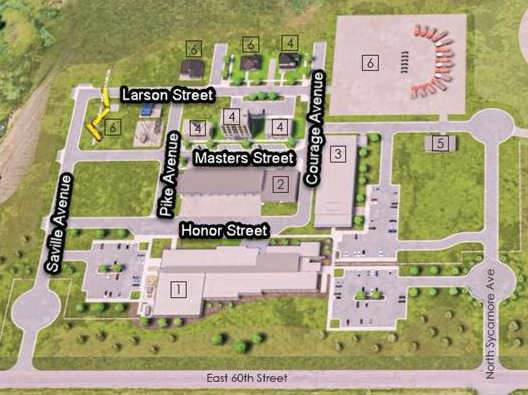
A new, sprawling public safety training campus is taking shape near 60th Street North and Sycamore Avenue and will open in the fall of 2023 to much fanfare and public dedications. It will include a 911 dispatch center, administration offices, emergency operations center, and police and fire training space. It also will include streets named after these four fallen policemen and firefighters: Fire Captain Charles E. Larson, Fire Apparatus Operator Thomas Masters, Police Captain George A. Saville and Police Night Captain Edward Pike.
“I am so honored,” said Kris Golden of Sioux Falls, whose father, Charles “Chuck” Larson, died from head injuries suffered while fighting a warehouse fire near the 11th Street viaduct July 14, 1967. “Sometimes you wonder … I mean, it’s been 55 years. Nobody who ever worked with my dad is there now. I guess I was really touched that they would remember.”
Touched? She’s not the only one. Before Larson, Tom Masters had died in the line of duty 62 years ago. Saville was killed 87 years ago, and Pike has been gone for more than a century. Yet as Fire Rescue Chief Matt McAreavey stood before the Sioux Falls City Council this fall for the first reading of the ordinance that would enact the naming of Saville Avenue, Pike Avenue, Masters Street and Larson Street, his voice cracked as he read their names to the councilors.
“It’s still tough to kind of talk about it,” McAreavey said. “I had reached out to make sure the families approved of this moving forward for consideration. Just some personal ties there and seeing how it still weighs on the family members who are left behind … that was just kind of in the back of my mind as I was reading their names.”
Despite the passage of time, these men have not been forgotten. Family stories of kindnesses and gratitude given decades ago still resonate in houses across this city and nation today.
For example, before Saville joined the police department, he had worked at the penitentiary. After his death in 1935, prison trustees actually were allowed to bring food to the family’s home. Similarly, after Masters’ death, fellow firefighters were a continuing presence around his family, fixing things in the basement and helping around the house.
Golden remembers how a firefighter’s wife stayed with her family for weeks after her father’s death.
Even now with national conversations about defunding police departments as an outgrowth of the Black Lives Matter movement, Sioux Falls’ gratitude toward its police and fire departments has not wavered. After rioting related to the death of George Floyd in Minneapolis erupted in Sioux Falls on May 31, 2020, “our break room had never been so full of food and goodies in the weeks afterward,” said police Lt. Jason Leach. “The public dropping stuff off, showing their support and really trying to uplift our officers … that is something we value and cherish in our community here.”
And when you think about it, Sioux Falls has been truly fortunate, McAreavey and Leach agree, that no public safety officers have died in the line of duty in more than a half-century. With the training opportunities afforded by this new campus, the hope is that the string of good fortune will continue.
The hope, more succinctly, is that as firefighting cadets and police recruits train and run real-life scenarios on the campus, the street signs will stand before them as reminders of those who came before, the price they paid and the need to always be diligent and aware, McAreavey said.
“I get little choked up even thinking about it,” he said. “But you know, in the future, we’ll have units in training responding, for example, to the corner of Saville and Masters. And even that hopefully makes a little point that they can identify … just to drive home that this is real. Take this as serious as possible so that, unlike these four men, you’re able to return home to your families.”
Here are the stories of the fallen heroes.
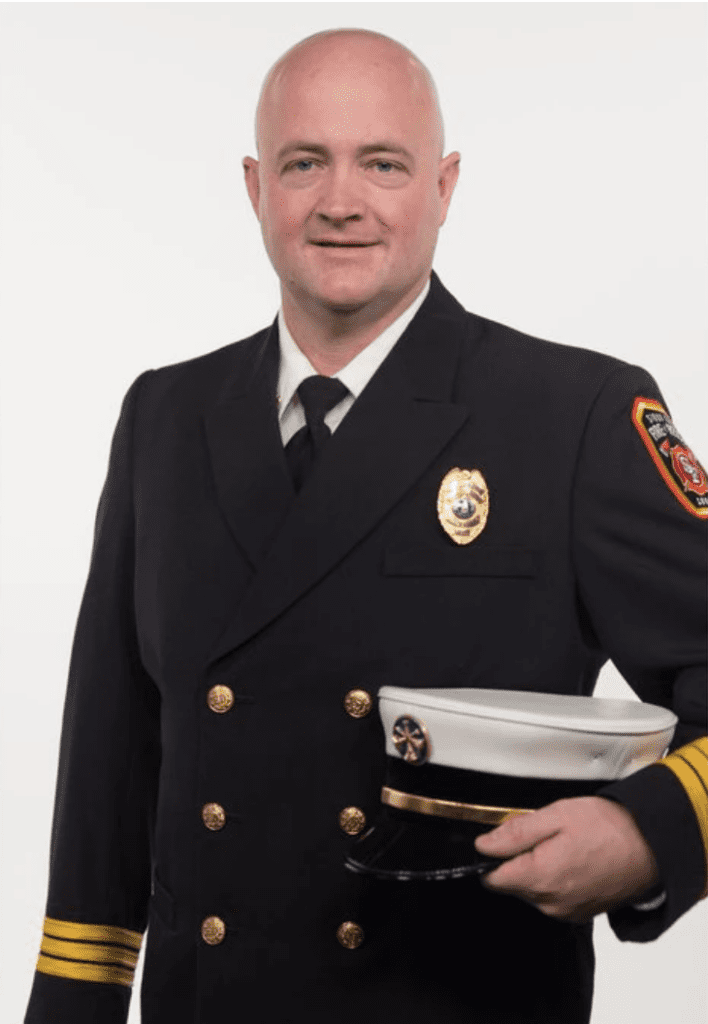
Fire Captain Charles E. Larson, final alarm, July 14, 1967
Larson was on a ladder fighting a blaze at a warehouse just south of the 11th Street viaduct ─ the old Jordan Millwork plant ─ when a section of the building collapsed on him and three other firefighters.
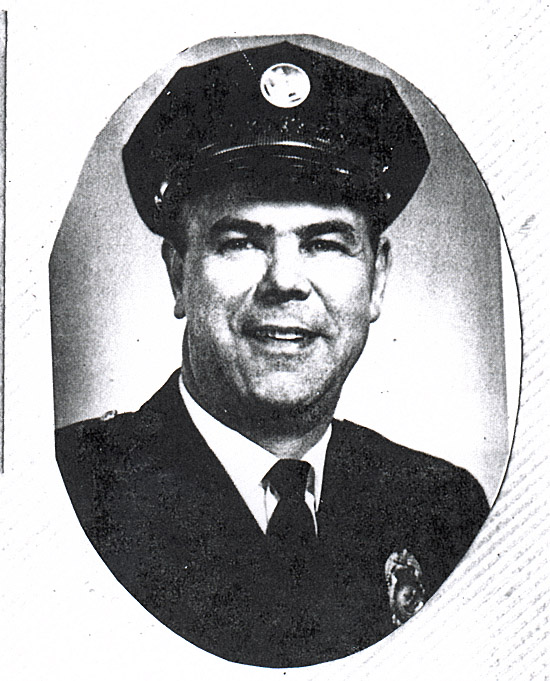
Sawdust insulation had absorbed so much water that it overloaded the structure’s integrity. Walls began cascading. Larson, 44, fell the farthest. He was critically injured; a second fireman suffered serious injuries, his daughter, Kris Golden, said. Her father survived for 15 days at McKennan Hospital, with a firefighter posted outside his hospital room for every single moment he was alive.
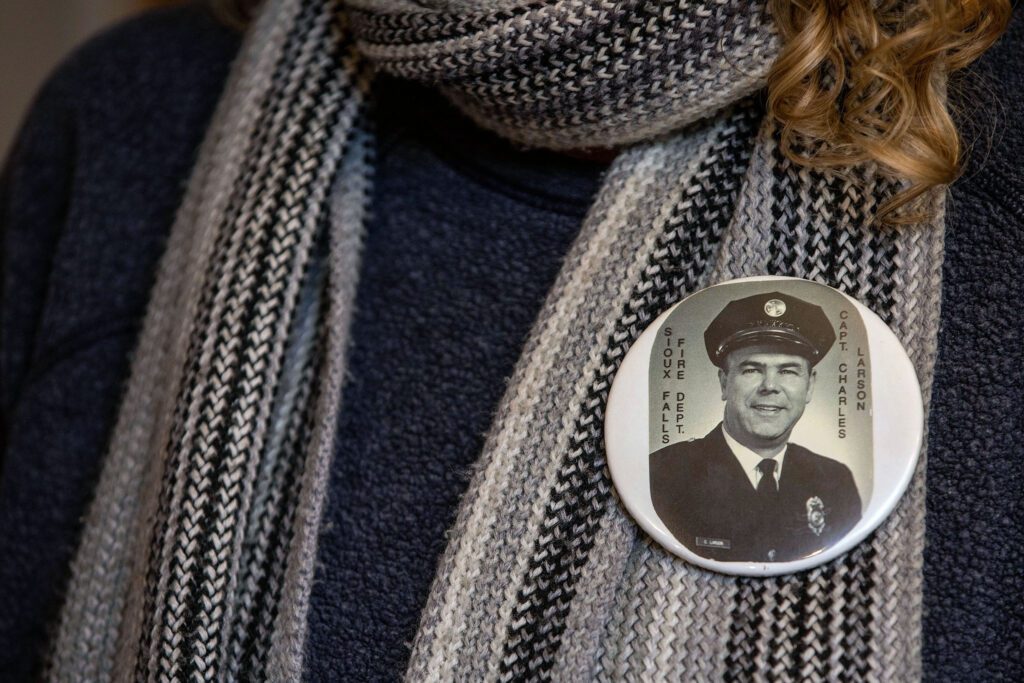
The Argus Leader honored him in an editorial for laying down his life in service to his community. If firefighters and police officers “always sought to proceed on a basis of avoiding risks, they would not be functioning efficiently and effectively,” the Aug. 1, 1967, editorial read. Larson “was a casualty of public service ─ a man who died doing what the requirements of our community suggested.”
He was more than that, his family said. Larson actually was no stranger to heroism. He was there for the cold and brutality of the Battle of the Bulge. They sent him home from World War II with a Bronze Star Medal for helping liberate France.
Back in Sioux Falls, he worked as a police officer for four years and then transferred to the fire department in 1950. Fighting fires was more than just a job for him, his family said.
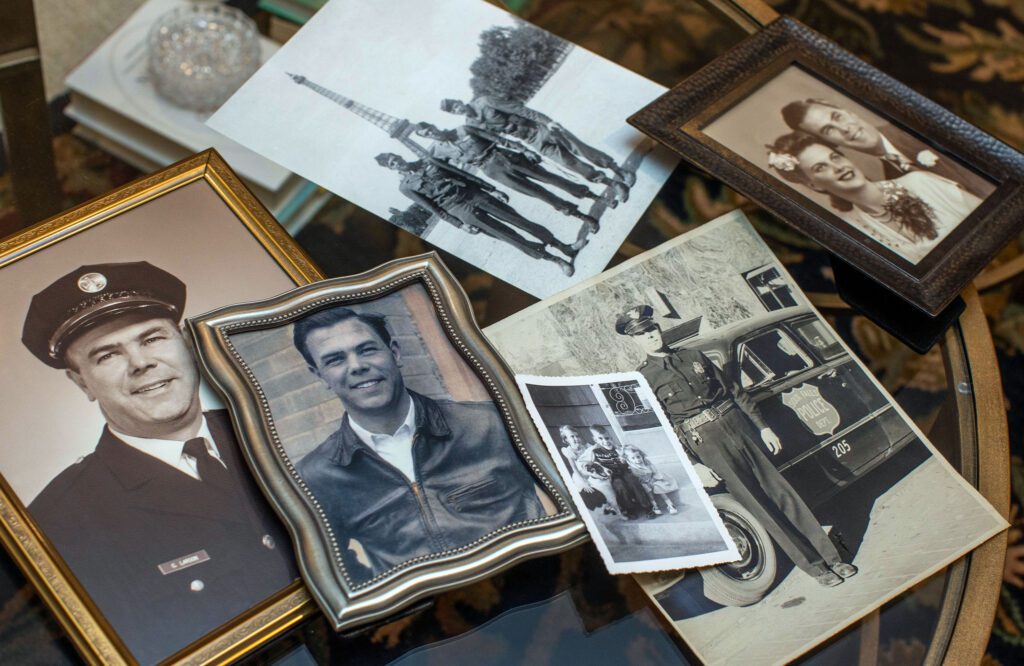
Larson and his wife, Lois, used to load their three children ─ Allan, Kris and Tania ─ in the back seat of their 1953 Buick, and as Lois drove, “Dad would be on the passenger side with his paper and pencil, taking notes on where every hydrant was in town,” Golden said. “He was writing all this down because they didn’t have hydrant books back then. So if he got a call, it was like, ‘Hey Charlie, where’s that hydrant at?’ He was doing all this on his time off. He was very dedicated.”
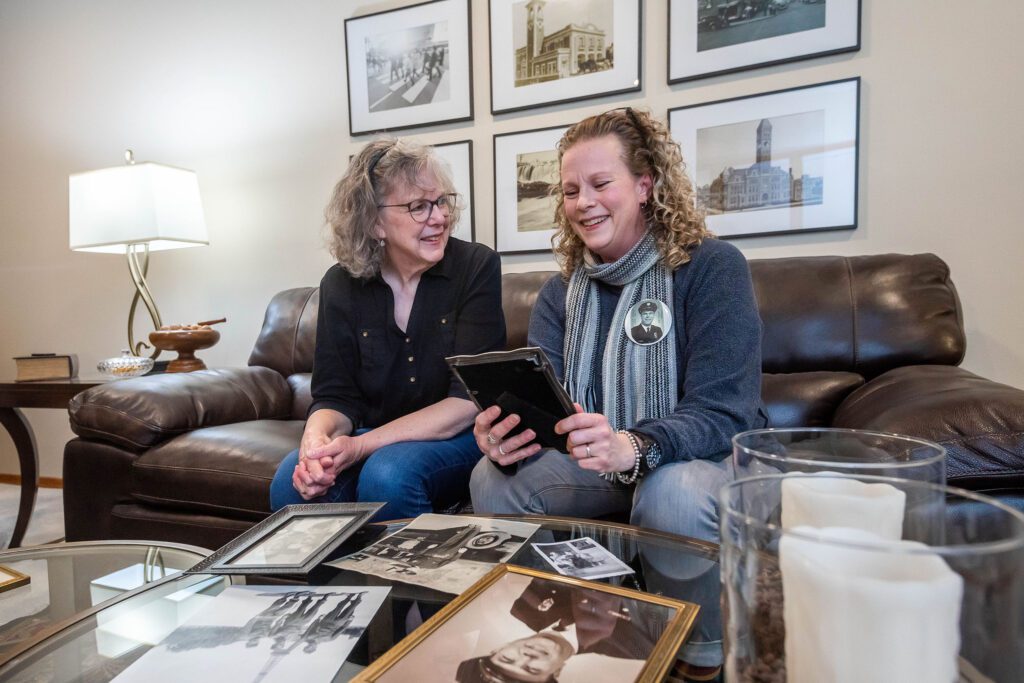
It was Larson who convinced his future son-in-law, Larry Golden, to become a firefighter. In fact, Larry answered the alarm for 29 years in Sioux Falls. The last 17 or so, after he became captain, he wore the captain’s badge that his father-in-law was wearing on both the day he was injured as well as the day he was to be buried.
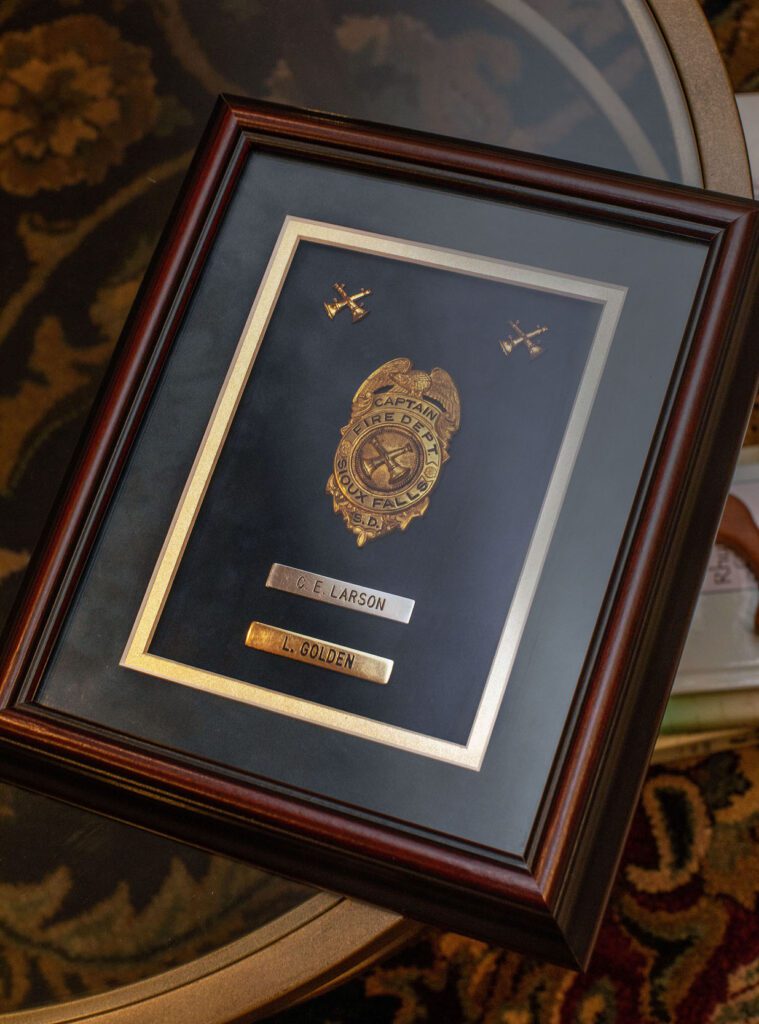
“I was honored to wear it,” Larry Golden said. Just as he, his wife, children and extended family are honored now to know that Larson’s name will live on with the street bearing his name. And yet, to Larry in particular, what the city is doing for his father-in-law isn’t so surprising.
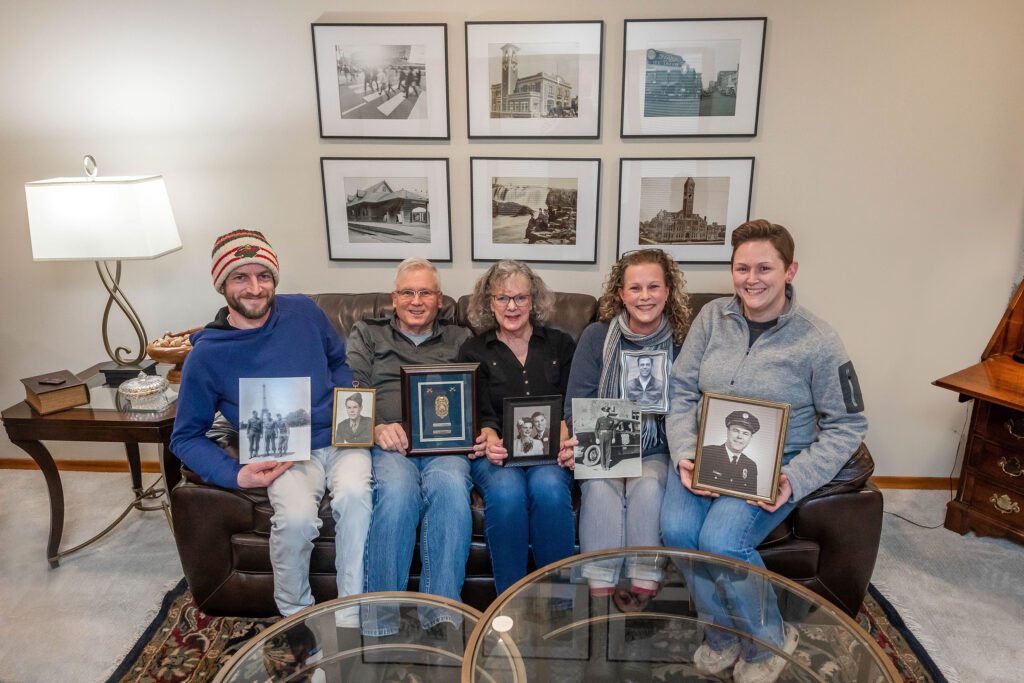
“I’ve been retired since 1999. But if I walk down there or if I go to see (Chief Matt McAreavey), I’m still a brother,” Larry Golden said. “Firefighters become your family, even through the ages. They don’t forget. They remember.”
Fire apparatus operator Thomas Masters, final alarm, Jan. 24, 1960
It was cold that late January day in 1960. A call had come in for a carbon monoxide poisoning in the Riverside area of north Sioux Falls. A 21-year-old man, overcome by the invisible gas and unconscious, was dead by the time he arrived at the hospital.
But he wasn’t the only victim that day.
Tom Masters, as he had a thousand times before, had driven the firetruck to the residence. But now, he was on the ground. The firefighter colleagues called “Cowboy” because of his Wyoming ranching roots had fallen from the vehicle.
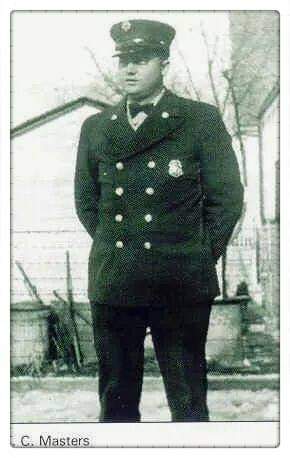
“They said he had a stroke,” his daughter, Pat Dossett, recalls. “They said he would have died there if he hadn’t been right there with the fire department … because they had all the equipment.”
But Masters, 54, didn’t die that day. He was hospitalized for a time and then released to his home, but he never fully recovered. After a second hospitalization, he died that March 28.
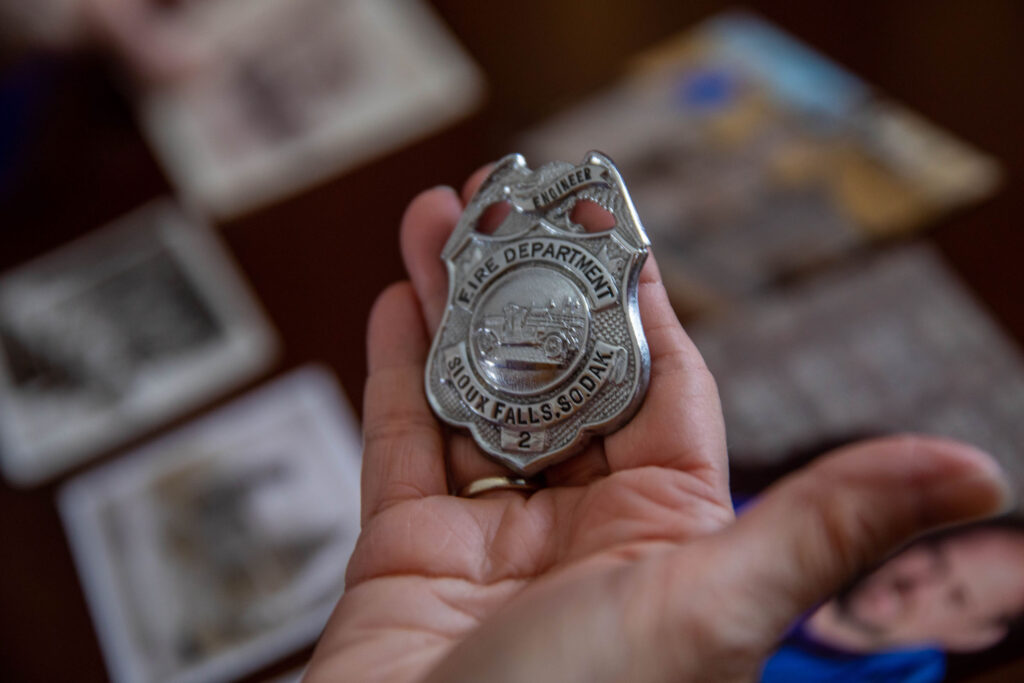
Sixty-two years later, a firefighter’s badge sitting on the kitchen table at Dossett’s east-side Sioux Falls home tells a poignant story of the man she called “Dad.” Masters used to tell his wife, Olive, and his children that “firemen don’t live very long,” Dossett said. “Being that they were always getting up when the alarm goes off, jumping out of bed and going down the pole, ‘it’s not good for your system,’ he’d say. ‘Firemen die young.’ That’s what he’d say. ‘A lot of them do.’”
Dossett’s daughter, Deb Nearman, smiles as she sits at the table and the stories of her grandfather are retold. She was just 3 when he died. She has only a few memories of him, like when he used to let her play with his shoes and the buckles on them.
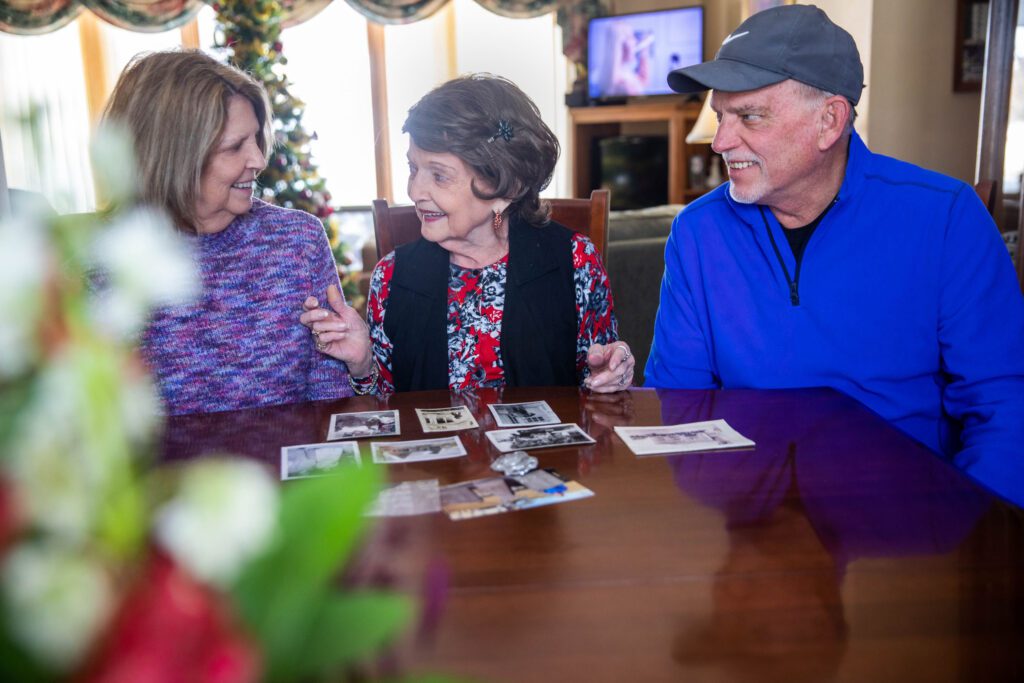
“I just remember I liked him,” Nearman said. “And I know he liked me.”
Masters was beloved within his firefighting family as well. When he was recovering at home, firefighters came constantly to the house, finishing projects he had started or fixing problems, Dossett said. When her mother had to go back to work part-time to help pay the bills, “every day, they sent over one or two firemen to stay with him while she was working,” Dossett continued. “They were wonderful.”
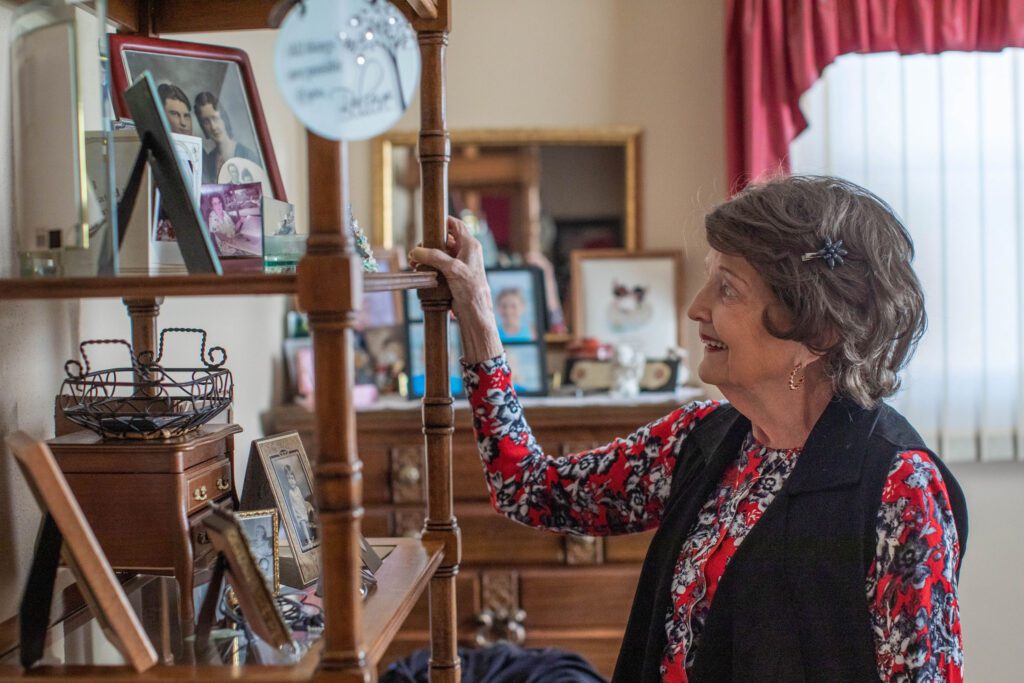
And still are, she and her daughter insist.
“I’m just amazed because, you know, he died in 1960, and that’s a long time ago for the fire department to still remember him,” Nearman said. “It says a lot, I think, about him and about this community.”
Police Captain George A. Saville, end of watch, Oct. 6, 1935
Capt. George “Dick” Saville and his partner, Walter Dean, had been patrolling the streets of Sioux Falls that October day when the call came in about three drunks in a car on Minnesota Avenue.
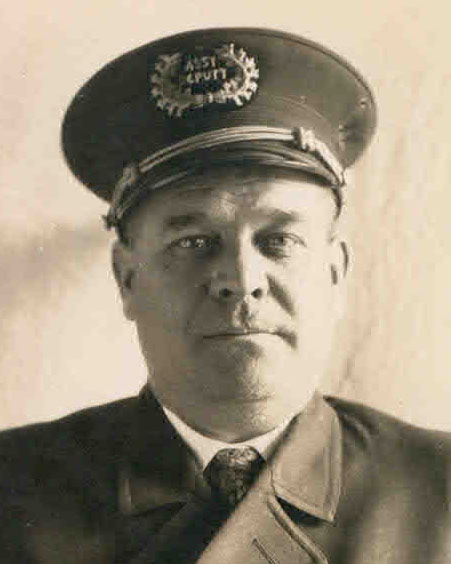
The trio was heading north. Once they spotted the suspects, Saville and Dean chased them for four blocks before running them into the curb between Fifth and Sixth streets on Minnesota. A struggle ensued as the officers worked to subdue the men and wrangle them into the patrol car.
They did not go peacefully. Though one of the trio was knocked unconscious and placed in the front seat, the other two scuffled violently with Saville as Dean raced to the police station. By the time they arrived, Saville was dead.
On the Officer Down Memorial Page ─ a nonprofit organization dedicated to honoring America’s fallen law enforcement officers ─ Saville is remembered by descendants as a World War I veteran and the son of a Civil War participant.
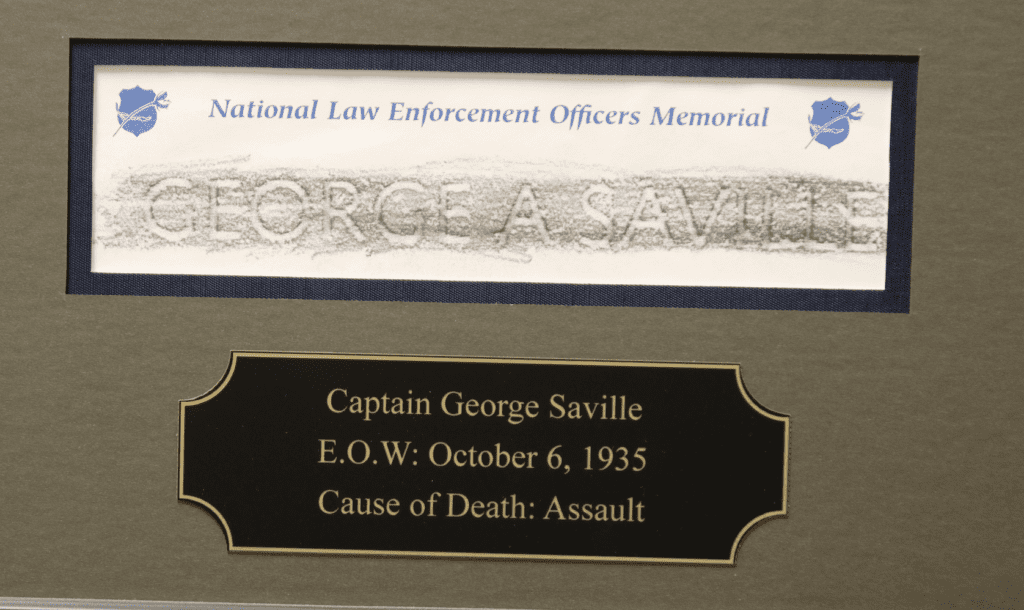
“But we really have no memories of him, except what was written by my great-aunt in her journal because my dad was only 6 years old when it happened,” said Saville’s granddaughter, Mary Saville Wallinga of Sheldon, Iowa.
Saville’s widow, Verna, was so traumatized by the experience “that she rarely talked about it,” Wallinga said. “We did not hear very many details.”
Saville grew up in Plankinton, worked for a time in sheriff’s department in Aurora County and then came to Sioux Falls, where he was hired at the penitentiary. While Wallinga’s father, Donald Saville, had few memories of his own father, “he did tell us about my grandfather taking him to the penitentiary for haircuts,” she said.
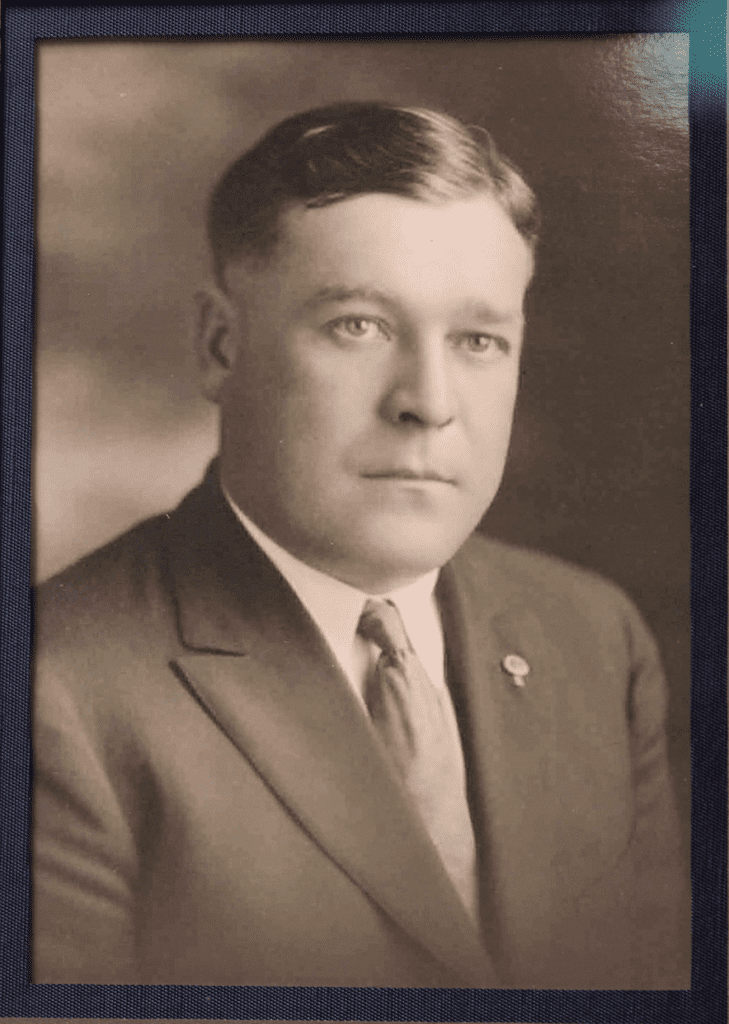
The story of trustees leaving the prison to bring food to Verna Saville and her two children after her husband’s death has always stayed with Wallinga. “I think he was liked by the staff at the penitentiary,” she said. “And maybe the inmates too.”
Her family has been told a special dedication will take place next year when the Public Safety Campus is nearing completion and the street signs are dedicated. She expects many of Saville’s descendants will make the trip to be there.
“We’re very proud, even though none of us who are left ever knew him,” Wallinga said. “We’re all just thinking that it’s so awesome that we’re being included in Sioux Falls’ history.”
Police Night Captain Edward Pike, end of watch, Sept. 23, 1922
Capt. Edward Pike was killed at 10:30 p.m. on a Saturday night as he and a fellow officer waited in the darkness in the 700 block of South Fourth Avenue for suspects in a string of robberies.
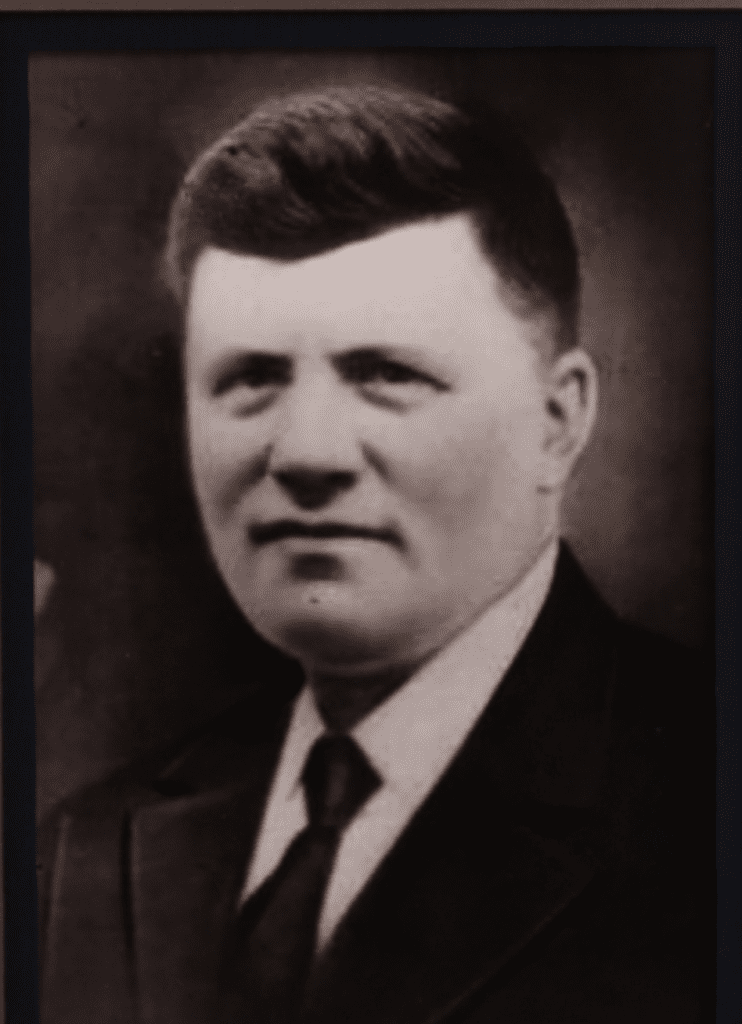
As the officers hid behind a woodshed in the rear of the lot, having been tipped off that the suspects were expected to show up at the address that evening, a car drove up the alley. The wary driver was shining a flashlight across the property. As the light traveled over the backyard, Pike came into full view.
At that moment, he and his partner started firing their guns. The suspect fired back, striking Pike three times. He was later transported by taxi to McKennan Hospital, where he died.
Though it has been a century, his descendants have not forgotten him. Just last month on the Officer Down Memorial Page, a granddaughter, Sharon Pike Boger, wrote: “I am very proud of him and his service. My father would also be a proud son. RIP Grandpa. I wish I would have known you in person.”
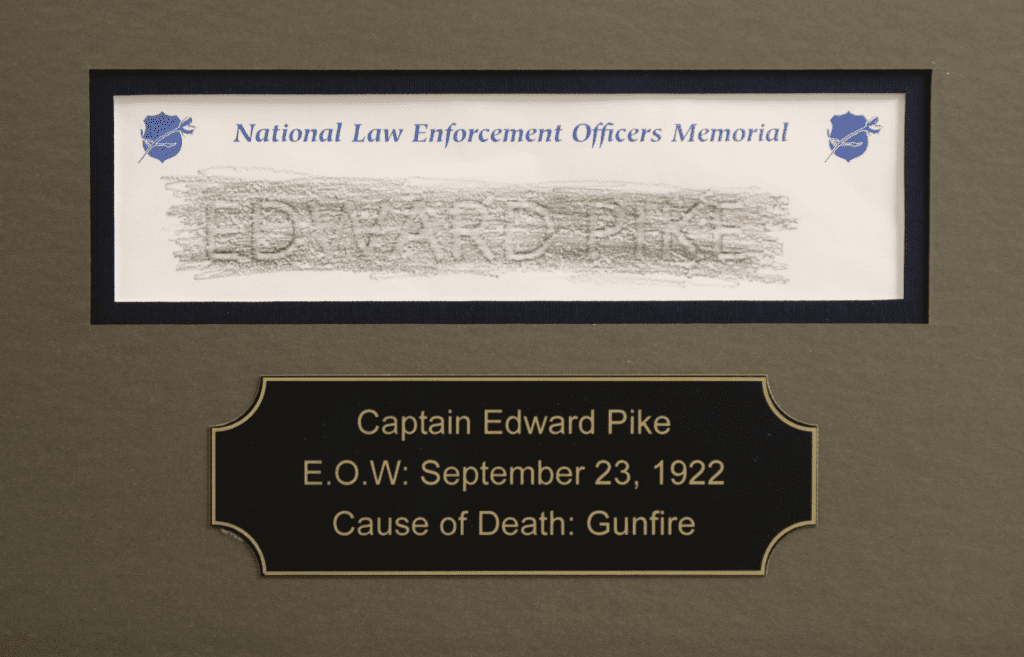
Fifteen years earlier, another granddaughter, Darlene Huebner, wrote on the Officer Down website: “Thank you Grandpa for being such a wonderful man. Your courage was unbelievable.”
Just over two years ago, Jason Leach, the honor guard commander for the Sioux Falls Police Department, took two other honor guard members out and found the gravesites for Pike and Saville in Sioux Falls. They performed some maintenance at each one, cleaned up the gravestones and laid flowers next to them.
Then, in a moving ceremony captured on video, a bugler played taps as an officer saluted at each site. That video was later shared with family members.
It’s just one more example of how, all these decades later, these men have not been forgotten, Leach said. And with their names on the street signs at the new campus, he added, they never will be.
“I think that says something about this community,” Leach said. “That we’re grateful. That we’re still remembering and memorializing and honoring these men and their families. It’s the right thing to do; I think everyone understands that.”
Share This Story
Most Recent
Videos


Looking amazing @dtsiouxfalls and @washpav! Thanks to @jpickthorn for capturing an incredible night.
Nov 26

Enjoy this glow headed into Halloween week! 📸: @jpickthorn
Oct 31
Hope you had a wonderful summer weekend and are recharged for the week ahead! 📸: @jpickthorn
Jun 27
Beautiful way to start a week! 📸: @jpickthorn
Jan 10
Favorite flyover of the year! Merry Christmas from our entire @pigeon605news flock. 🎄🐦 📸: @actsofnaturephotography
Dec 24
They definitely deserve to be treated like holiday royalty and they were! ❤️ these scenes from tonight’s lighting celebration at @sanfordhealth Children’s Hospital. 🎄
Dec 1
The holidays are here! Perfect night @dtsiouxfalls
Nov 27
Happy Halloween from @avera_health NICU babies! Link in bio to see more! 🎃
Oct 31
Did you know @dtsiouxfalls is filled with 👻 stories? Link in bio … if you dare 😱
Oct 8
When it comes to kids parties nobody wants to be cookie-cutter. Link in bio for the story on what’s trending.
Sep 28
Want to stay connected to where you live with more stories like this?
Adopt a free virtual “pigeon” to deliver news that will matter to you.




Are you a little bird with something to share?

Delivering news that matters to you
Years ago, homing pigeons were used to bring us news we needed. Today, your virtual “pigeon” will deliver what you want to know about the place you call home.
All pigeons are free to good homes!
Our Partners