

Electric vehicles are here. Is Sioux Falls ready for them?
Is Sioux Falls ready for the growth of electric vehicles? City government wants to know.
Electric vehicles continue to grow in popularity, with estimates that they could account for 40 percent or more of total passenger car sales by 2030, according to the U.S. Bureau of Labor Statistics.
In Sioux Falls, city officials are well aware of the trend. They kicked off a study in May to determine community readiness for the growth of electric vehicles. There are several phases of community engagement, including a survey that is open through Tuesday.
“One of the drivers of the study is that we know electric vehicles are coming in the market very broadly and in our community,” said Holly Meier, the city’s sustainability coordinator. “We want to make sure we understand the projected growth in our community and how we best prepare for this technology.”
Between 2011 and 2021, the number of electric vehicles on the road nationally jumped from about 22,000 to more than 2 million.
In South Dakota, there were 254 electric vehicles registered in 2015 and nearly 1,900 in 2022, according to the state Department of Revenue. Minnehaha County went from 50 to 496, and Lincoln County went from 10 to 214 in that same time period.
Meier said the city is working with consultant HDR on the project, which should take about a year and be finalized in 2024. The study looks at what kind of infrastructure might be needed to support the growth of electric vehicles, as well as consumer preferences.
“We are looking to hear from the public on what their perspective is on electric vehicles, from folks who drive them, what is their motivation and what are the challenges they face,” Meier said, noting they also want to hear from people who don’t drive electric vehicles.
The city also is working with business and community groups to gather information, including if they have charging stations or any plans to add them.
Understanding how an increase in electric vehicles translates into a need for charging stations is part of the study, including recommendations for locations based on driver data, Meier said. A business could profit from adding charging stations but only if they’re in the right location.
“The output of the study is to have this analysis and understand what the next five to 10 years look like for our community and then recommend how we best prepare for that,” Meier said.
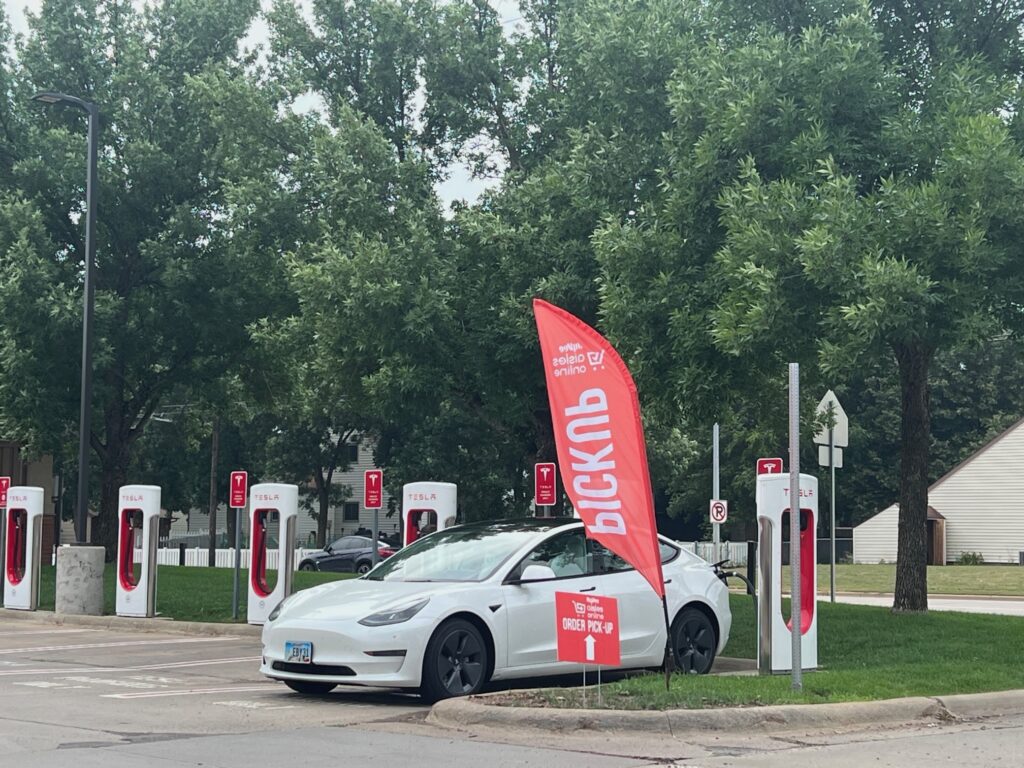
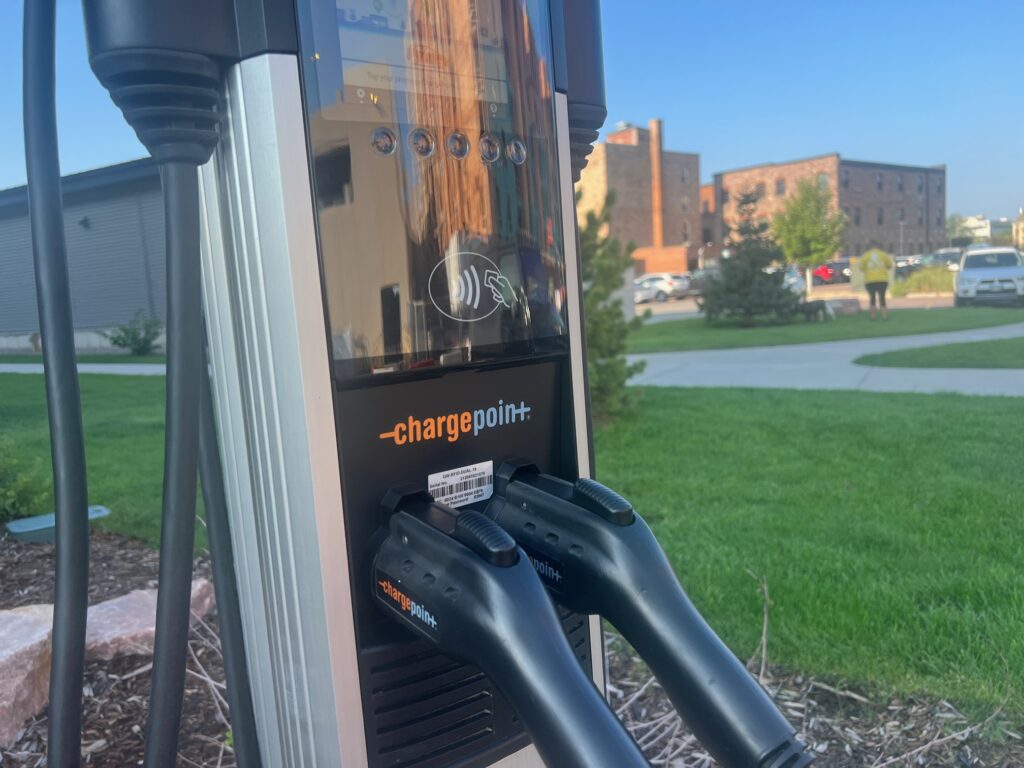
Right now, there are 17 charging stations open to the public. The city does not own those, and they range from downtown near the 8th & Railroad Center to Hy-Vee on Marion Road.
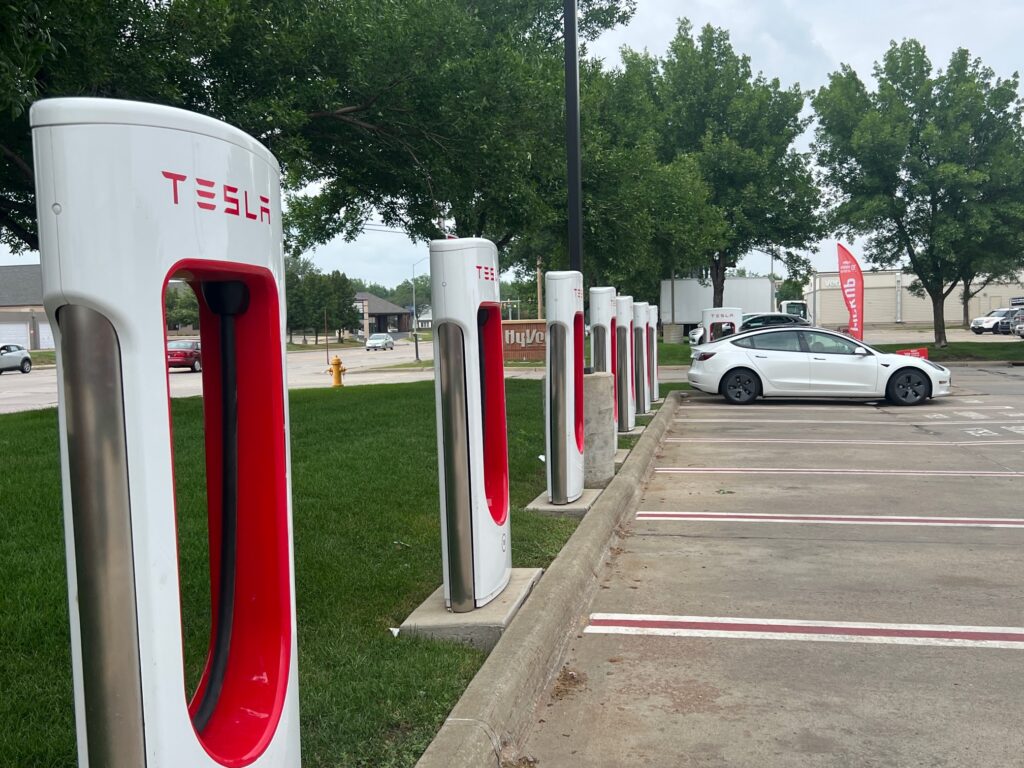
“There are eight Tesla chargers at the Marion Road Hy-Vee,” a spokeswoman said. “The chargers have been at that location since 2017.”
The chargers are owned and operated by Tesla, and there are no plans to expand, she said.
Who owns and operates charging stations is part of the discussion. Some municipalities have started exploring that, Meier said.
“That’s one of our questions, thinking about the growth and the increase for infrastructure. Who is owning and maintaining that infrastructure,” she said. “It’s a unique territory to be getting into.”
The first open house to get feedback on community readiness drew about 60 people, many of whom either had an electric vehicle, a plug-in hybrid or were considering one, she said.
“There are a lot of questions because it’s so new,” Meier said. “It’s a totally new way to fuel that relies on our electric grid. People have questions around infrastructure and grid capacity.”
The city is working with four electric providers in town to better understand the needs. She said they, too, are looking for projections to maintain reliability.
“We know electric vehicles are the future of transportation, and we are committed to helping our customers and communities make the transition,” Xcel Energy said in a statement.
In Minnesota, for instance, the utility provider offers an EV Accelerate At Home program, “which provides a hassle-free experience, with a vetted and qualified contract electrician installing the charger and scheduling it for lower-cost, off-peak charging,” the company said.

Its website has EV information and tools that can help customers in South Dakota decide if an EV is right for them, Xcel added.
“We look forward to working with the city of Sioux Falls as part of the city’s sustainability and climate action plan, and we await the results of the city’s study on future EV growth.”
Xcel also is preparing for further adoption of electric vehicles, including a planning team focused on developing and executing plans for generation, transmission and distribution on the electric and natural gas systems to meet the company’s vision to deliver net-zero energy by 2050 while preserving reliability and affordability for customers.
“We are enhancing our EV programs in states where they’re available to help customers understand their usage and even charge overnight when electricity costs less and there is less demand on the grid,” Xcel said.
Electric vehicle owners
Jackson Lounsbery is part of a local group of Tesla enthusiasts. He drove a Tesla for several years and said the experience alone is one of the best parts of the electric car.
“The instant torque and power you get from an electric car is really fun to drive and handles really well,” Lounsbery said. “And then with Tesla specifically, the technology is far and above most other vehicles – the giant touch screen and autopilot is all fun to play around with.”
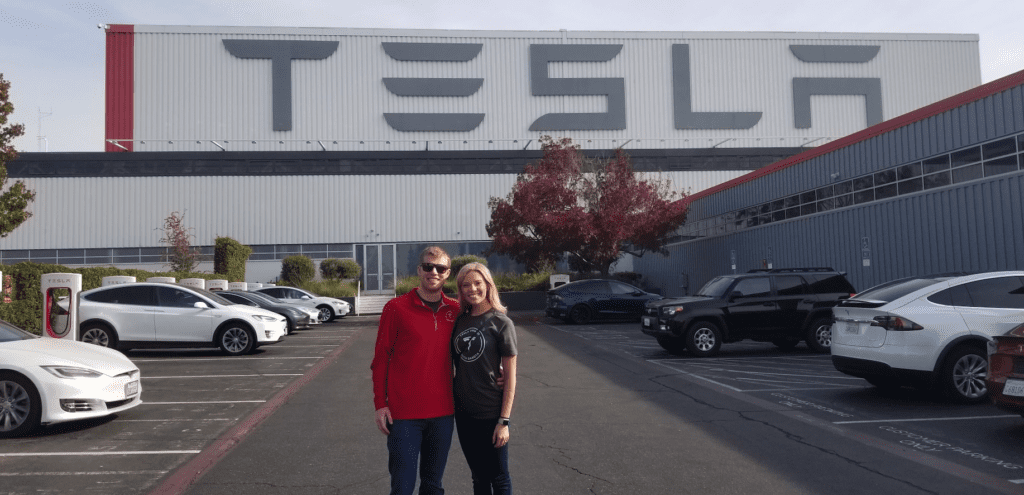
Lounsbery said sustainability is one factor in why he likes electric vehicles, but it’s also safety. “Tesla is the safest vehicle you can get. Electric vehicles in general are safer than gas vehicles. The battery pack makes it hard for them to roll over.”
But he also touts the dependability – a Tesla battery life is 300,000 to 500,000 miles, and the motor is rated for about 1 million. “They will last two to four times as long as a normal gas car would,” he said.
He said that while it’s important to have public charging stations – most of the recent infrastructure upgrades have been for superchargers on the interstates – “99 percent of your charging is done at home” with a 240-volt outlet or an actual charger.
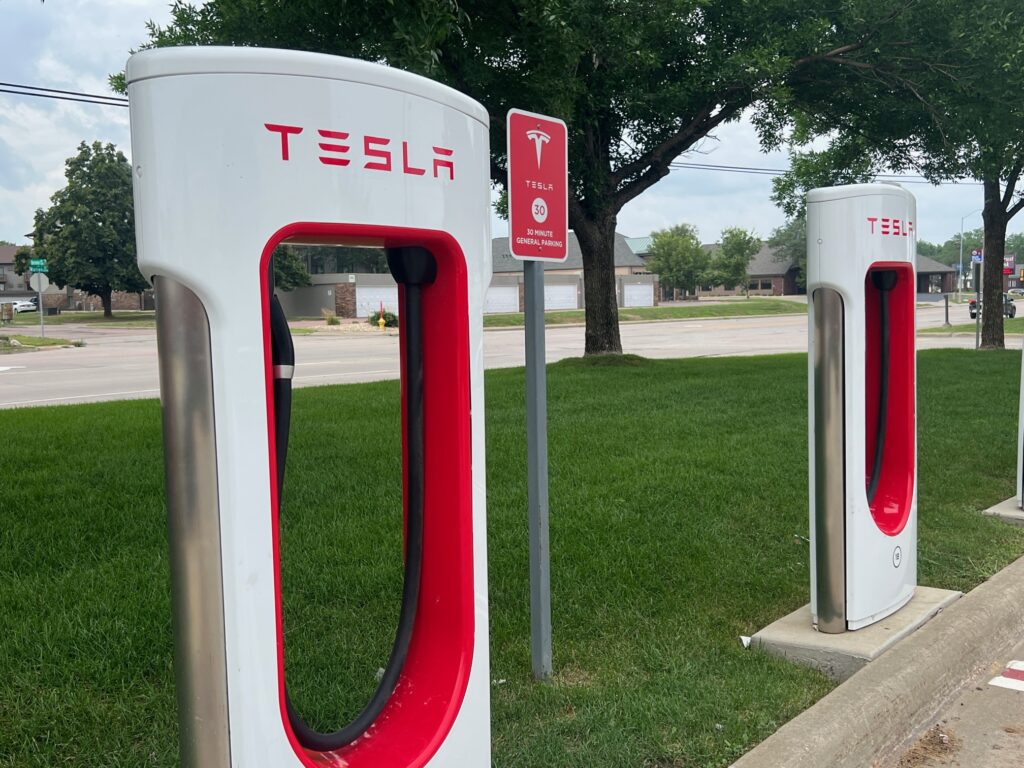
“Every night you can come home with nothing, and overnight every single day, you’ll have 100 percent in the morning,” Lounsbery said. “On a day-to-day basis, it’s better than gas because you don’t have to worry about anything.”
Then that 1 percent? “You’re going on trips and would use the supercharger network. You would stop every two to three hours and plug in for about 20 minutes and charge. That equates to a bathroom break and a snack.”
Charging trends
The federal Infrastructure Investment and Jobs Act allocated $7.5 billion to build out a nationwide charging network, which initially has focused on installing fast chargers along the highway, the Bureau of Labor Statistics reported. It also includes investments to upgrade the nation’s power grid.
In 2011, the median range on a single charge for an electric vehicle was 68 miles, the bureau reported. That was up to 234 miles in 2021 and continues to grow as technology improves.
Tesla uses a North American Charging Standard connector, and recently several automakers have partnered to switch to NACS, and it’s also being reviewed as a potential industry standard. In the meantime, many electric vehicles use Combined Charging System connectors. Charging stations that receive federal funding are required to have CCS plugs. Converters are available for consumers.
A universal plug-in for electric vehicles would give drivers the consistency needed to be confident they won’t run out of power. Lounsbery calls it a game-changer.
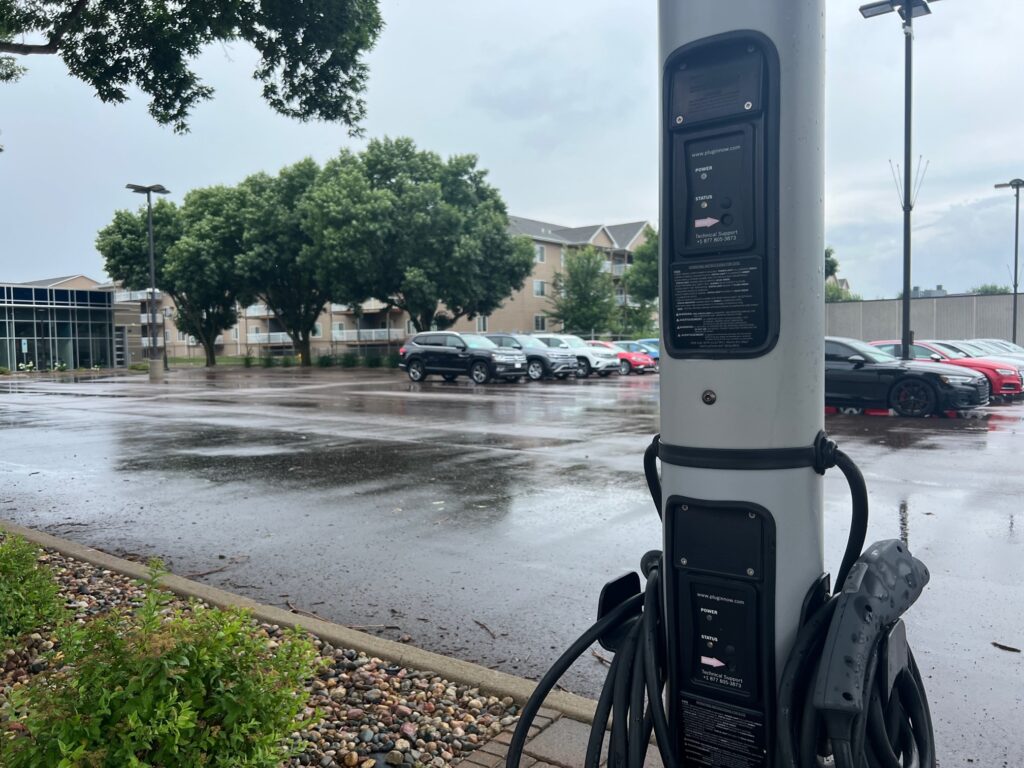
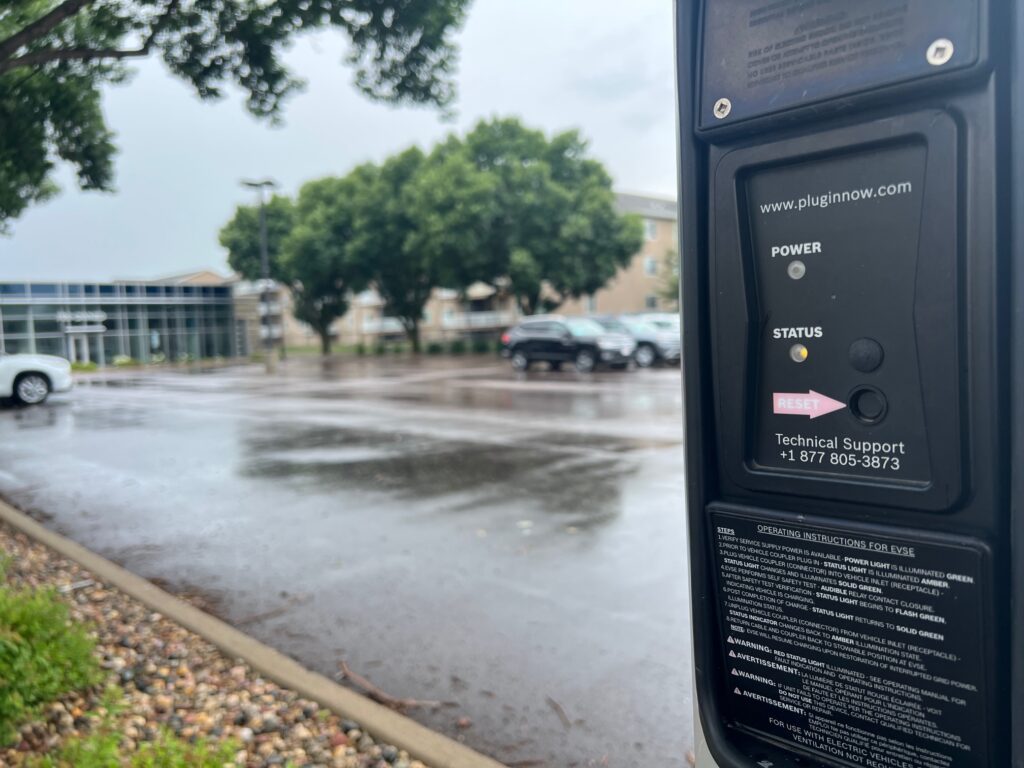
Chargers come in different levels, with a Level 1 being a typical household outlet with 120 volts that would provide about 30 miles of range overnight. The next level is a home charger with 240 volts.
Lounsbery said that’s where cities could invest.
“From a city perspective, the best help would be the Level 2 chargers,” he said. “From a cost perspective, you can deploy a lot more of them. You can put them at parks and public spaces to help give a little extra range here and there.”
Lounsbery thinks the home chargers right now are more important, and rebates for installing them would be an option. “A home charger isn’t that expensive – maybe $500 to $3,000, so a rebate breaks the barrier.”
There are incentives to buying an electric vehicle.
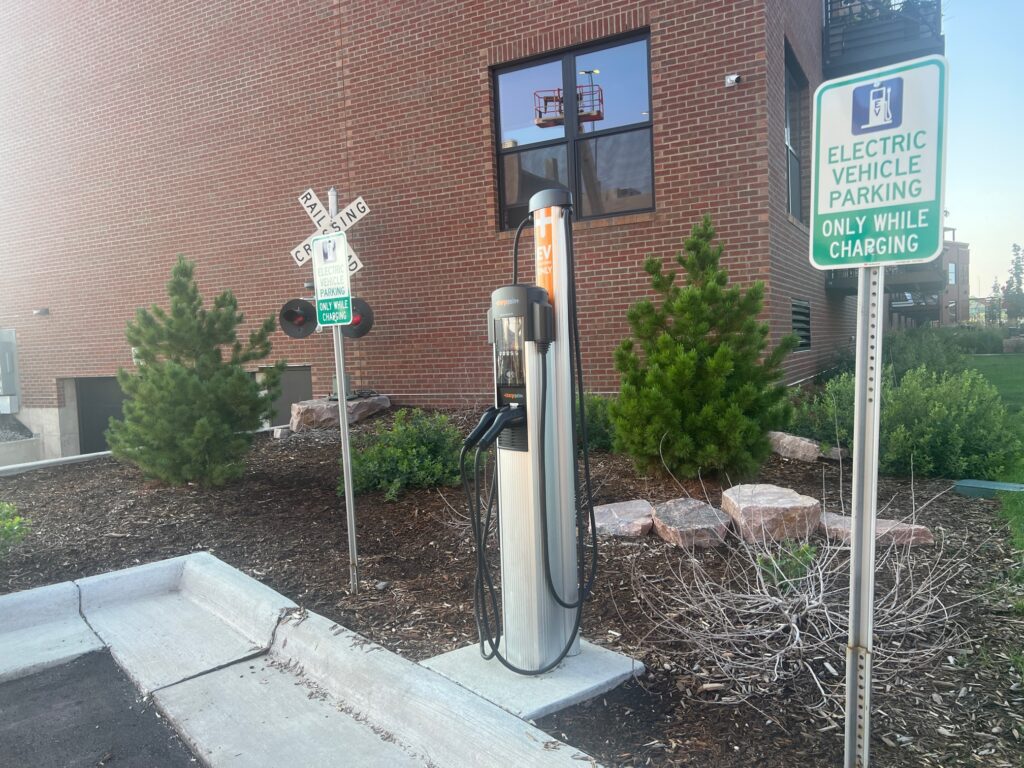
The Inflation Reduction Act, signed into law in August 2022, extended a tax credit of up to $7,500 for the purchase of new EVs until 2032 and provided, for the first time, that tax credits could be used for purchasing used EVs, the bureau reported.
Other Midwestern cities such as Minneapolis and Madison, Wisconsin, have public Level 2 chargers at police stations and parks, Lounsbery said. “I think that shows the public that electric vehicles are an option, and it’s easier than you think. But I would say it’s not a requirement for the city to dump millions of dollars into public charging.”
Meier emphasizes there is plenty of room and time for the public to be part of the process, and that the goal isn’t sweeping changes or mandates. “We want information to help us plan for this technology,” she said.
Share This Story
Most Recent
Videos



Looking amazing @dtsiouxfalls and @washpav! Thanks to @jpickthorn for capturing an incredible night.
Nov 26

Enjoy this glow headed into Halloween week! 📸: @jpickthorn
Oct 31
Hope you had a wonderful summer weekend and are recharged for the week ahead! 📸: @jpickthorn
Jun 27
Beautiful way to start a week! 📸: @jpickthorn
Jan 10
Favorite flyover of the year! Merry Christmas from our entire @pigeon605news flock. 🎄🐦 📸: @actsofnaturephotography
Dec 24
They definitely deserve to be treated like holiday royalty and they were! ❤️ these scenes from tonight’s lighting celebration at @sanfordhealth Children’s Hospital. 🎄
Dec 1
The holidays are here! Perfect night @dtsiouxfalls
Nov 27
Happy Halloween from @avera_health NICU babies! Link in bio to see more! 🎃
Oct 31
Did you know @dtsiouxfalls is filled with 👻 stories? Link in bio … if you dare 😱
Oct 8
When it comes to kids parties nobody wants to be cookie-cutter. Link in bio for the story on what’s trending.
Sep 28
Want to stay connected to where you live with more stories like this?
Adopt a free virtual “pigeon” to deliver news that will matter to you.




Are you a little bird with something to share?

Delivering news that matters to you
Years ago, homing pigeons were used to bring us news we needed. Today, your virtual “pigeon” will deliver what you want to know about the place you call home.
All pigeons are free to good homes!
Our Partners