
Before you bid: In business bonding, consider these surety strategies
This piece is sponsored by Holmes Murphy.
If your business wants to take on public sector work, chances are you’ll be asked to provide a surety bond.
By law, it’s required for many state and federal projects, and increasingly it’s something large general contractors look for from subcontractors even in private sector work.
“It’s becoming more top of mind, especially as our market becomes more sophisticated and attracts higher-value projects,” said Greg Krier, senior vice president of surety and a shareholder in the Sioux Falls Holmes Murphy office.
“We have some very large general contractors now working in Sioux Falls, and if you’re a subcontractor looking to work on projects such as the new Smithfield plant or the South Dakota Men’s Prison, a bond is going to be required.”
For contractors and subcontractors who have not needed surety bonds before, that requirement can come as a surprise — especially if they are used to private sector work where bonding has not always been part of the process.
“A lot of contractors would say it’s the same work they did 10 years ago in terms of scope,” Krier said. “But with inflation and the cost of materials, labor, everything has increased, the price of the contract goes up, and the bond still has to guarantee the full amount.”
What is a surety bond?
In construction, a surety bond generally is tied to a specific construction contract.
There are two common types: a performance bond and a payment bond.
A performance bond guarantees the completion of the project according to the contract. A payment bond guarantees that subcontractors and suppliers will be paid.
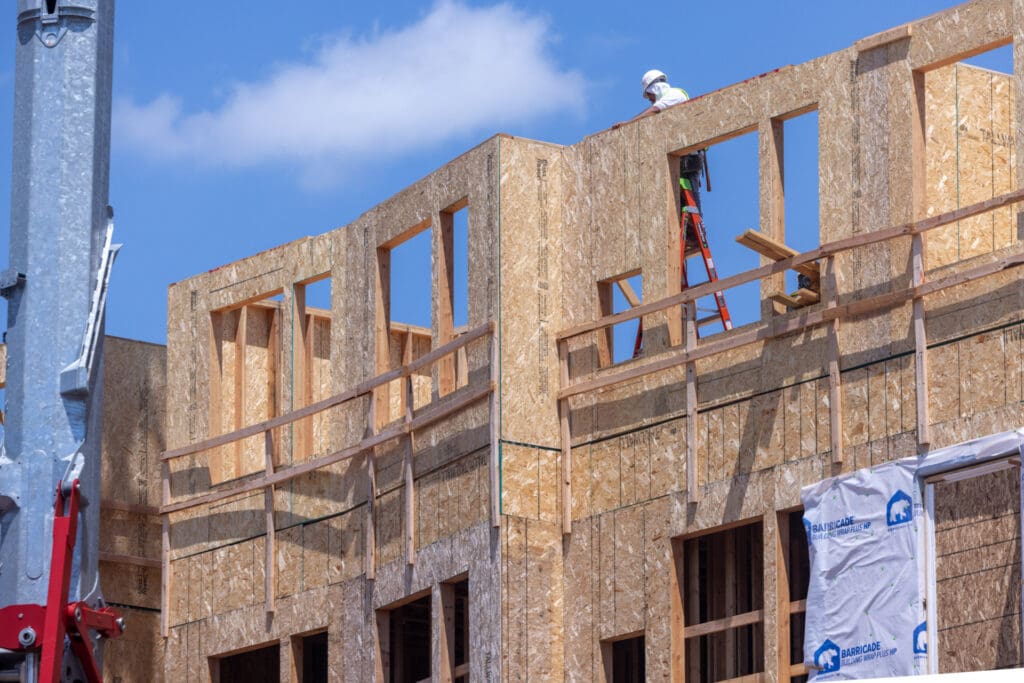
For public sector work, bonds are common in civil projects such as bridges, interstates, schools, government buildings and other public improvements. Private owners also can require bonds, and increasingly, large general contractors are doing so as a way to mitigate their risk throughout the project.
“It’s really up to the private owner, or possibly their bank, whether a surety bond will be required,” Krier said.
General contractors may require bonds from subcontractors, and public entities can require them for work bid directly by trade contractors such as plumbing, HVAC, electrical or other work.
Why preparation matters
One of the biggest mistakes contractors make is waiting until a bid is almost due before asking about a bond.
“Sometimes, they will come to us with two days to spare before a bid, and that creates a difficult situation for everyone,” Krier said.

That’s because surety is not simply a form or certificate that can be issued automatically. It is an unsecured form of credit.
“It’s similar to banking, but banking has all the security behind it,” Krier said. “They have first position on equipment, buildings, all those things. A surety does not have that same luxury.”
Instead, contractors typically sign a general indemnity agreement with the surety company, agreeing that the surety will be reimbursed if there is a loss.
“That’s a big thing many contractors don’t understand,” Krier said. “They think they can go to the surety and just request to get a bond.”
For smaller bonds, there can be faster options, often involving a credit check. But once a contractor begins pursuing larger work, especially projects of more than $1 million, underwriting becomes more involved.
“The bigger the contracts, the stronger a balance sheet needs to be to qualify for the bond,” Krier said.
Surety companies also want to understand a contractor’s experience. A company that has completed $1 million projects successfully may have difficulty immediately jumping to a $10 million project without demonstrating the financial capacity and project history to support it.
“Contractors have to financially qualify to bid a project, and then they also have to show they have experience in doing projects of a certain size or scope,” Krier said.
What contractors should do now
The first step is to keep strong financial records.
“No. 1, keep a good accounting system,” Krier said.
Contractors that have completed sizable private sector work should track those jobs, including how they performed, because that experience can support future bonding needs.
Financial statement reporting also becomes more important as a contractor grows. Internally prepared statements may be enough for smaller work, but larger projects often require additional expertise.
“As you get bigger, a CPA needs to do a year-end compilation, review or audit, depending on size,” Krier said. “Those usually are required by surety companies as you get into bigger work.”
Fall can be an ideal time for contractors to start planning for the next year, he said, because they are wrapping up projects and have a better sense of how the year will look financially.
“We can start getting prepared on what they might need for the next year, and you can factor that information in as you’re doing your year-end financials,” Krier said.
That preparation matters if a contractor wants to bid larger work in the next one to two years. Even before a specific project is available, a contractor can begin conversations about what will be needed to qualify.
“It’s about preparation, talking to your broker and making sure you have discussions about projects that may be upcoming that you want to pursue and what you need to do to get there,” Krier said.
Timely payments also matter. An unpaid supplier can file a claim on a payment bond, so contractors should be diligent about tracking and paying suppliers and vendors.
“A surety company will do a credit check, so credit is important,” Krier said. “Make sure payments are timely to vendors.”
Bonds can support growth
For contractors that want to grow, bonding capacity can be a competitive advantage.
If a business is bonded already, it can signal to owners and general contractors that the company has been reviewed and is backed financially.
“If they know you’re bonded, they know you’re backed financially,” Krier said.
The key is not to wait until the opportunity is already in hand.
“Most contractors really aren’t as concerned about rate as they are about the capacity that they have and size of projects they can bid,” Krier said. “They’re usually trying to push to bid a bigger job, and they’re not set up for it.”
That is where working with a surety specialist can help. Holmes Murphy works with contractors on surety needs whether or not they also are insurance or employee benefits clients.
“Beginning the relationship early can help as contractors are beginning to explore bonding or want to understand what would be required to pursue larger projects,” Krier said.
Holmes Murphy also brings scale and specialization to the process.

“We’re probably one of the largest privately held firms in the Midwest that provides surety bonds to our customers, and that allows us a lot of leverage with the surety companies to get things done,” Krier said.
The firm has a full-service team and guarantees a 24-hour turnaround time on approved bid bonds. If someone is out of the office, the team is aligned across locations to keep requests moving.
“Each office has at least 50 years of expertise in surety,” Krier added.
Holmes Murphy was founded on providing surety bonds to contractors, giving the firm a long history in the space.
“We think we can communicate to the surety companies better than most other brokers to get the best deals for our contractors,” Krier said.
For contractors and subcontractors looking at public work, larger private projects or growth over the next few years, the message is straightforward: Start early.
Whether the need is immediate or part of a future growth plan, understanding bonding capacity early can make the difference between being ready for an opportunity and missing it.
“If you’re asked to bond it, you want to be able to,” Krier said.
For information on Holmes Murphy or the company’s surety capabilities, visit here.
Share This Story
Most Recent
Videos



Looking amazing @dtsiouxfalls and @washpav! Thanks to @jpickthorn for capturing an incredible night.
Nov 26

Enjoy this glow headed into Halloween week! 📸: @jpickthorn
Oct 31
Hope you had a wonderful summer weekend and are recharged for the week ahead! 📸: @jpickthorn
Jun 27
Beautiful way to start a week! 📸: @jpickthorn
Jan 10
Favorite flyover of the year! Merry Christmas from our entire @pigeon605news flock. 🎄🐦 📸: @actsofnaturephotography
Dec 24
They definitely deserve to be treated like holiday royalty and they were! ❤️ these scenes from tonight’s lighting celebration at @sanfordhealth Children’s Hospital. 🎄
Dec 1
The holidays are here! Perfect night @dtsiouxfalls
Nov 27
Happy Halloween from @avera_health NICU babies! Link in bio to see more! 🎃
Oct 31
Did you know @dtsiouxfalls is filled with 👻 stories? Link in bio … if you dare 😱
Oct 8
When it comes to kids parties nobody wants to be cookie-cutter. Link in bio for the story on what’s trending.
Sep 28
Want to stay connected to where you live with more stories like this?
Adopt a free virtual “pigeon” to deliver news that will matter to you.





Are you a little bird with something to share?

Delivering news that matters to you
Years ago, homing pigeons were used to bring us news we needed. Today, your virtual “pigeon” will deliver what you want to know about the place you call home.
All pigeons are free to good homes!
Our Partners