
Think a college degree means a lot of debt? This experience shows otherwise
This paid piece is sponsored by South Dakota State University.
One year post-graduation, Kordell Feldhaus proves that a college degree and a large debt load don’t have to go hand-in-hand.
The Sioux Falls civil engineer and South Dakota State University graduate left Brookings with about $12,000 in student loans over four years. And that’s a bit more than he maybe even needed, he said.
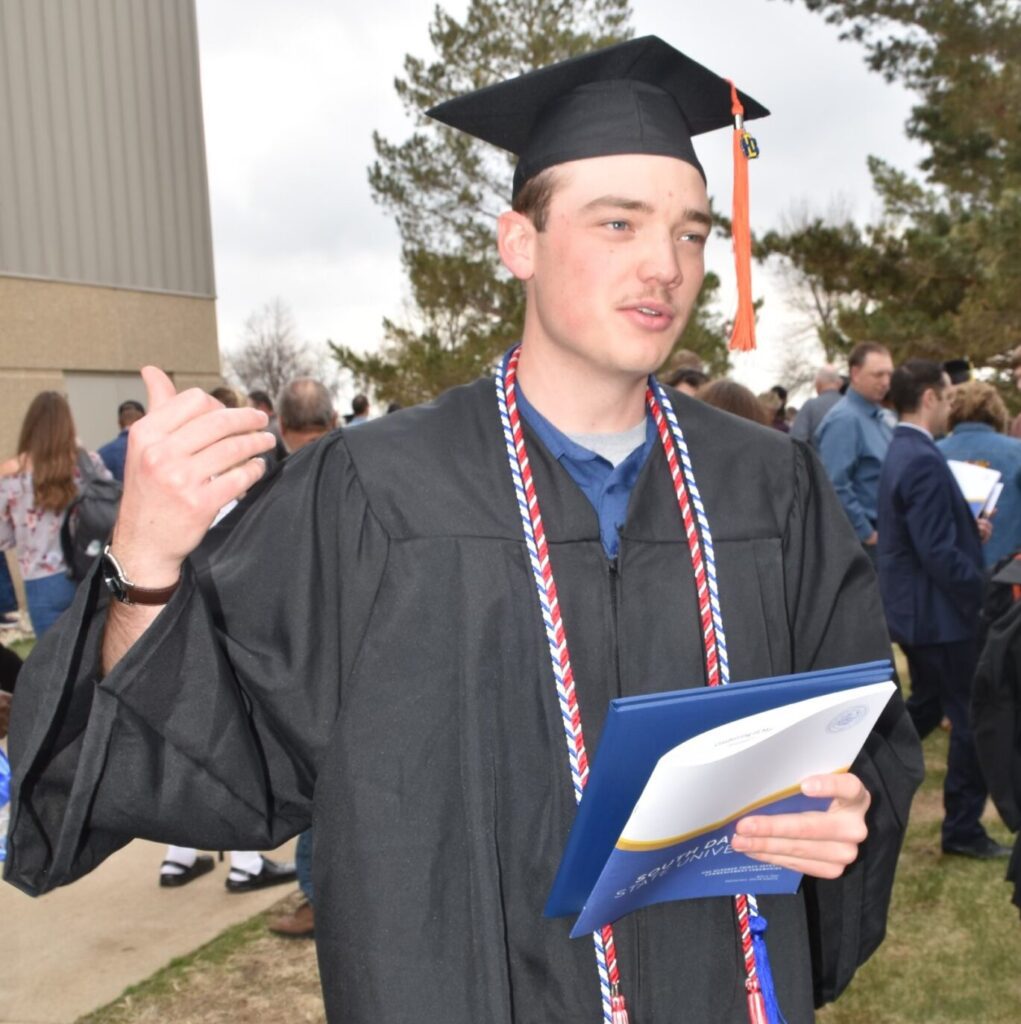
“My senior year I utilized more student loans to cover my college costs because I wanted to preserve some personal savings to propel me into my career. I was then able to buy a house in Sioux Falls right away,” said Feldhaus, who grew up on a ranch near Britton in northeast South Dakota.
“It was a good financial transition for me from being a student to becoming a professional.”
A homeowner with minimal student loan debt one year out of college? It’s not as rare as you might think – especially when students and their college or university work together to create a positive financial equation.
“I’m very fortunate, and luckily my best friend is in almost the same scenario as me – from Sioux Falls, we each bought houses within a month of each other and have similar debt, ” Feldhaus said. “In average, all my close friends from SDSU – I don’t think any of them took more than $20,000 in loans and $10,000 to $15,000 is pretty common within my friend group.”
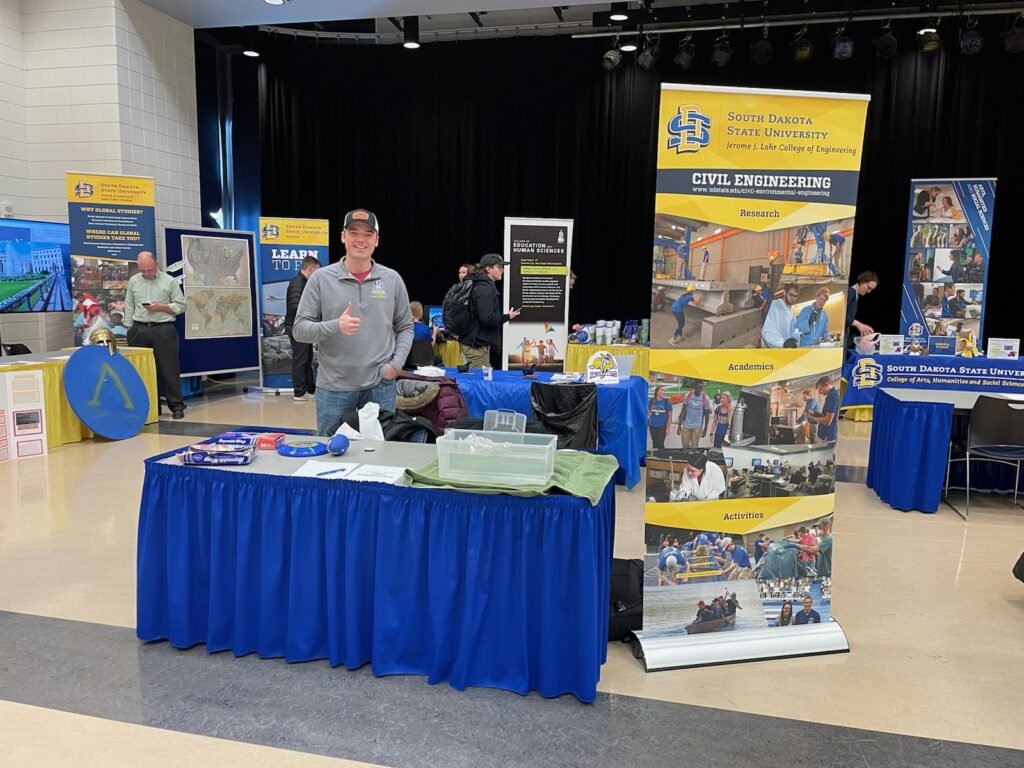
It’s also fairly common among the broader Jackrabbit community, said Shawn Helmbolt, assistant vice president for enrollment management at SDSU.
“I think that’s a fairly typical story for students here at the university,” he said. “They’re fiscally responsible, they care about and understand the opportunities in front of them and the resources needed to cover those costs. If students approach it with that mindset, they really have a tremendous opportunity here at SDSU.”
SDSU has “seen our average federal student loan debt total move in the right direction,” he continued. “It’s gone down for students the last six years, from more than $26,000 six or seven years ago to our most recent average federal debt total of $21,877 from the 2022-2023 school year, so that’s a significant reduction and puts us at about two-thirds of the national average in federal debt total, which is $31,855.”
How does SDSU make it happen? A combination of factors.
High-value, steady tuition
A tuition freeze from the South Dakota Board of Regents, which will be extended for the 2024-25 school year, has “provided us the opportunity to be extremely competitive from the start in terms of what a student pays to go to school,” Helmbolt said.
“We’re very competitive with institutions from near and far, and it’s not just tuition. It’s mandatory fees as well. So our starting price, which is very transparent, has remained the same despite inflation and the cost of so many things rising around us.”
It’s not just about the cost, but also the value received, Feldhaus added.

“It definitely helps when your school is so competitively priced, and the school itself is great,” he said. “A lot of the courses were very good and offered a nice variety. Plus, it’s a diverse campus with many degrees and clubs, so I was able to do things that were more broad than just engineering.”
Put in context, that $21,000 average debt “is the price of a good used car these days,” Helmbolt noted.
“So when we’re thinking about a student or family considering the investment in a career path or education, something that will impact their life path for the next 40 to 50 years, we’re looking at the same level of investment as if you took out a loan for a used vehicle to drive for the next 10 years.”
Enhanced scholarships
Thanks to state programs, institutional support and donors, SDSU students are enjoying more financial assistance in paying for college than ever.
“Right now at the university, 95 percent of our first-time students receive some type of financial aid – either federal financial aid, institutional scholarships or a combination of funding that helps offset their costs,” Helmbolt said.
More than three in four incoming students receive some type of scholarship, thanks in part to the longstanding Jackrabbit Guarantee program, which offers scholarship awards beginning with a 3.0 high school GPA.
“We have a grid that will take into account a student’s GPA and test scores, if applicable, and from there we will guarantee a minimum scholarship, and then often students are considered for additional or enhanced scholarships,” Helmbolt said. “Sometimes, it reaches a level where they’re even going to walk away with little to no debt based off opportunities from institutional scholarships, local or private scholarships, federal grants or work-study, or other grant programs.”
Feldhaus began his SDSU journey with several local scholarships and a federal grant.
“My first year I think I maybe paid $700 the first semester because I had so many one-time scholarships, and my second was $1,000, so the first year was really reasonable with no loans,” he said. “I calculated it one time, and my scholarships were 50 to 60 percent of my tuition, and room and board.”
Starting early, staying connected
Thanks to growth in dual credit programs, students also are getting a jump-start on college while still in high school.
“We’re seeing more students take college courses while in high school, and those courses come at a reduced cost,” Helmbolt said. “They’re saving money as they take the course early and then in turn reducing their time to degree.”
Once students earn those degrees, their ability to repay what loans they do have is also solid, he added.
“We’re not only seeing students needing to borrow less, but they’re defaulting on repayment less, which to us means there’s a strong return on their investment,” he said. “The value they’re getting from their degree is putting them in a position to consistently repay their student loans, which speaks to the outcomes of the degree programs and the opportunities they have after graduation.”
For Feldhaus, post-SDSU journey already has brought him back to campus – this time as a professional.
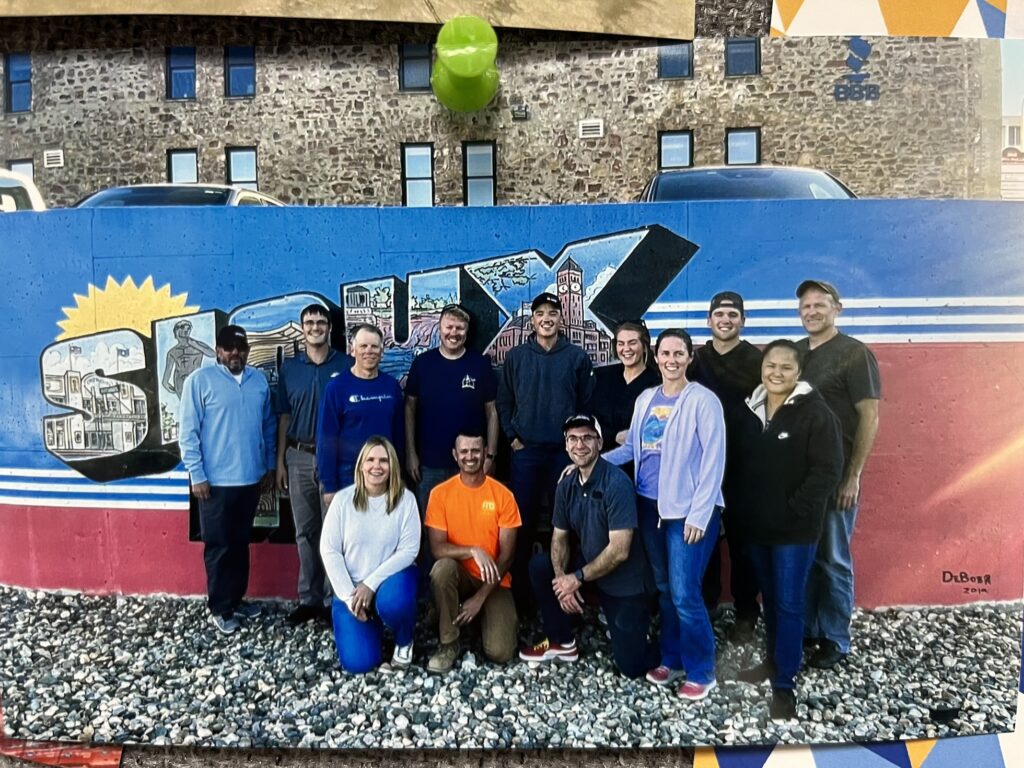
“I’ve been doing work at SDSU on campus projects since I graduated, including helping put in a new water main on the west side of campus and now for a water main project this fall at Briggs Library, and it’s really cool because I get to see it from start to finish,” he said. “I helped design it, and now I’ll get to watch it be built.”
To learn more
SDSU’s financial aid counselors are ready to work one-on-one with students and families to understand their unique financial situations. To get connected, click here.
Share This Story
Most Recent
Videos
Looking amazing @dtsiouxfalls and @washpav! Thanks to @jpickthorn for capturing an incredible night.
Nov 26

Enjoy this glow headed into Halloween week! 📸: @jpickthorn
Oct 31
Hope you had a wonderful summer weekend and are recharged for the week ahead! 📸: @jpickthorn
Jun 27
Beautiful way to start a week! 📸: @jpickthorn
Jan 10
Favorite flyover of the year! Merry Christmas from our entire @pigeon605news flock. 🎄🐦 📸: @actsofnaturephotography
Dec 24
They definitely deserve to be treated like holiday royalty and they were! ❤️ these scenes from tonight’s lighting celebration at @sanfordhealth Children’s Hospital. 🎄
Dec 1
The holidays are here! Perfect night @dtsiouxfalls
Nov 27
Happy Halloween from @avera_health NICU babies! Link in bio to see more! 🎃
Oct 31
Did you know @dtsiouxfalls is filled with 👻 stories? Link in bio … if you dare 😱
Oct 8
When it comes to kids parties nobody wants to be cookie-cutter. Link in bio for the story on what’s trending.
Sep 28
Want to stay connected to where you live with more stories like this?
Adopt a free virtual “pigeon” to deliver news that will matter to you.





Are you a little bird with something to share?
Delivering news that matters to you
Years ago, homing pigeons were used to bring us news we needed. Today, your virtual “pigeon” will deliver what you want to know about the place you call home.
All pigeons are free to good homes!
Our Partners