

New birth center aims for ‘middle ground’ between hospital, home birth
Women seeking a home-birth-like environment could have a new option in Sioux Falls as two sisters are opening the city’s first birth center.
Sarah Roe and Erin Vande Lune, who are certified nurse midwives, will operate Flourish Wellness & Birth Co. with the first birth expected in a couple of weeks’ time. That will take place in the individual’s home, but by the time clients with babies due in June and July go into labor, Roe and Vande Lune expect to have a permanent facility renovated and offering a homelike atmosphere.
The state’s first birth center opened last May in Rapid City. Flourish has the distinction of being South Dakota’s first midwife-owned birth center. As CNMs, Roe and Vande Lune are regulated by a professional board. While waiting to open a stand-alone facility, the sisters offer consultations in a downtown Sioux Falls office. This month, they’ll start offering HypnoBirthing classes, which address special breathing, relaxation, visualization, meditative practice, attention to nutrition and positive body toning.

The sisters, Lennox natives who trained first as registered nurses, took midwifery classes together through Frontier Nursing University in Versailles, Kentucky. It is the nation’s oldest midwifery school and currently has 2,000 students enrolled.
Flourish Wellness & Birth Co. will serve women beginning in adolescence through menopause with an emphasis on providing pregnant women a safe, homelike birth environment. When a permanent location is chosen, it will be renovated to meet Flourish’s needs.
“The timing is really right for it,” Vande Lune said. “People have been watching and waiting for this. It will complement the middle ground between hospital birth and home birth. It’s for those clients who don’t want to deliver at their house but want to feel like they’re in the comfortable environment of their own home in a setting that has resources, trained people and encouragement.”
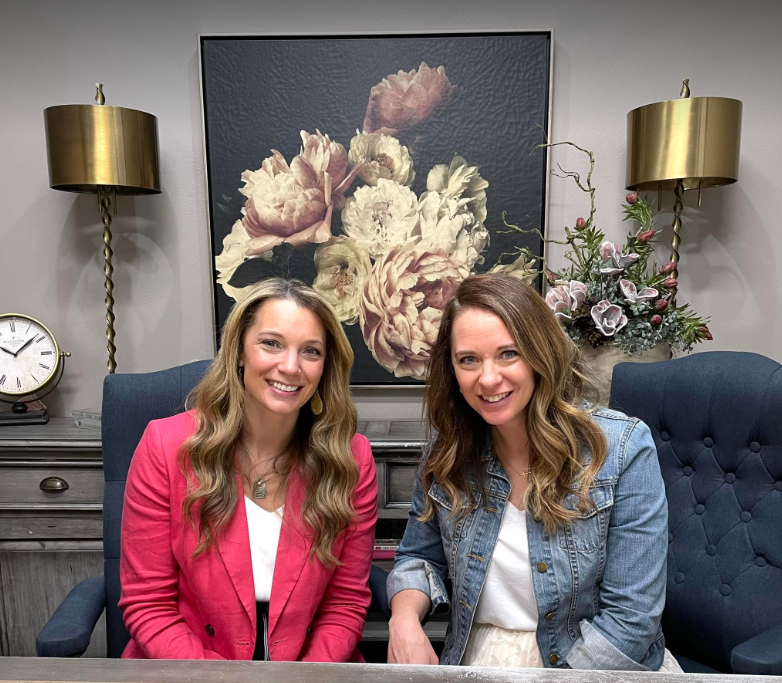
“Also, we feel like family-centered care is very important, letting them have the freedom of having their family around,” Roe added.
Roe’s path to midwifery began with a degree in journalism. When she discovered the profession didn’t suit her, she went back to school for nursing. After graduating, Roe spent a year as a nurse in an intensive care unit and then transferred to labor and delivery.
“I realized I loved the baby world,” Roe said. “For seven years, I also was a maternal flight nurse.”
Vande Lune begin college as a pre-med major. When back surgery necessitated a year off, she attended nursing school instead.
“I loved it,” she said. “I worked mostly in (a Neonatal Care Unit) when I lived in California, then our family moved to Haiti. I got to work with women, children and babies, and we had a prenatal program. I came home for a visit, and (the sisters) just started talking about our experiences we had with midwives, and we thought, hey, we want to do midwifery school together.”
As they aligned their career paths, they began midwifery schooling through Frontier Nursing University. That meant two trips to Kentucky: one for orientation and the second for a hands-on skills lab before starting their clinical experience. Vande Lune trained at Sanford Health because she wasn’t yet employed there. Already a Sanford employee, Roe was required to find a preceptor through Avera Health.
When training was completed, they joined the midwifery staff at Sanford.

The decision to start their own center was faith based but not without a pause or two.
“The Lord came to me in a dream and said I want you to start this, I want you to have a safe place for women where they will feel seen and known and heard and be able to have nonjudgmental health care and have a community,” Roe said.
That was last May. She turned to her sister and proposed they start a birth center.
“She said, no, thank you,” Roe said, and the two women laughed together.
Roe didn’t want to proceed without Vande Lune. When her sister came to her a couple of months later and said she was on board, a few things had changed in Roe’s life, and she said she was no longer interested.
Both women committed themselves to praying on the situation. Within a few short months, they said, their husbands were on board, their families were backing them, and people were cheering them on and offering support.
“The doors were really opening,” Vande Lune said. “A few times we have been forced to pause, and in that waiting the next door would open. A time came when we felt it was almost disobedient not to move forward.”

Their experience at Sanford has given them the opportunity to work and train with other dedicated midwives and develop the critical thinking skills and experience needed to push off on their own. They resigned from Sanford earlier this year, and Flourish officially opened May 1.
“The dream of this was just too big to fit into our other practice,” Vande Lune said. “What Sarah dreamt about and what we began to plan was too big to fit in the confines of a larger health system. So here we are.”
CNMs differ from doulas in the medical training they receive. A doula offers nonmedical support for women in labor. CNMs have medical training, first as nurses and then a master’s degree in nursing specific to women’s health and birth.
Ideally, the midwives will start seeing pregnant women at 12 weeks of gestation. They will work together through labor and delivery and postpartum, caring for the infants for the first two weeks. The focus is on natural health care, empowering women to make choices, they said.
“We definitely make suggestions on best practice and evidence-based care, but ultimately they get to decide,” Roe said.
The goal is to focus on a holistic approach with the women they see, not looking just at symptoms but overall women and child health so they can live an optimal life.
In the long term, the practice will build to see women and families. Their center will offer other services that are limited in Sioux Falls, such as hormone health visits and functional well visits for perimenopausal and menopausal women. While they won’t conduct physical exams until patients reach adulthood, they want to help teenagers who have questions about the physical changes they see.
Roe, the mother of three, had all her children with a midwife. Two of Vande Lune’s four children were born with a midwife present.
“We both were able to use midwives with our own pregnancies, and with personalized care and an independent voice, they empowered us to be an active participant in our pregnancy and our birth,” Roe said. “It truly was empowering. We wanted to be that strength behind other women to help them realize their own strength and potential.”
“We weren’t midwives until after we were mothers ourselves,” Vande Lune said.
Share This Story
Most Recent
Videos



Looking amazing @dtsiouxfalls and @washpav! Thanks to @jpickthorn for capturing an incredible night.
Nov 26

Enjoy this glow headed into Halloween week! 📸: @jpickthorn
Oct 31
Hope you had a wonderful summer weekend and are recharged for the week ahead! 📸: @jpickthorn
Jun 27
Beautiful way to start a week! 📸: @jpickthorn
Jan 10
Favorite flyover of the year! Merry Christmas from our entire @pigeon605news flock. 🎄🐦 📸: @actsofnaturephotography
Dec 24
They definitely deserve to be treated like holiday royalty and they were! ❤️ these scenes from tonight’s lighting celebration at @sanfordhealth Children’s Hospital. 🎄
Dec 1
The holidays are here! Perfect night @dtsiouxfalls
Nov 27
Happy Halloween from @avera_health NICU babies! Link in bio to see more! 🎃
Oct 31
Did you know @dtsiouxfalls is filled with 👻 stories? Link in bio … if you dare 😱
Oct 8
When it comes to kids parties nobody wants to be cookie-cutter. Link in bio for the story on what’s trending.
Sep 28
Want to stay connected to where you live with more stories like this?
Adopt a free virtual “pigeon” to deliver news that will matter to you.




Are you a little bird with something to share?

Delivering news that matters to you
Years ago, homing pigeons were used to bring us news we needed. Today, your virtual “pigeon” will deliver what you want to know about the place you call home.
All pigeons are free to good homes!
Our Partners