
New awareness campaign aims to shift thinking on panhandling
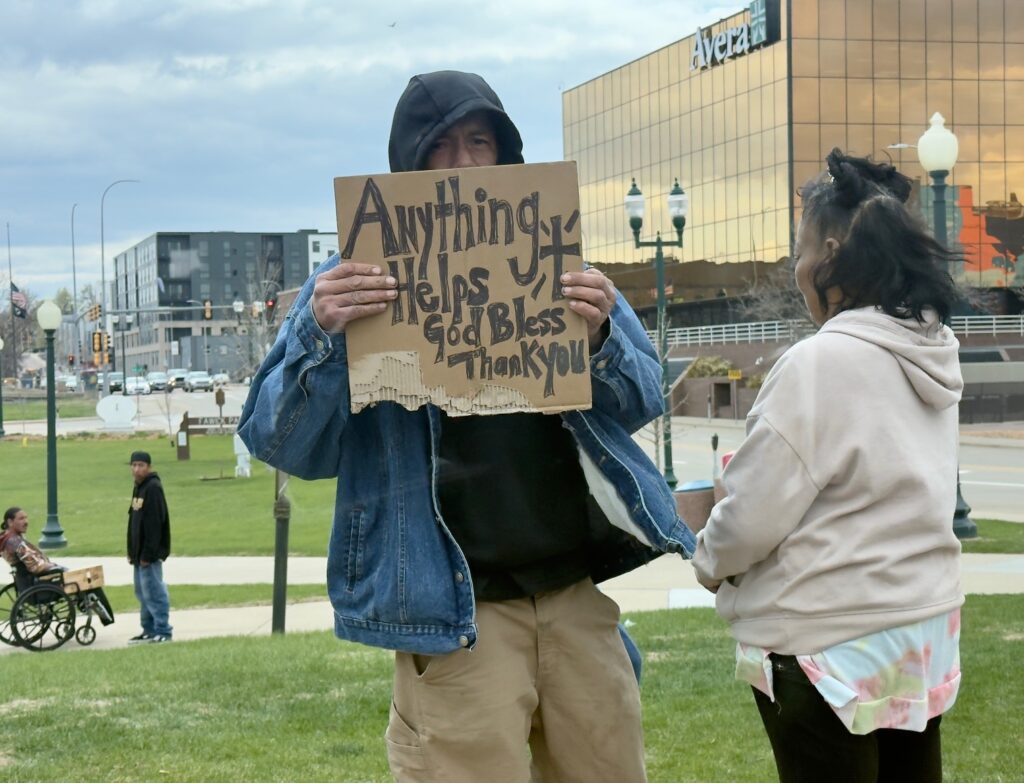
The signs are up, and the message is clear: Giving cash to those soliciting it on the street isn’t the best way to help them.
The awareness campaign through the city of Sioux Falls was approved by the City Council last year and is a response to increased issues not only downtown but also throughout the city. As those asking for cash receive it, the money tends to be used to support an addiction.
“We just saw and and walked alongside several individuals that just really struggled with the aftereffects of receiving cash,” said Michelle Treasure, the city’s homeless coordinator. “We want people to get connected to services. We want them to go down that path of recovery, whatever that looks like, so if there is a way to educate the community about what’s happening and pivot them away from handing out cash, that was really where this went.”
The $125,000 campaign is funded through revenue tied to liquor licenses.
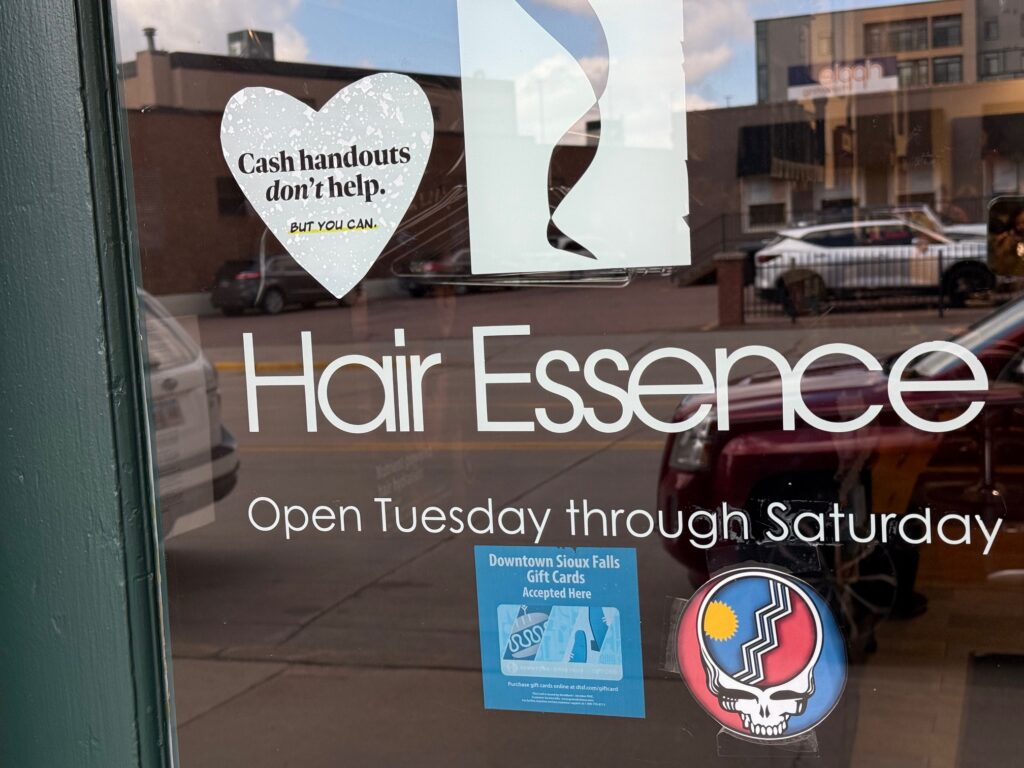
It includes billboards, street signs, bus wraps, window clings and social media posts, including video.

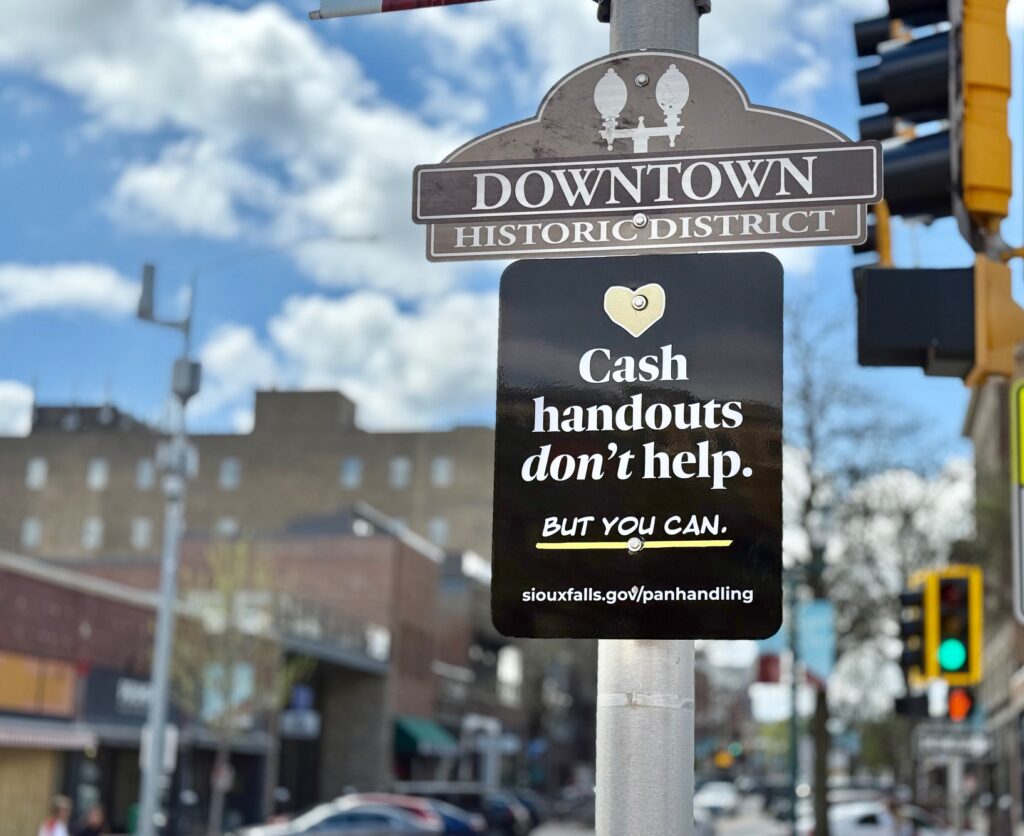
The message: Cash handouts don’t help. But you can.
A webpage, siouxfalls.gov/panhandling, leads visitors to information about homelessness in Sioux Falls and why giving cash to panhandlers can do more harm than good.
“While well-intended, passing out cash directly to individuals often leads to increases in disruptive, illegal behavior that law enforcement or emergency medical services are called to respond to,” the site reads.
“The most impactful way to help those experiencing homelessness is through volunteering or donating to already-established organizations. Sioux Falls has local organizations that provide comprehensive services to people experiencing homelessness, including meals, shelter and long-term support.”
A video features Police Chief Jon Thum, who said “we see it time and time again” that cash handed out goes directly toward contributing to addiction.
“This happens more often than we’d like to think, and I know we would never dream of handing someone who is struggling with addiction a syringe or a can of alcohol, but in many ways, that’s what we’re doing,” he said. “What we need to do as a community is take that sense of compassion and care and push it toward something that maybe makes a real change.”
The site suggests ways people can make a positive impact for those who lack permanent housing:
- Volunteer: Donate time and skills to local organizations across Sioux Falls.
- Mentor: Offer one-on-one support to individuals in our community through the Sioux 52 mentoring initiative.
- Give: Contribute financially or in-kind to support programs that offer comprehensive services.
The webpage also has links to city and county resources and a “who to call” directory for a wide range of issues, including public nuisances and safety concerns.
Treasure, along with representatives of Downtown Sioux Falls Inc. and South Dakota Urban Indian Health went door to door last week and shared the campaign with downtown businesses.
“The large majority of people were so excited about this,” Treasure said. “People are very excited about getting involved and finding different ways as downtown business owners to get creative and find solutions.”
DTSF supports the campaign because “it’s rooted in compassion and long-term solutions,” CEO Brandon Hanson said.
“While giving cash may feel like the right thing at the moment, we’ve seen firsthand through our ambassador program that it can unintentionally deepen the very challenges people are facing, especially when alcohol is involved. By directing support toward our incredible network of downtown service providers, we’re connecting people with food, shelter, recovery and mentorship — the things that lead to real transformation.”
The messaging is designed to show compassion for those soliciting money and focus on how to most effectively help them, Treasure said. While the effort is concentrated downtown, the billboards, bus wraps and signage at 14 locations also will reach people outside downtown.
“A lot of the loitering is because they haven’t made enough money for the day, and then they disperse,” she said, adding that it’s particularly timely now that people support the many nonprofits that exist in Sioux Falls to help with the same basic needs people claim are driving panhandling.
“It’s crucial people rethink how they get involved,” she said. “They (these organizations) are doing the work, and they’re doing it well, and they’re providing a sense of community rather than the exchange of a $10 bill.”
Hanson agrees.
“We’ve spent time with the service providers doing the work on the ground — and the scope, care and intentionality they bring is incredible,” he said. “Supporting these efforts, rather than handing out cash, gives people the best chance at a better life. DTSF’s ambassadors witness the unintended consequences of cash every day, from more hazardous interactions to increased trash and disorder. We encourage our community to give in ways that uplift both the individual and the district as a whole.”
Share This Story
Most Recent
Videos



Looking amazing @dtsiouxfalls and @washpav! Thanks to @jpickthorn for capturing an incredible night.
Nov 26

Enjoy this glow headed into Halloween week! 📸: @jpickthorn
Oct 31
Hope you had a wonderful summer weekend and are recharged for the week ahead! 📸: @jpickthorn
Jun 27
Beautiful way to start a week! 📸: @jpickthorn
Jan 10
Favorite flyover of the year! Merry Christmas from our entire @pigeon605news flock. 🎄🐦 📸: @actsofnaturephotography
Dec 24
They definitely deserve to be treated like holiday royalty and they were! ❤️ these scenes from tonight’s lighting celebration at @sanfordhealth Children’s Hospital. 🎄
Dec 1
The holidays are here! Perfect night @dtsiouxfalls
Nov 27
Happy Halloween from @avera_health NICU babies! Link in bio to see more! 🎃
Oct 31
Did you know @dtsiouxfalls is filled with 👻 stories? Link in bio … if you dare 😱
Oct 8
When it comes to kids parties nobody wants to be cookie-cutter. Link in bio for the story on what’s trending.
Sep 28
Want to stay connected to where you live with more stories like this?
Adopt a free virtual “pigeon” to deliver news that will matter to you.





Are you a little bird with something to share?
Delivering news that matters to you
Years ago, homing pigeons were used to bring us news we needed. Today, your virtual “pigeon” will deliver what you want to know about the place you call home.
All pigeons are free to good homes!
Our Partners