

Meet the advocate supervisors working day and night to represent kids in crisis
This piece is sponsored by Sioux Falls CASA.
Children going through abuse and neglect cases are best served when a volunteer walks alongside them to serve as the “eyes and ears of the court” that will determine their futures.
And those volunteers are best served because advocate supervisors are by their side, employed by Sioux Falls CASA, or court-appointed special advocates, to provide support.
“This is a volunteer journey unlike any other,” said Stacey Tieszen, CEO of Sioux Falls CASA. “It is time-intensive and can create lasting impact on emotional well-being.”
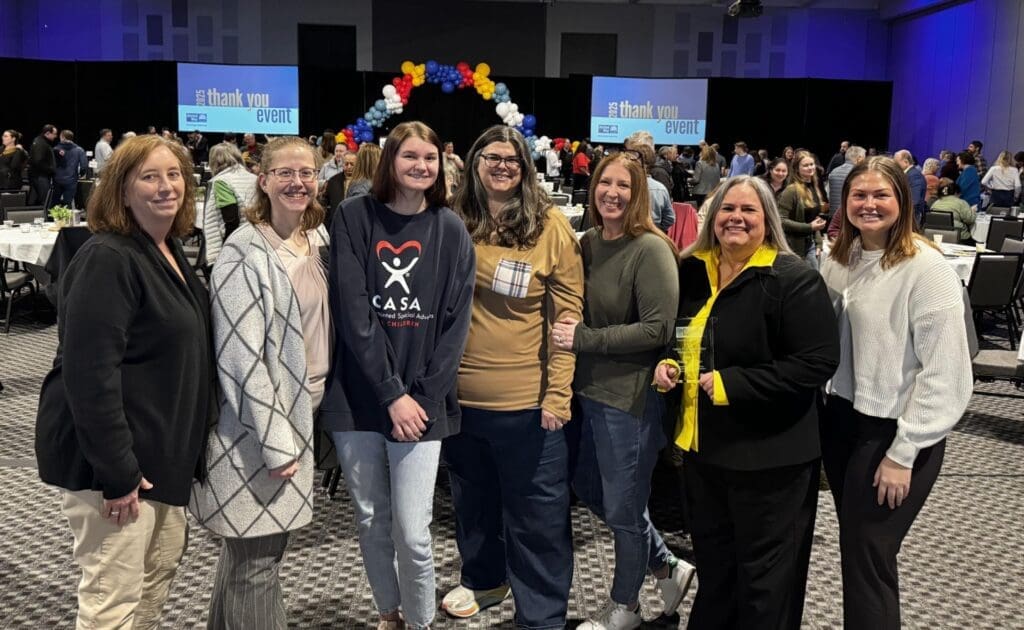
But CASA volunteers don’t serve alone.
“Our advocate supervisors are there to ensure effective advocacy, which leads to the children’s stories being heard,” Tieszen said.
Advocate supervisors are there to guide, encourage and edit the reports for the volunteers, letting them know the information that needs to be gleaned for the next court date.
Like the volunteers and the kids themselves, each Sioux Falls CASA advocate supervisor brings a unique background and perspective to the role.
Mandi Benitez
A Sioux Falls native, Mandi Benitez left the state for college at University of Minnesota, Morris where she earned a bachelor’s degree in liberal arts and human services. She returned to Sioux Falls to start her family, working at LifeScape with children and young adults with developmental disabilities from 2009 until 2020.
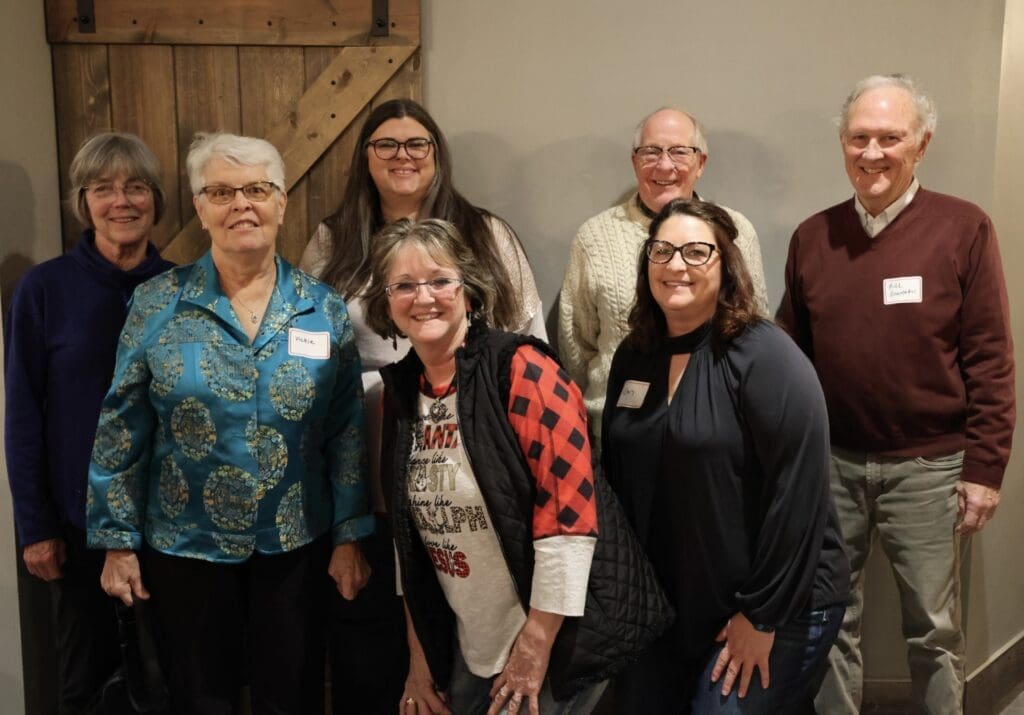
Mandi Benitez (back row second from left) with volunteers
“In 2020, I saw that CASA was hiring. I remember talking to a representative from CASA at a Take Back the Night event in 2016 or 2017, and when I saw they were hiring in 2020, I was ready to make a transition from helping the population I was working with to helping a different population,” Benitez said.
“It also seemed like more of an impactful way to serve our community. So in July 2020, in the middle of the COVID pandemic, I started at CASA.”
What’s the best part about your job? What keeps you in your role?
The best part and my favorite part of my job are different. The best part of my job is when we can reunite a family and the child or children can safely return home to their parents. Family reunification is always our goal when it is safe and in the best interest of the kids. When that can happen, that’s a great end to a case. My favorite part of my job is hearing the rewarding stories from the volunteers who are working with the kids. When they share a happy/funny/cute story about the kids or a proud moment of the parents on their case, it really shows them in the moment that what they are doing as a CASA volunteer is working. Those moments are rewarding to our volunteers and, in turn, rewarding to me.
What would you like people to know about Sioux Falls CASA or what do you think surprises them when they find out about it?
Sioux Falls as a community is struggling with so many things, whether it be mental health concerns, substance use issues, housing or food instability. The abuse and neglect that happens in our community does not get mentioned on the news every day. You only hear about the egregious cases of physical abuse. When I started at CASA, I was amazed at the amount of abuse and neglect that was occurring that no one was talking about. I think people are surprised to hear the extent of which abuse and neglect occurs in Sioux Falls.
What would your message be to anyone considering becoming a volunteer advocate? How are you ready to help ensure they have a successful experience?
Becoming a CASA volunteer is not for everyone. It does not always give the warm, fuzzy, happy feelings that some volunteer opportunities give you. This is hard work. This is diving into the deep end of a family’s life when they are at the worst, most vulnerable time of their lives and offering them a lifeline in the form of a supportive, consistent, listening ear. It is a big commitment to show up to see the kids on your case at least twice a month, every month, because they come to depend on you being a consistent person in their life when they may not have had a lot of dependable people before. It is making tough recommendations to the judge, who then ultimately makes life-altering decisions for that child. But it is also seeing that child light up and wave when you show up to their band concert or name their new doll after you because you are their favorite person. It is having a teenager talk to you for over an hour about their hopes and dreams and seeing that, even after everything they have gone through, they still have happiness and a light in them. Even though it is hard, there is so much good in being a CASA volunteer as well. As an advocate supervisor, we are there to guide you through everything, especially the hard parts.
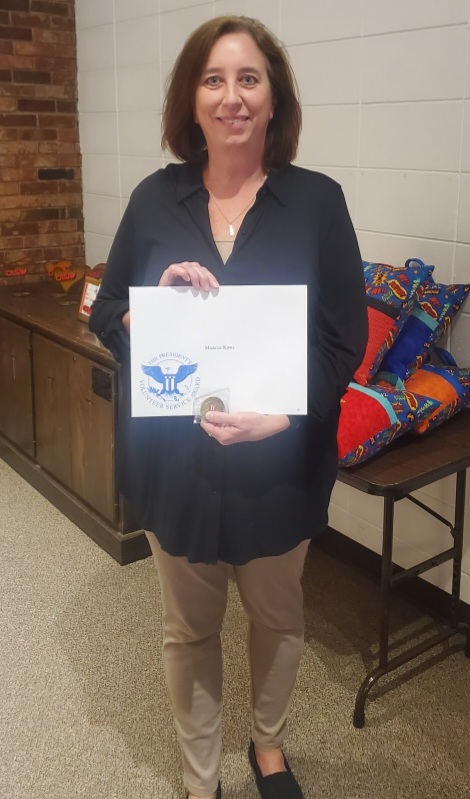
Marcia King
A Sioux Falls native, Marcia King attended the University of South Dakota in Vermillion before returning home to build a 28-year career with Wells Fargo. Her connection to Sioux Falls CASA began about 15 years ago after attending a Sioux Empire United Way rally, where she was introduced to the organization’s mission and later became a volunteer advocate.
“Inspired by the impact of their work, I applied to become an advocate and have remained involved in that role ever since,” King said.
In 2024, after being displaced from her bank role, she joined CASA as an advocate supervisor.
What’s the best part about your job? What keeps you in your role?
I love working with our advocates and supporting them as they navigate their cases. I enjoy learning alongside them. Most importantly, it’s incredibly rewarding to help ensure that children have a voice in decisions that shape their future.
What would you like people to know about Sioux Falls CASA, or what do you think surprises them when they find out about it?
I think many people are surprised to learn there is a need for CASA in Sioux Falls. There are dedicated foster parents and the Department of Social Services, both of which do wonderful. CASA serves as an independent voice, collaborating with them as well as parents, teachers, counselors, coaches, basically anyone involved in a child’s life. Our role is to gather information and provide an objective, well-informed report to the judge to support decisions regarding reunification or, when necessary, termination of parental rights.
What would your message be to anyone considering becoming a volunteer advocate? How are you ready to help ensure they have a successful experience?
I would encourage them to complete an application and come in for an interview, using that opportunity to ask any questions they may have. Our training program provides a strong foundation to begin working on a case, and each advocate is paired with an advocate supervisor who offers ongoing guidance and support to help them be successful. I would also let them know that advocates are responsible for preparing a report for the judge, but they are not expected to do this alone — we provide clear direction and support throughout that process as well.
Is there anything else you’d like to add?
Unfortunately, the need for advocates continues to be significant. There are often generational cycles involved, and until those cycles are broken, the demand for advocacy will remain. While substance misuse is not a new challenge, it has become increasingly complex and difficult to overcome. At the same time, I believe strongly that every child deserves a safe, stable and supportive home in which to grow and thrive. That belief is what makes this work so important and continues to drive the need for dedicated advocates.
Isabella Niemeyer
Originally from southwest Minnesota, Isabella Niemeyer moved to South Dakota shortly after graduating from the University of Sioux Falls, where she earned a bachelor’s degree in social work with a minor in criminal justice. Before joining Sioux Falls CASA, she interned with the Minnehaha County State’s Attorney’s Office as a victim witness assistant, advocating for victims of domestic violence, sexual assault and abuse. She joined CASA shortly after graduation and is approaching two years with the organization.
“I knew I had an obligation to help the children and families in our community,” Niemeyer said.
What’s the best part about your job? What keeps you in your role?
The best part of my job is being able to see the relationships that our volunteers develop with the children they are advocating for. It is apparent that the children we work with benefit from the connection and bond they build with their CASA. Children thrive off consistency and permanency – a CASA volunteer helps to bridge that gap when a child is involved in the court system by regularly meeting with them and advocating on their behalf. I am kept in this role by our volunteers as they need the guidance and direction from their advocate supervisors to be able to work through a case. I stay in this role because I know how beneficial a CASA volunteer can be for a child and a family. After working at Sioux Falls CASA for nearly two years, I have been able to see successful outcomes for children and families, and our volunteers have been able to develop incredible relationships with the children they advocate for.
What would you like people to know about Sioux Falls CASA, or what do you think surprises them when they find out about it?
Being a CASA volunteer is unlike any volunteer experience. When a CASA volunteer is assigned to case, it may go on for 12 months or longer. We expect our volunteers to commit their time that is needed for their case as it progresses. This may seem daunting to a new volunteer at first, but you will get into a routine, and eventually it will feel like it is part of your normal day-to-day life. Our veteran volunteers continue to pursue this role as they know how impactful it is, and it has essentially become part of their normal routine.
What would your message be to anyone considering becoming a volunteer advocate? How are you ready to help ensure they have a successful experience?
Just do it. Don’t wait. I think many individuals contemplate becoming a CASA volunteer for a long time before they decide to just do it. We need volunteers as there are many children involved in the court system that need advocacy. They deserve to have a voice. We, as advocate supervisors, will be there every step of the way to guide you throughout your case. You will never feel like you are navigating a case on your own. We are always here to answer questions and provide your next steps as a volunteer. In addition to our guidance, new volunteers must participate in 30 hours of new volunteer training before they are assigned to their first case. We try our best to train new volunteers accordingly and address any questions they may have throughout this training.
Mandi Roskam
Mandi Roskam’s connection to Sioux Falls CASA began through her own experience as a foster parent when a CASA volunteer was assigned to a child placed in her home. With a background in social work, she was encouraged to apply for a position and joined the organization nearly nine years ago. What began as a part-time role grew into a full-time career, and she now serves as director of advocacy.
“Having seen firsthand the impact a CASA volunteer can have on a child, this work is deeply personal to me and continues to drive my passion every day,” Roskam said.
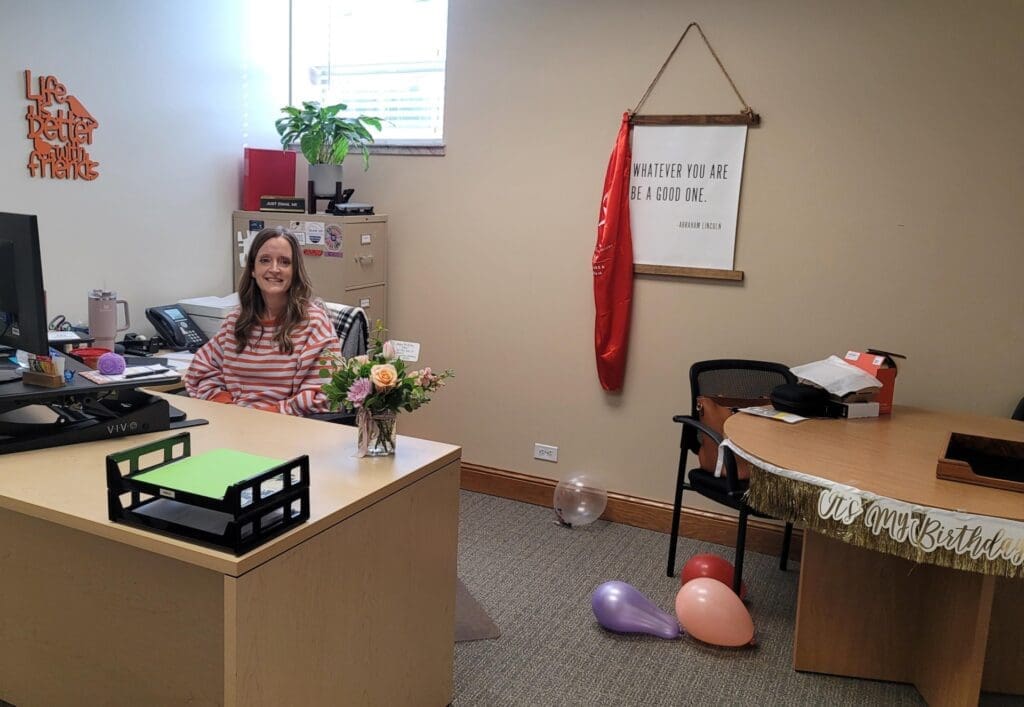
What’s the best part about your job?
The best part of my job is building relationships with our volunteers. Many of those relationships have grown into lifelong friendships. This role has connected me with people I likely never would have met otherwise, and those connections have been one of the most rewarding parts of the work.
What would you like people to know about Sioux Falls CASA?
I would like people to know that you don’t need experience in any specific field to become a CASA volunteer — you simply need a heart for helping children. The children you advocate for are looking for a consistent, caring adult — someone who shows up and stays. This is more than a volunteer role; it’s an opportunity to change the course of a child’s life.
What would your message be to anyone considering becoming a volunteer advocate?
If you’re considering becoming a volunteer advocate and something is holding you back, please know you’re not alone. Many CASA volunteers begin with a sense of apprehension, but that quickly fades once they meet the child they’re advocating for. You don’t need to have all the answers — you just need a willingness to show up and make a difference in a child’s life.
Christy Vander Woude
A Sioux Falls native, Christy Vander Woude completed high school and part of her college education at South Dakota State University before earning her bachelor’s degree in social work from the University of South Dakota and her master’s degree from the University of Iowa. She has worked in adoption and grief programming and joined Sioux Falls CASA five years ago, drawn by her passion for working with children and families.
“I was told by numerous people I should apply at CASA as it would be a good fit. Five years later, it still is,” Vander Woude said.
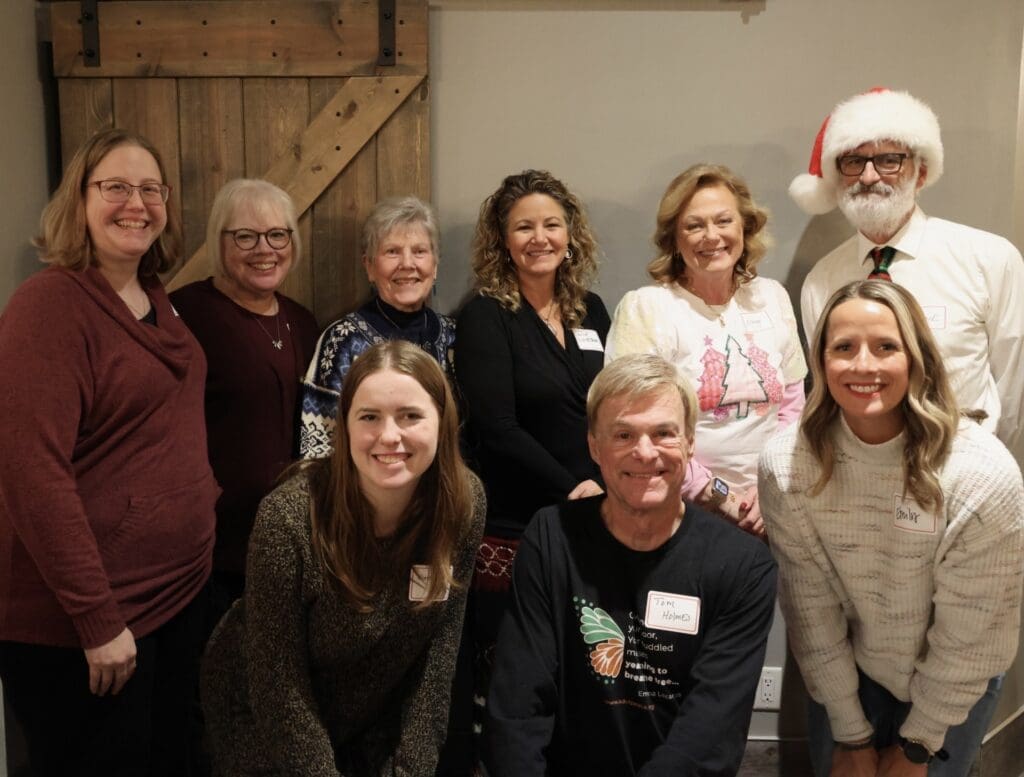
Christy Vander Woude, back row left, with volunteers
What’s the best part about your job? What keeps you in your role?
My co-workers and our volunteers are what make this work possible. Without our volunteers, we wouldn’t be able to do what we do. With the support and encouragement of my co-workers in all aspects, I’m able to come to work each day and do what I need to for our volunteers. I’m thankful to work for an agency that values everyone and everything involved.
What would you like people to know about Sioux Falls CASA, or what do you think surprises them when they find out about it?
Our volunteers tell the child’s story to the judge — what is happening in their life, how they are coping with everything they have been through and what the parents are or are not accomplishing. They share this information through written reports. Don’t let the report intimidate you. You will write multiple reports throughout the life of a case, but your advocate supervisor will be there to guide you along the way.
What would your message be to anyone considering becoming a volunteer advocate? How are you ready to help ensure they have a successful experience?
Don’t be afraid to take the first step and learn more about CASA. Ask questions, and attend a training. Not everyone is meant to be a CASA volunteer — and that’s OK. But if you decide this is the right path for you, know how important your work will be. As an advocate supervisor, my door is always open, and my phone is always on. We guide each of our volunteers through their cases and monitor what occurs.
Taryn Ziebart
Taryn Ziebart, who grew up in Woonsocket, discovered CASA while studying psychology and criminology at South Dakota State University. After learning about the program through an advisor, she kept an eye on the Sioux Falls organization and joined the team in 2024.
“I was in awe of the work CASA does, so I kept an eye on the Sioux Falls program and was lucky enough to be hired,” Ziebart said.
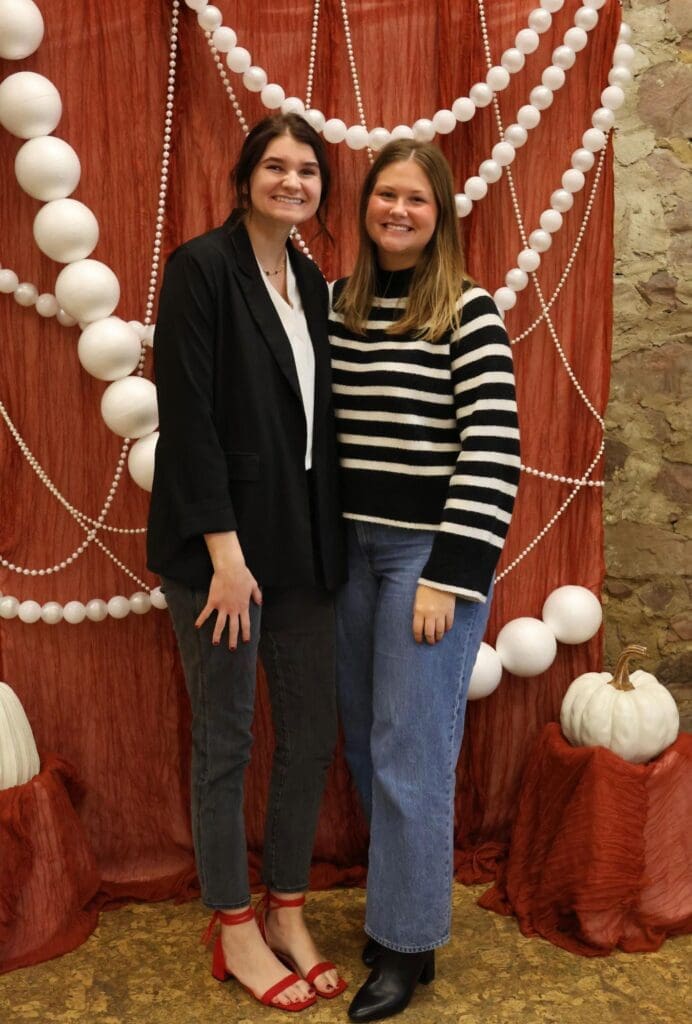
Taryn Ziebart, right
What’s the best part about your job? What keeps you in your role?
It may be the obvious answer/choice, but I truly love working with my volunteers! They are all so amazing and have wonderful hearts for these kids. Some are juggling multiple roles in their lives, yet they still find time to volunteer their efforts to these kids and families. They truly amaze me! The ladies that I work alongside every day make this job easy. Everyone in our office is so caring, helpful and understanding. You never feel that you are doing this job alone. It’s easy to come to work when you have great co-workers who care about who you are outside of this job.
What would you like people to know about Sioux Falls CASA, or what do you think surprises them when they find out about it?
I think hearing the number of kids that need a CASA would be surprising to people. Currently, we have 133 kids in the Sioux Falls area that are waiting for a CASA volunteer. Our hope is that every kid can have a CASA.
What would your message be to anyone considering becoming a volunteer advocate? How are you ready to help ensure they have a successful experience?
Jump into it! There is no better time than right now. It might be hard on your heart, but the journey is worth it if it helps just one kid. CASA advocate supervisors are with their volunteers every step of the way while working their case. Communication is open 24/7, and volunteers are never doing this alone! We check in, ask questions, give direction and assist wherever and whenever needed.
Why advocate supervisors matter
Advocate supervisors play a critical role behind the scenes, supporting the volunteer advocates assigned to them, whether or not they are active on a case.
“Advocate supervisors need to be kind, supportive and accessible,” Tieszen said. “People are working their cases when they have time, which may be at night or on weekends.”
They help guide volunteers through complex and often unfamiliar systems — from understanding court terminology to preparing reports that ultimately will help inform a judge’s decision.
“Words like adjudication, disposition, status hearing — without support, it can be overwhelming,” she said. “Our advocate supervisors provide clarity and reassurance.”
That support extends far beyond logistics.
Building strong relationships with volunteers is essential to helping them stay engaged in the work and connected to the mission.
“We want them to know they matter,” Tieszen said. “Without their advocacy, CASA doesn’t exist.”
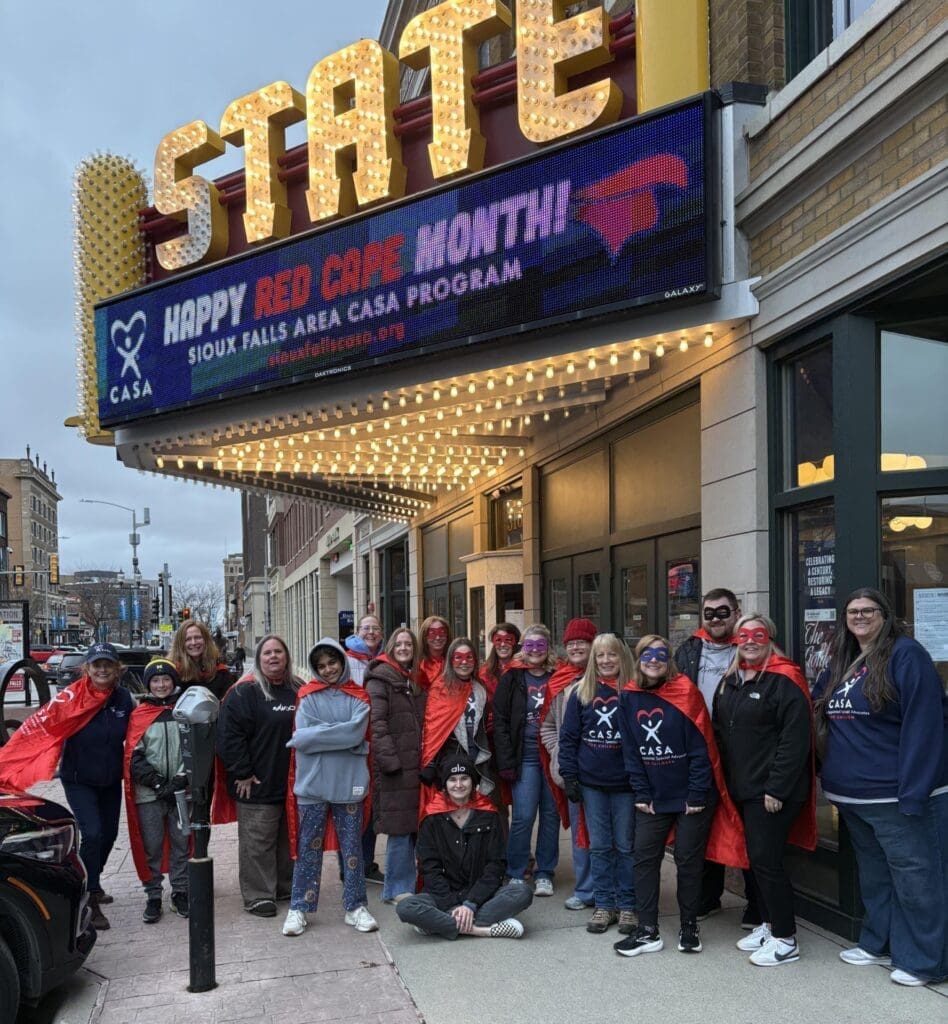
The role also requires a unique balance of strengths.
“A sense of humor is necessary,” she said. “Being able to adapt quickly, take things one day at a time but also plan months ahead is crucial.”
At the same time, advocate supervisors must be both emotionally resilient and empathetic, navigating cases that often involve trauma, instability and difficult outcomes.
“Termination of parental rights is the hardest conclusion to any case, and it is never taken lightly,” Tieszen said.
The team works closely together, reviewing cases, editing reports and supporting one another through the demands of the work. Self-care and teamwork are essential.
“They need time to breathe and reset,” she said. “The work is intense, but it’s also incredibly important.”
Ultimately, advocate supervisors are what help make the volunteer experience sustainable and successful.
“If we can support a volunteer through their first case, they gain confidence and continue,” Tieszen said. “And that consistency is what makes all the difference for the children we serve.”
Are you considering ways to make a difference for the children served by Sioux Falls CASA? Start online here, or email [email protected] for information.
Share This Story
Most Recent
Videos



Looking amazing @dtsiouxfalls and @washpav! Thanks to @jpickthorn for capturing an incredible night.
Nov 26

Enjoy this glow headed into Halloween week! 📸: @jpickthorn
Oct 31
Hope you had a wonderful summer weekend and are recharged for the week ahead! 📸: @jpickthorn
Jun 27
Beautiful way to start a week! 📸: @jpickthorn
Jan 10
Favorite flyover of the year! Merry Christmas from our entire @pigeon605news flock. 🎄🐦 📸: @actsofnaturephotography
Dec 24
They definitely deserve to be treated like holiday royalty and they were! ❤️ these scenes from tonight’s lighting celebration at @sanfordhealth Children’s Hospital. 🎄
Dec 1
The holidays are here! Perfect night @dtsiouxfalls
Nov 27
Happy Halloween from @avera_health NICU babies! Link in bio to see more! 🎃
Oct 31
Did you know @dtsiouxfalls is filled with 👻 stories? Link in bio … if you dare 😱
Oct 8
When it comes to kids parties nobody wants to be cookie-cutter. Link in bio for the story on what’s trending.
Sep 28
Want to stay connected to where you live with more stories like this?
Adopt a free virtual “pigeon” to deliver news that will matter to you.




Are you a little bird with something to share?

Delivering news that matters to you
Years ago, homing pigeons were used to bring us news we needed. Today, your virtual “pigeon” will deliver what you want to know about the place you call home.
All pigeons are free to good homes!
Our Partners