
Lifesavers: Meet the men and women behind Metro Communications
By Steve Young, for Pigeon605
Imagine sitting at your work desk, reaching for a ringing phone again and again, and hearing this on the other end of the line:
- A woman terrified by an intruder’s late-night footsteps outside her bedroom.
- A young mother-to-be screaming hysterically as she’s about to deliver her baby alone at home.
- Or the last gasp of one who would not be talked out of suicide.
“I’ve heard most of them,” said Aimee Chase, the Metro Communications administrator here in Sioux Falls as of early this year. “One that stands out in particular for me that I didn’t even take … still haunts me. A 10-year-old child had called in on his grandpa, who was unconscious and not breathing. And you just hear the child pleading, ‘Grandpa, please don’t leave me.’”
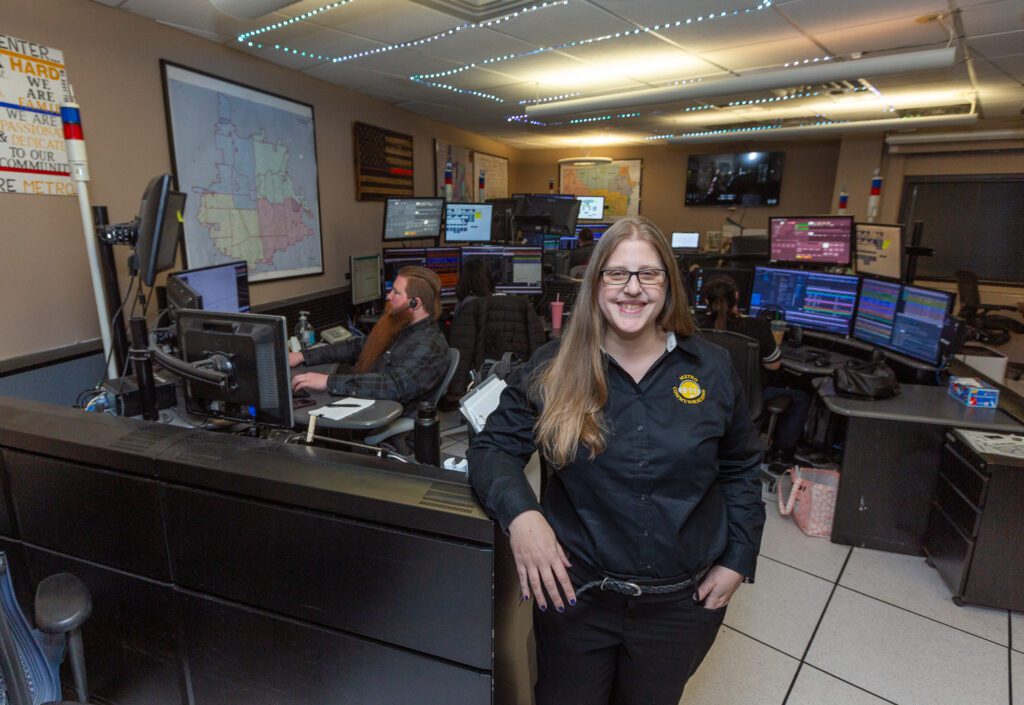
Phone calls fraught with panic and chaos obviously won’t go away now that the 911 emergency communications center has moved into the new $55 million Public Safety Campus in northeast Sioux Falls. In fact, any changes in the 911 work environment really lie with what $10 million to $11 million in new Metro Communications office space offers to the staff of four dozen-plus emergency responders.
For starters, the new center has windows ─ a big deal, said Chase, who breaks out in an angelic refrain.
The old center, next to the County Administration Building downtown, has been windowless throughout its 43-year existence. “It has served us well, but it’s dark. It’s dreary,” Chase said. “And with no windows, if you don’t know if it’s sunlight or darkness outside, that can take a toll.”
The fact is 911 work by its nature takes a toll. Various studies have ranked it among the top 10 most stressful occupations in the country. Sioux Falls emergency dispatchers answer 400,000 calls a year ─ 200,000 of which are requesting services from the Sioux Falls Police Department, Sioux Falls Fire Rescue, the Minnehaha County Sheriff’s Department, the Brandon Police Department, five ambulance companies or 17 other area fire departments. Against a backdrop of demanding workloads, staff shortages and ─ at the most personal level, the shared experiences of dealing with callers’ trauma ─ emotional numbness, anger and PTSD are all potential tolls of the job.
Here locally, those realities have contributed to a cumulative retention rate for 911 employees of 24 percent since 2004. Chase and others at Metro Communications are convinced that the new state-of-the-art center with many more amenities can begin reversing that trend.
The windows, Chase insists again, will help. There will be a much more modern break room, too, one with an actual stove and sink. And there is considerably more space now ─ the entirety of the old dispatch center would physically fit in just one of the multiple pods at the new site. Instead of sitting 2 to 3 feet apart as they answer the phones, staff members will find twice the distance between each other. There are new and better spaces to use to decompress after difficult phone calls as well.
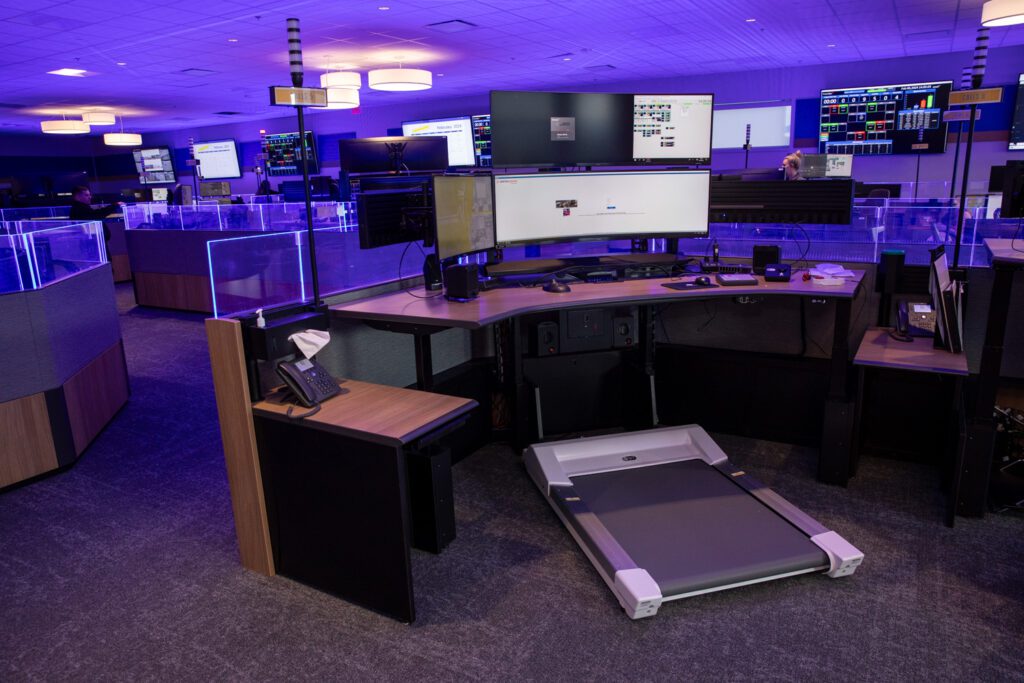
“It’s been said it will be like transitioning from the Flintstones to the Jetsons for us,” Chase said. “That’s truly the best comparison I’ve heard.”
The 911 employees will be operating under a new administrative structure as well. Metro Communications, which will continue to be funded by the city of Sioux Falls and Minnehaha County, has been an independent agency since 2007. Now, it will operate beneath the umbrella of the city – specifically, under Sioux Falls Fire Rescue.
Under that new structure and the city, the 911 dispatch center will see a refreshed support system for operational needs such as legal or accounting assistance and human resource needs. All of which means the possibility of enticing those called to the 911 mission ─ people skilled in listening, empathy, calm reasoning and unflustered resolve ─ to stay longer, Chase and others believe.
People like these four at Metro Communications today.
***
Chase began her 911 career at age 19 and has done it all in her 23-year career: answering calls; dispatching police, fire and emergency services; supervising; and administrating.
Amazingly enough, she actually took the call on the day her mother dialed 911’s nonemergency line to report that Chase’s father was having a heart attack. She couldn’t be the daughter at that moment; she had to remain calm throughout while simultaneously dispatching fire department and emergency medical services to her parents’ home.
“It was ‘Let’s take the call. Let’s fall back on our training. Let’s process it,’” she recalls. “Then, I hung up the phone, and that’s where it’s like, your breath whooshes out and you think: ‘Holy smokes. This is my dad.’”
Fortunately, she knew how that story ended, that her father survived. That’s often not the case with 911 calls. Chase said her job is like reading a suspense novel, only to find the last chapter ripped out of the book. The reality is when responders arrive and the phone call ends, dispatchers seldom learn the outcome.
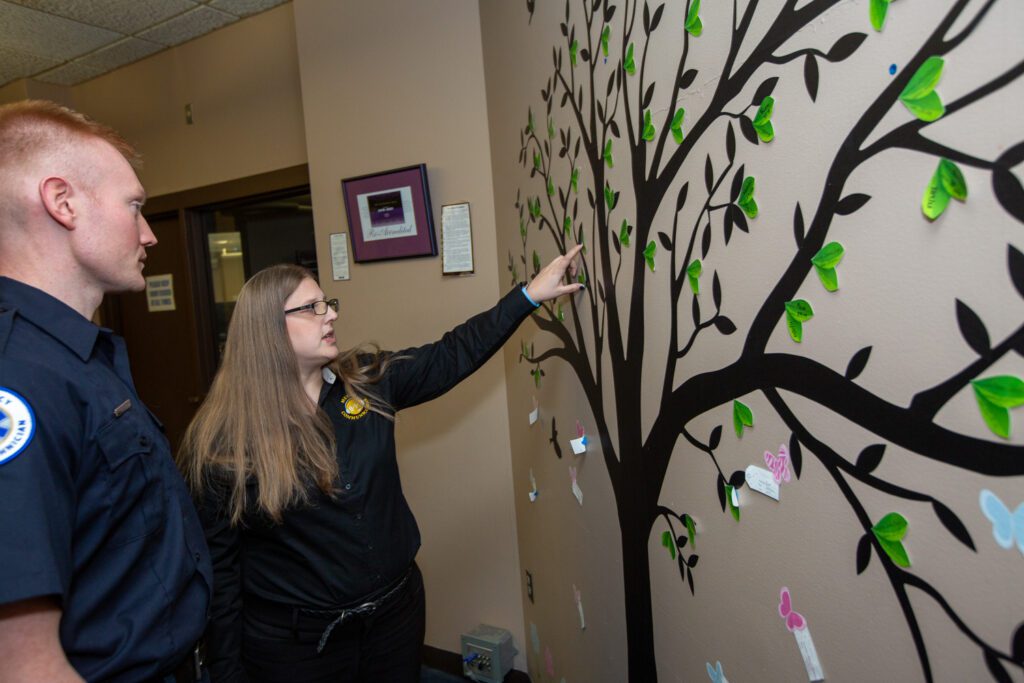
“If the phone’s ringing, we answer it, and it can be back-to-back-to-back,” she said. “I could pick up the phone, and it could be somebody whose child is unconscious and not breathing. I process that call, but the phones are still ringing, so you move on to the next one. So we might not know, did that first person on the other end of the line … make it? What happened after we disconnected? Not knowing takes a toll.”
Knowing, of course, can take a toll as well. Chase was fairly new on the job when she took a phone call from a day care provider. Two children were unconscious and not breathing. She walked the caller through performing CPR on both children, only to find out later that the deaths were homicides.
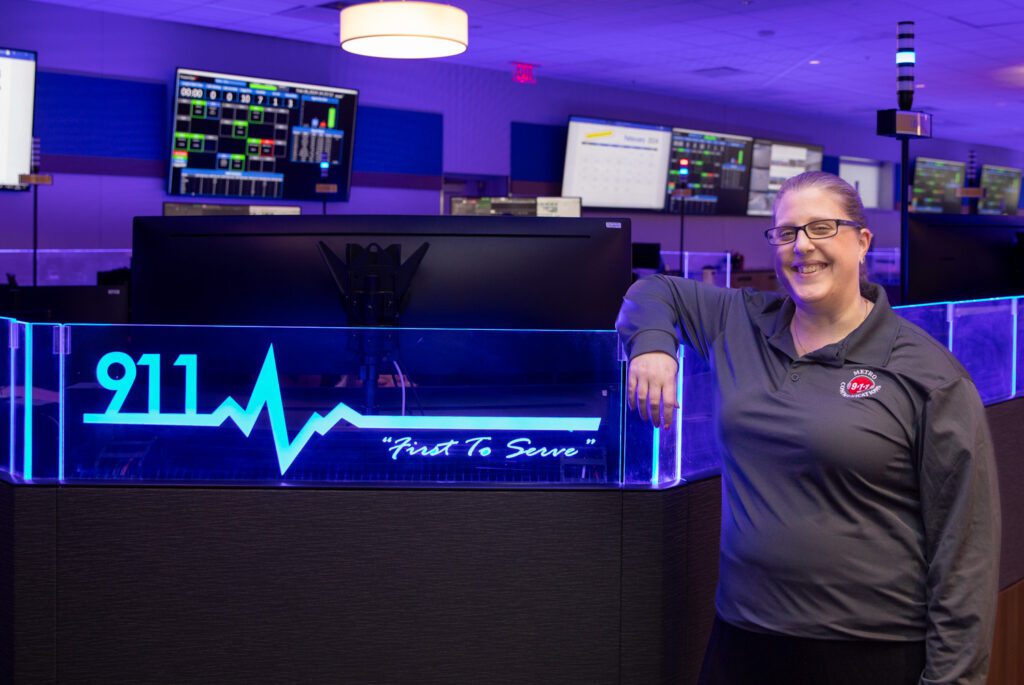
The thing is, it’s not easy to simply move on from those horrific situations, Chase said. Take, for example, the people intent on suicide who call 911 and end their lives while on the phone. Oftentimes, they do so believing that emergency responders will find their bodies so their loved ones won’t, she said. In those situations, staff don’t simply move on to the next call. They may need a quiet space to gather themselves; something the new facility has with aids to help them decompress. And if they need something more, they’ll have access to one-on-one peer support and, if need be, to large debriefings that connect call takers and dispatchers with responders.
“These days,” Chase said, “we’re very focused on the idea that it’s OK not to be OK. It hasn’t always been that way, but as a profession, as public safety professionals, we’re getting better with that.”
***
The girl was hysterical and, as 911 emergency communications operator Ryan Shumate recalls, “totally freaking out.” Her unconscious mother was dead or so the girl thought. Inconsolable, she could not hear what Shumate was trying to tell her.
Five years of working 911 communications in Berkeley County, West Virginia ─ and now doing the same job at Metro Communications in Sioux Falls since last September after having moved back to his home state ─ had shown Shumate how to deal with the screamers, the agitators and the frantic callers.
Sometimes simply allowing a person to vent for a few moments calms the situation, he said. Other times, it takes what he calls repetitive persistence. With the hysterical girl, that meant telling her she needed to get her mother on her back, to clear the space under her head and to begin CPR until the medics arrived ─ and repeating that over and over to her until she heard him.
“You just keep repeating it in a calm tone,” Shumate said. “It’s been shown that after a while, the caller starts to perk up and listens and follows your instructions.”
He admits it took him awhile to perfect that art. Early on in his career, colleagues called him “Tapping” because it wasn’t unusual for him back then to tap his computer mouse on his desktop if the call was chaotic.
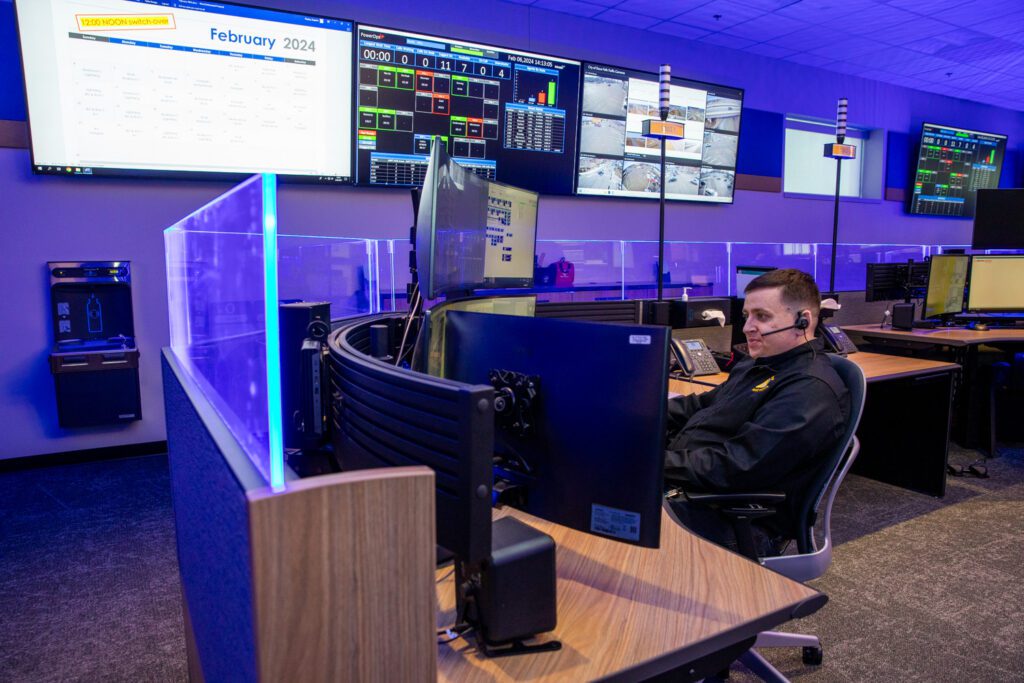
Now, he said he embraces the daily diversity and challenges of the work, from the early morning calls for burglaries, or people breaking into vehicles or businesses, to the afternoon run of accidents, especially during bad weather. He said he’s become more adept at dealing with such crises as domestic cases, where a frightened victim calls in, quickly blurts out the information they can, then hangs up.
In situations like that, he may simply dispatch police services and not call back, depending on what’s going on in the background of the call. Or he may dial the number, act like a friend or co-worker just checking in, and start on a series of yes-no questions. “It may be, ‘Are you being attacked by your boyfriend or your girlfriend? Is there a pistol involved?’” he said. “And they’ll say, ‘yes,’ or ‘no,’ and you get the information that way.”
Shumate admits that calls about children being abused, or animals for that matter, get to him. But co-workers, friends, family members ─ even his dog, Leo ─ provide him the support he needs to talk through and deal with the challenges of a job he loves.
“It’s the mystery of the job that I love,” he said. “You never really know what’s going to be on the other end of the line. That’s what makes it so interesting.”
***
Last summer, just months into his career as a Sioux Falls firefighter, Conrad Dahl tore up his knee outside of work. The surgery that followed meant he wasn’t going to be rushing to structure fires, rollover accidents and people suffering heart attacks any time soon. But thanks to a program called Partnership Agency Training, he wasn’t automatically out of the lifesaving game, either.
For the next five to six months, he has transferred from Sioux Falls Fire Rescue to Metro Communications, where instead of responding to fire calls, he’ll be dispatching his firefighting colleagues to those emergencies.
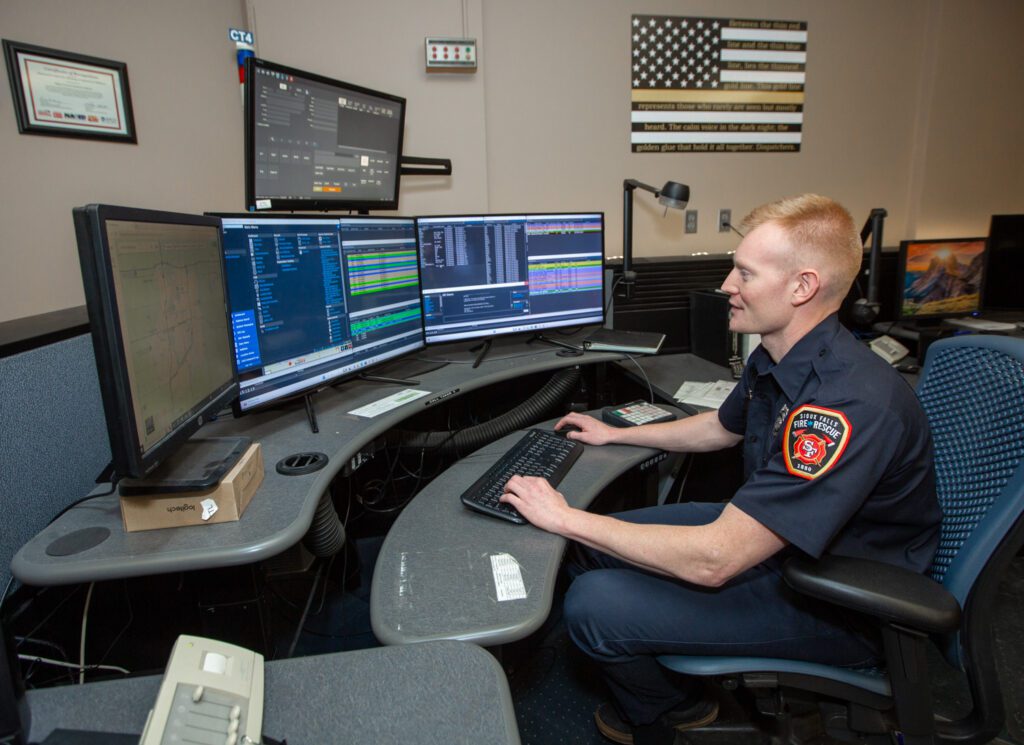
“I really am getting an education from the other side,” Dahl, 28, said. “And I’ll tell you, I have such a tremendous respect for every single person who works at Metro Communications. The calls they take and the challenges they face, it is extremely fast-paced. And they’re problem- solvers.”
Challenges? He has answered 911 calls to people screaming at him. Agitators, he said. People wanting to get under his skin. But for Dahl, it’s all about remaining calm.
“Getting worked up or yelling back isn’t going to make the situation any better,” he said. “I’ve never done that. Maybe it’s because I’m new, and I just like to treat everyone the way I want to be treated. I don’t get real fired up, I guess.”

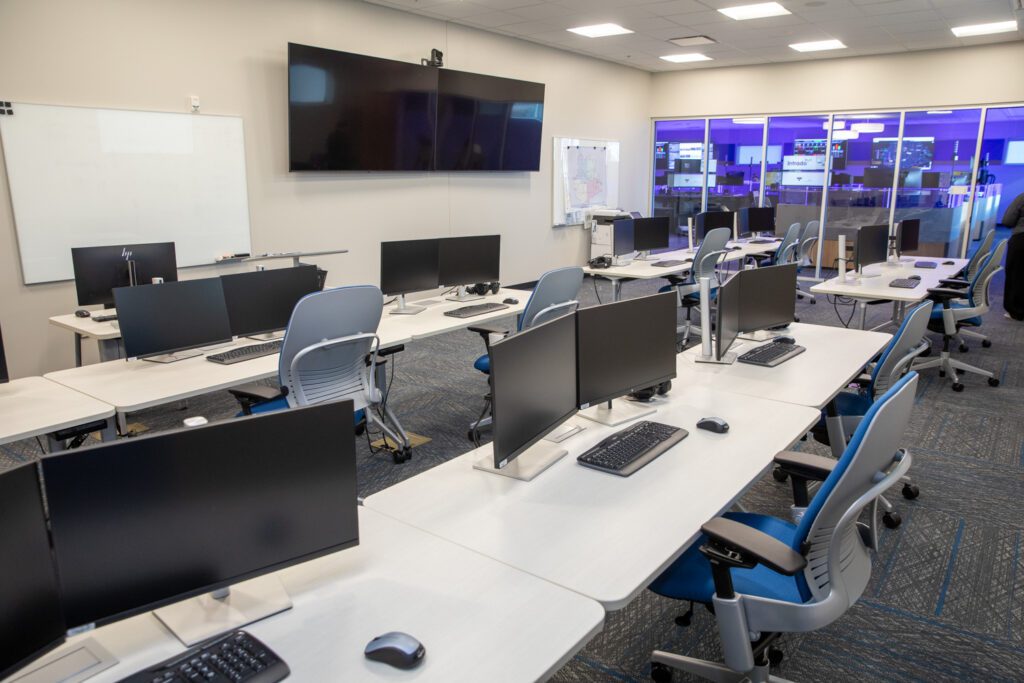
Even so, despite their calm and cool-headed approach, Dahl and his colleagues know that mistakes do and will get made. There’s a sign on a training room door at Metro that reads, “Fail often to succeed sooner.” While Dahl understands that mistakes can be a valuable learning tool, “you don’t want to make mistakes often or frequently because, obviously, that’s putting somebody else at risk.” That said, “I take a lot from my learning on the fire side,” he continues. “The way we train as firefighters is not to do it right one time, but train until you can’t do it wrong. I try to bring that mentality here.”
He’ll do so until this coming summer, when he plans to return to his firefighting duties. In the meantime, Dahl aspires to be a 911 operator and dispatcher who can handle any situation.
“Do I hope I ever have that call where it’s someone thinking about suicide or a child beside an unconscious parent? No,” he said. “Now, if I do have to take one of those calls, I’d like to see that I’m up to the challenge to handle it. I would like to step up and try to be a problem-solver, try to help. That stems from all the people in that (Metro) room. They’re problem-solvers at their best.”
***
It happens at times in 911 work across this country ─ the caller who phones in again and again with a crisis that can’t be substantiated, and the dispatcher who ends up making headlines by deciding to ignore the repeated calls for help.
But not in Sioux Falls, Metro Communications supervisor Ryan Trainer insists.
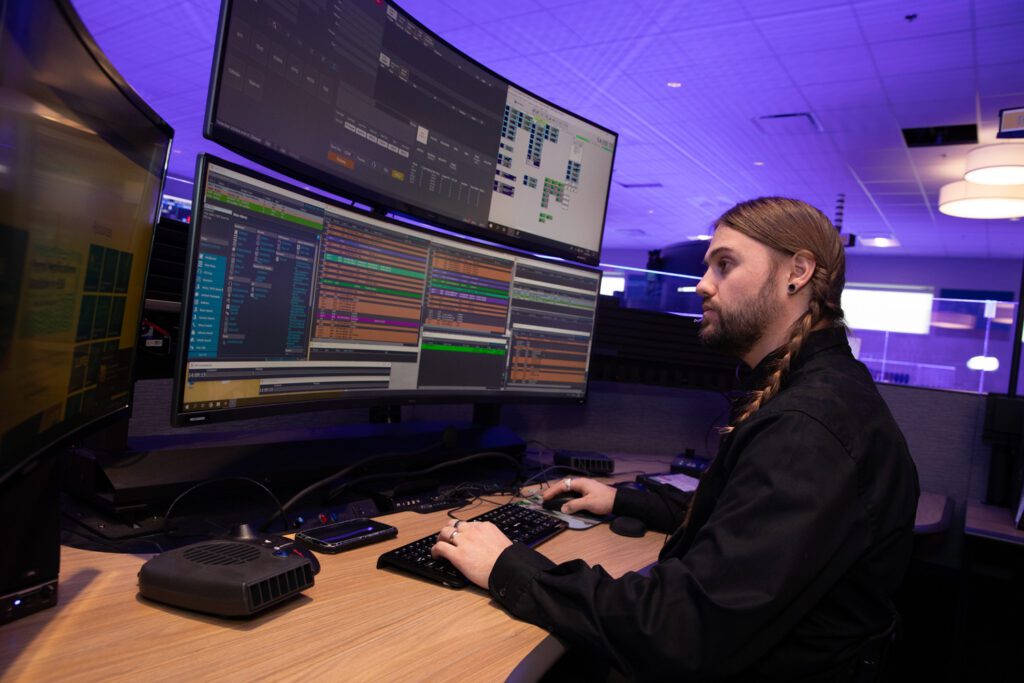
Say a person calls 15 times insisting that they’re hearing something strange in their house. And each time the police respond, no intruders are found. That won’t change how the 911 dispatcher handles the 16th call, Trainer said.
“You could call in 30 to 40 times a day,” he said. “We’re never going to disregard it because you just never know. We always err on the side of caution, obviously, when you’re dealing with people’s lives and safety. We always give the information to whoever’s responding, whether it’s the fire department or police department.”
People often don’t realize when they call 911 that they aren’t talking directly to police or firefighters. That’s a common misconception, Trainer, 31, said. As 911 employees, they answer phones but also work dispatch boards to ensure that police, fire and ambulance services get to the right location. And until those agencies arrive, dispatchers often are problem-solvers themselves.
His training enabled him to help with the home delivery of babies on two separate occasions. And then, there was the 13-year-old girl who called in because her father was in cardiac arrest. For four to five minutes, she performed chest compressions as Trainer talked her through the procedure. When responders arrived, they found her father with a pulse and began treatment, and he lived.

Children can be amazing in those situations, Trainer said. While they don’t always have the mental capacity to fully realize what’s going on, they tend to focus well when an adult is trying to provide them lifesaving instructions. “The girl was incredible,” he said. “She listened to everything I told her and did everything in a very timely manner.”
It’s the kind of outcome that makes him glad he came over to Metro Communications four years ago from his job at the Minnehaha County Jail ─ a move he said opened the door for greater advancement in his career of public service. Now as a supervisor, he spends his days monitoring work on the floor, being a second set of eyes and ears to head off mistakes, checking paperwork — like outstanding warrants, for example — and coordinating responses during major incidents.
Stress? There’s plenty of that, especially during shifts when call volumes are high, he said. There’s nothing worse than a phone not being answered in a timely fashion because of staff shortages or call volume. But like his colleagues, Trainer believes the new communications center is going to bring the promise and reality of better days to local 911 service in Sioux Falls.
That’s good for the child who calls in and has to be walked through CPR, he said. It’s good for the elderly woman who finds her husband unconscious on the floor. A better work environment means people dialing 911 are going to encounter “somebody on the other end of the phone who isn’t burned out,” Trainer said. “Somebody who can approach each and every call with tenderness and empathy, and who has a good mental state of mind to pour our hearts out into each one of those calls.
“When you have that, you have the type of service that the citizens of our community deserve.”
Share This Story
Most Recent
Videos


Looking amazing @dtsiouxfalls and @washpav! Thanks to @jpickthorn for capturing an incredible night.
Nov 26

Enjoy this glow headed into Halloween week! 📸: @jpickthorn
Oct 31
Hope you had a wonderful summer weekend and are recharged for the week ahead! 📸: @jpickthorn
Jun 27
Beautiful way to start a week! 📸: @jpickthorn
Jan 10
Favorite flyover of the year! Merry Christmas from our entire @pigeon605news flock. 🎄🐦 📸: @actsofnaturephotography
Dec 24
They definitely deserve to be treated like holiday royalty and they were! ❤️ these scenes from tonight’s lighting celebration at @sanfordhealth Children’s Hospital. 🎄
Dec 1
The holidays are here! Perfect night @dtsiouxfalls
Nov 27
Happy Halloween from @avera_health NICU babies! Link in bio to see more! 🎃
Oct 31
Did you know @dtsiouxfalls is filled with 👻 stories? Link in bio … if you dare 😱
Oct 8
When it comes to kids parties nobody wants to be cookie-cutter. Link in bio for the story on what’s trending.
Sep 28
Want to stay connected to where you live with more stories like this?
Adopt a free virtual “pigeon” to deliver news that will matter to you.




Are you a little bird with something to share?

Delivering news that matters to you
Years ago, homing pigeons were used to bring us news we needed. Today, your virtual “pigeon” will deliver what you want to know about the place you call home.
All pigeons are free to good homes!
Our Partners