
If your employees drive company vehicles, consider this protection
This piece is sponsored by Holmes Murphy.
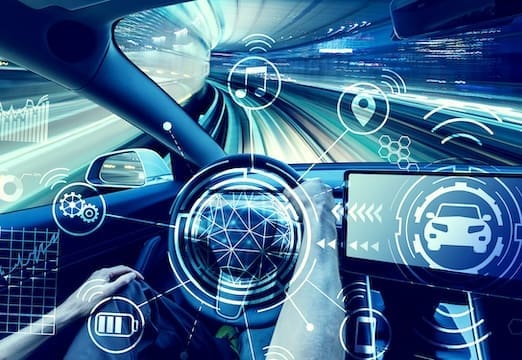
Think of it like being behind the wheel every time a vehicle your business owns is on the road.
You know when someone is speeding. When they’re distracted. When they’re braking hard or accelerating too quickly.
Those are just some of the benefits of telematics — technology that uses GPS, sensors and cameras to track how vehicles are being driven and help businesses better manage risk.
And in today’s insurance environment, that visibility is becoming more important than ever.
“I think it gets back to what’s happening in the insurance marketplace,” said T.J. Rolfing, a property casualty vice president at Holmes Murphy. “Between rising repair costs, more advanced vehicles and increasing litigation, it’s becoming harder for insurance to keep up.”
Even minor accidents are getting expensive.
“It’s hard to hit a pheasant and not have $5,000 of damage because you have to recalibrate the entire vehicle and its sensors,” Rolfing said.
At the same time, commercial vehicles increasingly are becoming targets.
“If someone sees a company name on the side of a vehicle, they know there’s insurance behind it,” he said. “That can make it a target for fraudulent claims.”
A growing risk — and a new way to manage it
“For most organizations, their biggest exposure is employees driving vehicles,” said Brent Hodgkiss, a property casualty vice president at Holmes Murphy.
That applies beyond traditional fleets.
“People think of contractors or trucking companies, but anybody who has employees driving for business purposes has risk,” he said. “If someone runs a stop sign and causes a serious accident, that’s a substantial loss.”
Telematics offers a way to better understand and reduce that risk.
“It gives owners the benefit of knowing exactly what’s happening in their vehicles when they’re on the road,” Hodgkiss said.
How telematics works
At its most basic level, telematics tracks driving behavior, including:
- Speed
- Braking and acceleration
- Lane changes
- Mileage and routes
More advanced systems can go further.
“AI can pick up distracted driving — even when a driver’s eyes leave the road,” Hodgkiss said.
Many systems also include:
- Forward-facing cameras to capture road conditions
- Rear-facing cameras to document collisions
- In-cab cameras to show driver behavior
That information is tied to alerts and reporting tools.
“You can set parameters, so if someone is speeding in a 35-mph zone, you get notified,” Rolfing said. “It creates accountability and gives you a chance to coach employees and improve behavior over time.”
Beyond safety: efficiency and cost control
While safety is a primary driver, telematics also can improve operational efficiency.
“You’re looking for ways to become best in class,” Rolfing said. “That’s not always just saving money — it’s becoming a better organization.”
Telematics can help:
- Optimize routes and reduce unnecessary driving.
- Track idle time and fuel usage.
- Monitor maintenance needs such as tire wear and oil changes.
- Reduce wear and tear on vehicles.
For example, Holmes Murphy has seen cases where employees were driving across town for nonwork-related stops — adding time and fuel costs that weren’t immediately visible.
“That’s something you wouldn’t know without the data,” Rolfing said.
Over time, those efficiencies can add up — and be measured.
“We can show where you’re spending on fuel, where your idle time is and how that impacts your bottom line,” Hodgkiss said.
A powerful tool in fighting fraud
One of the biggest advantages of telematics — especially when combined with cameras — is its ability to defend against fraudulent claims.
“A picture says a thousand words. A video shows 10,000,” Rolfing said.
That evidence can be critical in today’s legal environment, where large jury awards, sometimes called nuclear verdicts, are becoming more common.
Hodgkiss shared an example of a claim involving a lawsuit exceeding $1 million.
“The employee said they weren’t at fault. We reviewed the footage and confirmed that,” he said. “When that evidence was presented, the lawsuit was dropped immediately.”
Without that documentation, the outcome could have been very different.
“You might settle for hundreds of thousands of dollars just to avoid the cost and risk of litigation,” he said. “And now that claim is on your history, even though you did nothing wrong.”
Understanding the return on investment
Unlike personal auto policies, telematics typically doesn’t result in an immediate insurance discount.
“You don’t implement telematics because you get a discount off the top,” Rolfing said.
Instead, the value comes from avoided costs and improved performance.
“It may stop two or three accidents in a year that would have happened otherwise,” he said. “Those are costs you never realize because they didn’t happen.”
Holmes Murphy works with clients to quantify that impact.
“We can look at your loss history and show what might have been defensible with telematics or camera systems in place,” Hodgkiss said.
That includes:
- Avoided claims
- Reduced litigation exposure
- Improved fuel efficiency
- Lower maintenance costs
“We’re able to give you a solid idea of the financial return,” he said.
Who should consider telematics?
Telematics tends to make the most sense for organizations with larger fleets.
“We typically start working with companies that have 15 to 20 or more vehicles,” Hodgkiss said. “At that point, you have the structure to manage it and really benefit from it.”
For smaller businesses, the challenge often is capacity.
“In many cases, the owner is also the driver, the HR department and everything else,” he said. “They just don’t have time to implement something like this.”
But as companies grow, telematics becomes part of a more strategic approach.
“It’s for organizations that are looking to become best in class,” Rolfing said. “It’s about safety, efficiency and protecting your people and your business.”
Used effectively, tools like telematics help shift the focus from reacting to problems to preventing them, Hodgkiss added.
“At the end of the day, it’s about reducing exposure and helping organizations operate more effectively,” he said.
To learn more about Holmes Murphy can help optimize your company’s fleet, visit here.
Share This Story
Most Recent
Videos

Looking amazing @dtsiouxfalls and @washpav! Thanks to @jpickthorn for capturing an incredible night.
Nov 26

Enjoy this glow headed into Halloween week! 📸: @jpickthorn
Oct 31
Hope you had a wonderful summer weekend and are recharged for the week ahead! 📸: @jpickthorn
Jun 27
Beautiful way to start a week! 📸: @jpickthorn
Jan 10
Favorite flyover of the year! Merry Christmas from our entire @pigeon605news flock. 🎄🐦 📸: @actsofnaturephotography
Dec 24
They definitely deserve to be treated like holiday royalty and they were! ❤️ these scenes from tonight’s lighting celebration at @sanfordhealth Children’s Hospital. 🎄
Dec 1
The holidays are here! Perfect night @dtsiouxfalls
Nov 27
Happy Halloween from @avera_health NICU babies! Link in bio to see more! 🎃
Oct 31
Did you know @dtsiouxfalls is filled with 👻 stories? Link in bio … if you dare 😱
Oct 8
When it comes to kids parties nobody wants to be cookie-cutter. Link in bio for the story on what’s trending.
Sep 28
This error message is only visible to WordPress admins
There has been a problem with your Instagram Feed.
Want to stay connected to where you live with more stories like this?
Adopt a free virtual “pigeon” to deliver news that will matter to you.



Are you a little bird with something to share?
Delivering news that matters to you
Years ago, homing pigeons were used to bring us news we needed. Today, your virtual “pigeon” will deliver what you want to know about the place you call home.
All pigeons are free to good homes!
Our Partners