
How prebiotic, probiotic foods affect your gut health
This paid piece is sponsored by Avera.
You keep hearing about probiotics, and now prebiotics, but what exactly are these foods?
What do they do?
“The key to a healthy gut is nourishing the microbiome bacteria,” said Dr. Dawn Flickema, Avera Medical Group Integrative Medicine.
“When your gut is healthy, you feel better. At the same time, it’s better to develop a long-term plan for diet that includes pre- and probiotics regularly – they don’t offer any short-term solutions to gut health.”
Probiotics vs. prebiotics: What’s the difference?
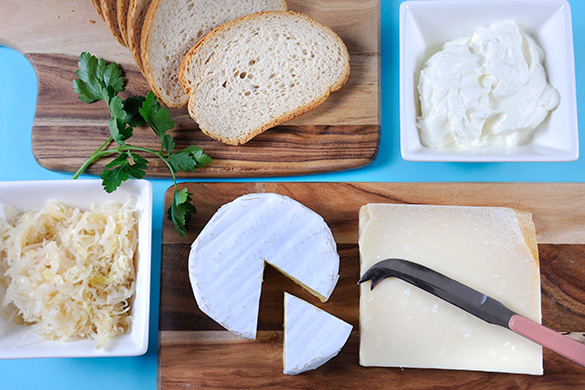
Probiotic foods have active colonies of bacteria. When you eat or drink them, those colonies join the trillions of tiny residents already at work in your esophagus, stomach and intestines.
“Most fermented foods offer probiotic benefits, but it varies greatly,” said Becky Hanzen, a health coach with Avera Medical Group Integrative Medicine. “There are many food preservation methods, and some remove beneficial bacteria.”

In most cases, people make probiotic-rich foods by simply adding salt to a food in a container and letting chemistry do the rest. Fruits and vegetables contain bacteria, and when they no longer have access to oxygen, those natural bacteria convert carbs and sugars in whole foods into acids. Those acids make ideal environments for preserved food.
In short: fermentation.
“We recommend getting in at least one to three servings of fermented foods each week, with a typical serving of about a half-cup,” Hanzen said. “But more probiotics are better for almost everyone.”
Role of prebiotics
Prebiotics are not foods, exactly, but the fibers in food that our bodies cannot digest.
They serve as raw fuel for the “good guy” bacteria keeping our gut happy and healthy.
“They feed our bacteria and continue important work of supporting gut health,” Flickema said. “Eating 25 and 45 grams of fiber every day will give your gut what it needs.”
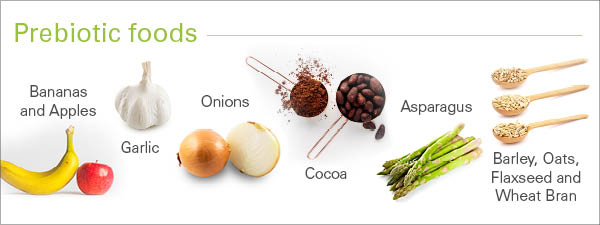
Optimal operation in the microbiome happens when prebiotic and probiotic foods are regular or daily parts of what you eat, Flickema added.
Pre- and probiotic supplements can offer some help
Some people don’t get proper amounts of either of these important nutrients in their regular diet. That’s when prebiotic and probiotic supplements can help.
“We recommend varieties of probiotics that offer at least 10 billion colony forming units per dose,” Hanzen said. “But we would stress: Do not use a supplement as your only source. It’s important to really get fruits and vegetables into your diet in their organic forms. In order to get a variety of pre- and probiotics and feed our gut garden, you will need to eat more vegetables and fruit.”
Supplements that have 10 billion colony forming units or more can help. But listening to your body is more important than anything else. If a supplement of that size leads to an upset stomach, cut the dose in half.
“You’re adding ‘new bugs’ to the garden of your gut, so to speak,” Hanzen said. “You might need to work up to the full dose.”
Unlike probiotics, there are no recommended prebiotic supplements. The wide variety of these unique nutrients means that your gut’s system may not like one set that are part of a prefabricated easy-to-buy supplement. That’s why working with a doctor or health coach can help you best understand the changes you experience.
“We can’t rely on just supplements. If we do, we’ll miss out on the wide variety that we need,” Hanzen said.
Good gut health is always a combination platter, so to speak, in that pre- and probiotics play roles but other factors are important. Reducing stress and getting rest helps, and diet restrictions can be effective methods too.
“You should strive to avoid processed foods and to reduce sugar and alcohol because they’re toxins to your good gut microbes,” Flickema said. “Diets that include more plant-based foods are going to be better for gut health too. There’s new focus on the roles of pre- and probiotics, but the health of your gut doesn’t revolve solely around these two pieces of the puzzle. We all need more of both.”
Talk to your provider, health coach or registered dietitian to see if these foods are right for you.
Share This Story
Most Recent
Videos



Looking amazing @dtsiouxfalls and @washpav! Thanks to @jpickthorn for capturing an incredible night.
Nov 26

Enjoy this glow headed into Halloween week! 📸: @jpickthorn
Oct 31
Hope you had a wonderful summer weekend and are recharged for the week ahead! 📸: @jpickthorn
Jun 27
Beautiful way to start a week! 📸: @jpickthorn
Jan 10
Favorite flyover of the year! Merry Christmas from our entire @pigeon605news flock. 🎄🐦 📸: @actsofnaturephotography
Dec 24
They definitely deserve to be treated like holiday royalty and they were! ❤️ these scenes from tonight’s lighting celebration at @sanfordhealth Children’s Hospital. 🎄
Dec 1
The holidays are here! Perfect night @dtsiouxfalls
Nov 27
Happy Halloween from @avera_health NICU babies! Link in bio to see more! 🎃
Oct 31
Did you know @dtsiouxfalls is filled with 👻 stories? Link in bio … if you dare 😱
Oct 8
When it comes to kids parties nobody wants to be cookie-cutter. Link in bio for the story on what’s trending.
Sep 28
Want to stay connected to where you live with more stories like this?
Adopt a free virtual “pigeon” to deliver news that will matter to you.
Read More





Are you a little bird with something to share?

Delivering news that matters to you
Years ago, homing pigeons were used to bring us news we needed. Today, your virtual “pigeon” will deliver what you want to know about the place you call home.
All pigeons are free to good homes!
Our Partners