

As city tackles snow removal, coldest air of the season moves in
The first major storm of the season was a big one — and now the cold is coming.
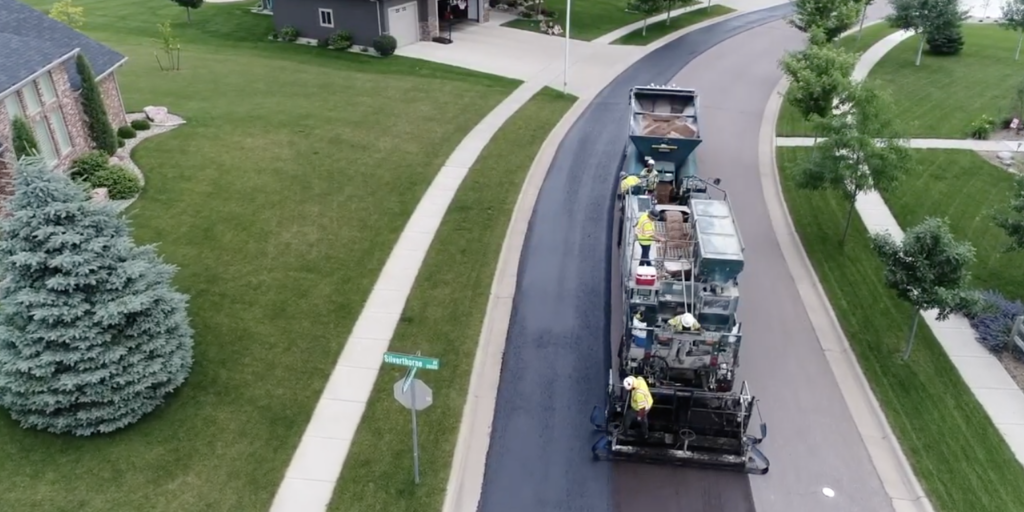
City crews have been clearing the almost 11 inches of snow that fell in Sioux Falls and initially had to focus on emergency routes given the duration of the snowfall.
“It was a very long, protracted snow event,” director of public works Mark Cotter said. “We’re going to be picking up snow for a long time.”
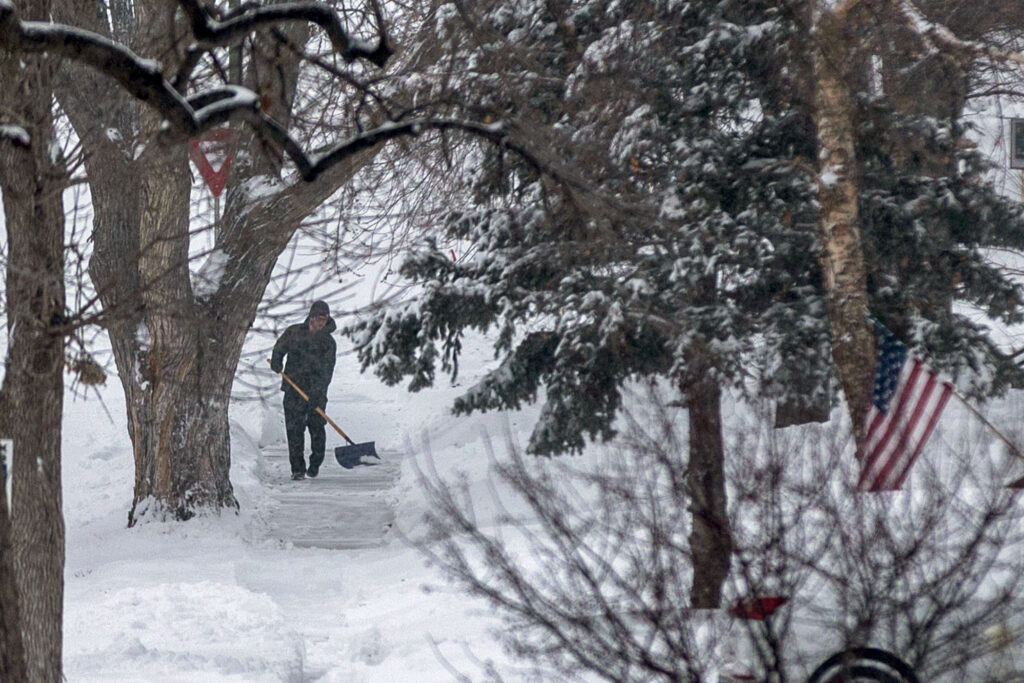
After crews worked overnight, all 20 snow districts were plowed by late in the day Wednesday.
You can track snow removal progress here.
On the snow tracker, “as streets turn from red to blue, that’s a good thing,” Cotter said. “That means that street has been plowed and should be restored to normal travel.”
Because the snow kept falling for 30 hours with just a short lull, it delayed the city from beginning work in residential neighborhoods.
“From start to finish, it’s 60 hours: 30 hours of snowing and 24 to 32 hours (to remove it), and we’re close to 32 hours on plowing out the neighborhoods,” Cotter said. “That’s a long time, and we know this one has been a tough one on residents.”
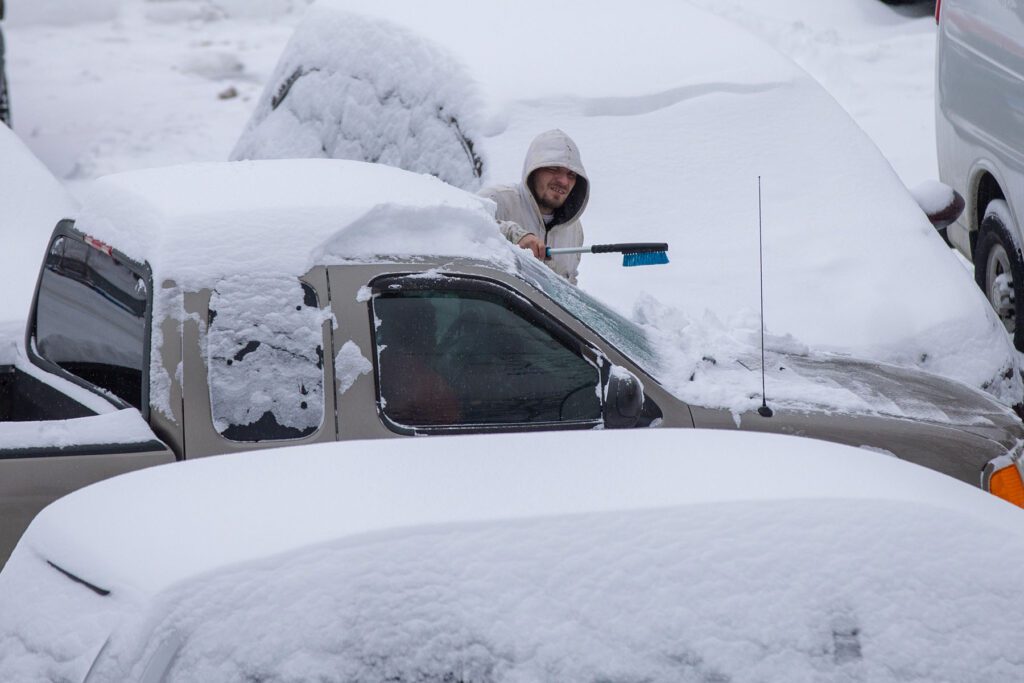
The city has 100 operators working 12-hour shifts, plus a team of mechanics keeping the equipment running.
“Once we get the streets all plowed curb to curb, we’ll transition into picking up snow, first in the downtown,” Cotter said. “Early Thursday morning, you’ll see a lot of activity. … There’s an impressive amount of snow in the downtown.”
While the city is using snow gates, they are most effective with a 6-inch snow or less, Cotter added.
“You’re going to see their effectiveness drop significantly,” he said. “We’re fortunate this is a little lighter and drier snow, but snow gates reduce the amount of snow that goes into your driveway. They don’t eliminate it.”
Snowfalls of 10 inches or more in a one- or two-day period aren’t all that common in Sioux Falls. They’ve occurred in 45 different years since record-keeping began in 1893, according to the National Weather Service. The average date of a first major event is Jan. 23, and last year’s first snowfall of 10 inches or more came on Jan. 2. Sioux Falls is most likely to see a large snowfall like this in March.
While there’s another chance for snow late Thursday into Friday, “that could be south of Sioux Falls,” said Matthew Meyers, a meteorologist with the National Weather Service. “I’m not super confident in that because we’re still looking at the latest data.”
Still, it could bring another round of measurable snow.
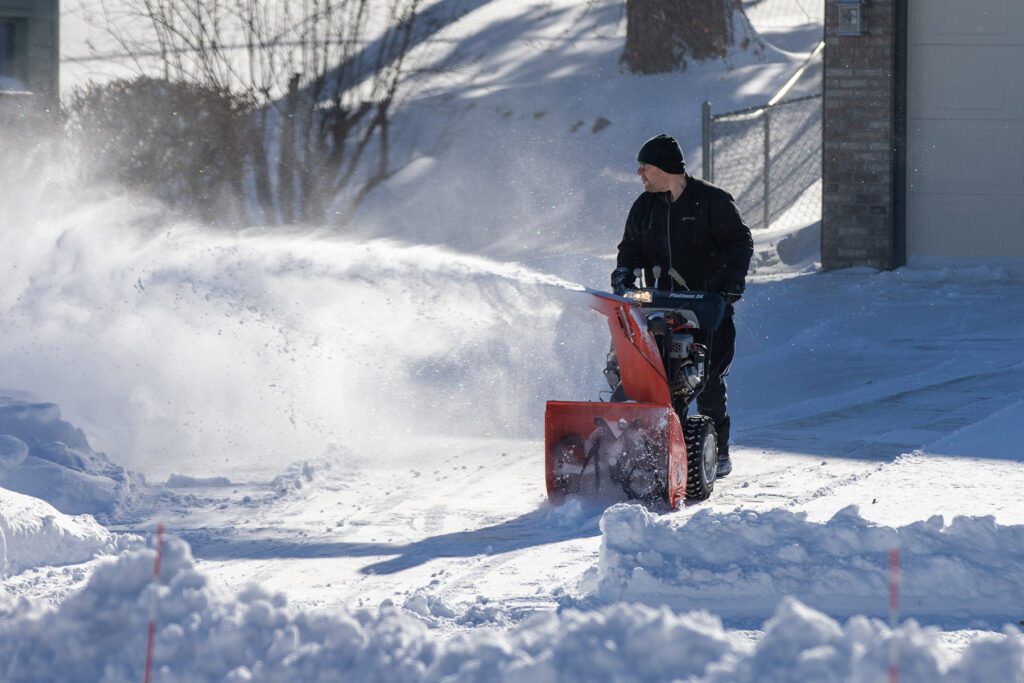
The National Weather Service is more confident “in the arctic air mass coming into the area for the weekend,” Meyers added.
The coldest weather appears to be coming Sunday, when temperatures might not get out of the negative single digits and wind chills could hover between 20 degrees below zero and 40 degrees below zero.
“It’s going to be pretty cold this weekend, to put it bluntly,” Meyers said. “We sort of start to warm up early next week — meaning it’s going to be above zero. So it’ll be warmer relatively speaking, just not super warm.”
It’s “too hard to tell at this point” when temperatures might get above freezing again, he said.
But the colder temperatures also reduce the likelihood of accumulating snow, so the long-range forecast is mostly dry.
“It is anomalously cold, but we do usually see this, at least maybe once or twice a year,” Meyers said. “So it’s not totally out there from a seasonal perspective.”
Steps to save
Xcel Energy reports that while “wholesale natural gas prices are significantly lower than last winter, winter heating can still account for about half of a typical customer’s monthly energy costs.”
Customers can reduce the impact of colder weather on their energy bills through steps such as:
- Lowering their thermostat to between 65 and 70 degrees while they are home and 58 degrees when away from home. A programmable or smart thermostat can lower the temperature automatically based on daily routines.
- Opening drapes and blinds to maximize heat from direct sunlight during the day and closing them to retain heat when it is dark.
- Running ceiling fans in a clockwise direction to push warm air down from the ceiling.
- Ensuring exterior doors and windows are fully closed and latched shut. Using window-sealing kits can be a low-cost way to further prevent heat loss.
- Keeping interior doors open to help circulate air more freely and maintain consistent heating levels.
- Changing out dirty furnace filters to promote better airflow and reduce the energy the furnace uses. Replacing the filter once a month during the winter can reduce heating costs by 5 percent to 15 percent.
- Improving the insulation of walls, crawl spaces, floors and heating ducts, which can save up to 10 percent on a home’s monthly energy bill.
Share This Story
Most Recent
Videos



Looking amazing @dtsiouxfalls and @washpav! Thanks to @jpickthorn for capturing an incredible night.
Nov 26

Enjoy this glow headed into Halloween week! 📸: @jpickthorn
Oct 31
Hope you had a wonderful summer weekend and are recharged for the week ahead! 📸: @jpickthorn
Jun 27
Beautiful way to start a week! 📸: @jpickthorn
Jan 10
Favorite flyover of the year! Merry Christmas from our entire @pigeon605news flock. 🎄🐦 📸: @actsofnaturephotography
Dec 24
They definitely deserve to be treated like holiday royalty and they were! ❤️ these scenes from tonight’s lighting celebration at @sanfordhealth Children’s Hospital. 🎄
Dec 1
The holidays are here! Perfect night @dtsiouxfalls
Nov 27
Happy Halloween from @avera_health NICU babies! Link in bio to see more! 🎃
Oct 31
Did you know @dtsiouxfalls is filled with 👻 stories? Link in bio … if you dare 😱
Oct 8
When it comes to kids parties nobody wants to be cookie-cutter. Link in bio for the story on what’s trending.
Sep 28
Want to stay connected to where you live with more stories like this?
Adopt a free virtual “pigeon” to deliver news that will matter to you.



Are you a little bird with something to share?

Delivering news that matters to you
Years ago, homing pigeons were used to bring us news we needed. Today, your virtual “pigeon” will deliver what you want to know about the place you call home.
All pigeons are free to good homes!
Our Partners