

Words of wisdom: Children’s Home Society Loving School student writes inspirational message
This piece is sponsored by Children’s Home Society.
When a storm is brewing in your mind, will you let the lightning and thunder drown out your judgment or will you rise above the clouds to find the sunshine? In the piece titled “Mountain of Hope,” the author explores how perspective, perseverance and hope can help us climb even the steepest emotional mountains — and reminds us that we are never truly alone on the journey.
Mountain of Hope
When your judgment is clouded like storm clouds in the sky, you can get up off the ground, shine brighter than lightning and make noise louder than thunder. Climb up the emotional mountain of life and even if you fall, you can be at your lowest point, but others could be lower, and they need help too. You can either be at your lowest point all alone, or you can be at your lowest point with them and help them rise to the top with you! It’s all about perspective … so when life throws you off the mountain of happiness and drags you to the deep valley of sadness, you can still have hope, you can still be optimistic … when you see a river… you can either see that river flowing back up towards the mountain of happiness, slowly but surely … or you can see it as pulling you down, making you sad and making life harder. But if that’s what’s happening, then swim against the current, fight back. Get your happiness back because no one can stop you from being who YOU ARE! You are BRAVE. You are BOLD. You are AMAZING!
— Avery
These insightful words weren’t crafted by a professional writer but by a 13-year-old middle school student, Avery, who attends Children’s Home Society Loving School in Sioux Falls. He wrote the story recently for a unique language arts assignment that started with nothing more than a squiggle.
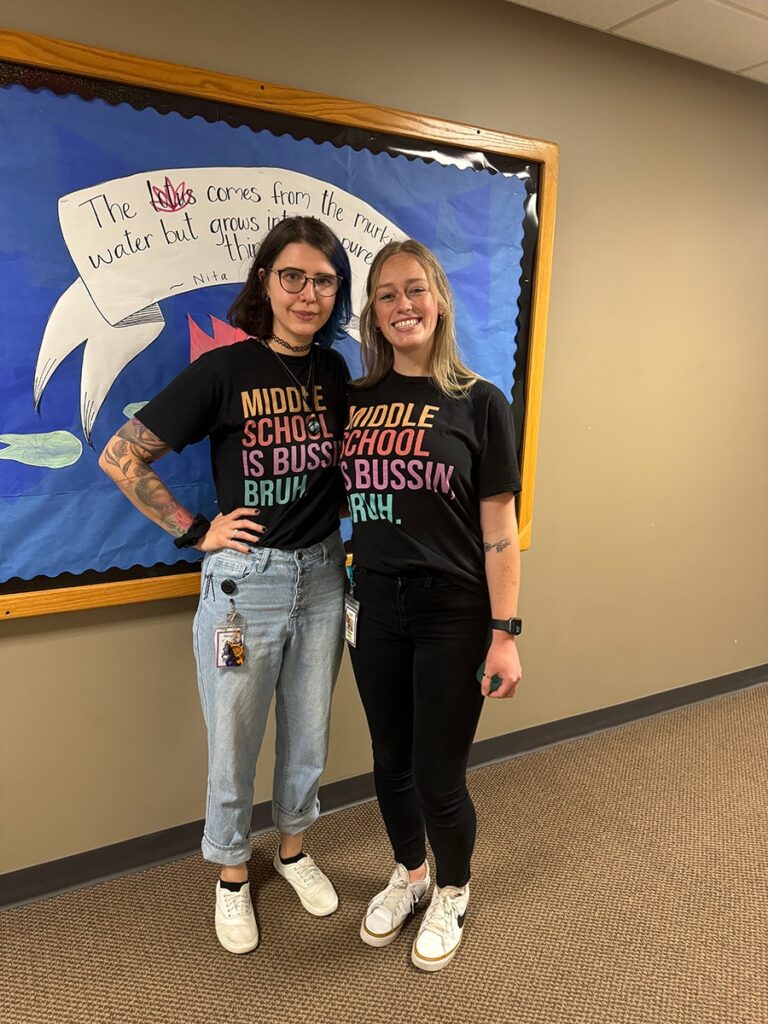
Teacher assistant Paige Knuth and classroom teacher intern Kaela Larkin handed each student a sheet of paper with a small squiggle on it. They asked students to complete the drawing and write a story to accompany their art.
“It all stemmed from a tiny little squiggle,” Knuth said. “They could write and draw whatever they wanted — they had total creative freedom. Some students, like Avery, took it and sprinted with it.”
For Avery, that squiggle became a mountain. As he drew, he imagined more: storm clouds, a river, sunshine and small faces. Each doodle represented something greater: the mountain as life’s journey, the storm as fear and moments that rattle you, and the river as both a threat and a path forward.
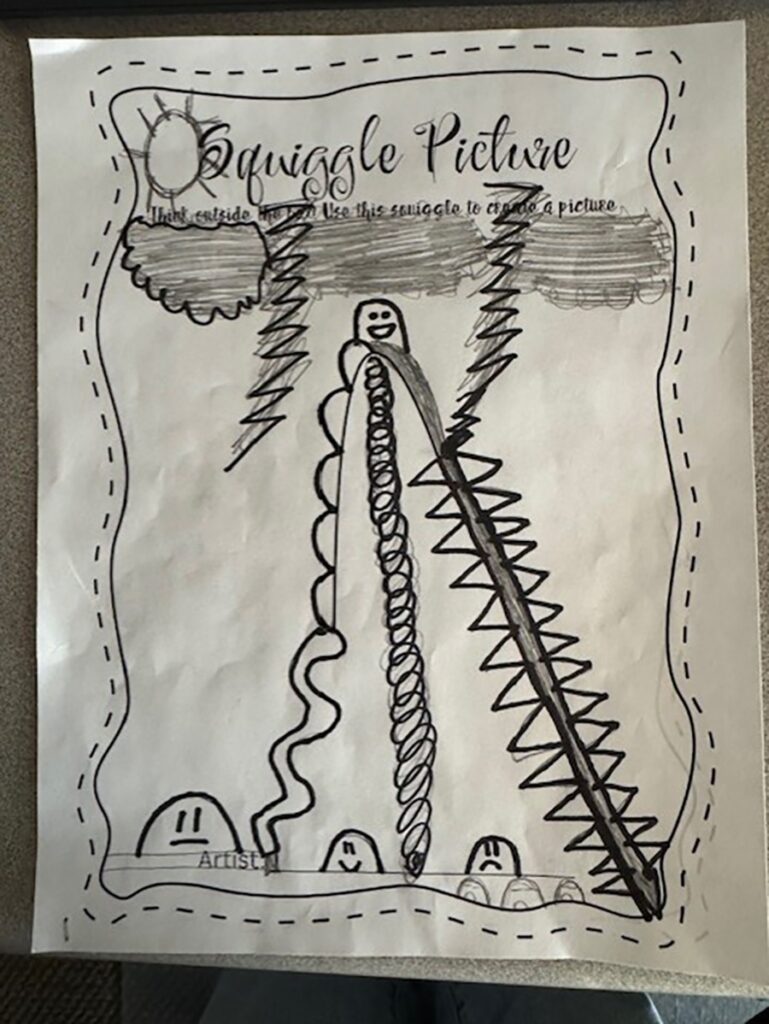
“These little circles are supposed to be people. I drew them downstream of the river to represent that there are people that may feel lower than you,” Avery said as he pointed to the bottom of the drawing. “When we’re sad, we don’t often think about others. But no matter where we are in our journey, we should always try to help someone else.”
Avery’s writing and awareness of other people’s emotions have stunned his teachers.
“His brain is just brilliant,” Knuth said. “The depth of awareness he already shows — it just makes Kayla and me so proud. A lot of adults can’t even comprehend what Avery is describing. We know he’s going to go far.”
Although Avery dreams about becoming an actor one day, it’s clear that his talent for storytelling and his emotional insight run deep. His words reflect more than imagination — they embody a concept CHS has embraced campuswide: hope — not just as a belief but as a science-backed tool for healing and growth.
Science of Hope at CHS
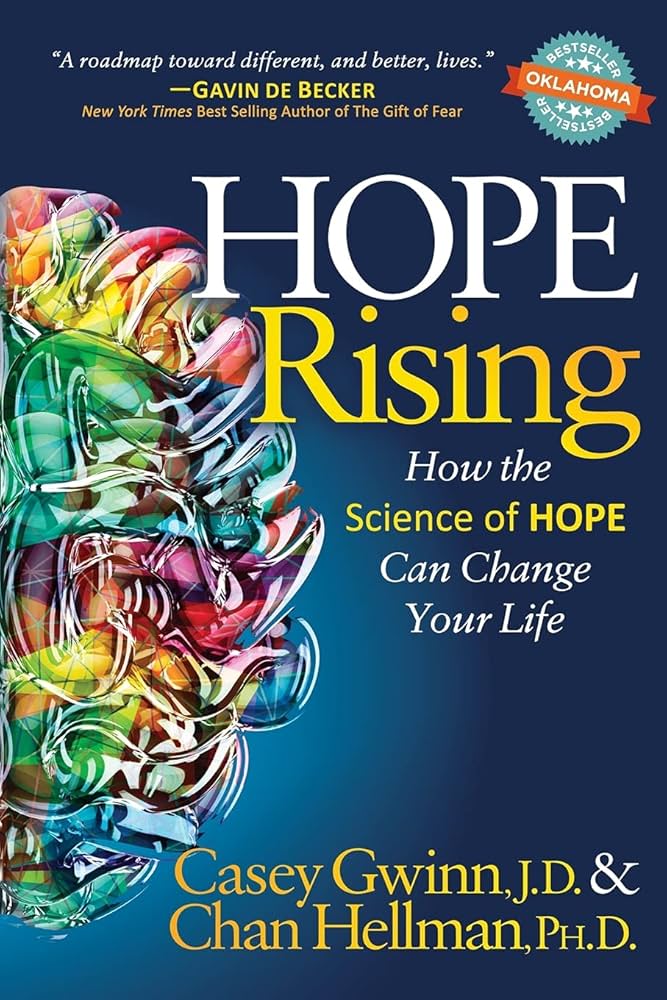
In 2024, CHS began training staff, leadership, board members and volunteers in the Science of Hope — a research-based framework developed by Chan Hellman. His book, “Hope Rising: How the Science of Hope Can Change Your Life,” defines hope not as wishful thinking but as “the belief that the future can be better than today and that you have the power to make it so.”
Hellman said hope is built on three pillars:
- Goals — something we want to achieve.
- Pathways — developing strategies to overcome obstacles and to reach goals.
- Willpower — staying motivated and resilient to reach what we desire.
Int June, CHS began measuring children’s hope levels through the validated “Children’s Hope Scale” survey. The survey includes six statements that measure both pathways and willpower thinking in kids age 8 to 16. CHS even received approval from Hellman to evaluate children as young as 4.
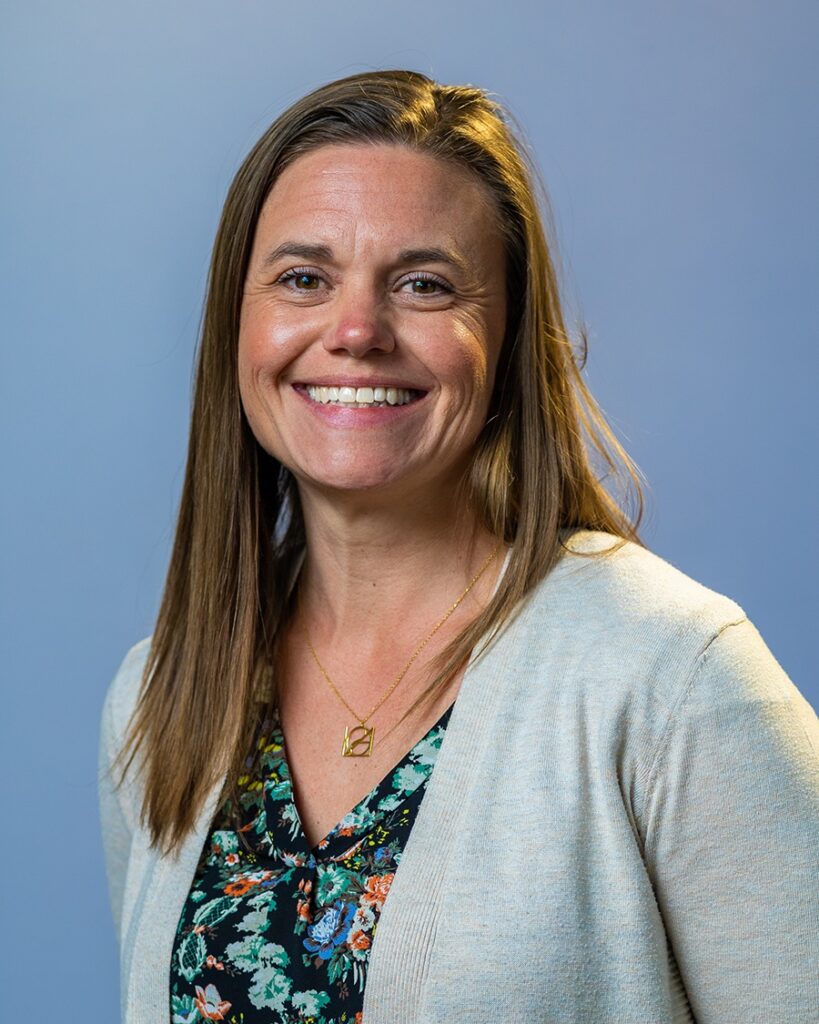
“Higher total hope scores are linked to better long-term outcomes,” CHS chief operating officer Allison Sanderson explained. “When children learn to use hope language, they begin to shift their thinking from self-doubt to confidence and growth.”
That shift leads to more than just optimism — it also supports better academic performance, stronger relationships and improved problem-solving skills. It helps children reframe challenges, persist through setbacks and manage stress.
“Ultimately, fostering hope in children empowers them to believe in their ability to shape their future, strengthening both their emotional well-being and their capacity to thrive in school and in life,” Sanderson said.
CHS plans to survey children throughout the year, and results will help educators, therapists and caregivers identify additional areas of support CHS can provide.
Hope in action on campus
The benefits of the Science of Hope teachings are showing up not just in assignments and surveys but also in daily classroom culture. Earlier this year, Knuth and Larkin began a midmorning snack program called Willpower Snacks. While children in residential care at CHS have breakfast, some kids enrolled in the day school program might not eat before arriving at the Sioux Falls campus. Each day around 9:30 a.m., teachers pause for 10 to 15 minutes to let students eat a quick, healthy snack — and share something they’re hopeful for or looking forward to.
“For some students, the time without food between breakfast and lunch can cause low willpower and may trigger food insecurities,” Knuth said. “We’re hoping this will increase their cognitive functions, improve behaviors and ultimately lead to a healthier environment. But even more than that, this is a moment to connect with students, check in and help them feel seen.”
Wisdom of Avery
Avery has already discovered what many adults are still trying to learn — that when life knocks you down, it’s OK to reach out to someone to keep going. In his writing, he describes a river that represents challenges in life that can drag you down. Avery wants everyone to understand that there is no shame in leaning on someone when you feel like drowning.
“I’ve found that there are some people in your life that you can talk to no matter what,” he said.
For Avery, that person is his uncle. When he’s feeling sad, he often recalls a conversation he had with his uncle, and usually, it motivates him to keep moving forward.
“Even when I can’t talk to my uncle, I think about what he would say. He once told me, ‘Only boring people get bored.’ That doesn’t mean you’re boring — it means you can do something about how you feel. The same thing goes for sadness. You can let it affect you, or you can find a way to fight back. You need to overpower your sadness because you are amazing.”
Avery’s ability to reflect, reframe and uplift others is a reminder that wisdom often doesn’t come with age. Knuth shared that sometimes the teachers aren’t wearing a badge at the front of the classroom but are sitting behind the desks.
“We need to remember that we are not just teaching these kids,” Knuth said. “They’re also teaching us. And we need to give them a platform because the insight and wisdom they hold needs to be heard.”
Avery’s words are exactly the kind of wisdom that Knuth believes should have a platform. And as he so eloquently put it, we all need to remember:
“Life has ups and downs like a mountain. There are slippery slopes, steep inclines and rocky paths, but if you persevere and make it to the top, you can see the sunshine. You can be happy. But we need to remember those people at the bottom — stuck in the river — because they need help too. I guarantee at some point on your journey up the mountain, you might have been stuck in a river needing a helping hand.”
Share This Story
Most Recent
Videos



Looking amazing @dtsiouxfalls and @washpav! Thanks to @jpickthorn for capturing an incredible night.
Nov 26

Enjoy this glow headed into Halloween week! 📸: @jpickthorn
Oct 31
Hope you had a wonderful summer weekend and are recharged for the week ahead! 📸: @jpickthorn
Jun 27
Beautiful way to start a week! 📸: @jpickthorn
Jan 10
Favorite flyover of the year! Merry Christmas from our entire @pigeon605news flock. 🎄🐦 📸: @actsofnaturephotography
Dec 24
They definitely deserve to be treated like holiday royalty and they were! ❤️ these scenes from tonight’s lighting celebration at @sanfordhealth Children’s Hospital. 🎄
Dec 1
The holidays are here! Perfect night @dtsiouxfalls
Nov 27
Happy Halloween from @avera_health NICU babies! Link in bio to see more! 🎃
Oct 31
Did you know @dtsiouxfalls is filled with 👻 stories? Link in bio … if you dare 😱
Oct 8
When it comes to kids parties nobody wants to be cookie-cutter. Link in bio for the story on what’s trending.
Sep 28
Want to stay connected to where you live with more stories like this?
Adopt a free virtual “pigeon” to deliver news that will matter to you.
Read More



Are you a little bird with something to share?
Delivering news that matters to you
Years ago, homing pigeons were used to bring us news we needed. Today, your virtual “pigeon” will deliver what you want to know about the place you call home.
All pigeons are free to good homes!
Our Partners