

Significant increase in developmental disabilities drives demand for pediatric therapy
This paid piece is sponsored by LifeScape.
The world of pediatric therapy has changed dramatically over the past few decades.
What’s driving it? According to the Centers for Disease Control, approximately one in six children in the U.S. have one or more developmental disabilities or other developmental delays.
Additionally, one in 36 children in the U.S. are living with an autism spectrum disorder; in 2010, that statistic was one in 69 children, and in 2000, that statistic was one in 150 children. This significant increase in prevalence has had a direct impact on the growth of pediatric therapy services over the past 20-plus years.
LifeScape occupational therapist Robin Mills, OTR/L, has seen this firsthand. She started practicing at LifeScape in 1984 when it was called Children’s Care Hospital and School.
“There are so many more of us (therapy providers), and so many more specialties within each therapy discipline, like feeding therapy, (a subset of occupational and speech therapy),” she said.

When Mills started, she was one of four occupational therapists who worked out of one building in Sioux Falls.
Now, in the occupational therapy discipline alone, there are 24 OTs who work between LifeScape’s two outpatient therapy clinics in Sioux Falls and one in Rapid City. That’s not to mention the numerous physical therapists, speech-language pathologists, clinical psychologists, board-certified behavior analysts and registered behavior technicians who also work at these three therapy locations.
As children develop and grow, they experience ongoing changes in their language, self-care, emotional, cognitive, social and motor skills. Children with a developmental delay or autism spectrum disorder may need extra help from a therapy team to help them reach their developmental milestones. This may include receiving speech, occupational or physical therapy; applied behavior analysis therapy; or mental health services such as counseling or play therapy.
These therapy services can be so impactful for a child living with autism or a developmental delay. Just ask Autumn Myst, mom of 4-year-old Raiden.
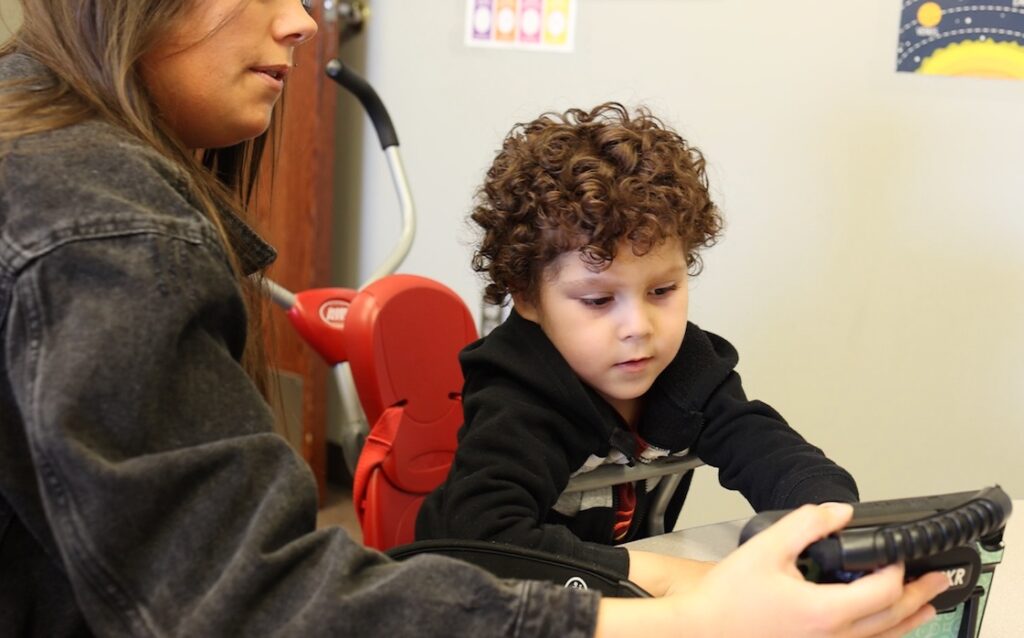
Raiden receives outpatient speech, occupational and ABA therapy services at LifeScape’s Autism and Child Development Center. Raiden initially started receiving OT and speech therapy services at LifeScape in the fall of 2020 after his mom noticed some concerns with regression and delays. He also was referred for an autism evaluation but had to wait a year before receiving an autism diagnosis in August 2021. Raiden then experienced another waiting period to begin ABA services, which began in January of this year.
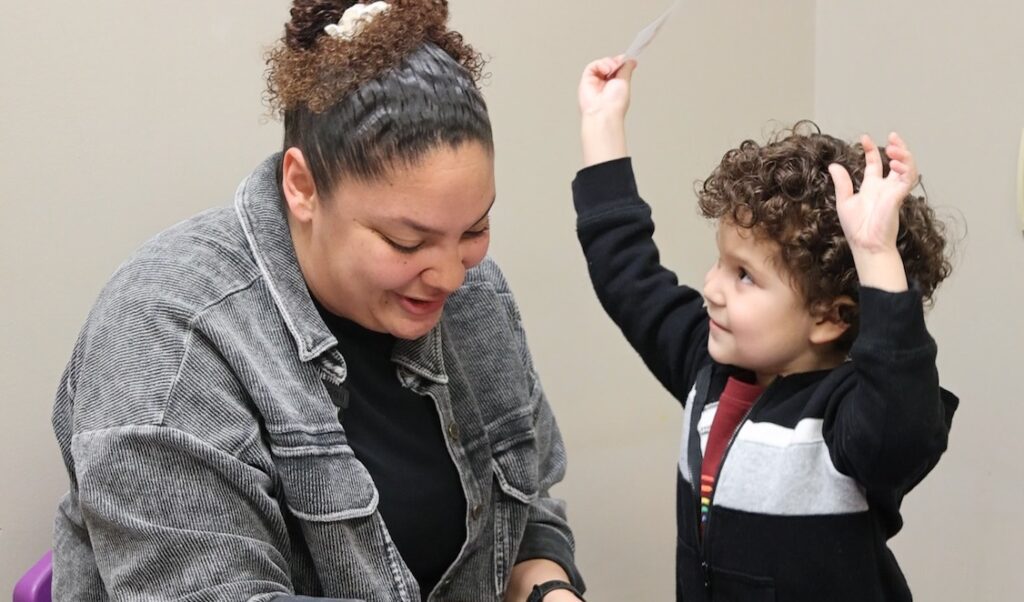
These wait times are commonly seen in pediatric therapy clinics because of the increase in demand for therapy services. That demand, however, hasn’t been matched with an increase in therapists, especially mental health providers and behavior analysts.
Despite being on the waitlist for autism services, Myst felt reassured that her son was still receiving the speech and occupational therapies he needed.
Myst said those early therapies led to improvements in Raiden’s motor skills and daily-living skills, including teeth brushing, independent dressing and picking up his toys. Getting his own speech communication device gave him the ability to communicate his wants and needs.
“That really helped his confidence just blossom. I can’t imagine how different things would have been if he hadn’t been receiving OT and speech services here in the interim between being on the waitlist for those autism and ABA services. There’s nothing worse than feeling like you can’t teach your child or you can’t take care of your child properly the way that they need. It’s a very emotional and humbling kind of experience, so to have his therapists on my team to help, and not only help him grow but also help me to know how to help him – it’s been amazing. They’ve helped the both of us for sure.”
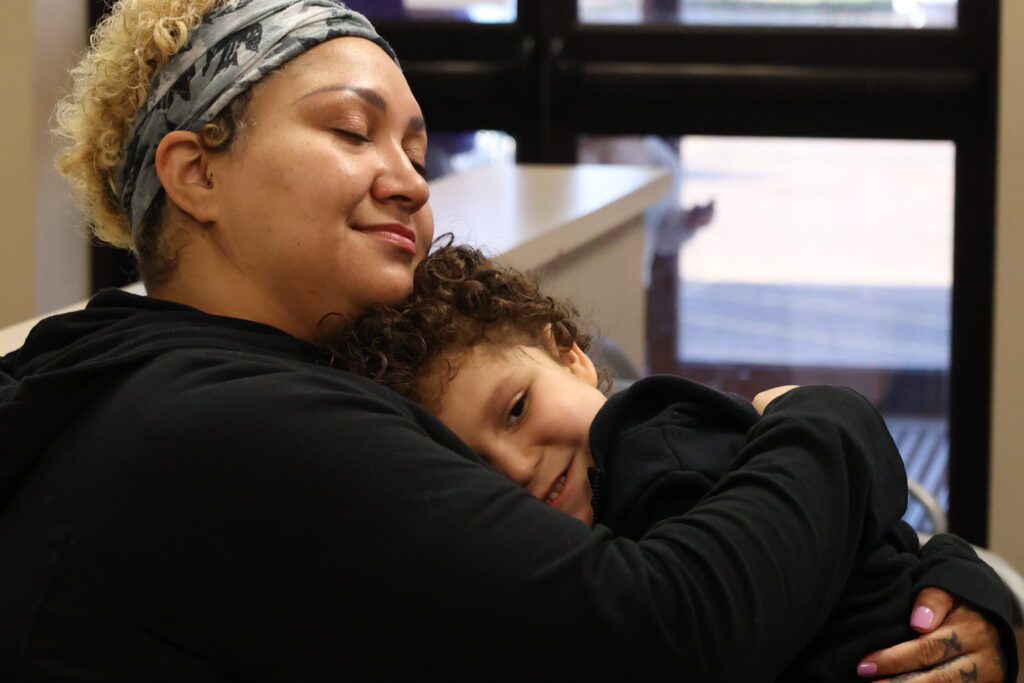
Mills’ advice to families who are deciding on therapy services for their child: “Don’t wait. Even if you’re waiting for one particular therapy discipline, it’s really important to start your other services. The research shows the earlier you start, the better you do and the more you can change.”
As you can see, it’s not just one type of therapy service where demand has grown.
“We’re not only seeing an increased number of children in our communities needing therapy services, but many of these children are needing multiple types of therapies,” said Nicole Koskovich, director of therapy at LifeScape.

That increase creates an increased burden on parents trying to get their child to multiple therapy appointments each week and coordinate all the components of their child’s care. To lighten that burden, outpatient clinics like LifeScape have adapted by creating a one-stop shop that provides all those therapy services under one roof with a team of specialists working together.
“The fact that we could just come here and receive everything and not have to have me running all over town, taking him to multiple providers, being the middleman of communication and relaying all these messages back and forth, took a lot of pressure off of me as a mom,” Myst said. “But it also helped Raiden feel more comfortable and safe, where he could perform his best because all therapies are in the same environment. Everybody really cares about every facet of him, and even though they have their specialties and their strengths, they all work together so well to just make it the best experience for him possible. And making it the best experience for him makes it a good experience for me.”
What else has driven the growth of therapy services? According to Mills, it’s the commitment to providing the best possible services to the children in our communities.
Often when new therapy programs are developed, “it’s because therapists recognize a gap in the available services and say collectively: ‘I’ve got these kids, and we’re not quite meeting their need. We need something else,'” Mills continued. “I’ve always looked at each kid and asked, ‘What else can we do? Where else can we go?'”
Koskovich agrees wholeheartedly with this.
“When a need arises for a child, we adapt, we shift, and we pivot to meet that need. As the need for therapy services in our community continues to grow, I fully expect that all therapy organizations will need to continue to adapt, change and develop creative solutions to meet the needs of the children and families living here.”
To learn more about pediatric therapy at LifeScape, click here.
Share This Story
Most Recent
Videos



Looking amazing @dtsiouxfalls and @washpav! Thanks to @jpickthorn for capturing an incredible night.
Nov 26

Enjoy this glow headed into Halloween week! 📸: @jpickthorn
Oct 31
Hope you had a wonderful summer weekend and are recharged for the week ahead! 📸: @jpickthorn
Jun 27
Beautiful way to start a week! 📸: @jpickthorn
Jan 10
Favorite flyover of the year! Merry Christmas from our entire @pigeon605news flock. 🎄🐦 📸: @actsofnaturephotography
Dec 24
They definitely deserve to be treated like holiday royalty and they were! ❤️ these scenes from tonight’s lighting celebration at @sanfordhealth Children’s Hospital. 🎄
Dec 1
The holidays are here! Perfect night @dtsiouxfalls
Nov 27
Happy Halloween from @avera_health NICU babies! Link in bio to see more! 🎃
Oct 31
Did you know @dtsiouxfalls is filled with 👻 stories? Link in bio … if you dare 😱
Oct 8
When it comes to kids parties nobody wants to be cookie-cutter. Link in bio for the story on what’s trending.
Sep 28
Want to stay connected to where you live with more stories like this?
Adopt a free virtual “pigeon” to deliver news that will matter to you.






Are you a little bird with something to share?

Delivering news that matters to you
Years ago, homing pigeons were used to bring us news we needed. Today, your virtual “pigeon” will deliver what you want to know about the place you call home.
All pigeons are free to good homes!
Our Partners