
Training to recognize traumatic childhood experiences provides tool for tribal healing
This paid piece is sponsored by Children’s Home Society.
What if scientists discovered that human experience is stored not just in our minds but also in our bodies?
The role of adverse childhood experiences — traumatic events or situations during childhood — in health, behavioral and social problems is well established.
ACEs are linked to national public health crises, such as heart disease, diabetes and depression. Researchers are seeking to use this knowledge to profoundly change the future of the public health.
In 2022, Children’s Home Society helped provide ACEs training to Native communities across South Dakota, where ACEs concepts are being incorporated into culturally based mental health services, bringing another tool to the table for healing and growth.
When ACEs training came to South Dakota
In 2018, the Children’s Home Society of South Dakota prevention program partnered with the Center for the Prevention of Child Maltreatment to bring ACEs training here.
Created by renowned psychologist Dr. Robert Anda and Laura Porter, the ACEs training they provide is for master trainers, who then can train presenters in their communities.
According to director of prevention and advocacy Tifanie Petro, CHS has taken the lead on training more than 200 ACEs presenters. And the number continues to climb. In collaboration with ACEs master trainers and presenters, more than 22,028 adults and youth statewide have received education in a shared language around understanding the impact of trauma.
Project AWARE
The first Indigenous master cohort training in South Dakota was held in April 2022 for Project AWARE. Located in the Oglala Lakota community of Kyle on the Pine Ridge Reservation, Project AWARE is part of the Culturally Informed, Trauma-Informed Schools program.
“Our goals are, one, to build capacity for resources and services for our students at our school,” said Edwina Brown Bull, director of Project AWARE at Little Wound School. “Another is to develop partnerships and relationships with existing organizations and our communities at the state level and national level. And our final goal is to build or to strengthen our awareness of cultural resilience and to incorporate the scientific portion of trauma-informed care.”
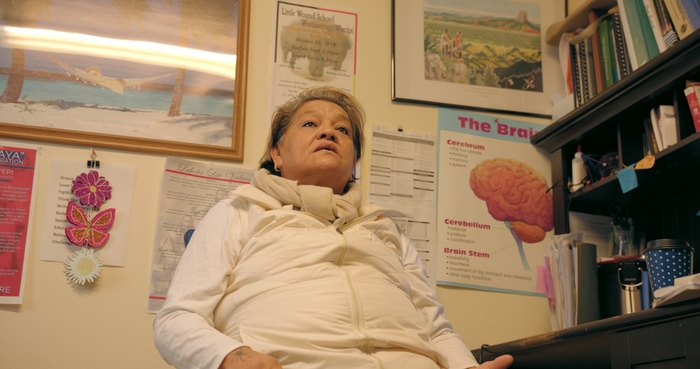
On Pine Ridge, youth suicide is a true crisis. While suicide is the leading cause of death in South Dakota for 10- to 29-year-olds, the suicide rate among the state’s Native people is 2.6 times higher than for whites.
In addition to other programs, Project AWARE has created an on-call emergency mental health system to respond to students who may be suicidal. Parents, relatives, friends, teachers and students are assured of an immediate response, referrals and resources.
Brown Bull sought ACEs training for Project AWARE staff for years. “Part of the sustainability of Project AWARE was to get as many master trainers in our partner schools as possible, so that we can design the services that we need for our students, the training we need for our staff, and after the grant funding is over, we will have that resource at those schools.”
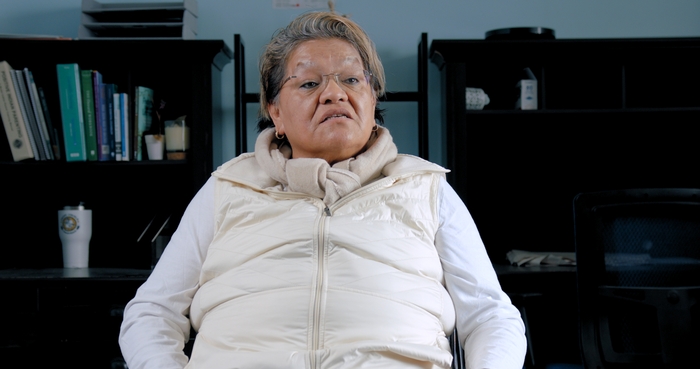
Understanding ACEs is just part of the healing process for Project AWARE. Culture and nature are tribal pathways to healing from ACEs and shape the bulk of the program’s work.
“Our culturally informed work includes Lakota mental health,” Brown Bull said. “We incorporate the cultural component of mental health, and we build capacity culturally to become good relatives, to support our schools and to address and to service trauma needs once they’re identified through the ACEs survey.”
November 2022 training
Later in the year, through a partnership with the state’s Department of Social Services Behavioral Health Division and a newly formed tribal advisory group, a second Indigenous master trainer cohort event was held. Individuals from seven tribal nations in South Dakota participated, spending four days in conversation with Anda and Porter.
Pauletta Red Willow, founder and director of Maggie’s House, also in Kyle, attended the fall training. Maggie’s House is a residential transitional living program for 17- to 22-year-olds who are exiting foster care, homeless or trafficked.
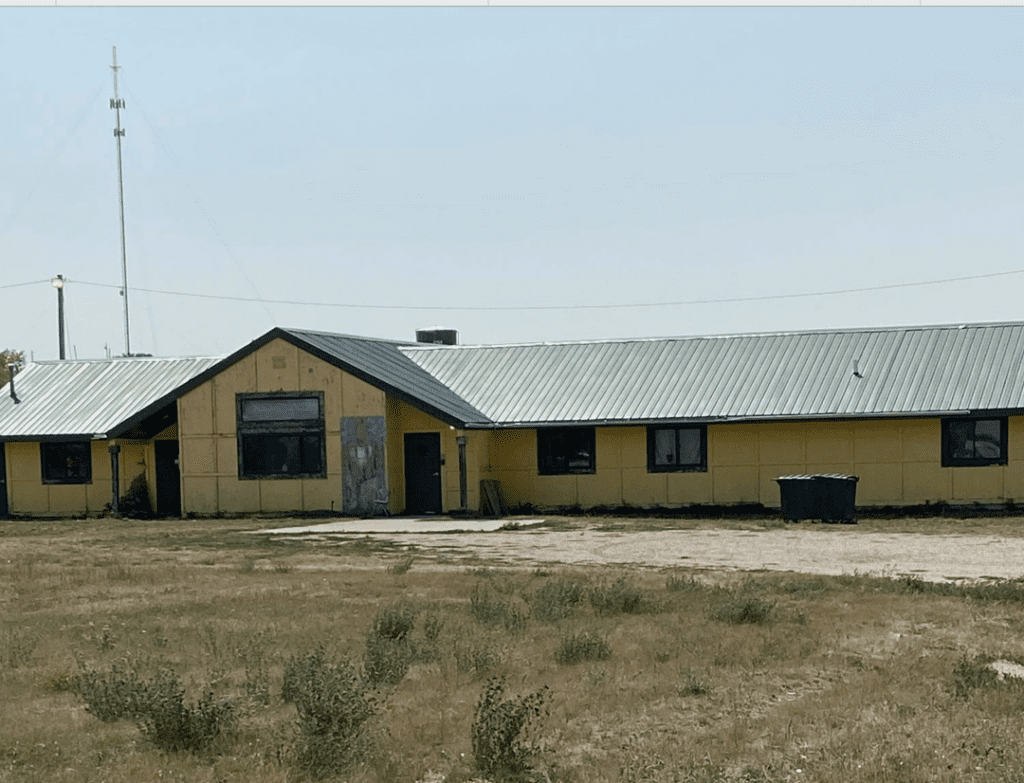
“In the tribal advisory group, we discussed how the ACEs material needs to be presented with cultural experience and knowledge,” Red Willow said.
Tribal people may have multiple layers of trauma, including historical trauma and boarding school trauma, that are passed down from one generation to the next. ACEs are a tool for understanding these impacts but must be placed in the right context.
“Say you score a seven on the ACEs test,” Red Willow said. “One of the tribal advisory group members said: ‘If I had known this when I was younger, would I have turned out the same? Would I have set myself up for defeat?’ It’s an indication that things out of your control are going to make your life even harder. What does someone do with that information?”
The training was an important step toward a model for using ACEs in Indigenous communities throughout South Dakota and beyond.
“It was a good learning opportunity,” Red Willow said. “We had a great group of individuals to review the materials and discuss what we were experiencing in our own communities.”
To learn more about ACE trainings in South Dakota, please visit here.
Share This Story
Most Recent
Videos

Looking amazing @dtsiouxfalls and @washpav! Thanks to @jpickthorn for capturing an incredible night.
Nov 26

Enjoy this glow headed into Halloween week! 📸: @jpickthorn
Oct 31
Hope you had a wonderful summer weekend and are recharged for the week ahead! 📸: @jpickthorn
Jun 27
Beautiful way to start a week! 📸: @jpickthorn
Jan 10
Favorite flyover of the year! Merry Christmas from our entire @pigeon605news flock. 🎄🐦 📸: @actsofnaturephotography
Dec 24
They definitely deserve to be treated like holiday royalty and they were! ❤️ these scenes from tonight’s lighting celebration at @sanfordhealth Children’s Hospital. 🎄
Dec 1
The holidays are here! Perfect night @dtsiouxfalls
Nov 27
Happy Halloween from @avera_health NICU babies! Link in bio to see more! 🎃
Oct 31
Did you know @dtsiouxfalls is filled with 👻 stories? Link in bio … if you dare 😱
Oct 8
When it comes to kids parties nobody wants to be cookie-cutter. Link in bio for the story on what’s trending.
Sep 28
Want to stay connected to where you live with more stories like this?
Adopt a free virtual “pigeon” to deliver news that will matter to you.
Read More




Are you a little bird with something to share?
Delivering news that matters to you
Years ago, homing pigeons were used to bring us news we needed. Today, your virtual “pigeon” will deliver what you want to know about the place you call home.
All pigeons are free to good homes!
Our Partners