

The Perch: New electric vehicle driver finds memorable ride to ownership
By John Hult
The 605 pigeons recently delivered some bad news to nearly everyone but me.
Gas prices had risen and would continue to rise, the messenger pigeons told us. The per-gallon price could even reach $2.90 by summer (gasp!).
This scoop would’ve induced an audible gasp from February John, a guy worried about summer driving season and a 40-mile daily work commute.
But this delivery landed in the hands of March John. That John had joined the tiny club of South Dakotans who scoff smugly in the face of rising fuel prices. March John was the proud owner of a gently used electric vehicle.
A 2019 Nissan Leaf in the garage means my wife and I can puff out our chests and snicker like jerks at the poor, unfortunate souls huddled around gas pumps like so many pitiful little mermaids at Ursula’s mercy.

OK, so not really.
We’ll still need a gas vehicle for road trips. The Leaf’s 130-odd-mile range and its inability to connect to the Tesla Supercharger stations that dot Interstate 90 at 80-mile intervals make it a daily-use vehicle, not a full-on replacement.
It’s also a slight little unit with front-wheel drive, carried along on the automotive equivalent of skateboard wheels, so we’ll need our gas-guzzler for winter too.
But still. We’re in the club now.
How tiny is the club, exactly? Very, very tiny.
Five percent of all vehicles sold globally were electric in 2020, even as sales of regular vehicles declined, but sales growth in South Dakota hasn’t kept pace.
The Alliance for Automotive Innovation estimates that just over 300 electric vehicles have been sold within the four corners of South Dakota’s borders since 2011, the year Nissan released its first Leaf. Only North Dakota and Wyoming saw fewer EV sales.
That’s .03 percent of South Dakota’s 931,184 registered vehicles.
Even accounting for EVs purchased out of state, there’s a good chance there are more first graders who love broccoli than electric cars here.
It was a 2011 Leaf that first got my attention. More specifically, it was the price tag and low mileage: $5,000 and 32,000. Naturally, my first question to the dealer was “what’s wrong with it?”
“Nothing,” he assured me over the phone.
There was something, though. Not something wrong with that vehicle in particular but rather with nearly every early model Nissan Leaf: its battery. All batteries lose capacity with age, but early Leaf batteries were not equipped with a now-standard feature called active thermal conditioning, which cools hot batteries to prevent premature capacity loss.
That little bump on Nissan’s EV learning curve meant the 2011 model that caught my eye could travel less than 50 miles under ideal conditions – scarcely enough for a Dell Rapids round trip.
Not that the battery had much to do with the sticker price. When prodded about the issue, the salesman seemed perplexed.
He’d never heard of active thermal conditioning. No one had ever asked about it. In fact, no one else had taken it for a test drive out of anything but curiosity.
“It’s the Midwest, you know,” he said sheepishly, trailing off without saying what we both knew he meant: The price was low because no one wanted it.
The battery news dashed my initial hopes, but the roller-coaster ride wasn’t over. The salesman soon sent a photo of a 2019 model, taken in the morning after I’d shown up with wide eyes and a host of weird battery questions.
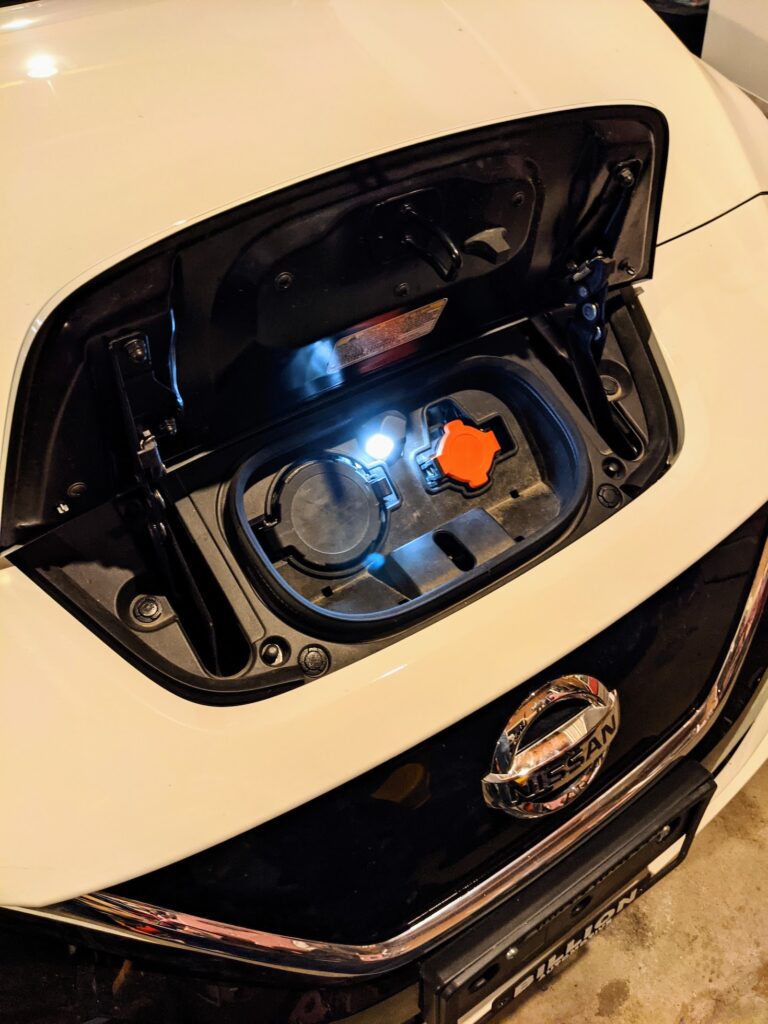
It wasn’t even listed yet.
The fates, it seemed, wanted us off hydrocarbons, even if they wanted us to pay a little more for the privilege. Our hopes were further stoked by an embarrassing episode of personal ignorance.
In my defense, I’m not a car guy. I don’t read about cars until it’s time to buy one. Having never shopped for an EV, I didn’t realize we couldn’t connect a Leaf to the Tesla Supercharger in Mitchell until an hour before my wife planned to take it out for an overnight test drive to Huron, where I already was.
We were deflated. Gas stations pump diesel and ethanol. Why couldn’t Elon Musk put a port for non-Teslas on one side of the Supercharger and a Tesla port on the other? Why won’t he take our money?
“I’m sorry. It’s just not at all practical,” my wife said via text. “We couldn’t go anywhere.”
On the way home the next day, full of anger at a very strange and very rich man and at myself for getting so excited, I stopped by the Mitchell electric-juice stop to glare and sigh.
As I pulled up to the sleek Tesla station outside the not-at-all sleek Goodwill store, fate once again intervened.
A real live human was there. Charging a real Tesla. Not just any human, either. This guy was a full-throttled Teslavangelist.
He struck up a conversation as I examined the charging cords, justifiably curious to know why a guy in a Ford Escape would be staring at such a thing at 8 o’clock on a windy Saturday night.
I spilled every bean. I recounted our whirlwind of a week with visible frustration as he nodded the calm, knowing nod of a guy who’d heard my story a hundred times. When I’d finished, he let loose his own story, which he’d surely told a few hundred times more.
He and his wife both wanted to go electric. They weren’t sure if they could afford it. They worried about the cold weather.
But then they penciled it out. They could upgrade to a used Model S with a 300-mile range, make a car payment similar to what they’d been paying, and it would cost just $20 more each month on their electric bill. An EV engine also has about 20 parts compared to more than 100 in a traditional vehicle. Less parts meant fewer parts that might break. It didn’t even need oil changes. It just made sense.
They made a weekend of their purchase, he said, stopping to charge periodically on their way home from the Twin Cities. The kids loved the smooth, quiet ride, and they loved the savings.
Then he handed me a card: Tesla Owners of South Dakota.
The club was small, but apparently it has business cards.
The true test of a Teslavangelist, I suppose, is whether they can convince the uninitiated to join Team Elon. That didn’t happen. But the encounter did change my perspective.
The next day, my wife and I penciled it out ourselves. The Leaf could take me to work and back with a full charge, even on days cold enough to drain the battery’s range during unplugged hours in the parking lot. At Sioux Falls city electric rates, we could plug in at home and pay less than $40 per 1,000 miles. By comparison, at 25 miles per gallon and a now-cheap $2.50 per gallon, those 1,000 miles would cost $100 in my Ford Escape
We could even take the Leaf out of town sometimes, since campgrounds have electric hookups, often with more voltage than we’d have at home.
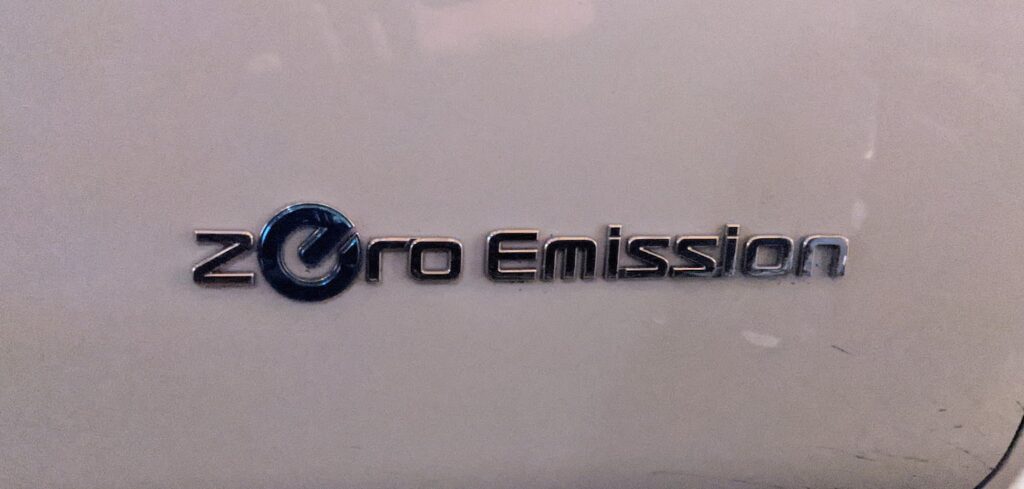
Given that a vehicle is the most expensive thing we all buy that’s sure to lose money, why not get one that costs at least 60 percent less to own?
The economics make it all the more surprising that the U.S. Postal Service didn’t begin taking steps to electrify its fuel-hungry fleet of short-range vehicles until early this year.
For us, like the family in Mitchell, it just made sense. We did the thing, and so far we’re pretty happy. It’s quiet, fun to drive and even satisfies our eldest’s demand for adequate legroom.
The South Dakota Tesla group, it turns out, doubles as the de facto EV Facebook club for South Dakotans. Leaf owners are welcomed with open arms.
We’d still like to see a few less-exclusive fast-charging stations installed, of course. That might just happen, South Dakota Public Broadcasting’s Seth Tupper reported in December, thanks to the state’s share of a settlement with Volkswagen over the company’s emissions test cheating scandal. Sioux Valley Energy, the first owner of our Leaf – they called her EVie before replacing her with a new one – is among the players pushing to build out the state’s charging infrastructure. Sioux Valley tells me its first seven DC fast-charging stations should appear along our interstates by this summer.
When that happens, members of the small but mighty club of Midwestern EV early adopters will probably let us know.
Which is nice, because our pigeons might not. They might be a little too busy delivering bad news to everyone but us.
John Hult is a freelance writer and former newspaper reporter in Sioux Falls currently employed as a science communications specialist for KBRwyle. He might race you at a red light, even though he knows that’s a bad idea.
The Perch offers anyone the chance to share a message through Pigeon605. To suggest a column, email [email protected].
Share This Story
Most Recent
Videos



Looking amazing @dtsiouxfalls and @washpav! Thanks to @jpickthorn for capturing an incredible night.
Nov 26

Enjoy this glow headed into Halloween week! 📸: @jpickthorn
Oct 31
Hope you had a wonderful summer weekend and are recharged for the week ahead! 📸: @jpickthorn
Jun 27
Beautiful way to start a week! 📸: @jpickthorn
Jan 10
Favorite flyover of the year! Merry Christmas from our entire @pigeon605news flock. 🎄🐦 📸: @actsofnaturephotography
Dec 24
They definitely deserve to be treated like holiday royalty and they were! ❤️ these scenes from tonight’s lighting celebration at @sanfordhealth Children’s Hospital. 🎄
Dec 1
The holidays are here! Perfect night @dtsiouxfalls
Nov 27
Happy Halloween from @avera_health NICU babies! Link in bio to see more! 🎃
Oct 31
Did you know @dtsiouxfalls is filled with 👻 stories? Link in bio … if you dare 😱
Oct 8
When it comes to kids parties nobody wants to be cookie-cutter. Link in bio for the story on what’s trending.
Sep 28
Want to stay connected to where you live with more stories like this?
Adopt a free virtual “pigeon” to deliver news that will matter to you.


Are you a little bird with something to share?

Delivering news that matters to you
Years ago, homing pigeons were used to bring us news we needed. Today, your virtual “pigeon” will deliver what you want to know about the place you call home.
All pigeons are free to good homes!
Our Partners