
Street-level services make slow but steady progress connecting with homeless
From before 7 a.m. until as late as 9 p.m. some days, up to eight ambassadors walk throughout downtown as employees of Downtown Sioux Falls Inc.
Dressed in a distinctive red uniform, their focus ranges from sweeping sidewalks and watering flowers to interacting with everyone across downtown — including homeless outreach. There are six permanent full-time members of the team, a seasonal ambassador and a lead ambassador.
“They’re not social workers. They’re not law enforcement. But they are a first point of contact,” said Joe Batcheller, president of Downtown Sioux Falls Inc.
“In a lot of situations, they might be able to intervene and engage with folks to determine if they have any kind of health crisis, if they need to go to The Link or need other services. They can provide that connection.”
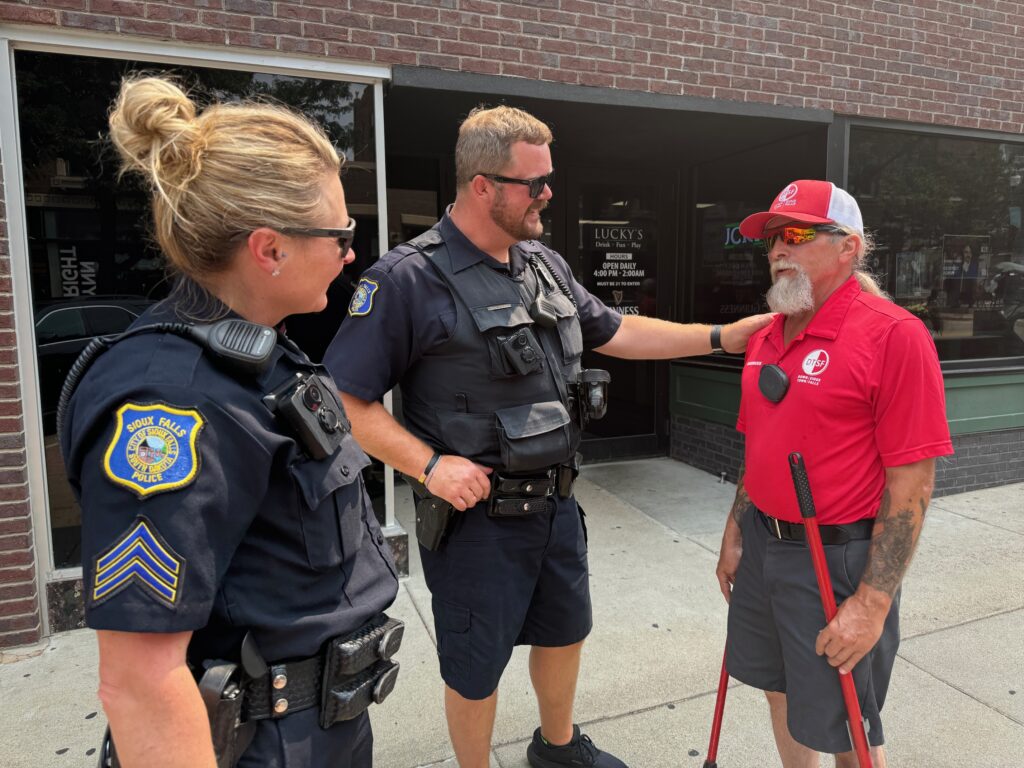
Sometimes, it requires emergency responders or law enforcement, while other times the ambassadors are able to address the situation themselves, Batcheller said.
“I think with the unhoused population in downtown, we have seen a bit of an uptick this year,” he said. “And it is a top issue. It really is a coordinated effort.”
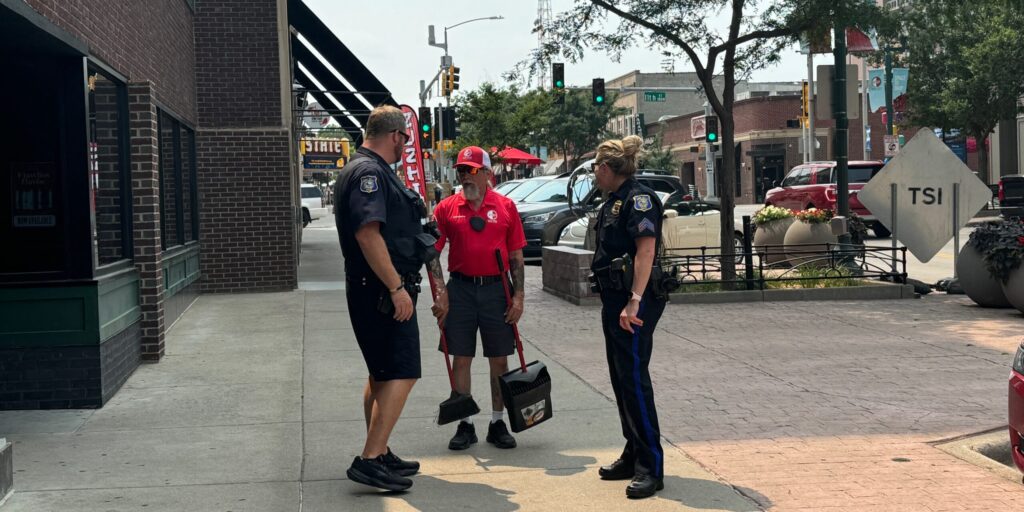
Batcheller said he would “love to have twice as many ambassadors,” including coverage later into the evening and on weekends. Some cities have ambassadors solely dedicated to homeless outreach while others focus on cleanliness.
“That’s where I’d like to go with it, but it’s all a function of funding,” he said. “We took a big step forward with the ambassador program, but I see that as a future iteration.”
Last year, South Dakota Urban Indian Health was selected by the city of Sioux Falls to pilot its homeless street outreach program.
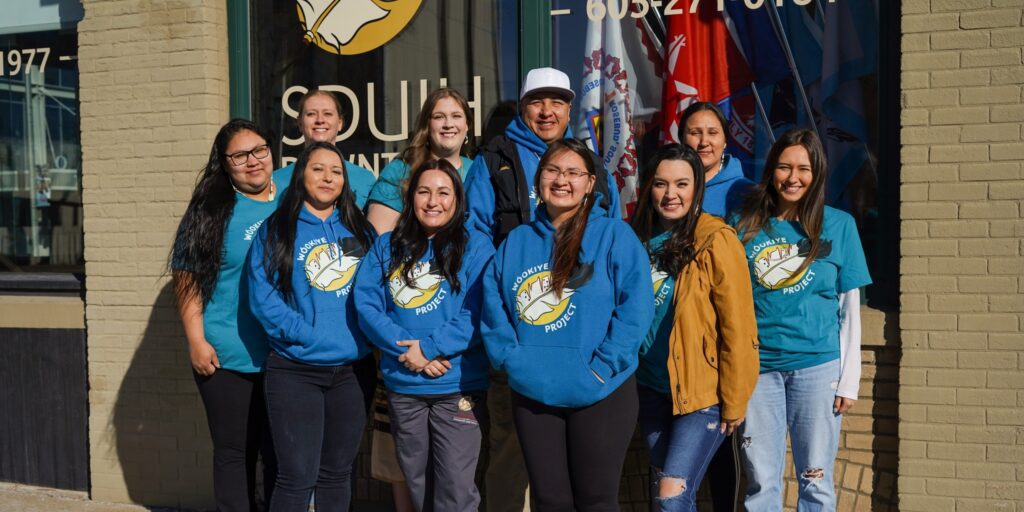
Its Wo’Okiye Project is designed to address some of the specific needs of the Native American population, who represented a disproportionate number of the homeless population. It was established two years ago via a partnership with Minnehaha County and the Sioux Falls Police Department with MacArthur Foundation funding.
Carly Uthe, the communications director at SDUIH, said the primary goal was to identify an “alternative solution” to law enforcement for members in the community, business owners and others to call when situations arose.
SDUIH street team members serve an area from Minnesota Avenue east to Cleveland Avenue, between Russell and 14th streets.
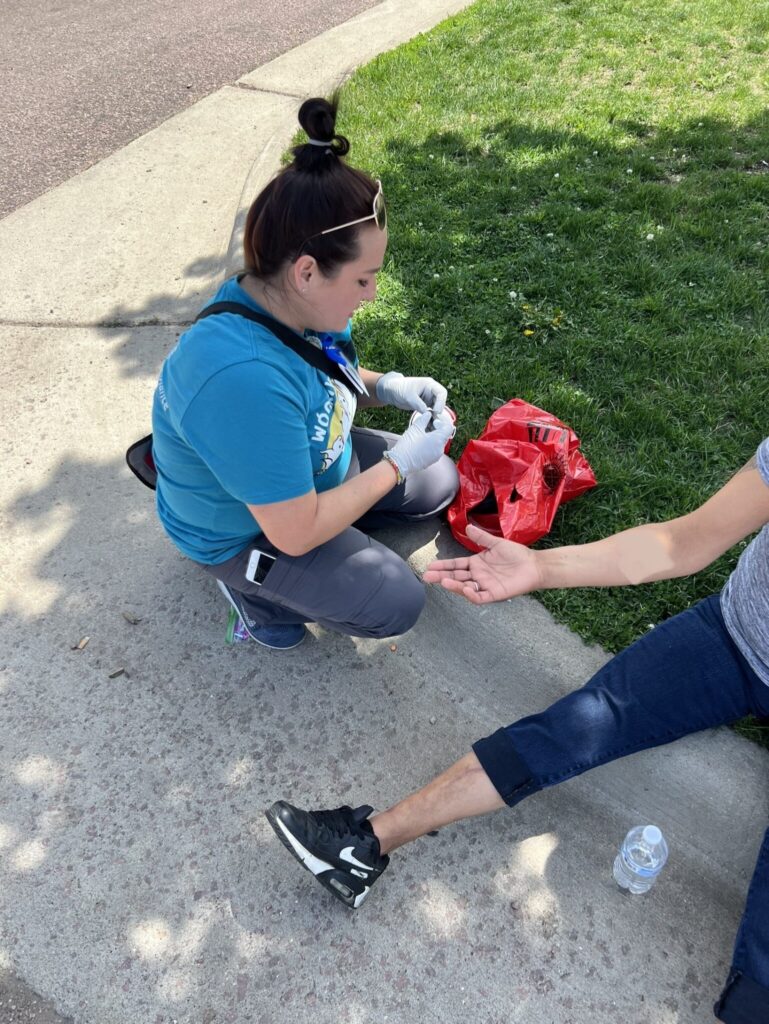
“We will respond to all calls that fall within the areas we serve,” Uthe said. “Some examples of the calls we respond to include an individual intoxicated on a bench, panhandling, mental health situations, etc.”
The funding from the city, which was done through a request for proposals, allowed for hiring additional staff for the Wo’okiye team.
“We have seen a lot of really great things over the year. We are proud to say that our relationship with the city, the county, the Sioux Falls Police Department and other community partners is stronger than ever,” Uthe said. “There are still barriers in our day-to-day work. For example, some of the barriers we see are access to housing, availability of jobs and transportation.”
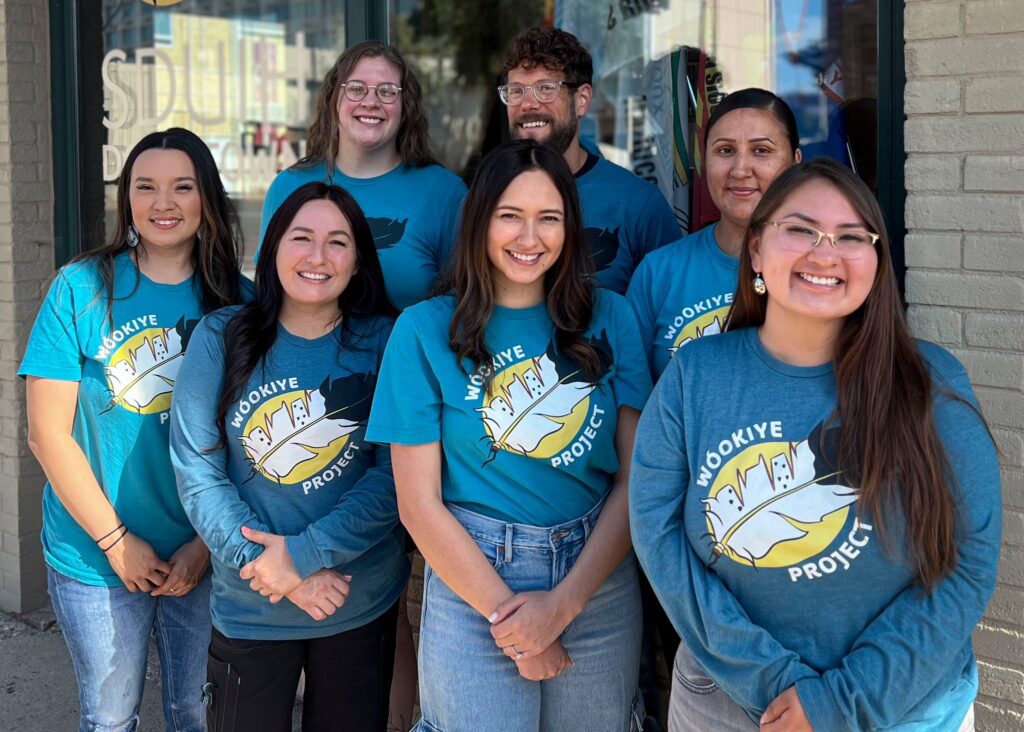
Still, from April to June the year, the organization helped 14 people gain housing, she said, while adding there has been an increase in families seeking emergency housing services.
“While we can’t provide emergency housing, we have been able to connect these individuals to community services and resources,” Uthe said. “Additionally, we have seen an increase in the number of unhoused folks during these warmer summer months.”
The Wo’okiye team provides both street outreach services and wraparound services/case management. Uthe said street outreach services involve responding to low-risk situations, providing basic first-aid and vital checks, conducting well-being checks, locating individuals for transportation to appointments and conducting street encampment checks.
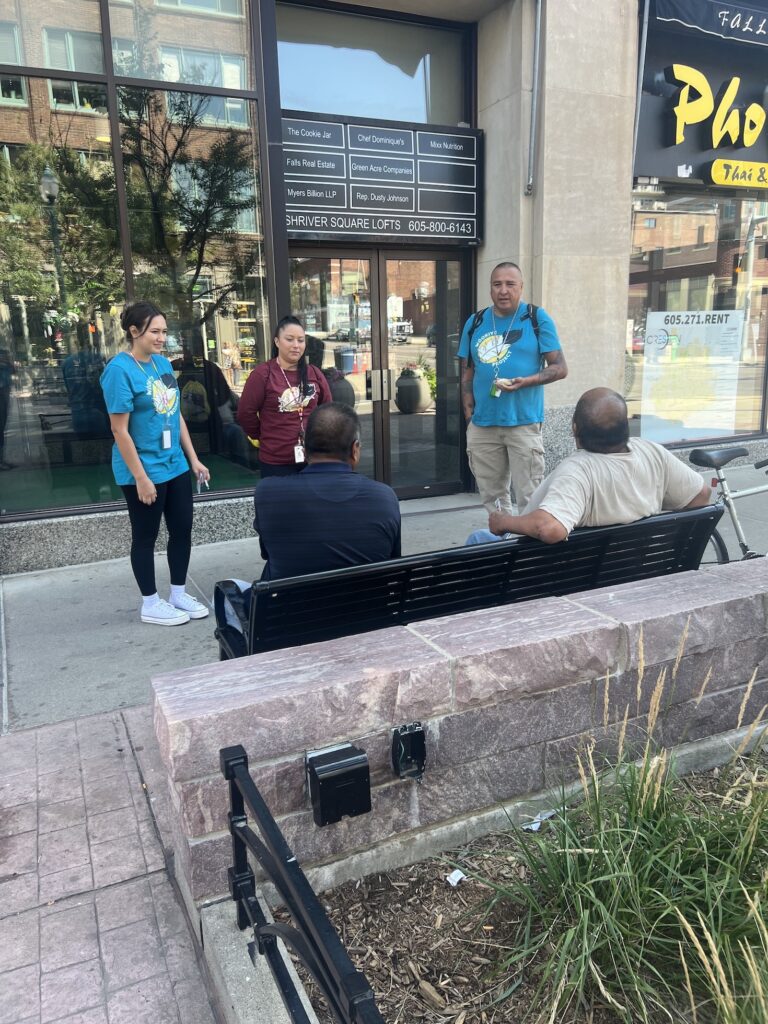
“We hope that once our downtown business partners are more familiar with us and our services, they will utilize us more because we truly have such great relationships with our unhoused relatives,” Uthe said. “Our team is comprised of therapists, certified nurses, Community Health Workers and other highly trained individuals. Most importantly though, our team is culturally represented and has lived experiences.”
Estimates vary in terms of what percentage of individuals experiencing homelessness are Native American, but Uthe puts it at nearly 40 percent.
“While the Wo’okiye team helps unhoused individuals of all races, our team can connect culturally to build better relationships and trust, Uthe said. “With an Indigenous, harm-reduction and trauma-informed approach, we are able to meet our relatives where they are at, and we truly care so deeply for all of them.”
Midwest Street Medicine, a nonprofit bringing care to people experiencing homelessness, also is bringing street-level services to the community.
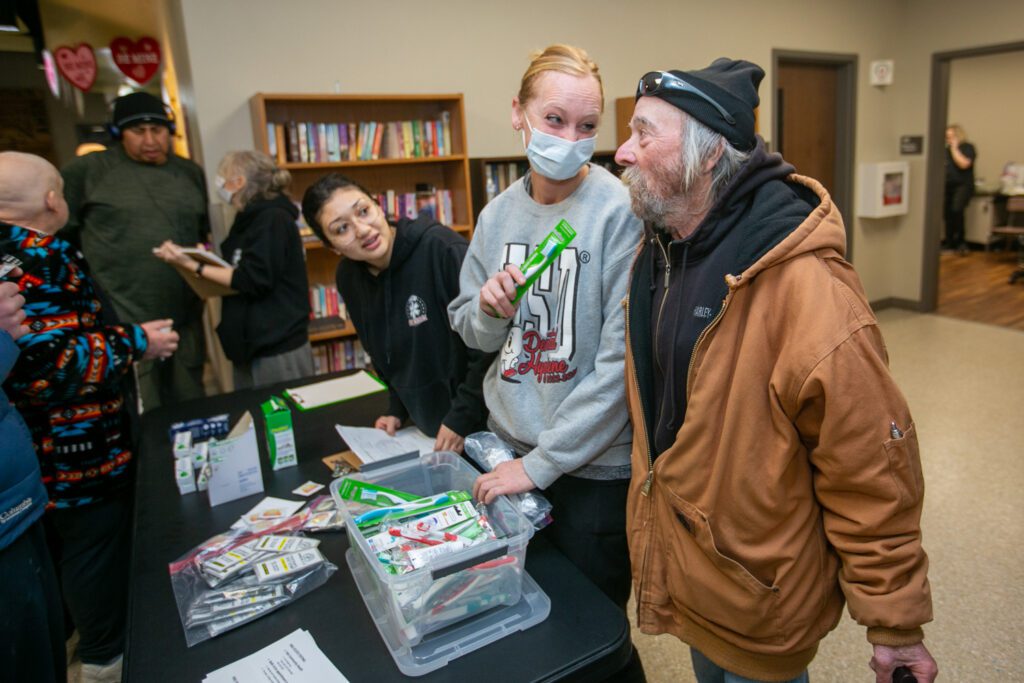
The organization recently received multiple grants to further its work.
Dr Melissa Dittberner, known as “Dr. Mo,” co-founded the organization in 2023.
“I can’t tell you how many people we’ve met who can’t afford their copay on medications,” Dittberner said. “We spend a good amount of time getting people medication they’ve already been prescribed.”
Midwest Street Medicine has been “running hard” for a year without funding, Dittberner said. The grants, from the Sioux Falls Area Community Foundation and the state of South Dakota, will allow it to expand and cover more medications, treat illnesses and many other needs.
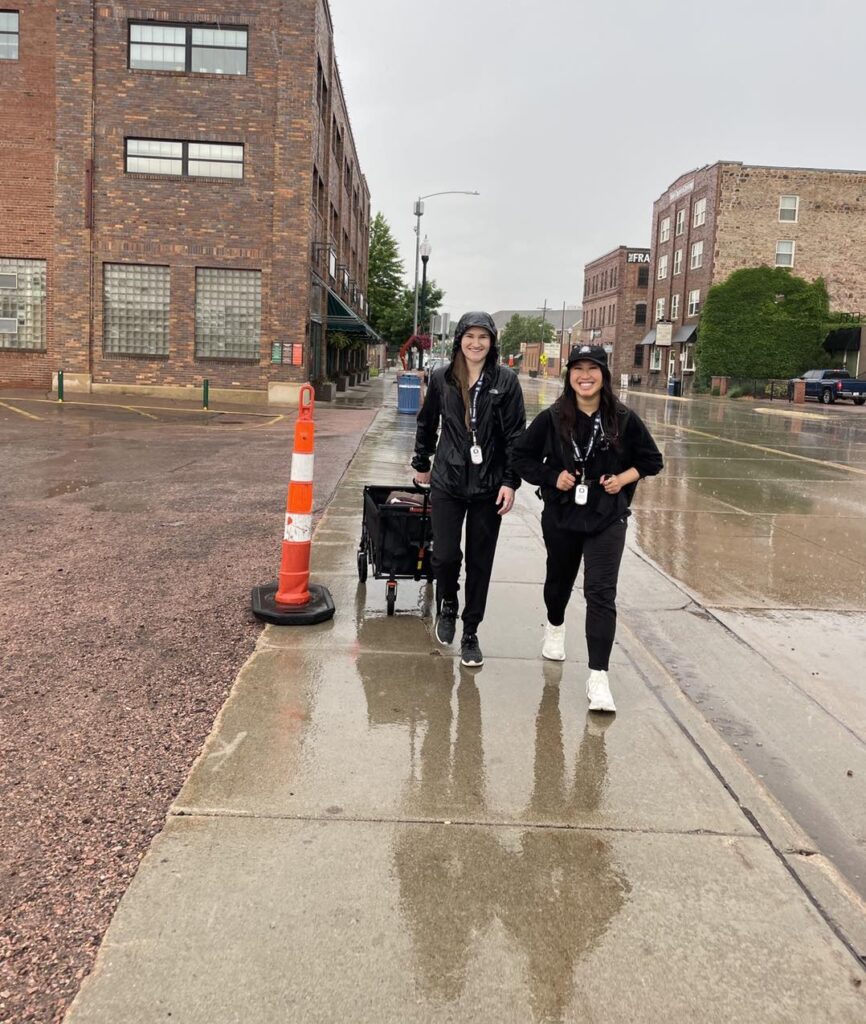
“When other people get a little injury, we might be like ‘whoops’ and treat it right away. But when these people don’t have access to meds, they can become extremely sick from an infection,” Dittberner said. “It really feels like the 1700s in that way; we see people lose fingers and limbs from completely treatable things. It shouldn’t have to be that way.”
Midwest Street Medicine is made up of about 25 volunteers and many have lived experiences with mental health, Dittberner said.
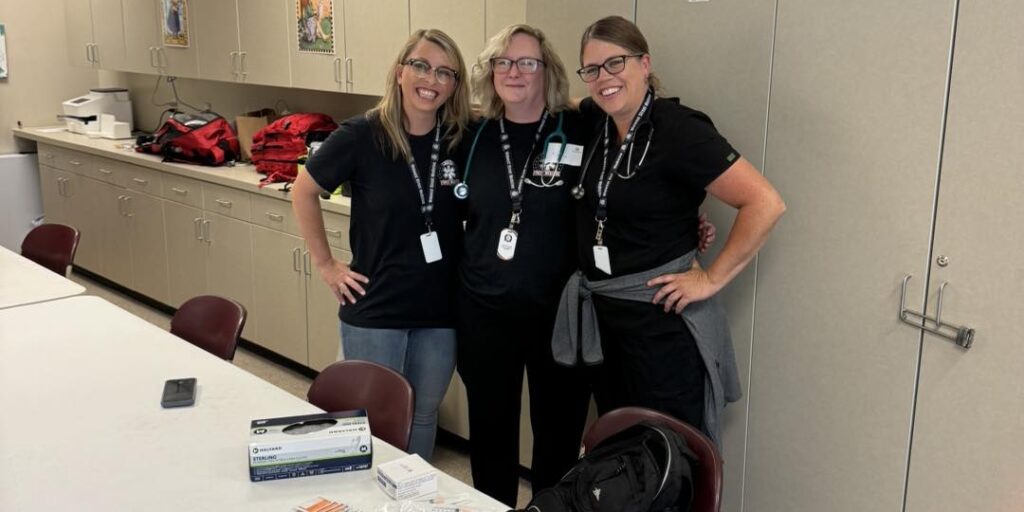
“We see frequently that unhoused folk say they can’t get to the doctor, and if they do, they don’t understand the medical terminology, so it becomes a frightening experience,” Dittberner said. “Our volunteers translate between the unhoused and doctors. It is a little more comfortable to be with folk who look and sound like you.”
In the summer, Midwest Street Medicine volunteers spend time asking how they can help, handing out clean water and helping people use resources they can get already, she said.
“Last winter, we lost two clients to the weather,” Dittberner said. “That really put us into team mode, and now we have protocols for if someone gets kicked out of the unhoused shelters. People get kicked out for the craziest of things in my opinion.”
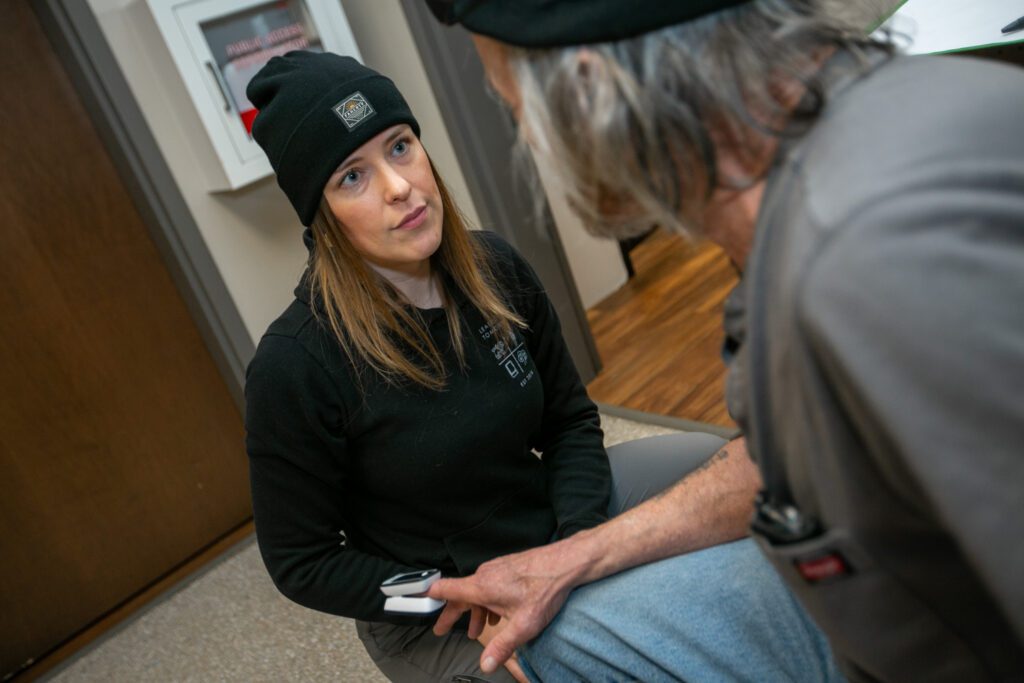
Dittberner mentioned seeing a significant number of frostbite cases last winter. She described the blisters, as well as the horrifying experience of people losing their toes.
“Something else that providers can stay aware of is new medications for substance abuse disorders,” Dittberner said. “I’m not a huge pusher of meds, but they can be a springboard to help clear someone’s head.”
Midwest Street Medicine volunteers also have seen a syphilis outbreak, “which is alive and well in South Dakota,” she said. “We might get syphilis and quickly be able to treat it. But when left untreated, it can be very dangerous.”
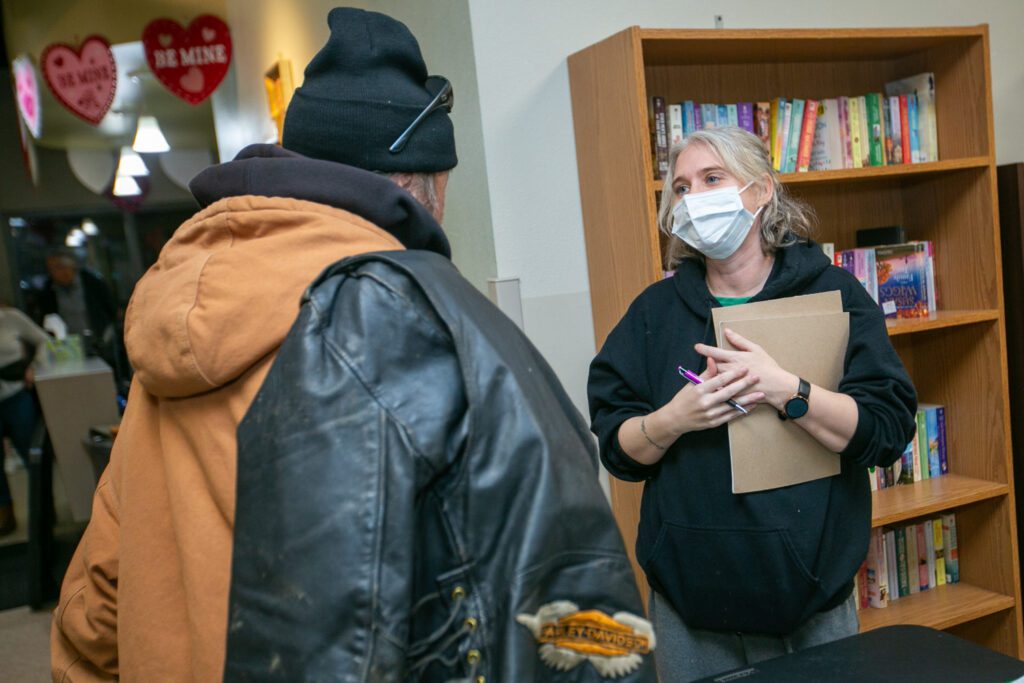
On top of everything else, Midwest Street Medicine volunteers are the “connecting pieces” to help folks get to and from appointments, navigate getting documents and driver’s licenses, and helping people get to treatment programs.
Dittberner said she’s always looking for volunteers; more information can be found here.
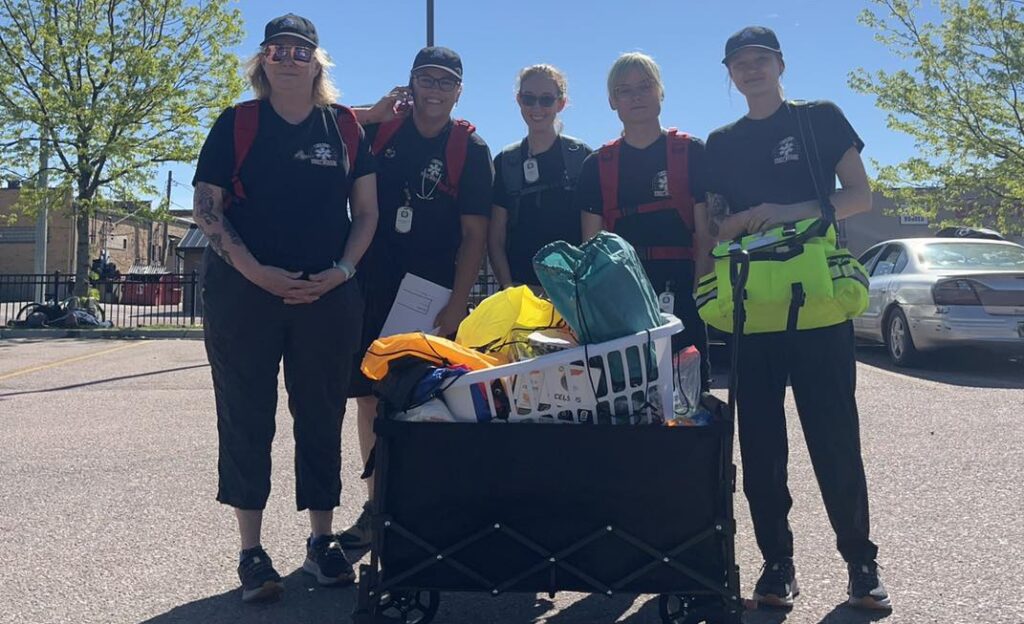
The street teams are beneficial, Police Chief Jon Thum said, calling them a way to meet people in a more culturally sensitive way “that may have more impact or opportunity to build relationships and transition them to a position of more stability within their housing situation.”
Expectations for the street teams are “very high,” said Michelle Treasure, the city’s homeless coordinator. “People want to see them out on the street, talking to people, and that’s their goal.”
On top of that is a need to provide wraparound services — case management for everything from employment and housing to assistance with mental health and addiction.
“It’s been slow, but it’s also a new program, so it’s really hard,” Treasure said, especially for Urban Indian Health. “I think internally they’ve done a lot of work just trying to figure out how to do it better.”
Mayor puts increased focus on addressing growing behavior issues downtown
Share This Story
Most Recent
Videos

Looking amazing @dtsiouxfalls and @washpav! Thanks to @jpickthorn for capturing an incredible night.
Nov 26

Enjoy this glow headed into Halloween week! 📸: @jpickthorn
Oct 31
Hope you had a wonderful summer weekend and are recharged for the week ahead! 📸: @jpickthorn
Jun 27
Beautiful way to start a week! 📸: @jpickthorn
Jan 10
Favorite flyover of the year! Merry Christmas from our entire @pigeon605news flock. 🎄🐦 📸: @actsofnaturephotography
Dec 24
They definitely deserve to be treated like holiday royalty and they were! ❤️ these scenes from tonight’s lighting celebration at @sanfordhealth Children’s Hospital. 🎄
Dec 1
The holidays are here! Perfect night @dtsiouxfalls
Nov 27
Happy Halloween from @avera_health NICU babies! Link in bio to see more! 🎃
Oct 31
Did you know @dtsiouxfalls is filled with 👻 stories? Link in bio … if you dare 😱
Oct 8
When it comes to kids parties nobody wants to be cookie-cutter. Link in bio for the story on what’s trending.
Sep 28
Want to stay connected to where you live with more stories like this?
Adopt a free virtual “pigeon” to deliver news that will matter to you.




Are you a little bird with something to share?
Delivering news that matters to you
Years ago, homing pigeons were used to bring us news we needed. Today, your virtual “pigeon” will deliver what you want to know about the place you call home.
All pigeons are free to good homes!
Our Partners