
Right care, right time: Reforming juvenile justice in South Dakota
This paid piece is sponsored by LSS.
Youth incarcerated as juveniles are three times more likely to face adult incarceration. When children who commit nonviolent offenses are placed in locked detention centers, it increases their chances of deeper involvement in the justice system later in life.
Over the past decade, LSS has worked with the state of South Dakota and partner organizations to revolutionize the approach to juvenile justice for youths age 10 to 17.
Two pivotal initiatives — the Juvenile Detention Alternatives Initiative and the Juvenile Justice Reinvestment Initiative — have profoundly reshaped the state’s juvenile justice system. Throughout this period, LSS has helped lead these initiatives, advocating for youth and families, and influencing processes, policies and change.
“Our commitment to supporting youth and ensuring they have a safe place to be has been the driving force behind our involvement in the evolution of juvenile justice in South Dakota,” said Rebecca Kiesow-Knudsen, LSS president and CEO. “A supportive, community-based approach makes all the difference for kids and their families.”
Juvenile Detention Alternatives Initiative
In 2011 and before, South Dakota experienced disproportionately high juvenile incarceration rates per capita, outpacing major cities like Chicago, New York City and Los Angeles. Many of these incarcerations, the state discovered, were for low-level offenses such as underage drinking, shoplifting and runaway behaviors.
Recognizing the long-term consequences of unnecessary juvenile incarceration, South Dakota took action to reform its system by implementing the Juvenile Detention Alternatives Initiative in Pennington and Minnehaha counties, focusing on alternatives that keep youths engaged in their communities.
The initiative set out to change the way the system responded to law enforcement-involved youths by looking beyond the numbers and understanding the reason for incarceration. To accomplish this, a risk assessment tool was developed to determine two key questions: Is the youth a danger to others? And are they likely to show up for their court date?
“The risk assessment showed that many youth didn’t need to be incarcerated, but at the time, there weren’t appropriate alternatives to detention,” said Amy Witt, LSS chief program officer. “The goal was clear: We needed to create the right options to care for youth in the right place at the right time.”
LSS began working with officials in Pennington County to develop the Reception Center, Shelter Care and Evening Reporting Center. This became known as LSS Arise Youth Center in 2013, followed by its counterpart in Sioux Falls in 2016.
Since LSS opened the Arise Youth Centers, almost 15,000 children and teens have learned to make better choices that lead to positive changes in their lives. In 2024, 100 percent of teens in the runaway and homeless program enrolled in school or a GED program. The program is committed to helping children and teens find employment opportunities, build healthy relationships and avoid further involvement in the justice system.
Juvenile Justice Reinvestment Initiative
While JDAI focused on keeping kids out of locked detention centers before they saw a judge, the state recognized the need for services for youths after a court decision was made. The Juvenile Justice Reinvestment Initiative brought about a shift toward proven programs that help youths stay in their communities, expand access to diversion programs and create better long-term outcomes.
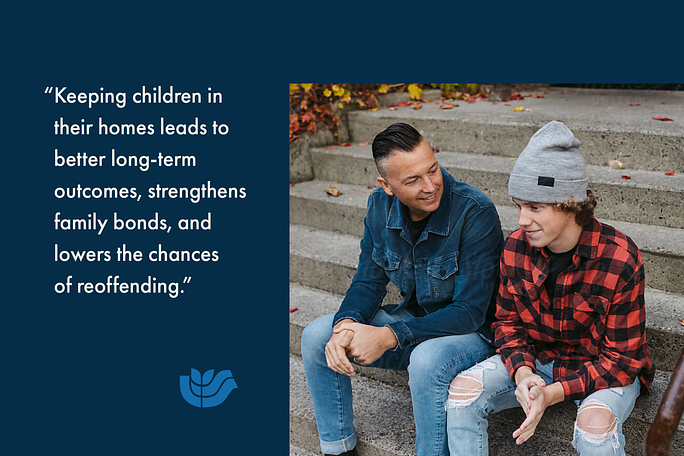
“The goals were to reduce out-of-home placements, increase community-based services and save money that could be reinvested into more effective programs,” Witt explained. “Housing kids outside their homes is not only costly but also often counterproductive. Keeping children in their homes leads to better long-term outcomes, strengthens family bonds and lowers the chances of reoffending.”
One of the most common charges for children involved with law enforcement is simple assault, such as conflicts at home that turn physical.
“This is why functional family therapy is so important,” Witt said.
Functional family therapy is a family-based therapy that focuses on building skills to improve family relationships, reduce behavioral issues and improve school performance. “It allows for earlier intervention, offering both youth and families the tools to resolve conflicts peacefully and prevent violence,” Witt said.
What it means to youths and their families
The story of juvenile justice reform in South Dakota is one of continuous change, with a strong commitment to improving long-term outcomes for all youths.
“It’s been amazing to see the number of kids and families that we’ve helped over the years,” said Staci Jonson, vice president, program operations.
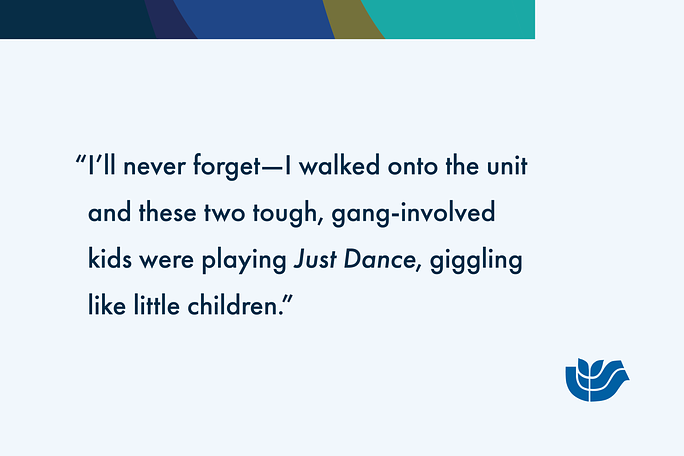
“Seeing the light come back to a child’s eyes never gets old. It’s as much of a gift to me as it is to them to see them become children again. I’ll never forget — I walked onto the unit to see two tough, gang-involved kids playing Just Dance, giggling and just being kids.”
“Because of circumstances, often beyond their control, many of the youth we serve have had to grow up quickly,” Jonson continued. “That’s why we do this. It’s because children have a safe place to be and get to be who they are.”
Share This Story
Most Recent
Videos



Looking amazing @dtsiouxfalls and @washpav! Thanks to @jpickthorn for capturing an incredible night.
Nov 26

Enjoy this glow headed into Halloween week! 📸: @jpickthorn
Oct 31
Hope you had a wonderful summer weekend and are recharged for the week ahead! 📸: @jpickthorn
Jun 27
Beautiful way to start a week! 📸: @jpickthorn
Jan 10
Favorite flyover of the year! Merry Christmas from our entire @pigeon605news flock. 🎄🐦 📸: @actsofnaturephotography
Dec 24
They definitely deserve to be treated like holiday royalty and they were! ❤️ these scenes from tonight’s lighting celebration at @sanfordhealth Children’s Hospital. 🎄
Dec 1
The holidays are here! Perfect night @dtsiouxfalls
Nov 27
Happy Halloween from @avera_health NICU babies! Link in bio to see more! 🎃
Oct 31
Did you know @dtsiouxfalls is filled with 👻 stories? Link in bio … if you dare 😱
Oct 8
When it comes to kids parties nobody wants to be cookie-cutter. Link in bio for the story on what’s trending.
Sep 28
Want to stay connected to where you live with more stories like this?
Adopt a free virtual “pigeon” to deliver news that will matter to you.



Are you a little bird with something to share?
Delivering news that matters to you
Years ago, homing pigeons were used to bring us news we needed. Today, your virtual “pigeon” will deliver what you want to know about the place you call home.
All pigeons are free to good homes!
Our Partners