

Patient finds help for severe depression with ECT
This paid piece is sponsored by Avera Health.
When Lisa Muldbakken’s depression was its worst, she felt enclosed in a dark place. Counseling and medication shed some light, but things really started to change when she tried electroconvulsive therapy, or ECT.
“I’ve been anxious since I was a child, and a few years ago, I felt like all control was lost,” Muldbakken said.
With her husband away in the Navy, her father aging and her own breast cancer diagnosis, her major depression and its darkness nearly overwhelmed her. Avera Behavioral Health professionals recommended ECT.
“After the ECT sessions, everything seemed more vibrant, and my head isn’t so heavy,” she said. “There is some memory loss, but the relief is significant.
“A person with depression has an illness like cancer or diabetes,” she continued. “I trust my team, and they have helped me so much. I don’t want to go back to the dark space.”
Understanding ECT and depression
ECT is a treatment used for people with major depression, bipolar or schizoaffective disorder.
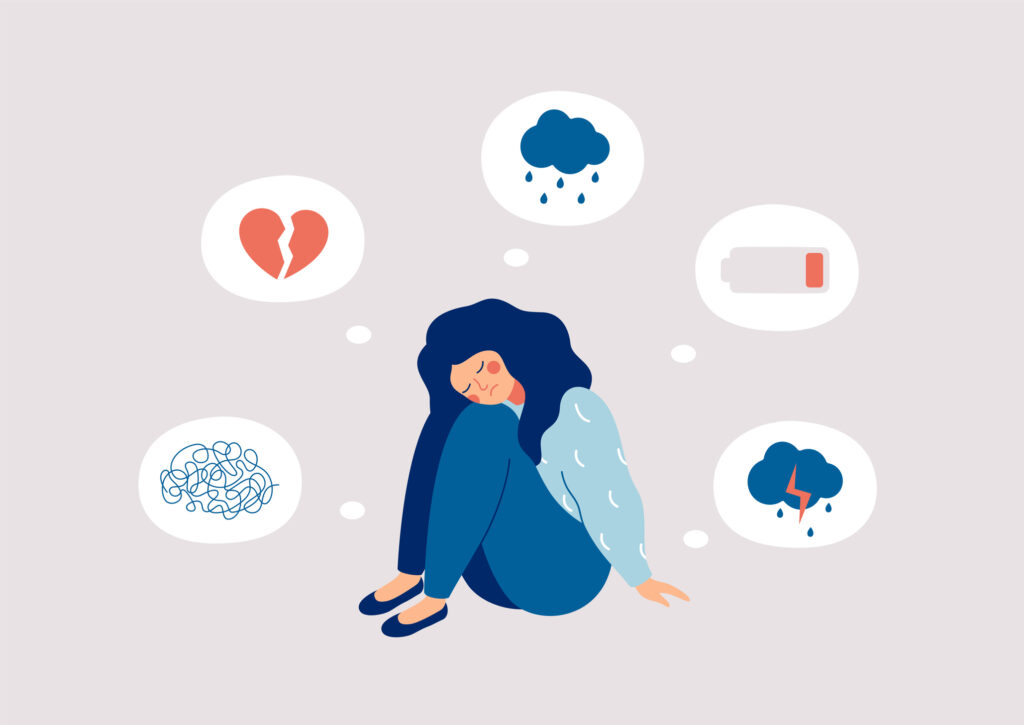
“ECT is not a first-line treatment; it is for conditions with severity,” said Dr. Matthew Stanley, Avera Behavioral Health psychiatrist. “It can really help people for whom medications are no longer providing relief and affects a broad spectrum of issues.”
ECT treatment works by producing changes in brain chemistry through a medically induced and professionally monitored seizure. It often produces positive outcomes more quickly than medications alone.
People who receive ECT as their primary treatment generally experience 80 percent to 90 percent improvement in areas such as mood, motivation, interest, energy and sleep patterns.
During ECT treatment, highly trained professionals use an electrical current to produce a closely supervised, medically induced seizure. Patients receive sedation for comfort and relaxation, and are asleep during the procedure under constant medical supervision.
Why ECT helps for depression
ECT was pioneered in the 1930s. Researchers hypothesized that seizures could treat people with schizophrenia based on observations of people with epilepsy. They found that seizures were most effective treating mood disorders.
Depression and anxiety medications have limitations because of the chemical nature in which they operate. Meds affect certain pathways, receptors and parts of the brain. ECT, however, is a physical effect; therefore, it can have a more broad-spectrum effect for the patient.
Since severe cases of depression can lead to catatonic or psychotic states of mind, ECT prevents the worst from occurring. It can be considered for patients who are working with a psychiatrist so that the after-care aspects of the therapy occur properly, Stanley said.
“The treatment has evolved greatly, and patients have a lot more comfort, and the situation is closely monitored for ECG and brain waves – it’s a very safe procedure,” Stanley said.
Help continues with maintenance treatments
Since beginning ECT, Muldbakken gradually has reduced the frequency.
One of the hardest parts of depression is feeling like you’re a condition. “The whole team, not just my psychiatrist, but everyone, they treat me like a human,” she said. “They keep me in the center of the entire process.”
Learn more about behavioral health treatments that may help you or your loved ones. If you need help but don’t know where to go, call Avera’s 24/7 hotline at 800-691-4065.
Get more health and wellness tips at AveraBalance.org.
Share This Story
Most Recent
Videos



Looking amazing @dtsiouxfalls and @washpav! Thanks to @jpickthorn for capturing an incredible night.
Nov 26

Enjoy this glow headed into Halloween week! 📸: @jpickthorn
Oct 31
Hope you had a wonderful summer weekend and are recharged for the week ahead! 📸: @jpickthorn
Jun 27
Beautiful way to start a week! 📸: @jpickthorn
Jan 10
Favorite flyover of the year! Merry Christmas from our entire @pigeon605news flock. 🎄🐦 📸: @actsofnaturephotography
Dec 24
They definitely deserve to be treated like holiday royalty and they were! ❤️ these scenes from tonight’s lighting celebration at @sanfordhealth Children’s Hospital. 🎄
Dec 1
The holidays are here! Perfect night @dtsiouxfalls
Nov 27
Happy Halloween from @avera_health NICU babies! Link in bio to see more! 🎃
Oct 31
Did you know @dtsiouxfalls is filled with 👻 stories? Link in bio … if you dare 😱
Oct 8
When it comes to kids parties nobody wants to be cookie-cutter. Link in bio for the story on what’s trending.
Sep 28
Want to stay connected to where you live with more stories like this?
Adopt a free virtual “pigeon” to deliver news that will matter to you.




Are you a little bird with something to share?

Delivering news that matters to you
Years ago, homing pigeons were used to bring us news we needed. Today, your virtual “pigeon” will deliver what you want to know about the place you call home.
All pigeons are free to good homes!
Our Partners