
The testing involves four assessments:
- King-Devick test
- Balance assessment
- Vestibular/ocular-motor screening
- ImPACT testing
Those participating receive a copy of the results. For Sanford patients, the results are also entered into your chart and available to your providers. After being diagnosed, patients can schedule an appointment to be re-evaluated and begin the recovery process.
All concussions are different
The existence of pre- and post-injury testing demonstrates that diagnosis and treatment of concussions have come a long way in the last 20 years. Neuropsychology is a big part of that climb.
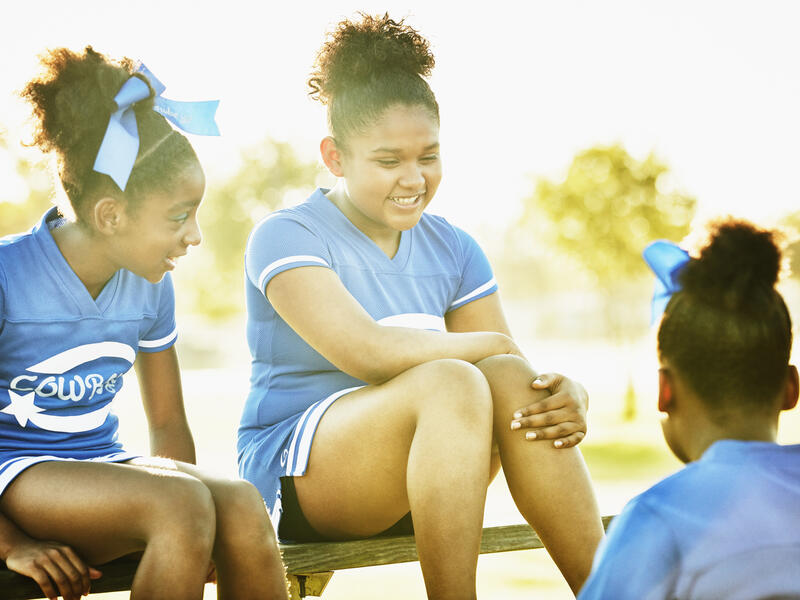
That role includes educating patients as well as their parents. In many instances, those affected start out with a view of their injury that is out-of-date. Combs then explains how things are going to work.
“Concussions are not one-size-fits-all,” she said. “There is a great variability. If I had a concussion and my teammate also had a concussion those two injuries might be very different. That’s why taking an assessment is so important.”
Related: Sports psychologist helps athletes build healthy attitudes
With an assessment comes explanation. Combs will explain the injury and give a patient insight into why they’re feeling the way they are.
“Concussions can be a very weird thing to go through,” she said. “It’s quite different from any other sports injury or any injury in general because our brain is involved in everything we do: How we function, our emotions, movements — everything. So when it’s not functioning it can affect many areas of our life.”
Helping patients through that initial unfamiliarity is a valuable part of being a neuropsychologist, particularly as it applies to student-athletes.
“A lot are very dedicated and invested in what they’re doing,” Combs said. “So they’re very upset when we have to remove them temporarily from their sport, or reduce their engagement, while they’re healing. At the clinic, those conversations go a lot better if they understand why we’re doing what we’re doing. They need to know these are preventive measures, not a punishment.”
Education the key
It is at this time Combs can tell them the way they’re feeling is not going to last. They are going to get better and that recovery process will most likely involve more than just taking some time off from activities. They will be able to take an active role in speeding up their recovery.
“How we regard physical activity with a concussion has changed dramatically over the last decade,” Combs said. “It’s not just about laying down and resting until you don’t feel the symptoms anymore. There are different types of concussions, and with some of them you will not get better until there is controlled, non-contact physical activity. You need to be exposed to physical activity — it’s actually part of the functional rehab.”
Combs is a former college volleyball player who was also a swimmer and a soccer player growing up. That sports background led to an interest in sports psychology, which in turn led to offering care to athletes who suffer concussions.
Prior to moving on to Sanford, she was doing post-doctorate work at the University of Pittsburgh, which has one of the leading concussion clinics in the country. If there was any doubt she was on the right career path, that ended it. She’s passionate about helping athletes get back to doing what they like to do.
“I don’t think there’s a sport I haven’t dealt with. Everything from the traditional sports like basketball and football to tennis, auto racing and golf — to more exotic sports like Brazilian jiu-jitsu,” Combs said. “I’ve also seen athletes on every level, from middle school to pro sports and everything in between. I’ve always been intrigued by the psychological complexity of athletes and how they’re impacted by different things.”