Jaw pain, teeth grinding, tension headaches? Stress could be affecting your oro-facial health
This paid piece is sponsored by Siouxland Oral & Maxillofacial Surgery.
Your face, jaw, teeth and mouth might be telling you you’re under stress.
And that wouldn’t be uncommon. The pandemic has had a large effect on our mental and physical health, with many Americans reporting experiencing significantly more stress during this time.
Stress affects everyone in many ways both physically and emotionally, so it’s important to pay attention to the many different signs our bodies tell us to be able to recognize those warning signs. That includes your oro-facial health.
Oro-facial pain and disfunction often have multiple contributing factors and are almost always made worse by stress and poor management of associated conditions. Often, it is necessary to involve a team of providers to help address these contributing problems, including a general dentist, oral surgeon, physical therapist, neurologist, TMD specialist, psychiatrist, etc.
The experts at Siouxland Oral & Maxillofacial Surgery have found the following list of oro-facial complications can be exacerbated by stress, causing pain and disfunction:
- Jaw joint disfunction – osteoarthritis of the temporomandibular joint also known as TMJ, systemic rheumatological disease affecting the TMJ and internal derangement of the TMJ. The temporomandibular joint is the one that connects your mandible, or lower jaw, to your skull. This joint can be found in front of the ears on both sides of the head. It’s the joint that allows the jaw to open and close, therefore enabling you to speak and eat.
- Myofascial pain disorder – poorly characterized pain affecting patient’s masticatory muscles exacerbated by function and stress. This is a chronic pain disorder where pressure on sensitive points, often known as trigger points, causes pain in the muscle and in other parts of the body, often seemingly unrelated.
- Teeth grinding, or bruxism – nocturnal bruxism is often associated with undiagnosed or poorly controlled obstructive sleep apnea. Diurnal bruxism or tooth clenching is often caused directly by stress.
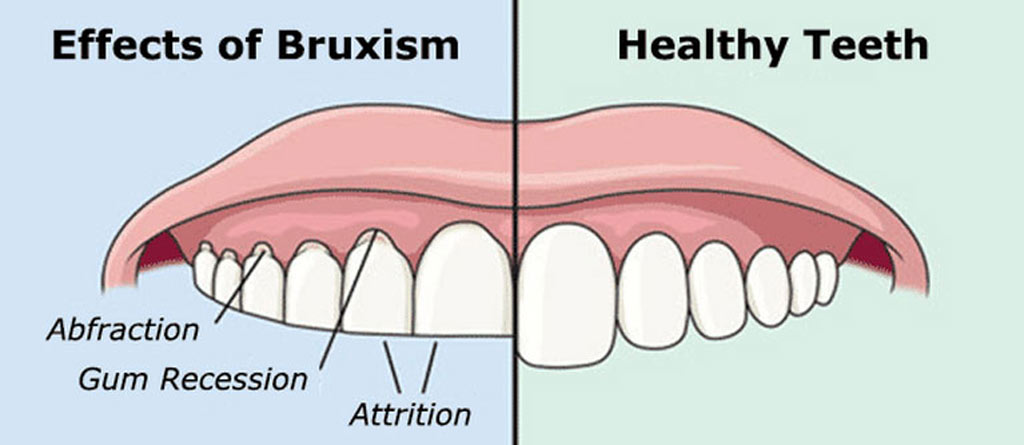
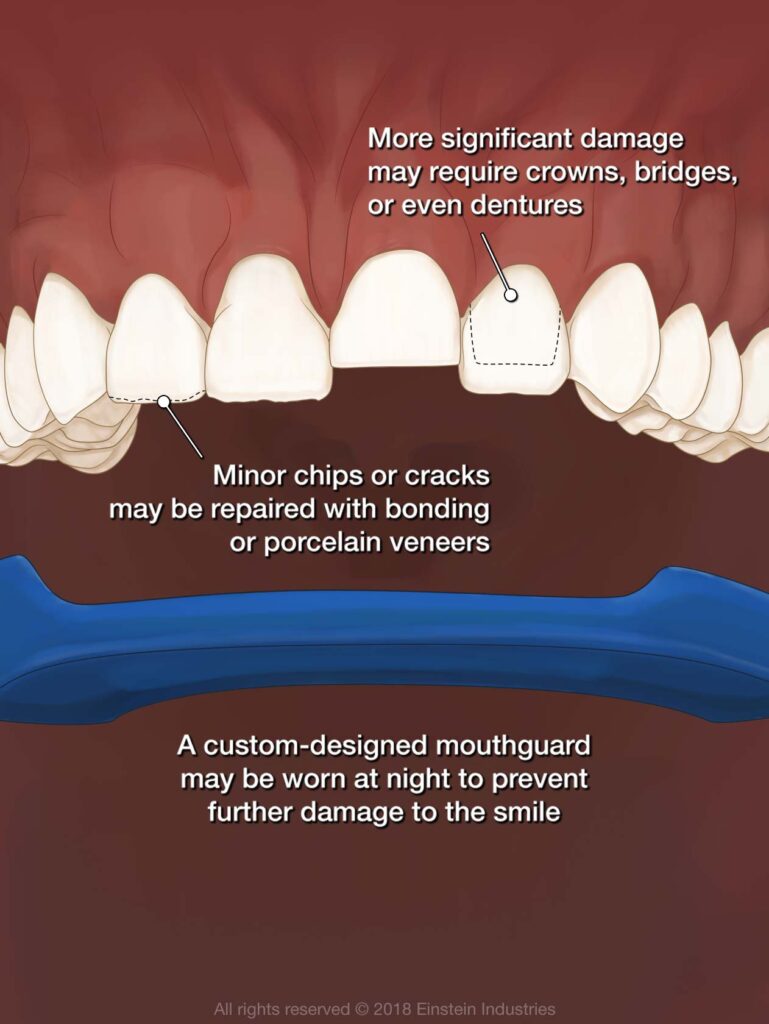
- Cracked teeth – a long-term complication of persistent bruxism, heavy function or clenching. It can lead to the loss of teeth and need for restorative dental care, which is expensive.
- Poor oral hygiene – caused by a lack of good brushing and flossing. If you are too busy or forget to keep up with your dental hygiene, you can wind up with tooth decay and gum disease.
- Cold sores/canker sores – can be triggered by a weakened immune system, stress, trauma or herpes simplex virus.
- Tension-type headaches and migraines – often modulated by stress levels and cortisol levels.

Where does your stress come from? It’s important to get down to the root of the problem so you can find the best solution to ease your stress levels. Once you’ve determined why you’re experiencing stress by identifying the different causes, come up with a plan to minimize the cause. Be sure to seek help from your primary care physician or mental health professional. Some recommendations when dealing with painful oral symptoms are as follows.
- Communicate with your dentist regarding treatment options.
- Teeth grinding can be addressed by asking your dentist about getting a custom-fitted night guard. Night guards can help to prevent tooth damage caused from grinding and clenching your teeth. They also create a cushion to remove stress on your aching muscles and joint tissues.
- Avoid specific foods when you’re in pain. Hard or crunchy foods and chewing on ice can add to or make the painful symptoms worse.
- Don’t cope with tobacco and alcohol. Using these products can make your oral symptoms worse when people often think it will help lessen them.
- Manage pain through gentle massaging, physical therapy or pain-relief medications.
- Ask your dentist or doctor about prescription medications. Anti-inflammatory drugs can help inflammation of the jaw joint. Antiviral drugs may prevent cold sores.
- Avoid the sun or use a sunscreen with at least an SPF of 30 to help reduce cold sores.
During times such as the pandemic, it is natural to feel stress, anxiety, grief and worry, but in turn it is even more important to focus on healthy ways to cope with stress. In doing so, loved ones and others around you will feel more at ease, therefore becoming resilient to stress. Take care of yourself, recognize the signs, and see your medical professionals for help.
Please look for our future monthly articles covering a variety of dental and surgical topics.
To learn more about Siouxland Oral & Maxillofacial Surgery, click here.
Share This Story
Most Recent
Videos



Looking amazing @dtsiouxfalls and @washpav! Thanks to @jpickthorn for capturing an incredible night.
Nov 26

Enjoy this glow headed into Halloween week! 📸: @jpickthorn
Oct 31
Hope you had a wonderful summer weekend and are recharged for the week ahead! 📸: @jpickthorn
Jun 27
Beautiful way to start a week! 📸: @jpickthorn
Jan 10
Favorite flyover of the year! Merry Christmas from our entire @pigeon605news flock. 🎄🐦 📸: @actsofnaturephotography
Dec 24
They definitely deserve to be treated like holiday royalty and they were! ❤️ these scenes from tonight’s lighting celebration at @sanfordhealth Children’s Hospital. 🎄
Dec 1
The holidays are here! Perfect night @dtsiouxfalls
Nov 27
Happy Halloween from @avera_health NICU babies! Link in bio to see more! 🎃
Oct 31
Did you know @dtsiouxfalls is filled with 👻 stories? Link in bio … if you dare 😱
Oct 8
When it comes to kids parties nobody wants to be cookie-cutter. Link in bio for the story on what’s trending.
Sep 28
Want to stay connected to where you live with more stories like this?
Adopt a free virtual “pigeon” to deliver news that will matter to you.






Are you a little bird with something to share?
Delivering news that matters to you
Years ago, homing pigeons were used to bring us news we needed. Today, your virtual “pigeon” will deliver what you want to know about the place you call home.
All pigeons are free to good homes!
Our Partners