
I’m under 50. Should I worry about colon cancer?
This paid piece is sponsored by Avera Health.
You may think if you’re younger than 50 it’s too early to start thinking about colon cancer.
But the number of diagnoses continues to rise, and colon cancer is showing up more frequently in younger people. The death of Chadwick Boseman last year to colon cancer brought the issue to the forefront.
Twelve percent of people diagnosed with colorectal cancer are younger than 50, according to the American Cancer Society.
Incidence rates have been increasing in 20- to 39-year-olds since the mid-1980s and in 40- to 50-year-olds since the mid-1990s.
What’s that mean for people younger than 50?
- Talk with your provider if you have any of the signs of colon cancer to create a plan of care.
- Take the time to learn about your family history, and then share that information with your provider.
- Get a colonoscopy as soon as it’s recommended starting at age 50.
“The danger of skipping a colonoscopy is that an undetected tumor in your colon could grow and metastasize to the lymph nodes or even the liver or bones, making it much more difficult to treat,” said Dr. Christopher Hurley, a gastroenterologist at Avera Medical Group Gastroenterology.
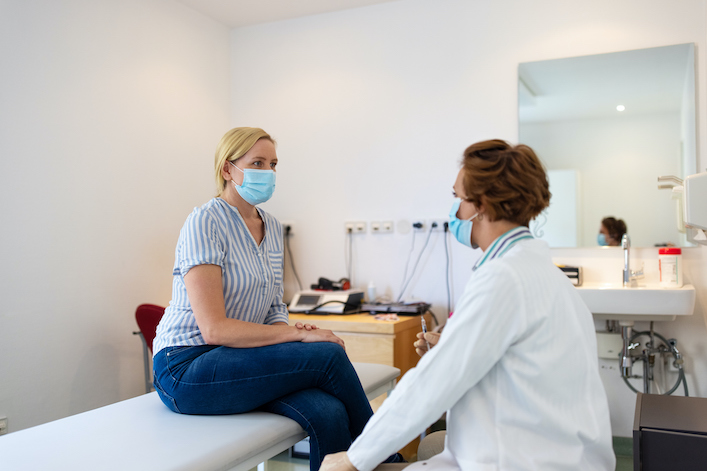
The colon cancer screening conversation
Talking to your family about past history is important because colon cancer can be hereditary. Knowing your family history – even parts of it – can help you too.
“The main risk factor people face in regard to colon cancer is their genetics,” Hurley said.
Some of the most important facts you want to know include:
- Whether your siblings or either of your parents were diagnosed with or passed away because of colon cancer.
- The age at which your loved one was diagnosed or passed away.
- Other types of cancer your family member may have had.
“Like all families, health histories are unique,” said Kayla York, lead genetic counselor with Avera Cancer Institute Sioux Falls.
“When we meet with patients, we send a questionnaire out ahead of time, and that can often help families get the conversation started with their loved ones.”
People who have a strong family history of colon cancer – like a parent or sibling – may qualify for earlier screenings. That’s why it’s important to talk to your provider.
Signs of colon cancer
The purpose of regular screenings is to detect cancer before symptoms arise. Early detection offers the best chance for an ideal outcome should you receive a cancer diagnosis. Colonoscopy is the gold standard in colon screenings because doctors can remove precancerous polyps on-site.
If you experience any of these symptoms, talk to your doctor:
Blood: Watch for blood in your stools or if they appear tar black.
Fatigue: Anemia, caused by internal bleeding, prevents oxygen from circulating in the blood, causing you to feel tired and look pale.
Abdominal pain: Discomfort can come from a blockage or constant gas, cramps or bloating.
Change in bowel habits: “Bowel habits vary from person to person, so you know what’s normal for you,” Hurley said. Normal could be going once most days per week or a few times per day. Bouts of constipation or diarrhea happen to anyone for a variety of reasons, such as medication, change in diet, stress, etc., but a sudden, unexplained change in bathroom habits should be checked out.
Weight loss: Cancer cells can affect how your body turns food to energy, which may result in easy, unintentional weight loss.
Click here to connect with the Avera Cancer Institute.
Get regular health and wellness tips from Avera experts when you sign up for this email newsletter.
Share This Story
Most Recent
Videos



Looking amazing @dtsiouxfalls and @washpav! Thanks to @jpickthorn for capturing an incredible night.
Nov 26

Enjoy this glow headed into Halloween week! 📸: @jpickthorn
Oct 31
Hope you had a wonderful summer weekend and are recharged for the week ahead! 📸: @jpickthorn
Jun 27
Beautiful way to start a week! 📸: @jpickthorn
Jan 10
Favorite flyover of the year! Merry Christmas from our entire @pigeon605news flock. 🎄🐦 📸: @actsofnaturephotography
Dec 24
They definitely deserve to be treated like holiday royalty and they were! ❤️ these scenes from tonight’s lighting celebration at @sanfordhealth Children’s Hospital. 🎄
Dec 1
The holidays are here! Perfect night @dtsiouxfalls
Nov 27
Happy Halloween from @avera_health NICU babies! Link in bio to see more! 🎃
Oct 31
Did you know @dtsiouxfalls is filled with 👻 stories? Link in bio … if you dare 😱
Oct 8
When it comes to kids parties nobody wants to be cookie-cutter. Link in bio for the story on what’s trending.
Sep 28
Want to stay connected to where you live with more stories like this?
Adopt a free virtual “pigeon” to deliver news that will matter to you.





Are you a little bird with something to share?

Delivering news that matters to you
Years ago, homing pigeons were used to bring us news we needed. Today, your virtual “pigeon” will deliver what you want to know about the place you call home.
All pigeons are free to good homes!
Our Partners