

If college doesn’t feel like home, consider making a move
This paid piece is sponsored by Dakota State University.
College should feel like home, said Micah Brandsrud, an admissions specialist at Dakota State University in Madison. If it doesn’t, it might be time to consider transferring.
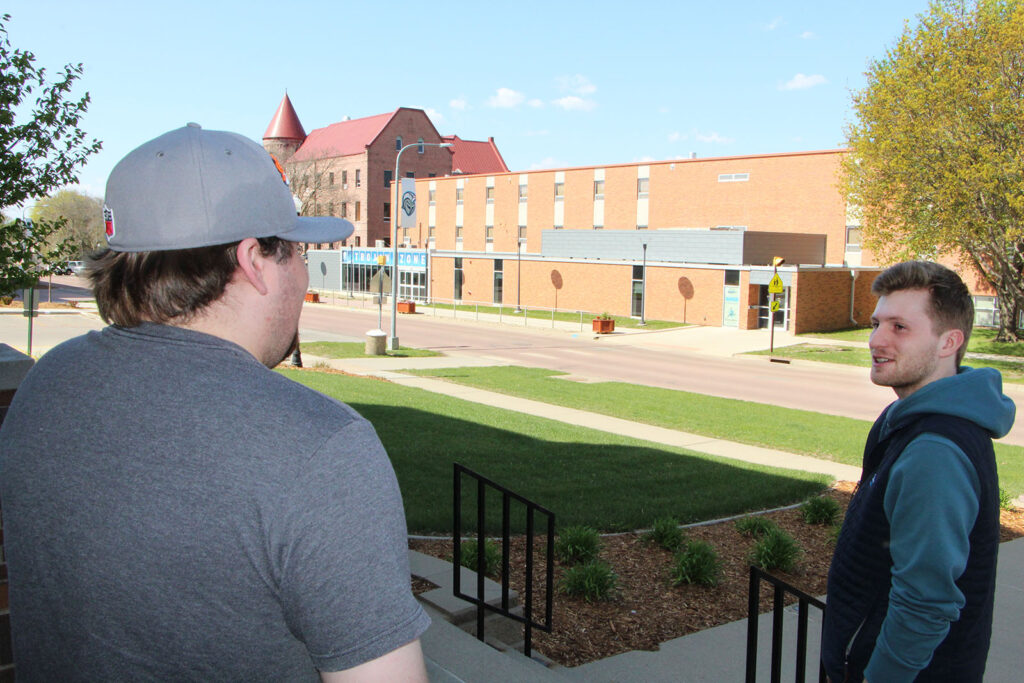
This month, some college students who are completing their spring semester may be coming to the realization that their present institution doesn’t give them that homelike feeling. There could be a number of reasons for this: They may not be getting the help they would like from faculty or advisers, they may want to change to a major not offered by their current college, or there may be financial issues.
This is not uncommon. Thirty-sevent percent of all first-time college students transfer, according to a 2015 report from the National Student Clearinghouse Research Center. Most of these transfers occur in the student’s second year of college. In the fall of 2019, there were 1.3 million transfer students at over 3,000 postsecondary institutions, according to the National Center for Education Statistics.
Despite these numbers, the process can feel overwhelming for students – and their parents – if they don’t know where to begin. Brandsrud recommends transfer students and their families reach out to the college admissions team with questions, but here are some basic steps to start the process:
- Try to realize what is making the student unhappy at their current school. Maybe they feel socially isolated, maybe it’s situational, such as with COVID-19, or maybe it’s just not the right environment. Research schools of interest, and look at colleges that address those concerns yet provide the major they want. “Transfer students generally know what to look for, such as class details, comparing course catalogues, number of students in class,” Brandsrud said, but there still will be a lot of questions.
- When they’ve discovered a school that appeals to them, find a point of contact at that institution. He suggests getting in touch with the school’s transfer coordinator in the admissions office. This person can provide the student with basic information about admission and the transfer process, the campus environment, their programs and other details.
- Set up a campus visit. It’s very important to tour the campus and visit with academic advisers and professors in their major “to interact with people and get the right culture fit.” He advises taking the tour in person, but a virtual visit is an option too. “It’s not as cool as walking around in person, but we still offer excellent virtual options,” Brandsrud said.
- The next step is credit evaluations, and this is a major concern for potential transfer students, who wonder if they will lose credits they’ve already worked and paid for.
Brandsrud said students should be aware that courses may not transfer as they expect, but they “usually transfer over in some capacity” as electives or general education credits.
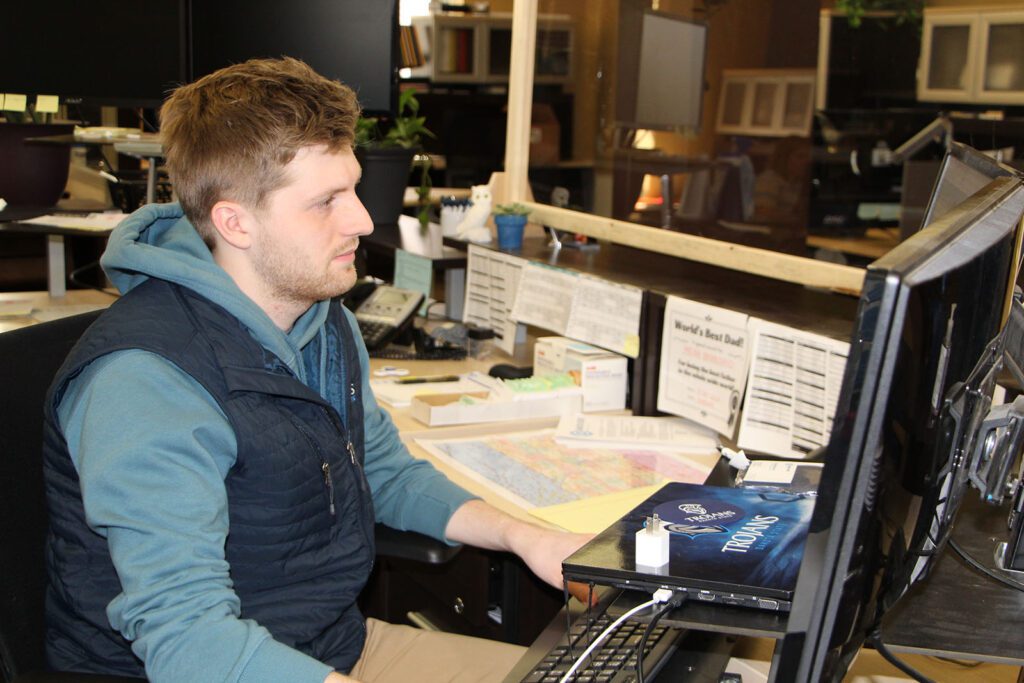
For example, if the student is an upperclassman, some of their completed majors courses may not align exactly with program of study at the new institution. There may be other stipulations, as well; at Dakota State, there is a requirement that 50 percent of majors courses must be taken at DSU. Or if a student chooses a completely different major, some credits may transfer in only as electives.
To start this process, the student has transcripts sent to the admissions office. In this initial stage, an unofficial transcript is acceptable; an official transcript will be needed later if the student decides to enroll at the university. One tip from Brandsrud: “Make sure we can read the transcript, and it’s not a picture of a picture of a transcript.”
This process may take a couple of days to a couple of weeks. With South Dakota regental schools, it’s quite simple because they have a shared system. With private or out-of-state schools, it may take a little longer, so he advises students to be patient with the process.
- After the evaluation process is complete, the transfer coordinator will get back to the student, who can look over the evaluation and think about their options. If they’re still interested in attending, they can apply for admission. Once accepted, the student will go through the registration process, and get signed up for classes with an adviser.
- Throughout the process, don’t forget to consider financial aid, Brandsrud shared. While some scholarships may be able to transfer with the student, others may not be transferrable. Also, some scholarships at the new school may be offered to incoming freshmen only. Make sure to check the school website, he said, or talk with the financial aid office.
Brandsrud said he enjoys working with these individuals.
“Transfer students are some of the most interesting people to work with,” he said, “because they’ve got a lot of life experiences and great stories to tell.”
Share This Story
Most Recent
Videos



Looking amazing @dtsiouxfalls and @washpav! Thanks to @jpickthorn for capturing an incredible night.
Nov 26

Enjoy this glow headed into Halloween week! 📸: @jpickthorn
Oct 31
Hope you had a wonderful summer weekend and are recharged for the week ahead! 📸: @jpickthorn
Jun 27
Beautiful way to start a week! 📸: @jpickthorn
Jan 10
Favorite flyover of the year! Merry Christmas from our entire @pigeon605news flock. 🎄🐦 📸: @actsofnaturephotography
Dec 24
They definitely deserve to be treated like holiday royalty and they were! ❤️ these scenes from tonight’s lighting celebration at @sanfordhealth Children’s Hospital. 🎄
Dec 1
The holidays are here! Perfect night @dtsiouxfalls
Nov 27
Happy Halloween from @avera_health NICU babies! Link in bio to see more! 🎃
Oct 31
Did you know @dtsiouxfalls is filled with 👻 stories? Link in bio … if you dare 😱
Oct 8
When it comes to kids parties nobody wants to be cookie-cutter. Link in bio for the story on what’s trending.
Sep 28
Want to stay connected to where you live with more stories like this?
Adopt a free virtual “pigeon” to deliver news that will matter to you.




Are you a little bird with something to share?

Delivering news that matters to you
Years ago, homing pigeons were used to bring us news we needed. Today, your virtual “pigeon” will deliver what you want to know about the place you call home.
All pigeons are free to good homes!
Our Partners