

Historic home remodel brings pops of color to Cathedral neighborhood
A “long-term project” renovating a historical home in Sioux Falls has turned into a “longer-term project,” but the delay doesn’t fluster the owner.
“We had planned on this being a long-term project, and I think it will be a longer-term project than we had envisioned, but that’s the nature of restoration work,” said Bob Trzynka, who moved to the Cathedral Historic District in 2020. “The main thing is that we don’t rush things for the sake of getting it done. It’s better that it’s right the first time.”
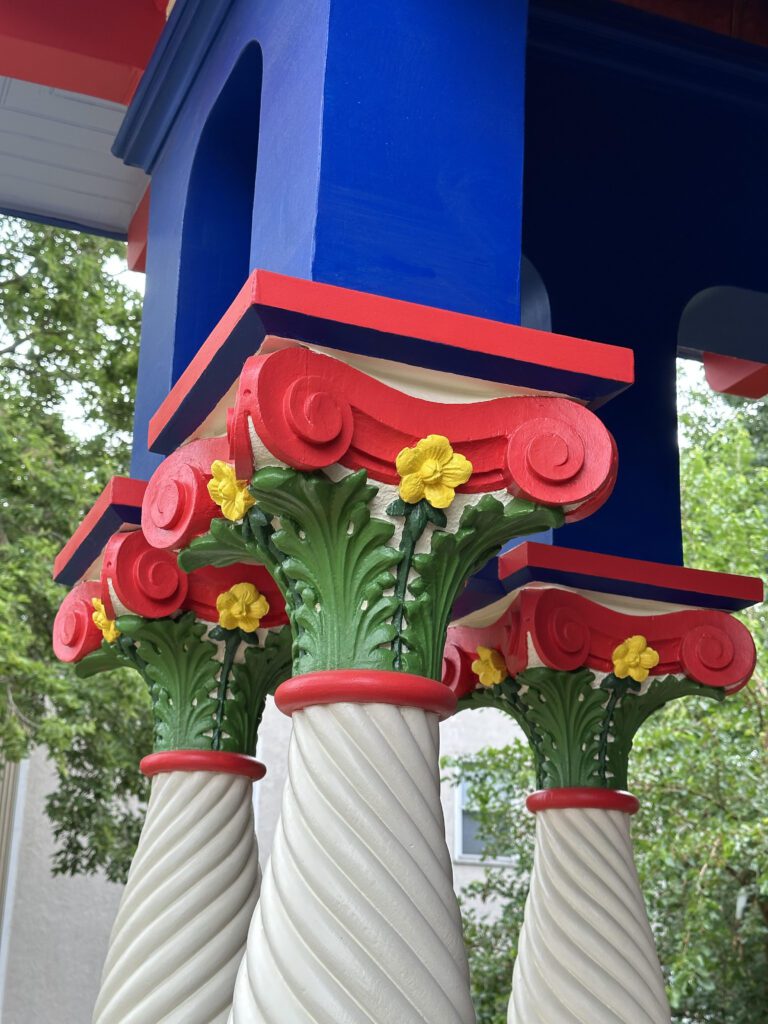
Trzynka, his husband and his mother moved into the house built in 1883 by early settlers Charles and Frances Carpenter, and since then they have been involved in making changes that will honor its history while modernizing it to suit their needs.
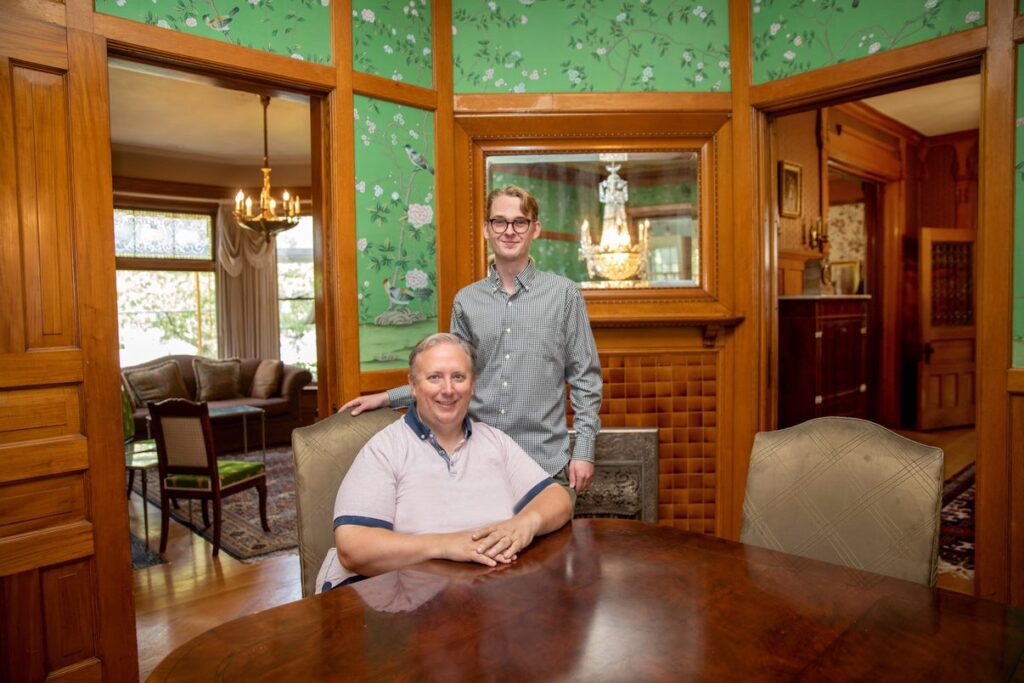
When it came to designing the house near Ninth Street and Duluth Avenue, Frances Carpenter turned to noted architect Wallace Dow, who also designed the buildings that today house the Pettigrew Museum, Old Courthouse Museum and South Dakota State Penitentiary. As a widow, she later made a name for the family in Sioux Falls with the historic Carpenter Hotel on Phillips Avenue.
Frances Carpenter was a sister of Helen McKennan, who eventually had an entire historic district of houses named after her. Trzynka and his husband owned a house where the McKennan and Sherman historic districts touch when they decided to move once again.
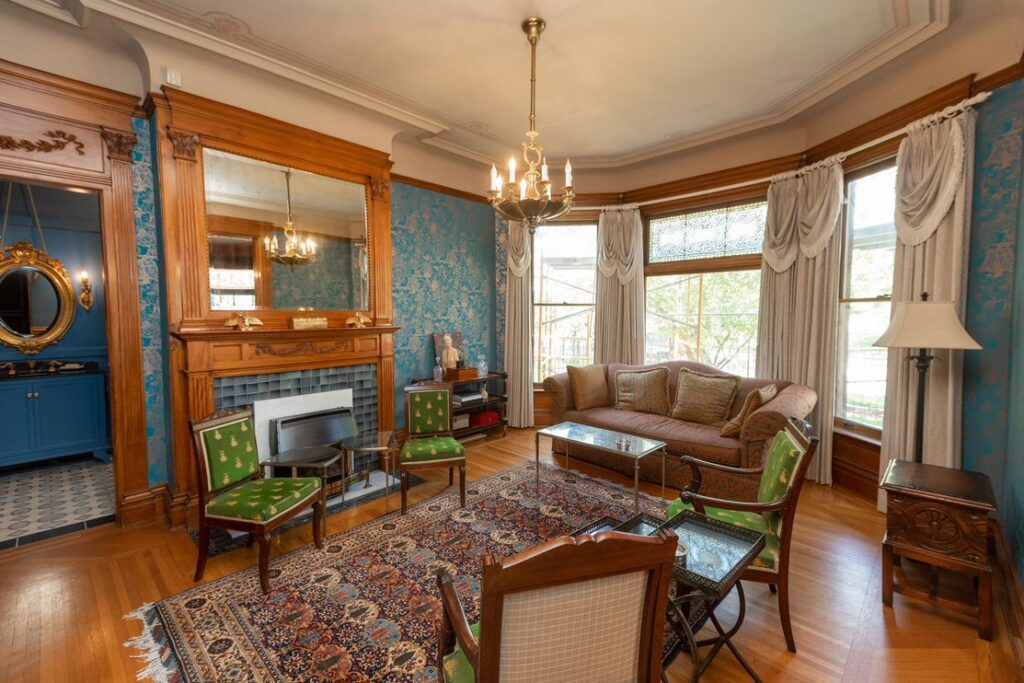
It was a decision that took months to make.
“A friend — a Realtor — had seen the house come on the market, and she suggested we take a look at it,” Trzynka said. “We liked it, but we also liked our house and had no intention of moving. Over time, we saw it a few more times, and we were drawn to the house. It was on the market for over nine months. We were looking at having my mom move down so she could live with us, and we agreed it would be a good place for all of us.”
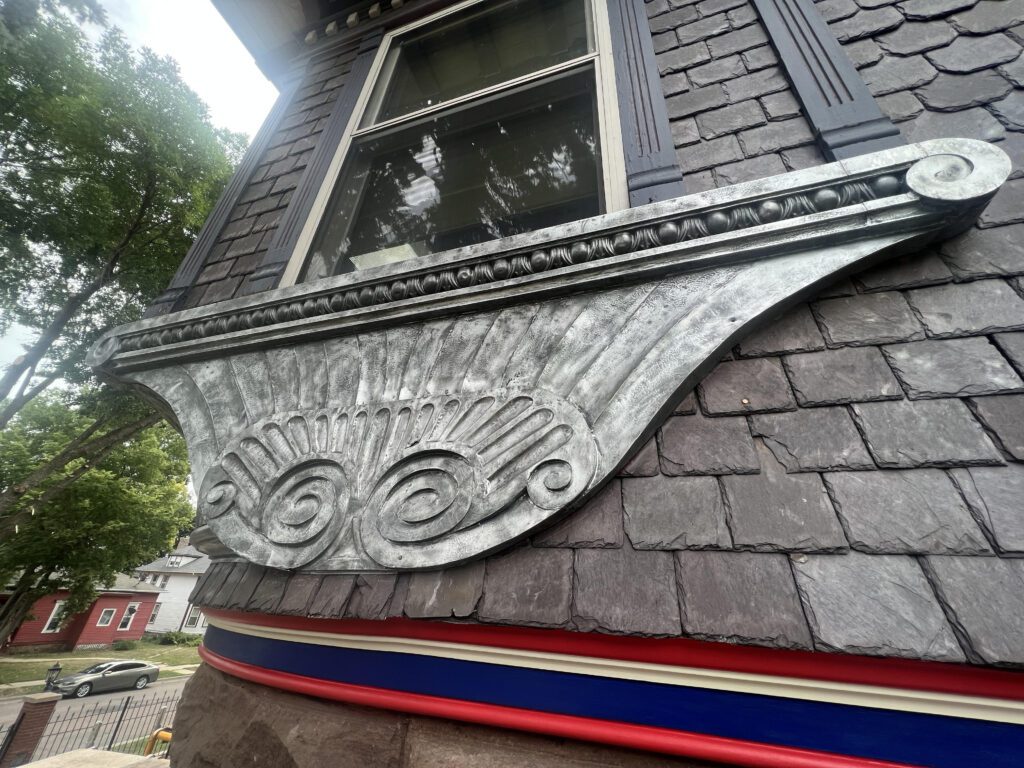
Trzynka grew up in a midcentury modern house in Watertown, but his late father’s medical practice operated out of a turn-of-the-century home that had been converted into a clinic. He has always liked the history of older houses and the architects who designed them, he said.
The Queen Anne-style house he now lives in has four bedrooms, 4,200-square feet and a carriage house. Charles Carpenter died in the mid-1890s, while Frances lived until the 1920s. Their son, Gale, occupied the house after his mother’s death. After a brief stint as a school, it has been owned by private families since then.
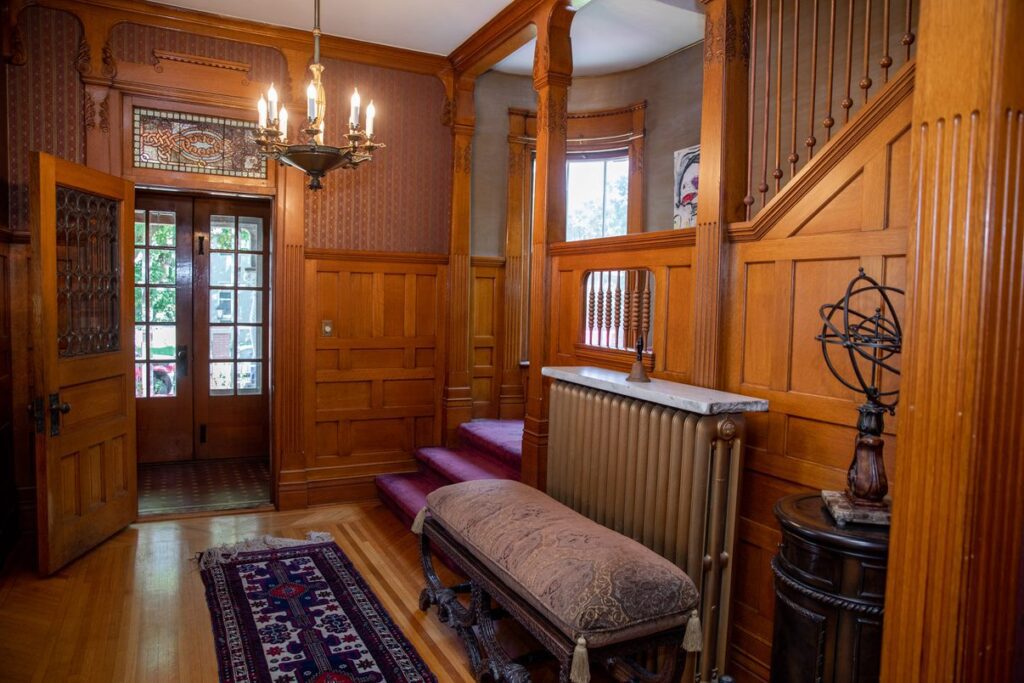
While the previous owners had lavished loving care on the house, Trzynka and his husband knew a significant amount of work awaited them. They worked with staff at the Siouxland Heritage Museum to learn what the historians knew about the house and were aided by the original blueprints.
A big project that will start soon is remodeling the kitchen. The area now in use to prepare meals once was three rooms: the kitchen, butler’s pantry and laundry. Trzynka plans to restore the butler’s pantry so there will be a more formal separation between the dining room and kitchen. He hopes to have that work done by spring.
Much of the work in recent months has focused on the house’s exterior, which was in more urgent need of repair. That includes the house’s roof, which originally was slate, as is apparent from early photographs. A previous owner installed a new slate roof in the 1970s, but in the intervening years it was replaced with asphalt.
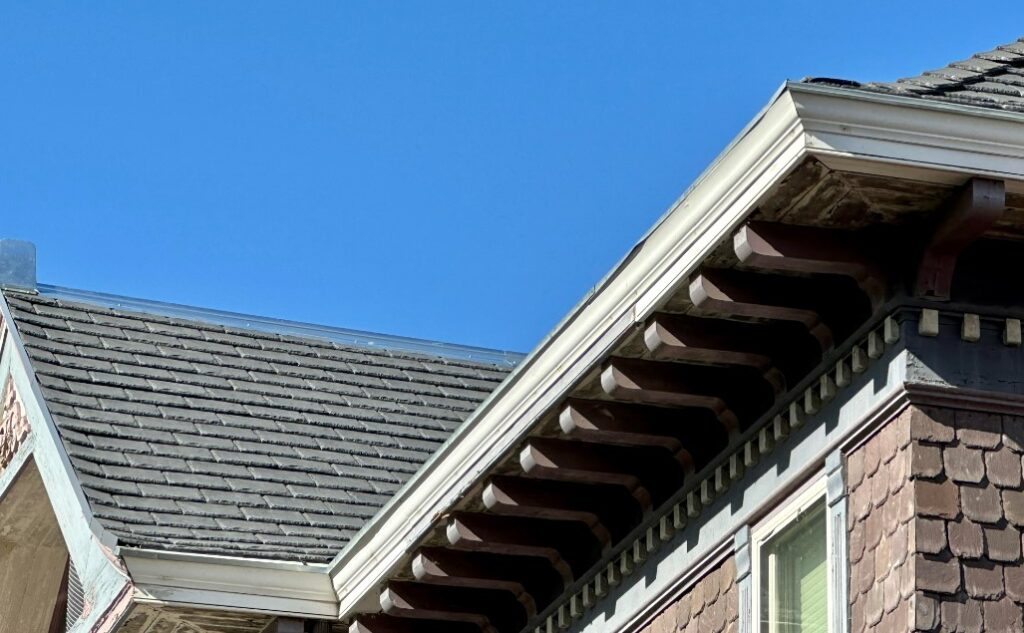
“We wanted to restore the appearance of a slate roof but utilize more modern materials that would give protection to the structure of the house and offer durability,” Trzynka said.
The decision was made to use synthetic slate, which should last longer than the traditional material.
An original metal ridgeline from the 1890s, the decorative metal cover that runs along the roof’s entire peak, was in bad shape and needed replacement, Trzynka said. When the old ridgeline was removed, a bullet hole that had pierced it was discovered.
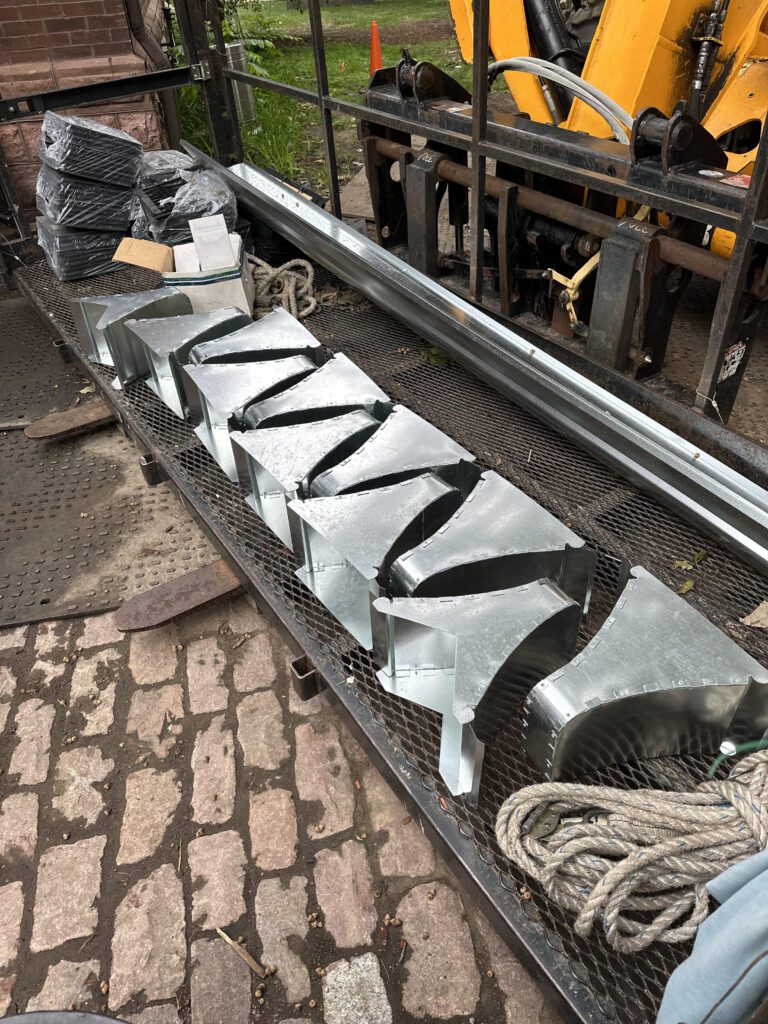
“That was a sign that this neighborhood was a little neglected in the past,” Trzynka said.
The new roof has accomplished the owners’ goal of improving the house while not making any drastic changes.
“We wanted to make it look like we haven’t spent any money on the house, like it’s always been this way,” Trzynka said.
The arches on the house’s north porch, which faces Ninth Street, were starting to fail. To replace them, the porch was disassembled and rebuilt from the ground up with bricks, Sioux quartzite and a sandstone decorative element. The metal roof over the porch has been replaced with a handmade copper roof.
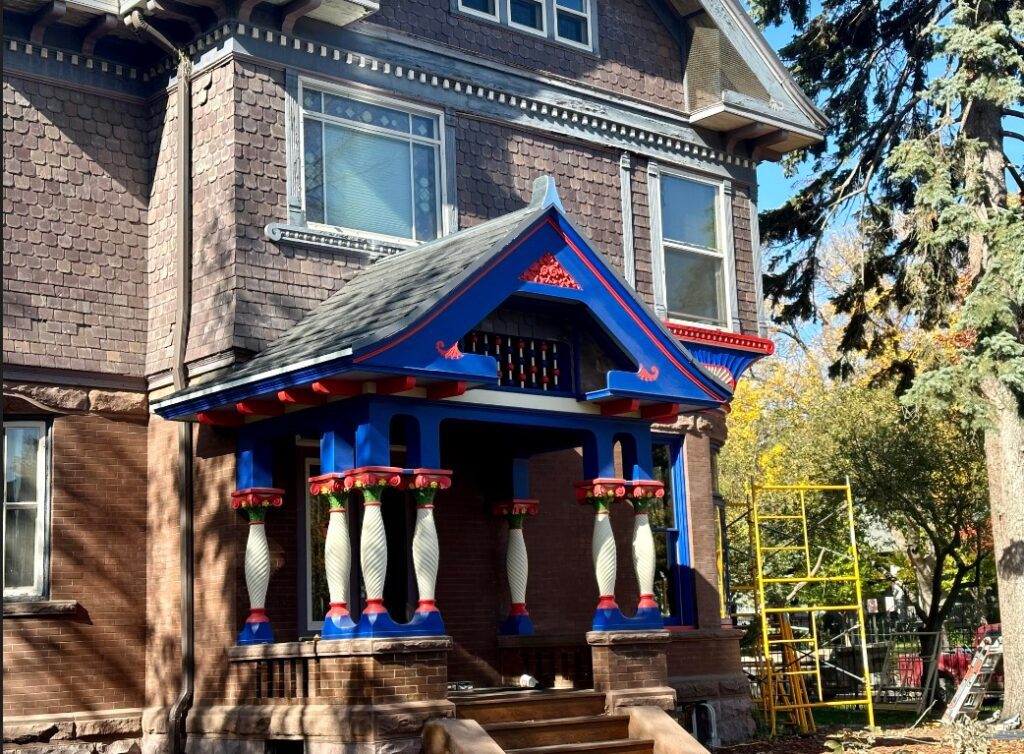
Masonry on the front porch had “subsided,” Trzynka said. A support structure was built to hold it up, and the rotten decking was rebuilt and the stone tuck-pointed.
“A lot of the woodwork had started to rot, so we repaired and replaced it,” Trzynka said. “We’re taking off 130 years of accumulated paint as we’re going, so we’ll have a clean surface, and we’re restoring each window.”
On the house’s northeast corner, a piece of curved stained glass was removed, flattened and replaced with new leading. A storm window placed over it has replacement materials less likely to cloud. Stained-glass windows on the house’s north side also were reglazed and rehung.
The landscaping also received attention with Sioux quartzite used on a retaining wall. Sioux quartzite pavers made a patio that blends with the house’s foundation.
With the exterior work largely completed, attention will turn to the house’s second floor. The bedrooms are in good shape, and a bathroom is functional, but a bathroom converted into a closet may be returned to its original function. A second-floor balcony likely will be restored.
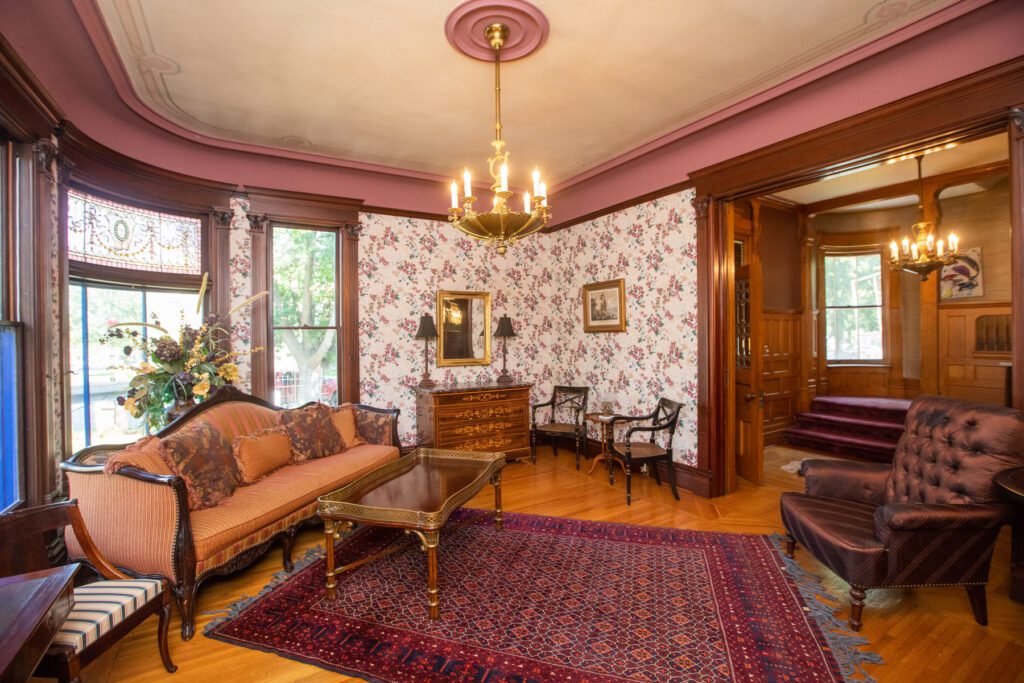
Neighbors and passersby have been interested in the changes, Trzynka said. He also frequently receives visits from people who once lived in the house and share photos from the past.
While restoring the house means Trzynka lives in the present, the past is never far from his mind.
“When you have a historical home, you’re as much a caretaker of the house as the owner of the house,” he said. “You think about the future owners as much as the past owners. They will ensure homes like this continue to exist and continue to be livable. They don’t make any more of them. There’s a limited supply of historically significant homes, and it’s up to the current owners to preserve them for the future.”
Share This Story
Most Recent
Videos


Looking amazing @dtsiouxfalls and @washpav! Thanks to @jpickthorn for capturing an incredible night.
Nov 26

Enjoy this glow headed into Halloween week! 📸: @jpickthorn
Oct 31
Hope you had a wonderful summer weekend and are recharged for the week ahead! 📸: @jpickthorn
Jun 27
Beautiful way to start a week! 📸: @jpickthorn
Jan 10
Favorite flyover of the year! Merry Christmas from our entire @pigeon605news flock. 🎄🐦 📸: @actsofnaturephotography
Dec 24
They definitely deserve to be treated like holiday royalty and they were! ❤️ these scenes from tonight’s lighting celebration at @sanfordhealth Children’s Hospital. 🎄
Dec 1
The holidays are here! Perfect night @dtsiouxfalls
Nov 27
Happy Halloween from @avera_health NICU babies! Link in bio to see more! 🎃
Oct 31
Did you know @dtsiouxfalls is filled with 👻 stories? Link in bio … if you dare 😱
Oct 8
When it comes to kids parties nobody wants to be cookie-cutter. Link in bio for the story on what’s trending.
Sep 28
Want to stay connected to where you live with more stories like this?
Adopt a free virtual “pigeon” to deliver news that will matter to you.




Are you a little bird with something to share?

Delivering news that matters to you
Years ago, homing pigeons were used to bring us news we needed. Today, your virtual “pigeon” will deliver what you want to know about the place you call home.
All pigeons are free to good homes!
Our Partners