
From glass negatives, moments in time are brought to life again
You can’t look at their faces without wanting to know their fates.
Young sisters with their hair in sausagelike ringlets.
A boy with a Scandinavian-style cap and his dignified dog.
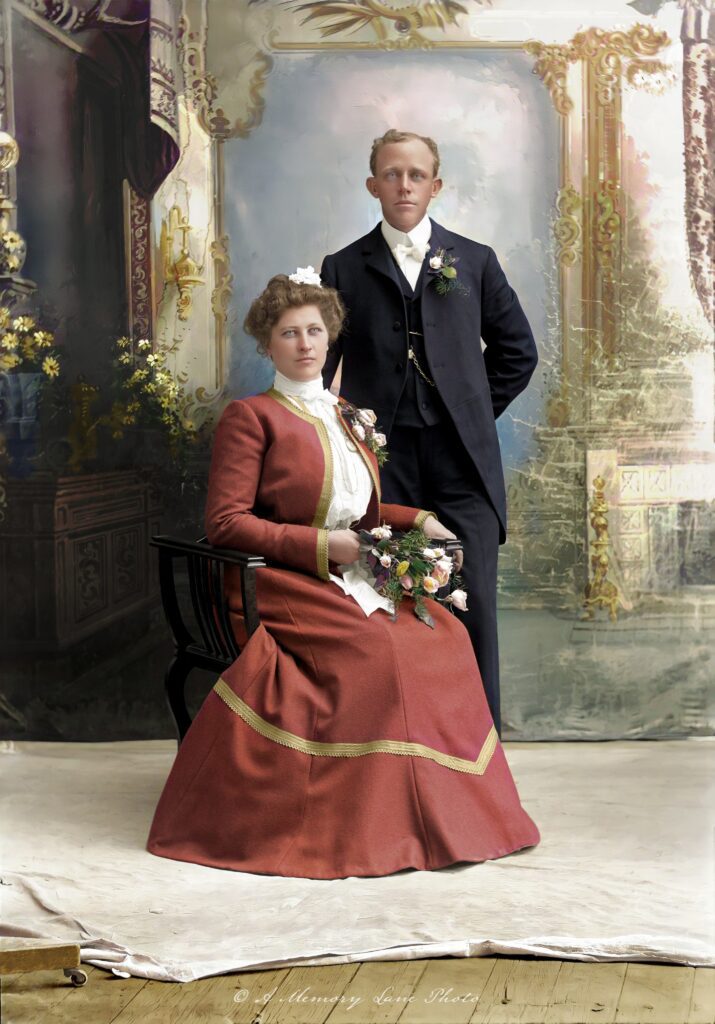
The couple who may be embarking on married life.
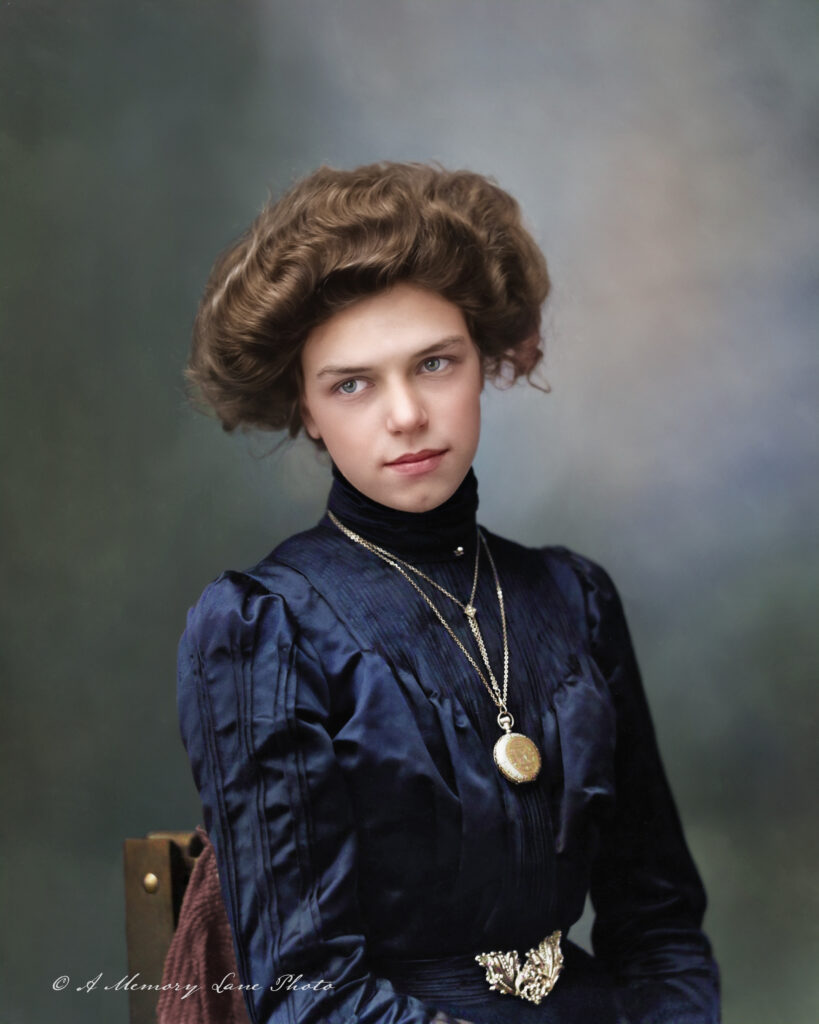
And the dark-haired woman. Her hair is styled in a fluffy pompadour, and she’s wearing a pendant watch or necklace that likely was a prized possession.
These people, and hundreds more, came to a Centerville, South Dakota, photographer more than 100 years ago to capture a moment in time.
Thanks to the preservation efforts of Sherree Schmiedt, who once operated a private museum in Centerville, her daughter-in-law Karleen Schmiedt, who is going through boxes of glass negatives, and Robin Clark, who is restoring and colorizing some of the photographs, this “moment in time” is getting another viewing.
Clark posts the photographs made from glass negatives on her website and on her Facebook page. She occasionally shares the colorized photographs that John Johnson of Centerville shot in his studio on another Facebook page set aside for historic photographs from South Dakota.
A Pennsylvania native who now lives in Savannah, Georgia, Clark is a long way from turn-of-the-20th-century South Dakota, then just barely a state. She retired from her position with the CIA in 2015. That’s where she learned Adobe PhotoShop. Along with an interest in family history and everyone’s history, that skill piqued her interest in colorizing old photographs.

That morphed again when she discovered the wonder that is an old glass negative. Wet-plate negatives were used from the early 1850s until the 1880s. Silver gelatin-coated dry-plate negatives were the first economically successful durable photographic medium. They most commonly were used between the 1880s and 1920s.
Clark has amassed almost 3,000 glass negatives. She now splits her time doing restoration and colorization work for private clients of Memory Lane Photo Restoration, and working on her glass negatives, restoring and colorizing those.
And growing attached to her subjects. She has even turned some of her work into wallpaper for her home.
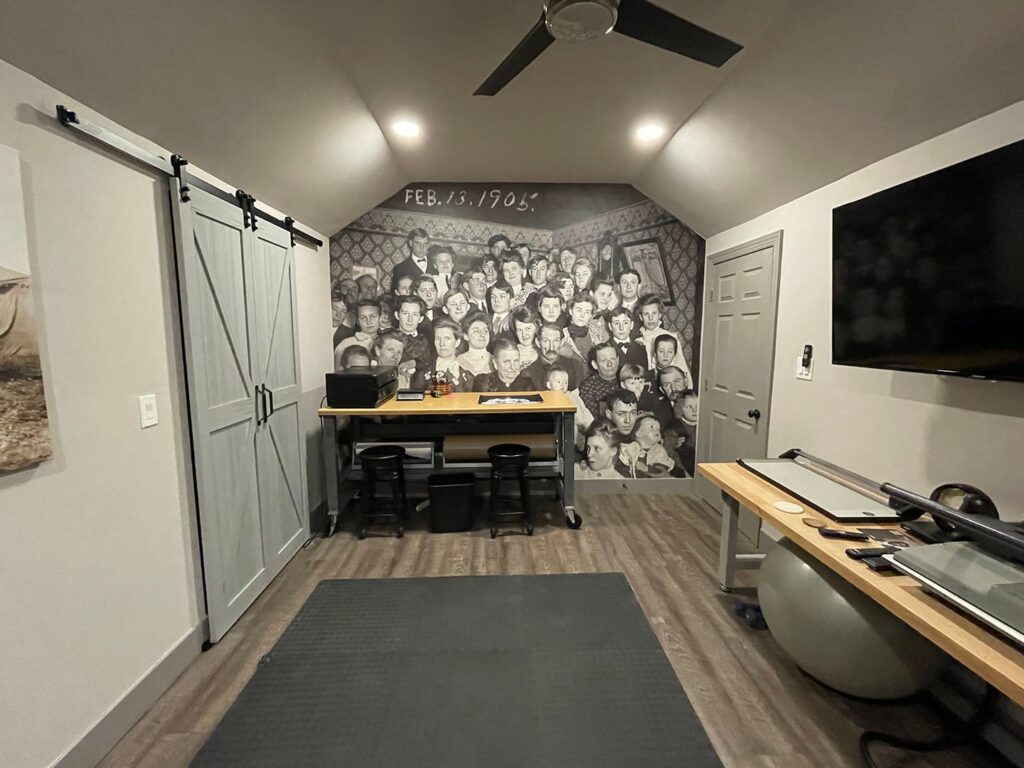
“The weird thing is because in some of these you’ll see the same person in multiple photos, you’ll start to feel like you know them, you get an attachment to these people,” Clark said. “I don’t know if it’s explainable, but it’s real.”
Many collectors of glass negatives never want to share their finds. Clark feels exactly the opposite.
“I’m bringing these (photographers’) names and pictures to people in a wider audience,” she said. “I think I’m the only one who restores and colorizes them. I think I’m the only one who buys her own negatives.”
Clark’s collections include a father-and-son team, Nathan C. White and Nathan C. White Jr. The Georgia photographers were perhaps remarkable because they included portraits of African Americans in their collection in a time and place where people often were overlooked.
And she has the photos of Johnson — born Jno, the Scandinavian equivalent of John — taken in his Centerville studio. That’s where the Schmiedts come in.
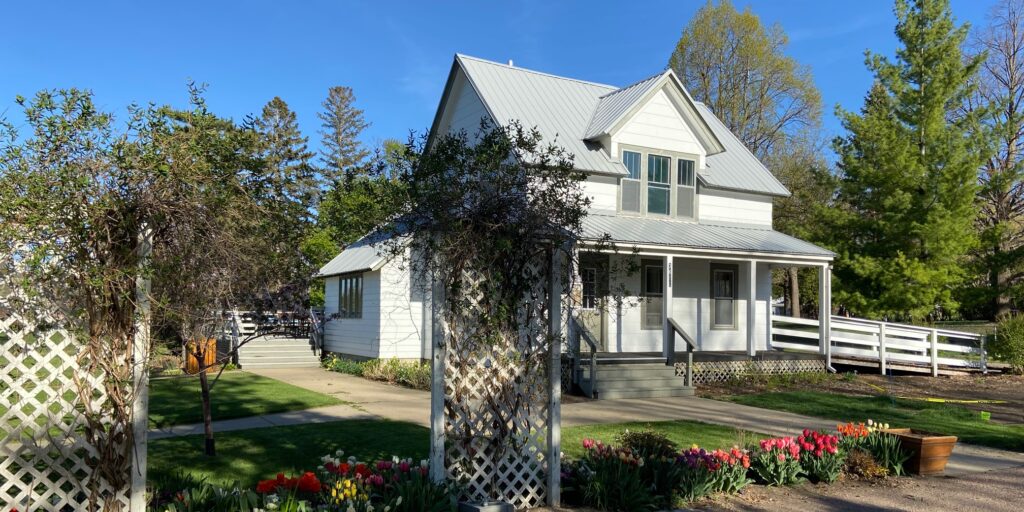
Sherree Schmiedt and her late husband, Stanford, were reared in the Centerville area. He ran the drugstore there for many years. She learned Johnson’s history years ago while researching a book for the town’s centennial. Johnson built a wooden building for his professional photography studio in 1888 and operated it until 1905. He also had studios in Beresford, Wakonda and Viborg.
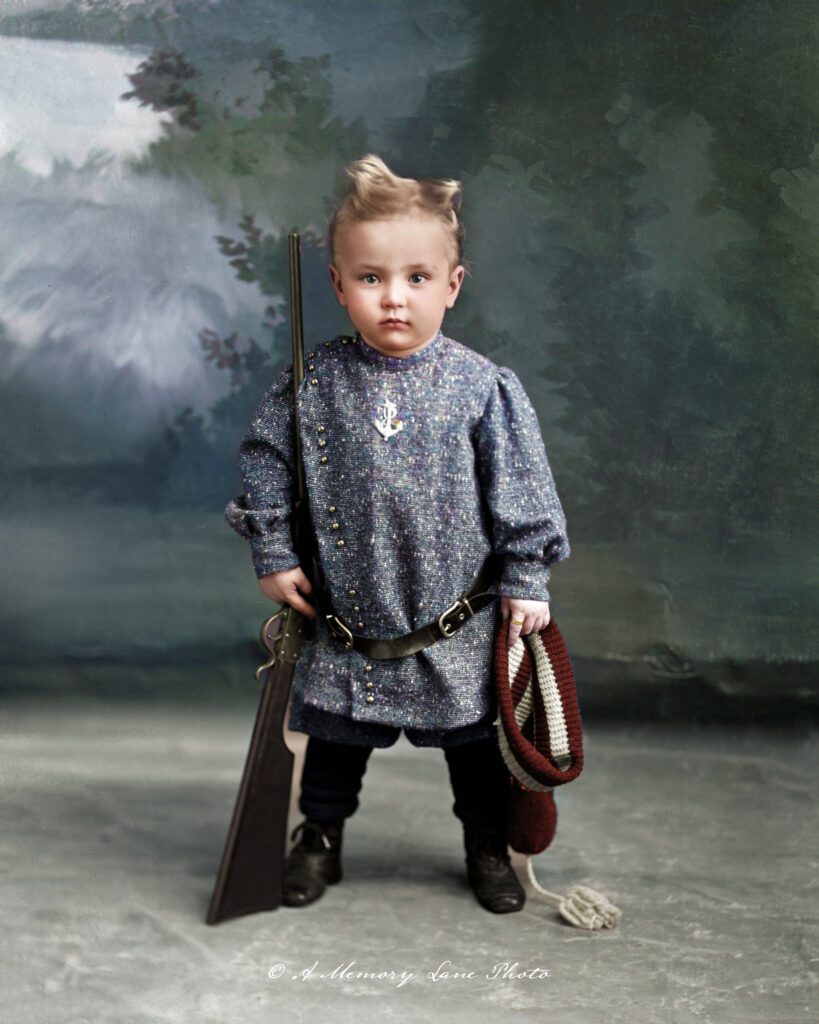
Area residents would come to Centerville on Saturdays and visit the town’s bath houses to clean up before Sunday church services, Karleen Schmiedt said. After they had shed the grime of the past week — or longer — they would use the opportunity to have their picture taken.
Sometimes they didn’t even wait to bathe.
“There was a guy named Charlie who lived in a barn near Wakonda, and men would buy him drinks if he would go over and have his picture taken,” Karleen Schmiedt said.
Over the years, Johnson’s studio changed usages. He leased part of his studio in 1895 to another photographer. Others also leased the studio, but their professions are unknown. At various times, it was used as a millinery shop, a cream station and a dry-cleaning business.
It still had a photography studio on the upper level when Dr. C.C. Pascale removed the building so he could construct a new office. The building was placed on a hay wagon and moved out of town. Its contents included the fragile glass negatives, most of which survived a rough trip that included crossing railroad tracks.
They sat out in the barn for years, subject to blazing hot summers and frigid winters until Sherree Schmiedt began researching Centerville history in 1981. “Doc” Pascale and Stanford Schmiedt retrieved the glass negatives from the old studio building, now essentially a storage shed. Sherree Schmiedt cleaned up the old glass negatives, while the two men used Pascale’s X-ray equipment to print pictures.
For years, Sherree Schmiedt displayed the printed photographs in an album near the pharmacy’s Coca-Cola cooler, a town gathering place. She stored the glass negatives and other albums in her personal museum. Since the museum’s closure, the albums have been given to the Centerville Development Corporation/Arts Council/Centerville Museum on the town’s main street.
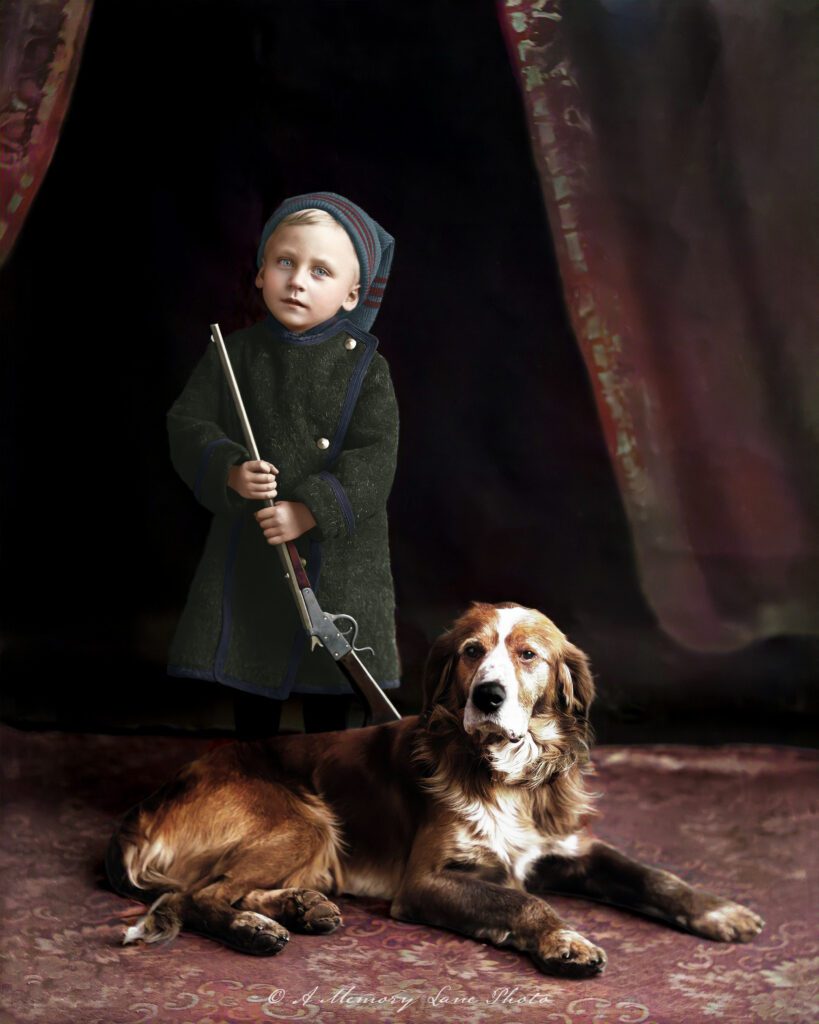
When Sherree Schmiedt decided several years ago to sell the museum building, which also was a former hotel, Karleen Schmiedt and her husband had rooms of items to sort through. About 300 to 400 of the glass negatives went home with them to Minnesota; Karleen Schmiedt goes through each one and records the image before putting them up for sale.
“What I do is, I take a picture with my cellphone of the negative, then I have an app on my phone from Kodak that turns the negative into a positive,” she said. “I might highlight it a little bit, but I do not develop them or change them. I take a thumb drive, and I copy all my images. Ultimately, the city of Centerville and the CDC (the development group) will have the thumb drives.”
Clark takes the glass negatives she has purchased and studies the images carefully before deciding what colors to make the subjects’ hair, eyes and clothing. In many ways, it’s a guessing game, but she stays true to the period. No child in 1900 worn neon green, she said. Light eyes will be colored blue or green; light hair generally receives a blond tone.
On one of her photographs from Johnson that she posted on Facebook, she was contacted by the subject’s granddaughter, who had recognized the image. Clark had chosen a pale green for the girl’s dress. At the granddaughter’s request, she changed the pleated material to pink.
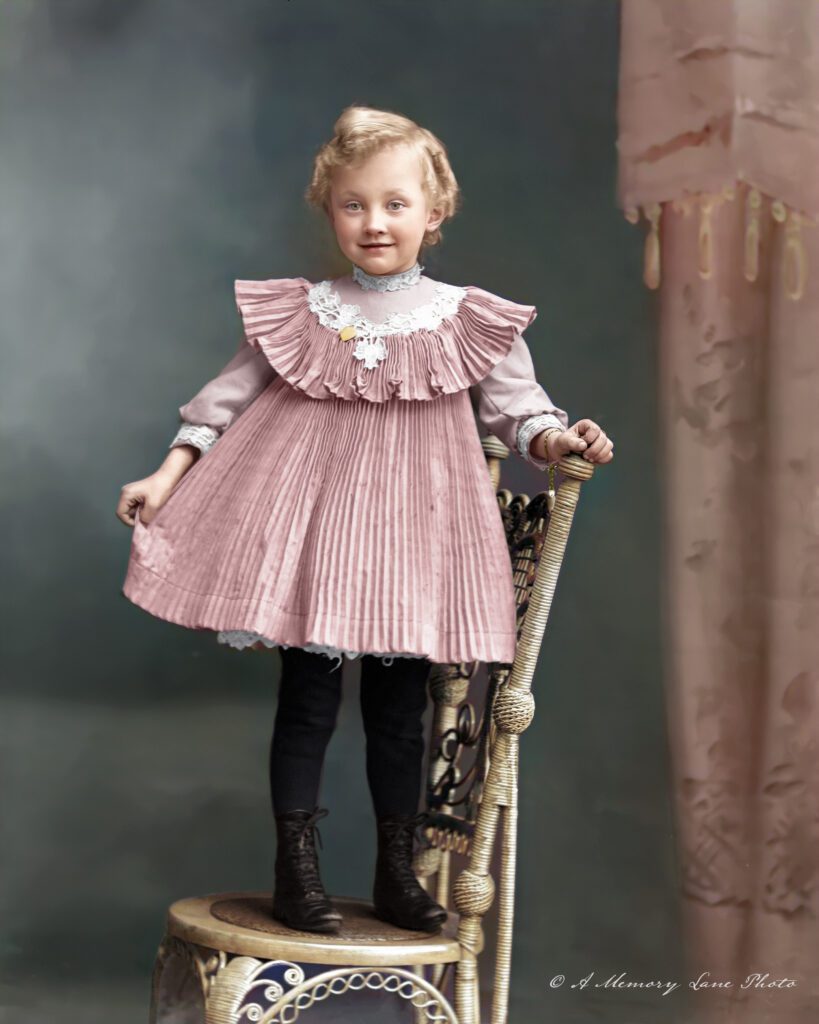
Some of the photographs from Johnson’s collection were identified during the years they were on display at the Schmiedts’ drugstore. Occasionally, Clark hears from someone who recognizes an ancestor.
“The exciting thing about this for me is when I can maybe even connect with a descendant,” she said. “Which I have had happen, but maybe not as much as I would like.”
Clark especially would like to know more about the young woman in the dress she decided to color a deep, rich blue. Women’s portraits are her favorites, and there is just something about this young woman that speaks to her.
“It’s one of my absolutely all-time favorites,” she said. “It’s a beautiful picture. This woman, I would love to know who she is.”
Share This Story
Most Recent
Videos



Looking amazing @dtsiouxfalls and @washpav! Thanks to @jpickthorn for capturing an incredible night.
Nov 26

Enjoy this glow headed into Halloween week! 📸: @jpickthorn
Oct 31
Hope you had a wonderful summer weekend and are recharged for the week ahead! 📸: @jpickthorn
Jun 27
Beautiful way to start a week! 📸: @jpickthorn
Jan 10
Favorite flyover of the year! Merry Christmas from our entire @pigeon605news flock. 🎄🐦 📸: @actsofnaturephotography
Dec 24
They definitely deserve to be treated like holiday royalty and they were! ❤️ these scenes from tonight’s lighting celebration at @sanfordhealth Children’s Hospital. 🎄
Dec 1
The holidays are here! Perfect night @dtsiouxfalls
Nov 27
Happy Halloween from @avera_health NICU babies! Link in bio to see more! 🎃
Oct 31
Did you know @dtsiouxfalls is filled with 👻 stories? Link in bio … if you dare 😱
Oct 8
When it comes to kids parties nobody wants to be cookie-cutter. Link in bio for the story on what’s trending.
Sep 28
Want to stay connected to where you live with more stories like this?
Adopt a free virtual “pigeon” to deliver news that will matter to you.




Are you a little bird with something to share?

Delivering news that matters to you
Years ago, homing pigeons were used to bring us news we needed. Today, your virtual “pigeon” will deliver what you want to know about the place you call home.
All pigeons are free to good homes!
Our Partners