
Family’s diabetes documentary jumps to top of streaming charts
A Sioux Falls family’s experience with type 1 diabetes led to a documentary released worldwide this month.
“The Diabetes Solution” was conceived and produced by Bethany McKenzie, whose son River was diagnosed as a diabetic when he was 5 years old.
The film debuted on streaming services and DVD on Nov. 9. It jumped to the top of the streaming charts immediately, including No. 3 on iTunes. It was purchased in 34 countries in the first two days, McKenzie said.
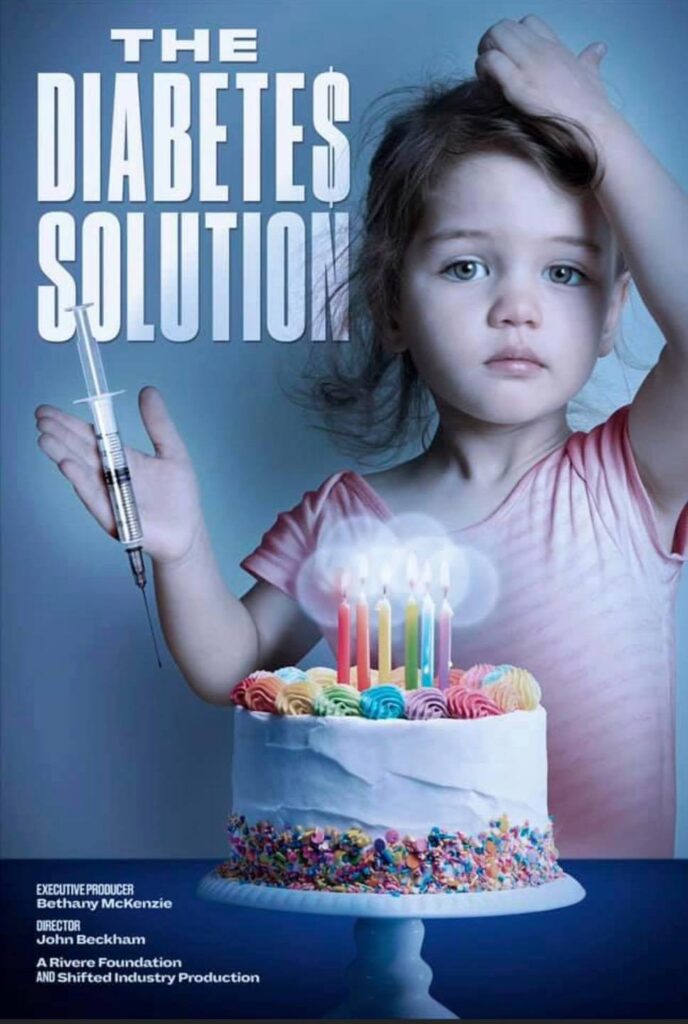
The film focuses on the role of carbohydrates in managing the disease, the roots of traditional treatment and how the diabetes-support community is wed to the pharmaceutical companies that produce insulin.
The name comes from the 1997 book by Dr. Richard K. Bernstein, who is featured in the documentary. Bernstein, who was diagnosed as a type 1 diabetic in 1946, is a leading advocate for a diet with low carbohydrates as a way to manage blood sugar.
That’s counter to the accepted approach in the medical community, which advises parents not to adjust a child’s diet but rather to calculate the carbohydrates consumed and balance that with the appropriate amount of insulin.
That’s what McKenzie did. But she said her son’s blood sugar was consistently too high or too low. There was no middle ground. Either he didn’t feel well and couldn’t participate in activities or he couldn’t concentrate.
“We followed the rules for three years,” McKenzie said. “He was miserable. His life and our life was utter chaos.”

The McKenzies learned of Bernstein’s approach of radically reducing carbs, and it worked. Today, she cooks all their favorites – and many new ones – by replacing the carb producers with ingredients such as almond flour. Their diet is higher in protein and fat, but it’s also stocked with vegetables.
“We found this new method, and life became shockingly peaceful and predictable,” she said. “Our son became sparkly again.”

The bulk of the “The Diabetes Solution” features families from around the country telling similar stories. Many of them took their young children to a doctor when they were ill. Initial prognosis was often the flu, but when conditions worsened, they were diagnosed with type 1 diabetes.
They were all given similar instruction. Make sure the child gets enough carbohydrates to develop his or her body and brain and then inject the right amount of insulin to bring the blood sugar level down.
The film shows materials produced by pharmaceutical companies and the American Diabetes Association that recommend high levels of carbs in every meal. It shows diabetic children given ice cream and thick-crusted pizza in the hospital after their diagnosis.
McKenzie, River and her husband, Dr. Matt McKenzie, are also interviewed in the film. Matt McKenzie is an orthopedic surgeon who discusses the effects of diabetes.

Their opinion is not endorsed by most doctors, McKenzie said.
“There are no physicians that I have been able to find locally who are in favor of a low-carbohydrate diet for a person with type 1 diabetes,” she said.
There are risks to this approach, said Dr. Kurt Griffin, a pediatric endocrinologist at Sanford Health.
Primarily the question is whether the child is consuming enough nutrients for brain and body development. There’s also the threat of ketoacidosis, a life-threatening condition that can occur if the level of ketones and blood sugar are too high.
Griffin refrained from speaking to a particular child or family, but said that in general the accepted guidelines are the product of research and practicality.
The typical American clearly consumes too many carbohydrates, said Griffin, who leads the clinical trials for Sanford Research into type 1 diabetes. A large proportion of those bad carbs come from processed foods. It’s much healthier for everybody to consume good carbohydrates from natural sources such as vegetables and legumes.
But that’s not what people do.
There’s a socioeconomic reality that many of the families he deals with don’t eat balanced diets. They can’t afford continuous glucose monitors, which would make calculating insulin intake more exact.
The research on low-carbohydrate diets in kids with type 1 diabetes is not thorough, he said.
“How low is low enough. How low is too low,” he said.
That’s also not a blanket condemnation of the low-carb approach.
“If somebody wants to go down that path and goes there with their eyes open, that’s one thing,” he said. “It’s not the answer for everybody. It’s not the answer for most people because they are not going to be able to do it.”
Diabetic children on a low-carb diet still require insulin. But their blood-sugar levels are lower and more consistent. That means significantly less and often less-expensive insulin, according to the parents in the film.
There are two types of diabetes – 1 and 2.
Type 1 is where the body’s immune system attacks the insulin-producing cells in the pancreas. It’s a genetic disorder that usually shows up early in life.
Type 2 is largely diet- and lifestyle-related and develops over time.
They are, in a real sense, different conditions that share a name.
The three major pharmaceutical companies and the ADA either did not respond to inquiries from the filmmakers or declined to answer questions.
Today River McKenzie is 13 years old and a student at Edison Middle School, where he is in the Spanish immersion program.

He does well at school and is a nationally ranked tennis player.

McKenzie said she decided to make a documentary about type 1 diabetes because it’s a form of education she enjoys. And it seemed like a great way to get the message out to other families managing the disease.
She hired production staff and conducted interviews in the nation’s capital, Arizona, New York, Texas and Hawaii. Filming started in 2017 and took about a year to complete. Then, it was on to editing and production.
“I just want it to reach people, people who crave to learn something new. I want them to see this and question everything,” she said. “I adore children, and I want all these kids to have a normal, healthy life without complications.”
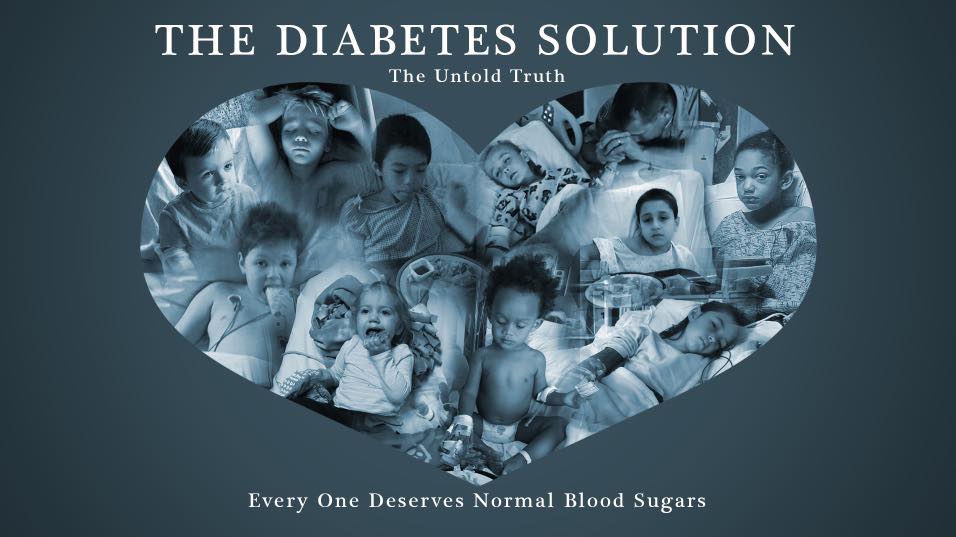
“The Diabetes Solution” is available for streaming on iTunes, Apple TV, Vimeo, Google Play and YouTube. The DVD can be purchased online through Amazon, Barnes & Noble and Best Buy.
All profits from the film will go to The Rivere Foundation, which McKenzie created to produce the film and help parents with diabetic children.
You can find her blog and social media under the name “Let Me Be 83: My Dude with Diabetes.”
Share This Story
Most Recent
Videos



Looking amazing @dtsiouxfalls and @washpav! Thanks to @jpickthorn for capturing an incredible night.
Nov 26

Enjoy this glow headed into Halloween week! 📸: @jpickthorn
Oct 31
Hope you had a wonderful summer weekend and are recharged for the week ahead! 📸: @jpickthorn
Jun 27
Beautiful way to start a week! 📸: @jpickthorn
Jan 10
Favorite flyover of the year! Merry Christmas from our entire @pigeon605news flock. 🎄🐦 📸: @actsofnaturephotography
Dec 24
They definitely deserve to be treated like holiday royalty and they were! ❤️ these scenes from tonight’s lighting celebration at @sanfordhealth Children’s Hospital. 🎄
Dec 1
The holidays are here! Perfect night @dtsiouxfalls
Nov 27
Happy Halloween from @avera_health NICU babies! Link in bio to see more! 🎃
Oct 31
Did you know @dtsiouxfalls is filled with 👻 stories? Link in bio … if you dare 😱
Oct 8
When it comes to kids parties nobody wants to be cookie-cutter. Link in bio for the story on what’s trending.
Sep 28
Want to stay connected to where you live with more stories like this?
Adopt a free virtual “pigeon” to deliver news that will matter to you.





Are you a little bird with something to share?

Delivering news that matters to you
Years ago, homing pigeons were used to bring us news we needed. Today, your virtual “pigeon” will deliver what you want to know about the place you call home.
All pigeons are free to good homes!
Our Partners