

Cervical cancer survivor now advocates for HPV vaccine
This piece is sponsored by Sanford Health.
Ali Hofer is living with purpose.
She’s a mom, wife and vice president of the Good Samaritan Foundation.
It was 2004 when her life changed forever.
“That summer, I was experiencing some unusual bleeding after intercourse and reported it to my OB/GYN at the time when we were living down in the Sioux City area,” Hofer told Sanford Health News.
The bleeding symptoms continued from summer to December.
“When I went back to the OB in December, he did conduct a physical exam at that time,” she explained. “The cancer had grown so much during that time, it made my cervix very friable, to the extent that when the doctor attempted to collect a sample of the cervix during the exam, the inflamed cervix released a large amount of blood onto the exam table.”
Hofer, who was raising 2-year-old Anna at the time, underwent a procedure called a loop electrosurgical excision procedure, or LEEP, to remove abnormal tissue from the cervix for biopsy.
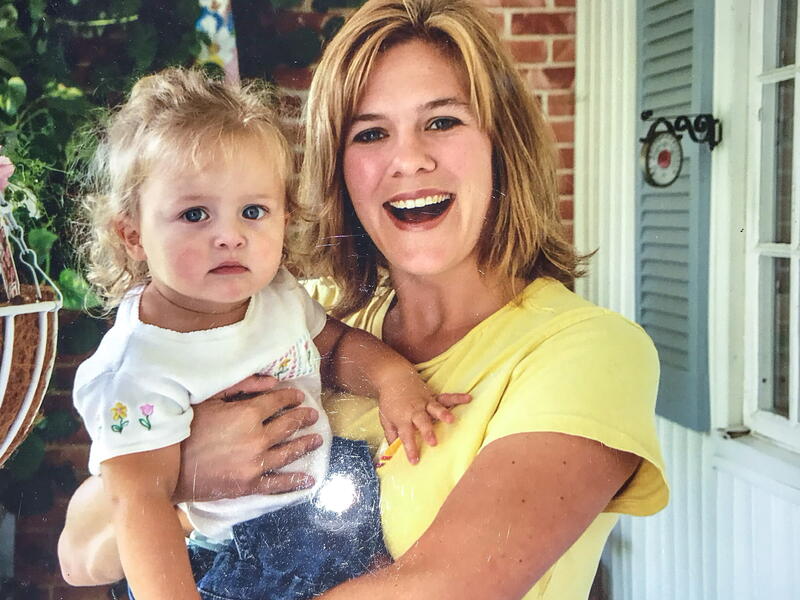
“My doctor called me the next day and said, ‘You have a very aggressive form of cervical cancer, and we need to send you to a specialist.’”
She underwent a radical hysterectomy, which is a procedure to remove the uterus, cervix and surrounding tissue, including in some cases the ovaries and fallopian tubes.
“The main thing going through my mind at that time was I’ve only had one child. I’m going to lose my ability to have children,” she explained. “It was hard to know the why. I was grappling a lot with like, why me? Is it my fault? What did I do?”
During surgery, several cancerous lymph nodes were found and removed. Hofer’s surgery was followed by 28 doses of radiation and six doses of chemotherapy.
“They actually only took one,” she said of her ovaries. “My doctor wanted to save me one because I was so young. The chemo and radiation killed the second one. So then I went into what’s called surgical menopause.”
Very quickly, Hofer’s body aged while she was still in her early 30s.
“That was very difficult,” she said. “The follow-up appointments for my stage of cervical cancer were aggressive. I had to have a Pap smear every month for the first 12 months and every two months for the second year, every three months for the third year, every four months for the fourth year and so on.”
Moving care to Sanford Health
As a young mom, she was trying to rally and be present for her daughter to move forward.
“I was starting to have some symptoms again and so that looked like it was starting to come back,” she said.
She continued her care at Sanford Health with Dr. Maria Bell, a specialist in gynecologic oncology.
Bell recommended a procedure to rid the cells that are along the vaginal wall.
“The discussion at that time was we’ll probably have to do that every year and I said: ‘Oh, Dr. Bell, I don’t want to have to have a surgical procedure every year. I don’t want to live my life like that. Like, what else can we do?’”
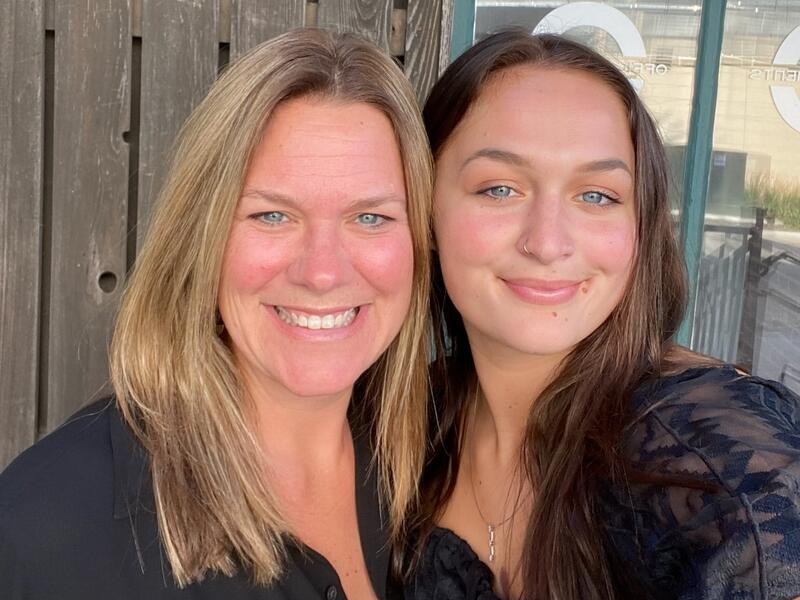
Ali Hofer and her daughter, Anna, today
Bell and Hofer had some frank conversations about some of the stress in her life.
“Part of the virus that causes cervical cancer, HPV, can attack when your stress is really high,” Hofer explained. “So I made some really significant life changes at that time.”
Cervical cancer is an environmentally or behaviorally induced cancer, and according to Bell, there are properties found in whole foods and vegetables that play a key role in prevention.
According to the National Institutes of Health, multiple studies suggest that the consumption of cruciferous vegetables contributes to a cancer-protecting diet.
“We know that the cruciferous vegetables like cauliflower, bok choy, cabbage have a natural substance in them called indole-3-carbinol that has natural anti-HPV activity,” Bell said. “So there’s some nutritional things patients can do.”
Another thing is exercise.
“I feel like we really had a great partnership and were able to be real of what was my outlook and what could I do to make a difference,” Hofer said.
Distributing the HPV vaccine
Through her work at the Good Samaritan Foundation, Hofer had the opportunity to visit a Sanford World Clinic location in Ghana in 2022 to help administer the HPV vaccine to children and teens in a community trying to eradicate the disease.
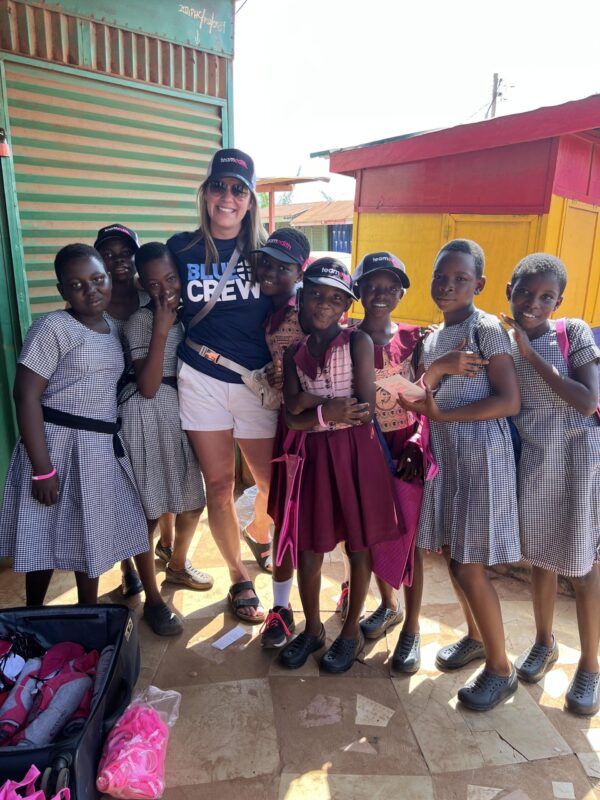
Ali Hofer meets students in Ghana during a Sanford Health HPV vaccination program.
According to the NIH, the vaccine’s single dose is 83 percent to 96 percent effective against preventing cancer.
“To help someone all the way across the world that probably has no health care absolutely felt full circle,” Hofer said. “It fulfilled that ‘why God?’ question for me.”
The vaccine was introduced in 2006 after Hofer’s first onset of cancer.
“There was research; there were studies starting to come out,” Hofer recalled. “After I was able to feel like I had enough information, I did have my daughter vaccinated against HPV.”
Hofer was proud to know that she was helping her daughter avoid a similar journey.
“If you can model advocacy for your own health for your children, then they’re more likely to do it. She advocates for that, too, and for other people in her life.”
Learn more
Share This Story
Most Recent
Videos



Looking amazing @dtsiouxfalls and @washpav! Thanks to @jpickthorn for capturing an incredible night.
Nov 26

Enjoy this glow headed into Halloween week! 📸: @jpickthorn
Oct 31
Hope you had a wonderful summer weekend and are recharged for the week ahead! 📸: @jpickthorn
Jun 27
Beautiful way to start a week! 📸: @jpickthorn
Jan 10
Favorite flyover of the year! Merry Christmas from our entire @pigeon605news flock. 🎄🐦 📸: @actsofnaturephotography
Dec 24
They definitely deserve to be treated like holiday royalty and they were! ❤️ these scenes from tonight’s lighting celebration at @sanfordhealth Children’s Hospital. 🎄
Dec 1
The holidays are here! Perfect night @dtsiouxfalls
Nov 27
Happy Halloween from @avera_health NICU babies! Link in bio to see more! 🎃
Oct 31
Did you know @dtsiouxfalls is filled with 👻 stories? Link in bio … if you dare 😱
Oct 8
When it comes to kids parties nobody wants to be cookie-cutter. Link in bio for the story on what’s trending.
Sep 28
Want to stay connected to where you live with more stories like this?
Adopt a free virtual “pigeon” to deliver news that will matter to you.




Are you a little bird with something to share?

Delivering news that matters to you
Years ago, homing pigeons were used to bring us news we needed. Today, your virtual “pigeon” will deliver what you want to know about the place you call home.
All pigeons are free to good homes!
Our Partners