Art exhibition designed for blind visitors marks latest step in accessibility at Washington Pavilion
This piece is sponsored by Washington Pavilion Management Inc.
Richard Crawford has visited the iconic “Mona Lisa” at the Louvre Museum in Paris — but had to rely on his wife to describe the painting.
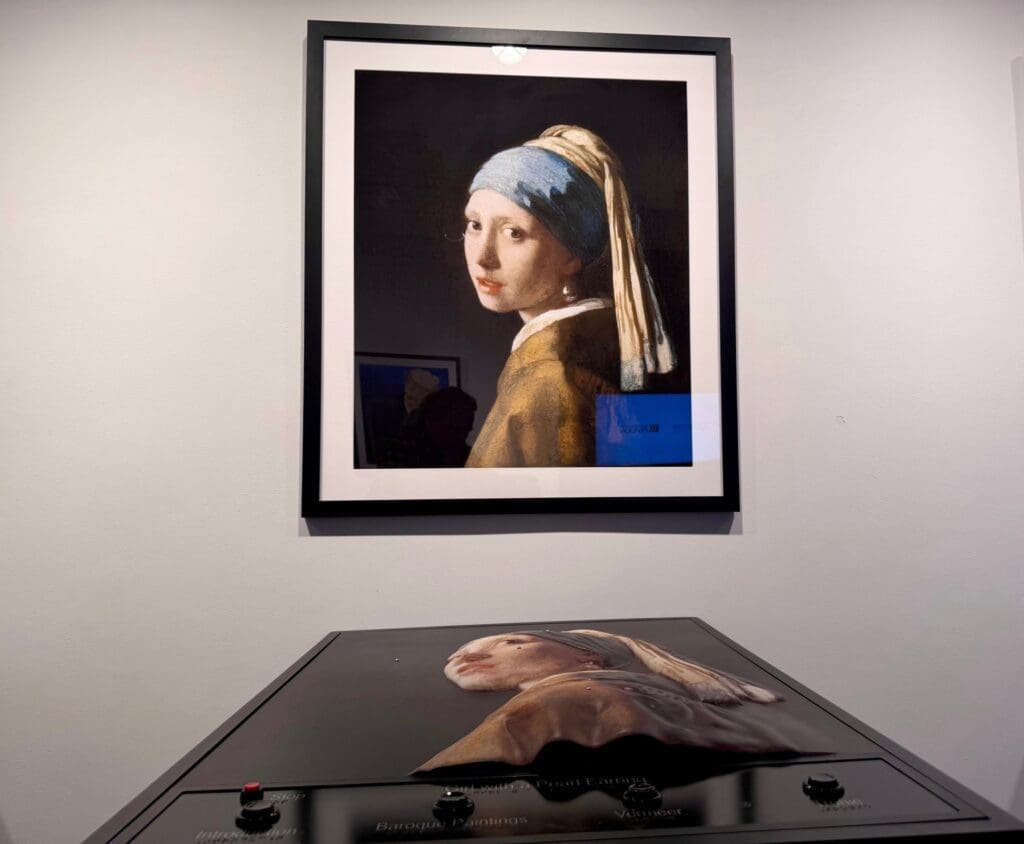
That changed recently with a visit to the Washington Pavilion’s Visual Arts Center, where Crawford — who is a blind person — had the rare opportunity to experience that and other reproductions in a one-of-a-kind exhibition.
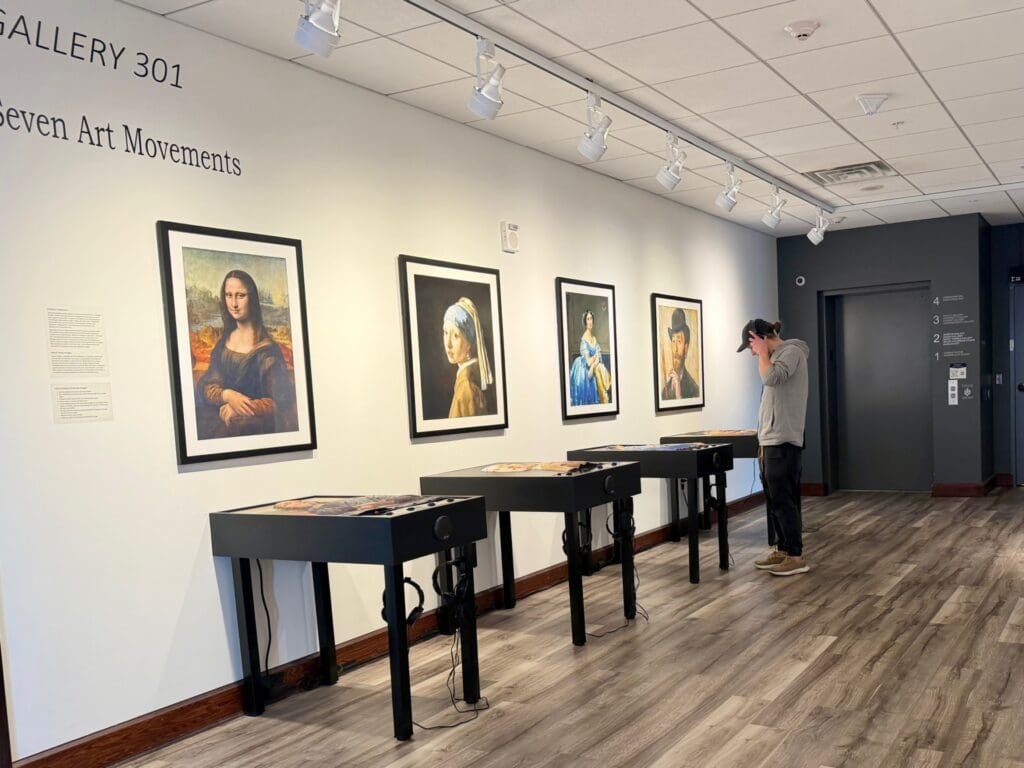
“You can close your eyes and feel the raised picture of the Mona Lisa tactically,” he explained. “There are sensors built into the pictures as you touch different parts of it, and a narrator describes what you’re feeling — the color, the background, some highlights about it.”
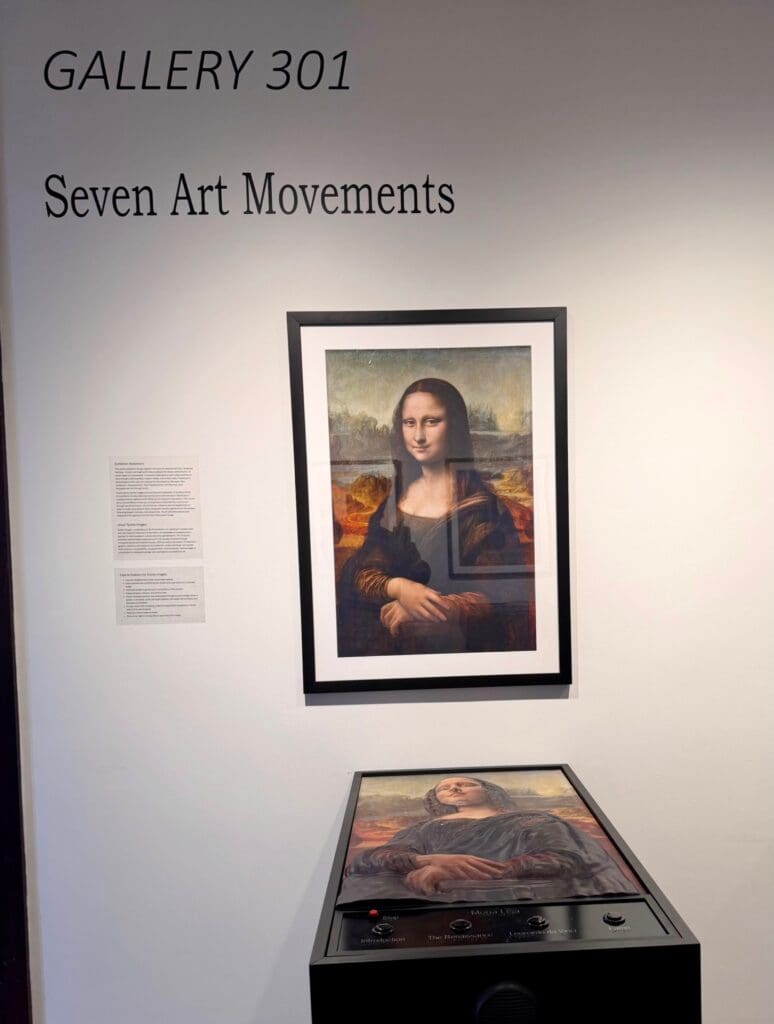
Crawford was visiting the new “Seven Arts Movements” exhibition, a touch-and-audio experience developed in collaboration with the National Federation of the Blind. Crawford, who is a member of the federation, discovered it when the exhibition’s creator demonstrated it at a national convention.
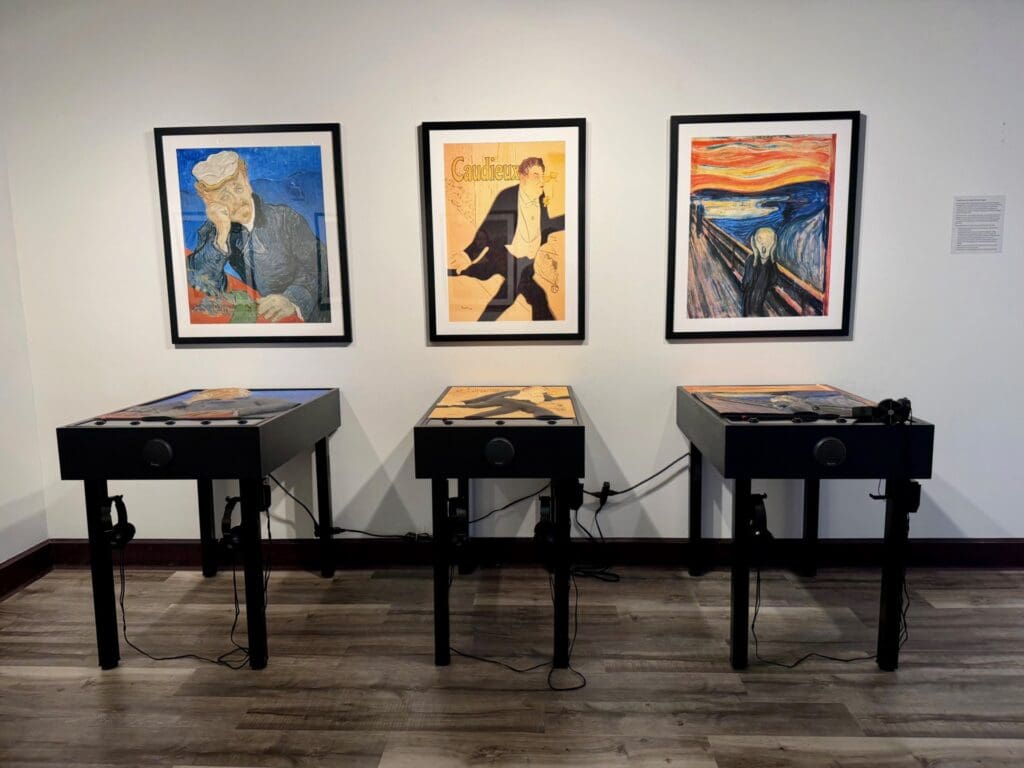
“I thought, well that would be a cool thing to get into Sioux Falls,” he said. “It took two years to come to fruition, but we got it down, and I’m tickled to death.”
A retired financial adviser from northwest Iowa, he moved to Sioux Falls several years ago and helped raise thousands of dollars to bring “Seven Art Movements” to his new home.
“It’s a free exhibit, so I think that has appeal for people,” he said. “I’m very pleased with how it turned out.”
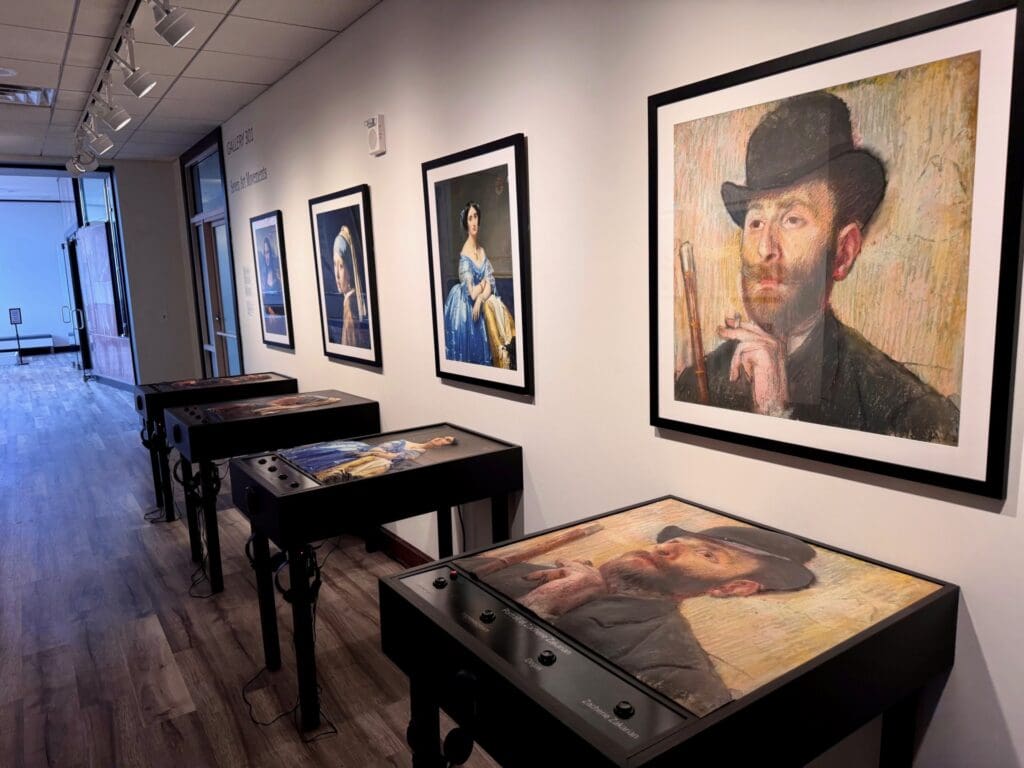
While most art museums operate as no-touch spaces, “Seven Art Movements” invites visitors to engage directly with art history. Through raised-line reproductions, textured surfaces and audio narration, guests explore seven defining movements presented in chronological order: the Renaissance, baroque, neoclassicism, impressionism, post-impressionism, art nouveau and expressionism.
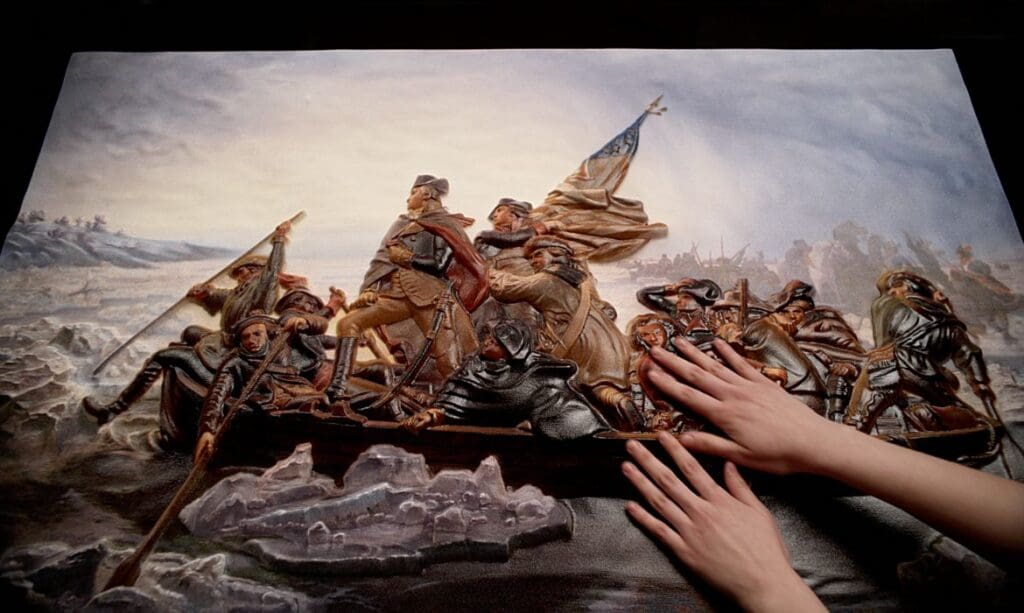
Tactile interpretations of works by artists such as Leonardo da Vinci, Johannes Vermeer and Vincent van Gogh reveal shifts in craftsmanship, subject matter and artistic style across centuries. Audio descriptions guide visitors as they follow shapes, contours and composition with their hands.
“As blind people, now we can mentally see what you’re seeing on the canvas,” Crawford said. “It’s not the same, but two sighted people can look at the same picture and not see the same thing, and the same is true with blind people. Other people noticed things on the raised exhibit that I missed.”
The exhibition “reflects our belief that art belongs to everyone,” said Maddy Grogan, director of museums and education at the Washington Pavilion. “Accessibility is fundamental to our mission. By hosting ‘Seven Art Movements,’ we are intentionally creating space for blind and low-vision guests to lead the experience, while inviting all visitors to reconsider how art can be understood.”
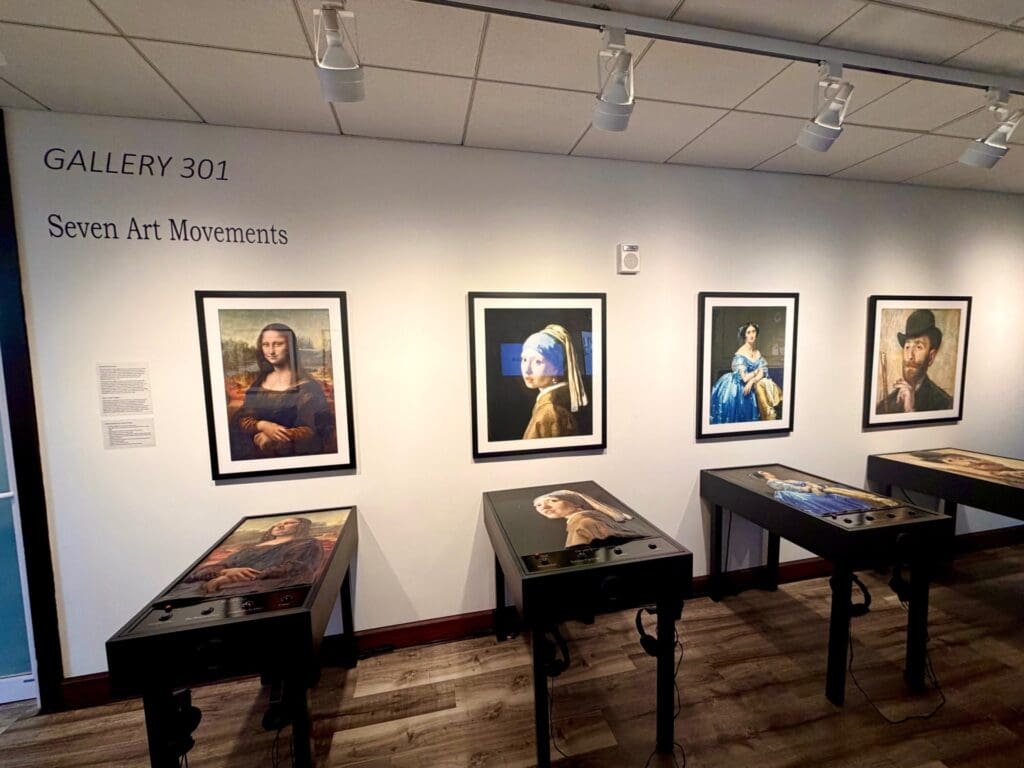
The traveling exhibition is in town until May 1.
“‘Seven Art Movements‘ shows that accessibility is a core part of the experience, not just an added accommodation,” said Kendra Gottsleben, marketing communications specialist for the USD Center for Disabilities, a sponsor of the exhibition.
“By designing the exhibition so blind and low-vision guests can lead the experience, it moves beyond traditional models and allows people with visual disabilities to fully engage with and interpret the artwork.”
The exhibit also invites the broader community to rethink how art is experienced, she added.
“Rather than relying solely on sight, visitors are encouraged to engage through other senses, perspectives and storytelling. This broadens appreciation for art while highlighting the experiences of the blind and low-vision community.”
By bringing the exhibit to Sioux Falls, the Washington Pavilion continues its commitment to inclusive programming and community enrichment, inviting all guests to experience art through a broader lens.
The Washington Pavilion recently initiated the certification process with KultureCity, the world’s leading nonprofit on sensory accessibility and acceptance.
“Other facilities in Sioux Falls have become part of this effort, and it struck me that we should offer the same service,” said Candice Balkovic, guest experience manager.
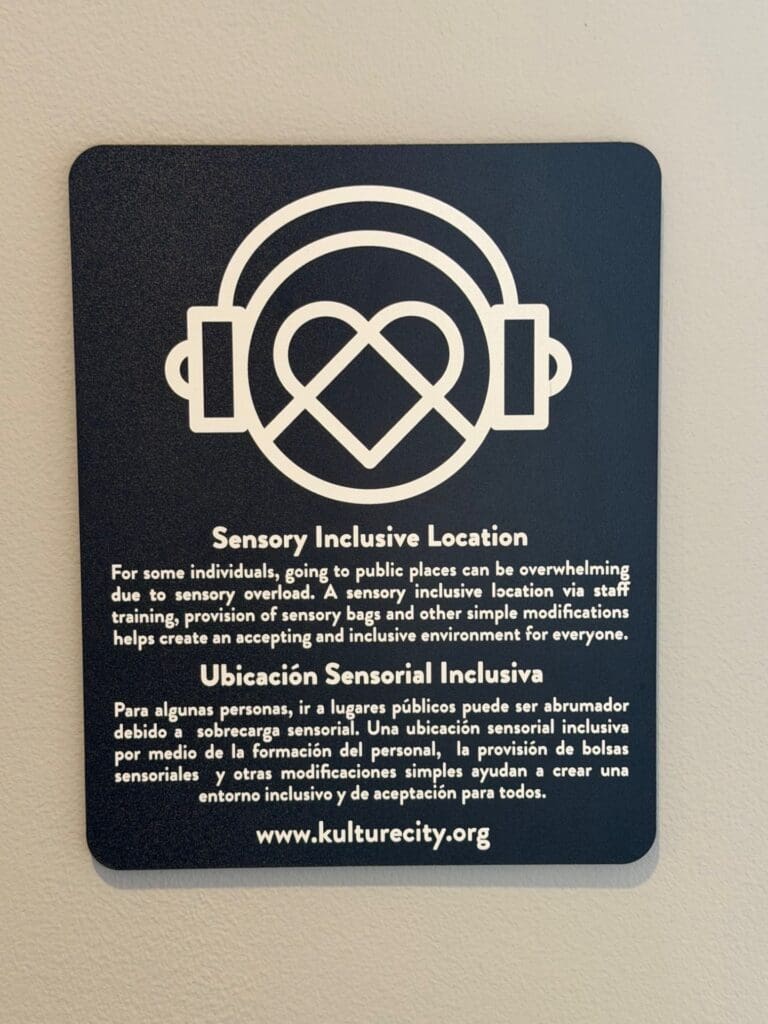
“A key part of KultureCity is training staff, so we’ve focused on training all our guest-facing team, which is offered online in a way that’s easy and accessible to everyone.”
More than 150 employees and volunteers now are more aware of different sensory sensitivities and how to better help guests.
“Many of them have thanked us for providing the training, so it’s been very positively received, and they’re eager to provide services to guests,” Balkovic said.
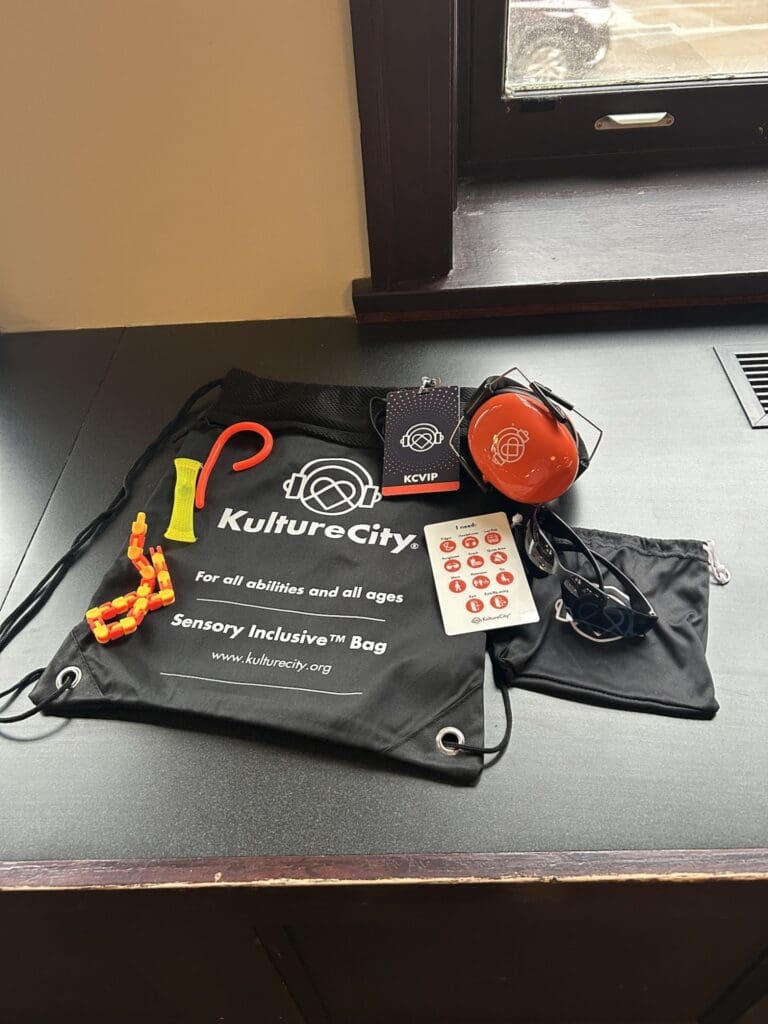
The Washington Pavilion now offers a backpack-style kit to guests upon request that offers fidgets with different sensory modes, strobe-reduction glasses for light sensitivity and headphones to help with noise sensitivity. There’s also a communication card for those who need help with verbalizing needs.
The Washington Pavilion expects to complete certification soon and then will be included in KultureCity’s app.
Gottsleben, who has served on the Washington Pavilion programming board for several years, also brings a disability perspective to the conversation.
“Since joining the board, I have seen real progress at the Washington Pavilion,” she said.
“There have been physical accessibility improvements such as automatic doors at the building entrance and recently added push buttons on the bathroom doors. These changes create a welcoming environment for everyone.”
ASL interpreters are available for any performance at the Washington Pavilion or Orpheum Theater Center. Request the service through the box office with at least two weeks’ notice.
“It could be anything from a children’s performance to a Broadway show or concert, even the Lallycooler music festival that we produce,” Balkovic said.
The Mary W. Sommervold Hall also is equipped with a hearing aid loop allowing those with a telecoil, or T-Coil, assistive hearing device to get a signal directly from the venue’s audio system. On telecoil-equipped hearing aids and cochlear implants, the wearer must “turn on” or “switch to” T-coil mode by moving a small switch to the “T” position, or by changing to a program mode by pressing a button on a phone app, the ear-level device or on a remote control.
Assisted listening devices also are available for the Mary W. Sommervold Hall and the Belbas Theater. Aux headphones must be plugged into the device, which then connects to the theater’s audio system. Ask at the box office for additional assistance.
The additional offerings tend to have broad benefits, Gottsleben added.
“When something is designed to provide access for people with disabilities, it often makes access easier for those without disabilities as well,” she said.
“Everything takes time, but when organizations like the Washington Pavilion continue taking this accessibility-focused approach, I hope the whole community can recognize its importance and benefit from it.”
Share This Story
Most Recent
Videos
Looking amazing @dtsiouxfalls and @washpav! Thanks to @jpickthorn for capturing an incredible night.
Nov 26

Enjoy this glow headed into Halloween week! 📸: @jpickthorn
Oct 31
Hope you had a wonderful summer weekend and are recharged for the week ahead! 📸: @jpickthorn
Jun 27
Beautiful way to start a week! 📸: @jpickthorn
Jan 10
Favorite flyover of the year! Merry Christmas from our entire @pigeon605news flock. 🎄🐦 📸: @actsofnaturephotography
Dec 24
They definitely deserve to be treated like holiday royalty and they were! ❤️ these scenes from tonight’s lighting celebration at @sanfordhealth Children’s Hospital. 🎄
Dec 1
The holidays are here! Perfect night @dtsiouxfalls
Nov 27
Happy Halloween from @avera_health NICU babies! Link in bio to see more! 🎃
Oct 31
Did you know @dtsiouxfalls is filled with 👻 stories? Link in bio … if you dare 😱
Oct 8
When it comes to kids parties nobody wants to be cookie-cutter. Link in bio for the story on what’s trending.
Sep 28
Want to stay connected to where you live with more stories like this?
Adopt a free virtual “pigeon” to deliver news that will matter to you.


Are you a little bird with something to share?
Delivering news that matters to you
Years ago, homing pigeons were used to bring us news we needed. Today, your virtual “pigeon” will deliver what you want to know about the place you call home.
All pigeons are free to good homes!
Our Partners