

Historic Heritage Park structures find new homes, return to long-ago uses
A writing cabin once again will host authors eager to put their ideas into words.
Within the next year, couples once again will exchange wedding vows in front of a church altar. A schoolhouse that once sent students out into the world now will embrace brides embarking on the next stage of their lives.
And a farmhouse once again will give visitors a glimpse of the past.
The structures that made up Heritage Park on the Augustana University campus for several decades have found new locations. While the slice of history no longer occupies one place, the foundation behind it is dissolving with the knowledge the historic buildings still have a future.
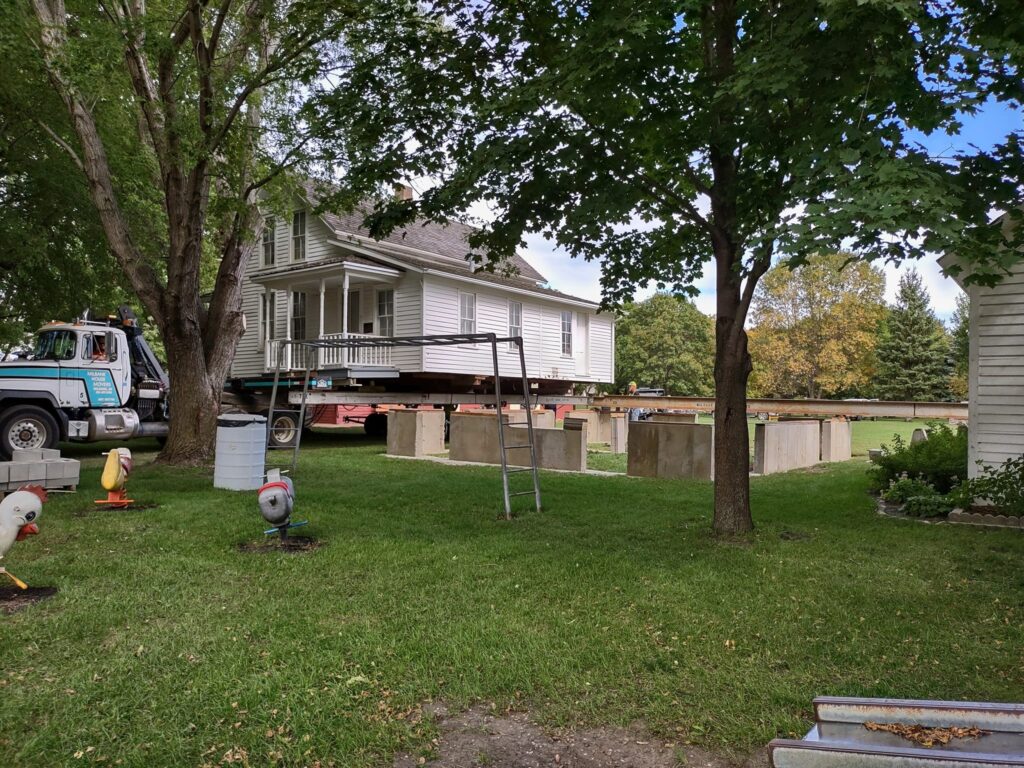
“There is a time for everything,” said Charles Berdahl, whose great-grand-uncle built and lived in the 139-year-old farmhouse that had been part of Heritage Park. It was donated to Augustana University in 1978. “That kind of park doesn’t have the same attraction for young people.”
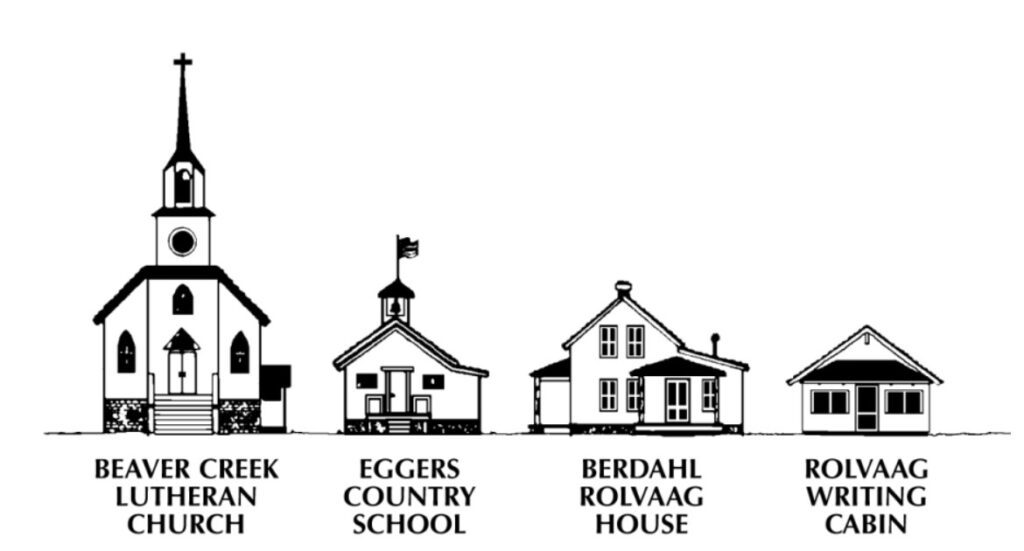
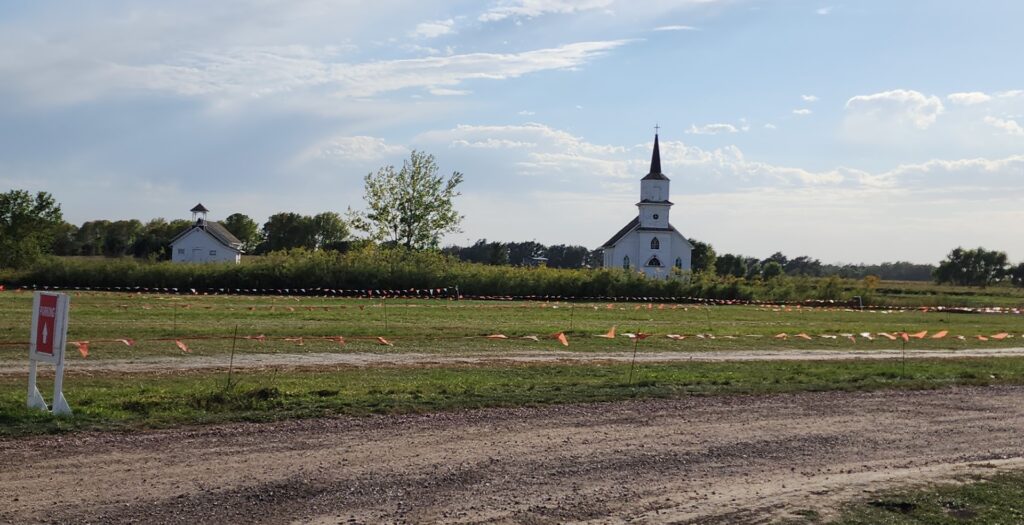
The Berdahl-Rolvaag House eventually was joined by Beaver Creek Lutheran Church, the Eggers School and the Rolvaag Writing Cabin in an area on campus off 33rd Street between Grange and Summit avenues. An ice hockey rink for Augustana’s Division I program is being built on that site.
With the decision to build the arena on the site, the Nordland Heritage Foundation that oversaw the historic buildings needed to find new locations. It was determined early on that it was unlikely the buildings could stay together.
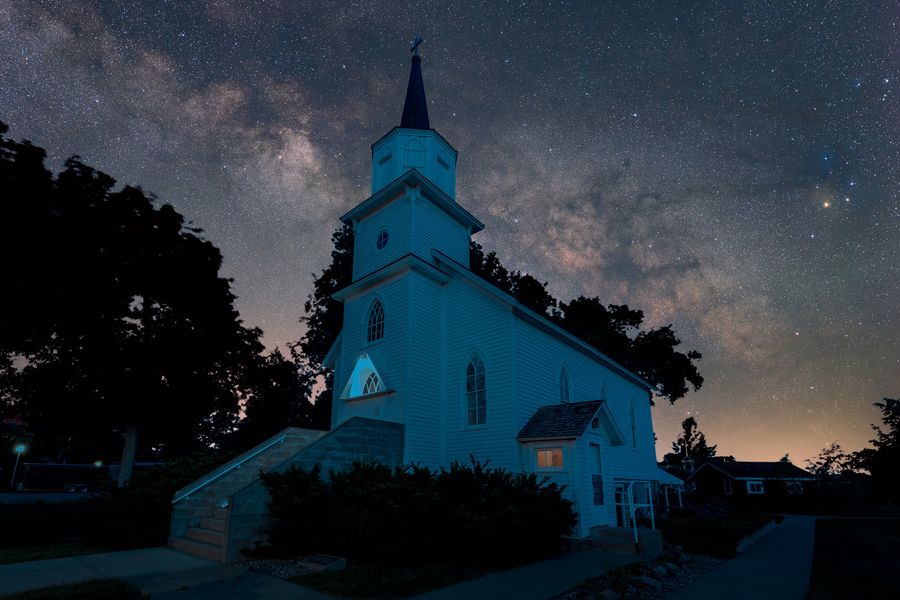
Photo courtesy Knight Images with blended background
The Nordland Heritage Foundation came about more than 40 years ago after a gathering of the “wagon train families,” the descendants of the Scandinavian pioneers who traveled to present-day Garretson in 1873. The Berdahl-Rolvaag house moved to campus in 1978, followed by the Beaver Creek Lutheran Church in 1985, Eggers School in 1993 and the Rolvaag Writing Cabin in 2001, Berdahl said.
A corner of the ice hockey arena will salute the former Heritage Park, he said. Augustana graduate and pioneer descendent Dr. John Berdahl is contributing to the tribute.
Nordland Heritage Foundation member Ray Johnson was instrumental in finding new locations for the buildings. His connection to Beaver Creek Lutheran Church is strong.
“Beaver Creek was my church when it grew up in the country” the Sioux Falls man said. “My relatives helped build the church. Dad was baptized there, our kids were baptized there, there’s a lot of confirmations. A cousin of mine and his wife, Dr. R.C. Johnson and Jane Nutter Johnson, were very instrumental in getting the church moved up here. It had sat a while in the country vacant, and we’re fortunate no damage was done.”
As Johnson pondered locations for the buildings, he relied on inspiration.
“On a whim, I called down to Greg Jones at the Harrisburg orchard, and I left my name and number and got a call back either the same day or the next day, and he said, yeah, he would be interested in it,” Johnson said.
Here are the four structures that once comprised Heritage Park and now have found new homes.
Beaver Creek Lutheran Church and Eggers School
Beaver Creek Lutheran Church, completed in 1892, was established in Lincoln County. Its Vernacular Gothic Revival style attempted to combine European attributes with the prairie experience. The church’s congregation voted to close in 1978, and it was moved to the Augustana campus in 1985.
Greg and Katie Jones have owned and operated the wedding venue Meadow Barn at Country Orchards south of Sioux Falls and west of Harrisburg since 2016. While their Meadow Barn seats up to 400 guests and The Veranda at Meadow Barn can hold up to 250 people, the couple had been considering a smaller venue and an actual church building.
“We were already thinking it would be nice to have a church for ceremonies, then Ray approached us out of the blue,” Greg Jones said. “And this is gorgeous. It’s a beautiful church, and it’s got the really picturesque steeple. It’s a tall old-fashioned church that makes great pictures.”
The couple originally didn’t expect they’d want to move the school to their property too.
“We didn’t know until we went and looked, and they said that was available as well,” Jones said. “They look like they match even though from separate places, both old fashioned, and they look cool in the orchard.”
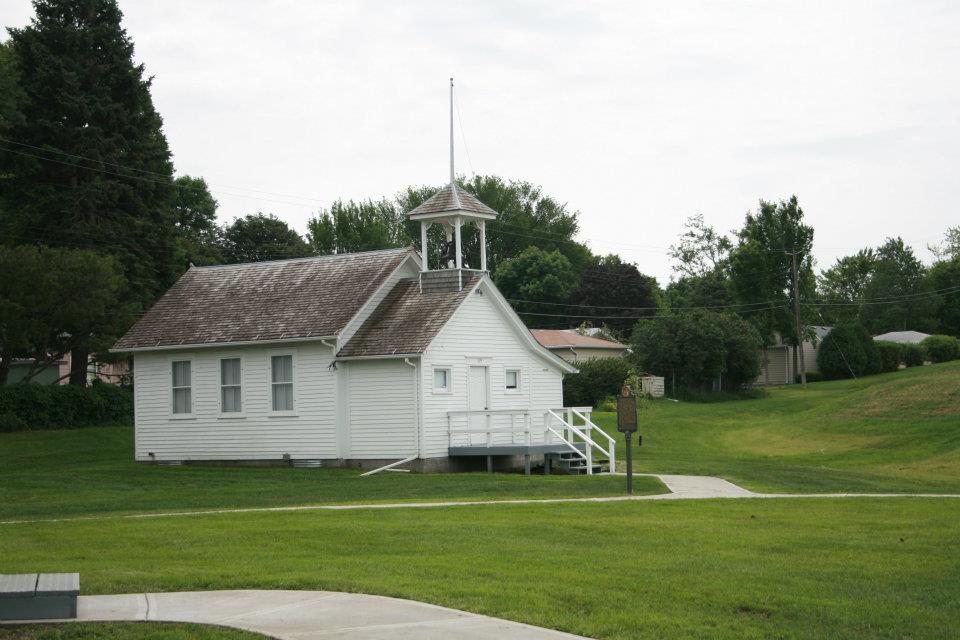
The Eggers School was built on an acre of land near Renner Corner in 1909. An average of 15 students attended the school for almost 50 years, but by 1957 enrollment had dropped to four. James Wehde, a former student, purchased and preserved the school after it was closed.
Placing the Eggers School next to the church will give brides and their attendants a place to prepare for the ceremony.
The couple purchased a neighboring orchard a year ago, wanting to keep their wedding venue site away from housing developments. The historic buildings have an appeal that new structures do not always display.
“I’m not an expert, but just walking through you feel the uniqueness or history of them,” Jones said. “I think we’ll put up information about the history when the site’s all up and going.”
The couple will start taking reservations for the church in June. Foundations must be poured for the buildings and electricity brought in. The church will receive new paint and flooring but few other changes.
“There’s definitely been some interest in the church already and a few people chomping at the bit,” Jones said.
Berdahl-Rolvaag House
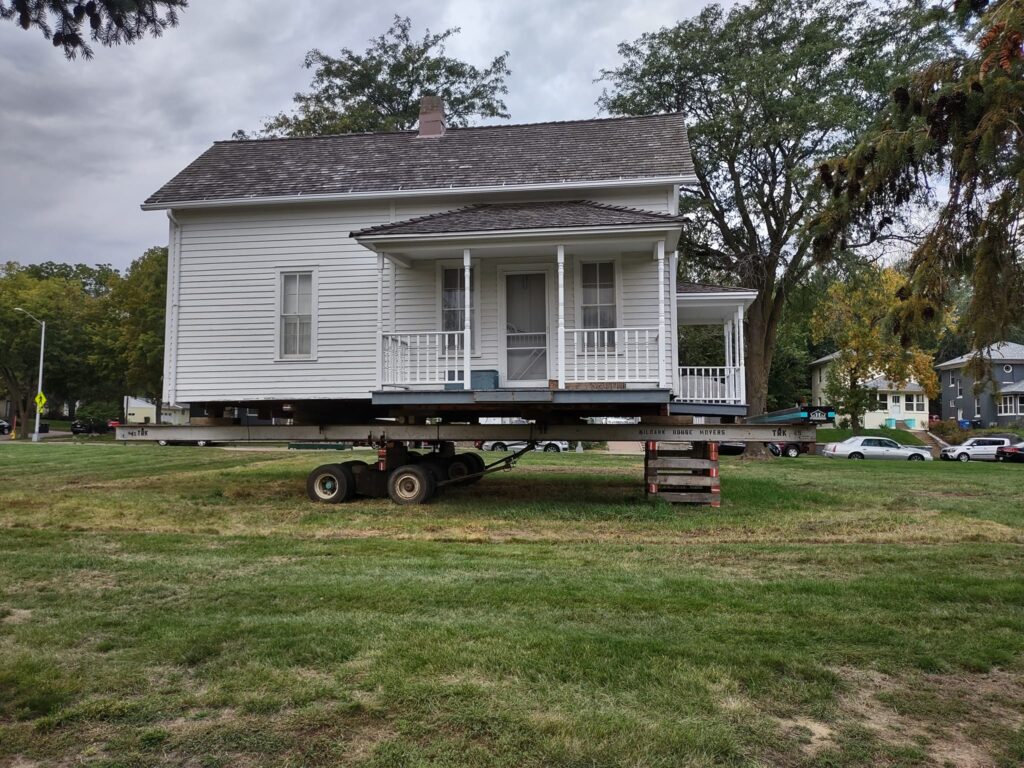
The Berdahl family built its farm home in 1883. Jennie Berdahl was raised in the house; she was still living at home with her parents when she married Ole Rolvaag, an immigrant whose trio of novels told the stories of Norwegian immigrants who moved to this area in the 1870s.
When it came to the Berdahl-Rolvaag House, Johnson made a few calls before reaching Darrell Hansen of Granite, Iowa. Granite is the home of an annual threshing bee every July, and the organizers have created a small history center with an antique gun mill and other historic attractions.
Earlier this month, Johnson, Berdahl and several others traveled to Granite, 4 miles south of Rowena, to set up the artifacts inside the house.
The Berdahl-Rolvaag House has joined an 1881 school from Hills, Minnesota; a Hudson, South Dakota, depot from the early 1900s; a summer kitchen from Steen, Minnesota; and a farmhouse and machine shop from Inwood, Iowa, said Darrell Hansen. Real estate at the threshing bee site is precious, he said, so the board of directors considered the matter carefully before deciding to take the Nordland Heritage Foundation’s offer.
The house was placed on a foundation last month. Gaps must be closed and exterior steps built before it can be opened to the public, he said. The monument designating it a historic building also will be erected.
Its new owners will open the house to any clubs and organizations that want to tour it, Hansen said.
“We’ve been hearing some vibrations from people who want to see it,” he said. “There’s more interest than I thought there would be.”
Rolvaag Writing Cabin
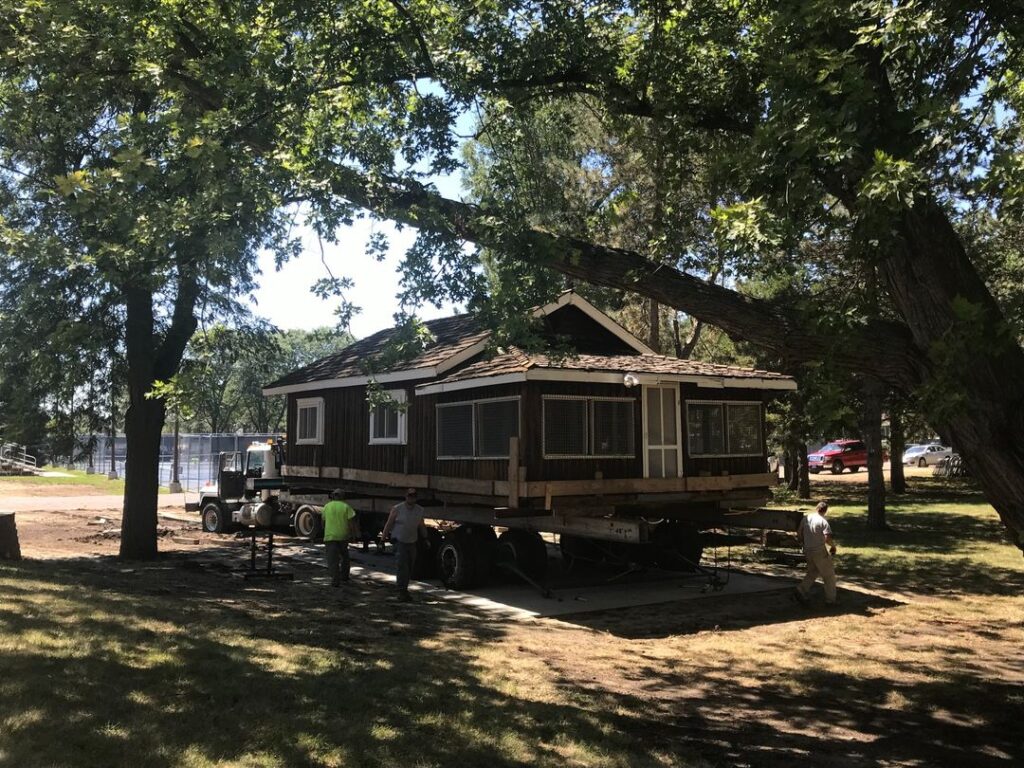
Ole Rolvaag wrote the first book in his trilogy, “Giants in the Earth,” between September and October 1923 when the cabin stood on U.S. Forest Service land on Big Island Lake in northern Minnesota. Plans were to raze the cabin, but the Rolvaag family interceded. They chose to have the cabin close to the Berdahl-Rolvaag House, where Rolvaag heard many of the stories later incorporated into his novels. Two Finnish carpenters dismantled and reassembled the cabin.
The Rolvaag Writing Cabin moved to what is referred to as the Humanities Grove on the Augustana campus in early August. Professor Patrick Hicks said the cabin’s ultimate usage still is being determined.
“We are in the process of trying to figure that out,” he said. “It’s very, very possible it’s going to be a type of classroom. Not official, but a place for writing assignments, meditation, an atmosphere that can shape how a writer imagines a narrative,” he said.
The cabin never had electricity. While that worked for Ole Rolvaag in the 1920s, students’ laptops and phones will need electric outlets. It also has no heating or cooling systems, so most of its occupancy will be in the more temperate months.
The cabin now is amidst trees, approximating its location in northern Minnesota. Future landscaping is planned.
The cabin’s “bones” remain good all these years after Rolvaag used it, Hicks said. Augustana administrators made a wise decision in keeping it on campus, he said.
“For me, the Rolvaag cabin is perhaps the greatest literary artifact Augustana has, for sure, and quite possibly for the city of Sioux Falls in general,” Hicks said. “It ties in to the beginning of Minnesota literature as far as white settlers are concerned. I feel those intersections whenever I open his (Rolvaag’s) cabin.”
A writer and novelist himself, when Hicks enters the cabin, Rolvaag’s desk draw his eyes.
“It’s fun to imagine sitting at the desk looking out at the lake,” he said. “It’s fun for me to imagine the space he was in as he was trying to conjure up that other literary world.”

The historic buildings once part of Heritage Park also are preserved on video, Berdahl said. Augustana graduate and filmmaker Andrew Kightlinger interviewed Berdahl family members and filmed the buildings to preserve the history. They also will be part of a presentation on preserving the homes of three historic South Dakota families to air on South Dakota Public Television.
Janet Brown, another Berdahl descendent, served as executive producer.
“It gives wonderful background on each building,” she said. “We did films of each of the four buildings’ interiors and four 30-minute interviews. It’s meant to be a video Augie will use on a loop in the hockey rink or in the writing cabin.”
Coming up
A 30-minute television documentary, “Preserving South Dakota’s Pioneer Past,” will air at 9:30 p.m. Nov. 17 on South Dakota Public Broadcasting. It tells the stories of the lives and preserved homes of several of the state’s prominent pioneer families. Featured are the Berdahl, Mellette and Pickler families, among the first European-Americans to settle in Dakota Territory. The opening segment on the Berdahl-Rolvaag House, the Rolvaag Writing Cabin and the other structures formerly on the Augustana University campus opens the program.
Share This Story
Most Recent
Videos
Looking amazing @dtsiouxfalls and @washpav! Thanks to @jpickthorn for capturing an incredible night.
Nov 26

Enjoy this glow headed into Halloween week! 📸: @jpickthorn
Oct 31
Hope you had a wonderful summer weekend and are recharged for the week ahead! 📸: @jpickthorn
Jun 27
Beautiful way to start a week! 📸: @jpickthorn
Jan 10
Favorite flyover of the year! Merry Christmas from our entire @pigeon605news flock. 🎄🐦 📸: @actsofnaturephotography
Dec 24
They definitely deserve to be treated like holiday royalty and they were! ❤️ these scenes from tonight’s lighting celebration at @sanfordhealth Children’s Hospital. 🎄
Dec 1
The holidays are here! Perfect night @dtsiouxfalls
Nov 27
Happy Halloween from @avera_health NICU babies! Link in bio to see more! 🎃
Oct 31
Did you know @dtsiouxfalls is filled with 👻 stories? Link in bio … if you dare 😱
Oct 8
When it comes to kids parties nobody wants to be cookie-cutter. Link in bio for the story on what’s trending.
Sep 28
Want to stay connected to where you live with more stories like this?
Adopt a free virtual “pigeon” to deliver news that will matter to you.





Are you a little bird with something to share?

Delivering news that matters to you
Years ago, homing pigeons were used to bring us news we needed. Today, your virtual “pigeon” will deliver what you want to know about the place you call home.
All pigeons are free to good homes!
Our Partners