
Well-child visits important for children of all ages
This paid piece is sponsored by Sanford Health.
A regular checkup for a child younger than 18 is often referred to as a “well-child visit.” These visits help ensure that infants, children and teens are getting the proper care they need to stay healthy. They give the provider, parents and child an opportunity to talk about nutrition, safety, immunizations and many important age-appropriate topics.
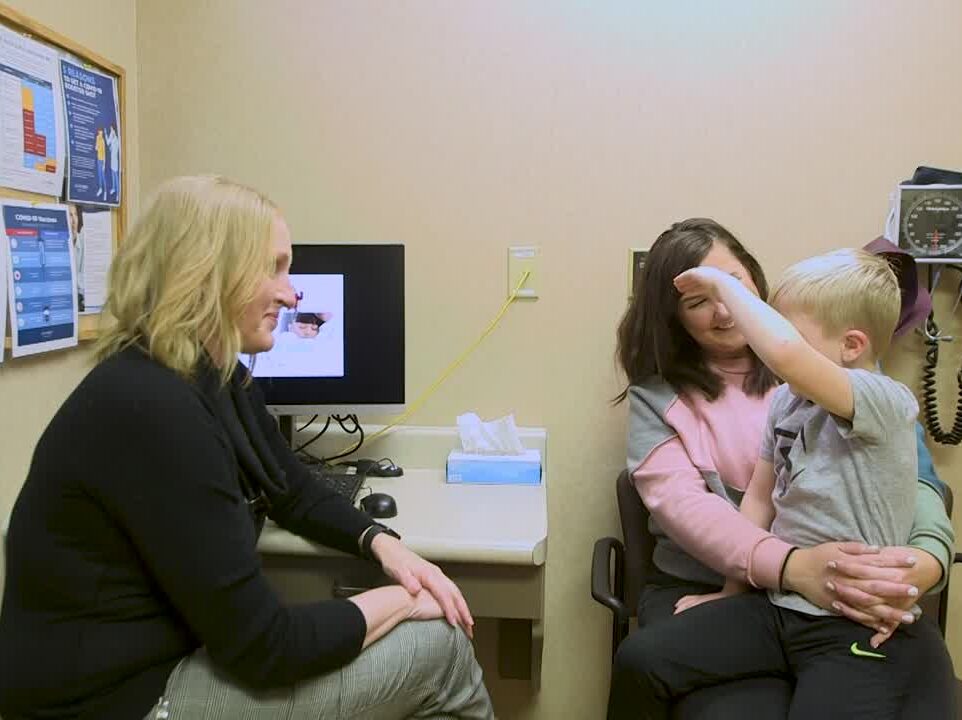
Sanford Health physicians Krista Hoyme, Michelle Johnson and Laura Whittington offer advice on scheduling well-child visits and what to expect.
What takes place at a well-child visit for kids age 0-3?
During the first months and years of life, growth and development are happening rapidly. Parents typically have a lot of questions during this time frame, and we are here to help. Regular checkups allow primary care providers to stay in contact with patients and families regarding these issues and any other concerns they may have.
There is a set schedule for parents to follow for well-child visits in this age range. Your providers ask to see a newborn a few days after delivery. After that, you should come in again five times before their first birthday. This happens at months 2, 4, 6, 9 and 12. Then, providers like to see kids when they are 15, 18, 24 and 30 months of age. After that, the visits can occur on an annual basis.
When you arrive, you will be asked to fill out forms that are a developmental screening tool. These give your provider an idea of where your child is at in this stage of their development based on their age.
A nurse will take your child’s vital signs and measurements. After that, your provider will do a physical exam of your child to look for anything out of the ordinary.
During these young well-child visits, providers monitor growth and development, eating habits, the transition from breast milk or formula into solid foods, sleep patterns, bowel habits and behavioral concerns, and update vaccines.
Providers also spend time discussing the importance of things like dental checkups and precautionary measures such as safety around the home and in the community.
Ask any questions you might have. Feel free to write them down beforehand, too, to be sure you cover everything that’s on your mind.
What do annual well-child visits for kids older than 3 involve?
As your child grows, their body is going through a lot. It is important for primary care providers to monitor these changes closely so they can know if the development is happening at a normal rate. If your child seems to be falling behind in certain areas, the earlier providers know, the earlier they can help get your child back on track.
From an educational standpoint, providers make sure children have hit all their milestones for preschool and kindergarten. This ensures that they’re on track to progress properly and have positive experiences that will set them up for better success later on in life.
Because behavioral issues can become a problem during and after the toddler phase, providers like to stay in touch with parents to address or diminish any of those concerns, especially with school approaching.
Safety issues concerning bikes, water, cars and stranger danger also are discussed. Providers also make sure vaccinations are up to date.
Plus, as your child is going through all these changes, you’re experiencing parenting changes as well. Having an opportunity to talk to the provider about concerns you have as your child grows can help put your mind at ease.
What does a well-child visit do for a tween or teen?
Growth patterns tend to change as children enter the pre-pubescent and adolescent stages of life. Kids begin to experience changes in hormones, develop acne, and the girls start their menstrual cycles. Well-child checks continue to be beneficial in providing education to middle schoolers and high schoolers — as well as their parents — on these changes and any challenges that may be present.
For parents or students with concerns about grades or classwork, these checks also provide an opportunity to intervene early from an intellectual and educational standpoint and further address any potential behavioral or academic issues.
Providers will discuss any hearing or vision concerns and remind kids about healthy sleep patterns, eating habits and food choices. It’s important to make sure kids are healthy mentally and physically so primary care providers do mental health screenings and discuss how kids are feeling mentally and emotionally. They also offer resources to parents so they can support their child’s well-being.
Providers also have started screening preteens and teenagers for cholesterol and high blood pressure to test for high risks of cardiovascular disease.
What types of immunizations does my child need?
Immunizations are one of the best, most effective ways to keep you and your family healthy and protected from dangerous illnesses.
Click here for a list of recommended vaccinations for infants to teens.
They may not all appear on the list of required vaccinations for your child’s school because schools focus on vaccine-preventable diseases that are transmitted easily while school is in session. However, they’re still important for a child’s lifelong health.
Is a back-to-school exam different?
Back-to-school exams can benefit all children who are headed back to the classroom. This is essentially the same as a well-child visit but can be completed in the summertime to address any upcoming concerns regarding the new school year.
How is a well-child visit different than an athletic physical?
In the sports medicine field, the sports physical exam is known as a pre-participation physical examination. The exam helps determine whether it’s safe for a child to participate in a particular physical activity. Most states require that kids and teens have a sports physical before they can start a sport or begin a competitive season.
The sports physical focuses on your well-being as it relates to participating in a physical activity. It’s more limited than a regular physical, also known as a well-child visit.
A well-child visit is much more comprehensive and includes reviewing immunization records, medical history and family history. The provider also discusses behaviors, school issues and proper nutrition with the child.
“Many parents don’t know that a well-child visit will qualify as a sports physical,” said Johnson, a family medicine physician for Sanford Health. “Just bring the required paperwork from your school, and we will complete it for you.”
In addition, well-child visits will be filed with insurance. Check with your insurance company; many pay for 100 percent of the visit.
Learn more
Share This Story
Most Recent
Videos



Looking amazing @dtsiouxfalls and @washpav! Thanks to @jpickthorn for capturing an incredible night.
Nov 26

Enjoy this glow headed into Halloween week! 📸: @jpickthorn
Oct 31
Hope you had a wonderful summer weekend and are recharged for the week ahead! 📸: @jpickthorn
Jun 27
Beautiful way to start a week! 📸: @jpickthorn
Jan 10
Favorite flyover of the year! Merry Christmas from our entire @pigeon605news flock. 🎄🐦 📸: @actsofnaturephotography
Dec 24
They definitely deserve to be treated like holiday royalty and they were! ❤️ these scenes from tonight’s lighting celebration at @sanfordhealth Children’s Hospital. 🎄
Dec 1
The holidays are here! Perfect night @dtsiouxfalls
Nov 27
Happy Halloween from @avera_health NICU babies! Link in bio to see more! 🎃
Oct 31
Did you know @dtsiouxfalls is filled with 👻 stories? Link in bio … if you dare 😱
Oct 8
When it comes to kids parties nobody wants to be cookie-cutter. Link in bio for the story on what’s trending.
Sep 28
Want to stay connected to where you live with more stories like this?
Adopt a free virtual “pigeon” to deliver news that will matter to you.




Are you a little bird with something to share?
Delivering news that matters to you
Years ago, homing pigeons were used to bring us news we needed. Today, your virtual “pigeon” will deliver what you want to know about the place you call home.
All pigeons are free to good homes!
Our Partners