Train whistles could go largely silent downtown – possibly with help from state
An effort to bring so-called quiet zones to downtown railroad crossings in Sioux Falls is on track to potentially get a boost from the state.
A bill being considered by the Legislature would offer Sioux Falls and other cities of 5,000 people or more the chance to receive state general funds to match with local funds.
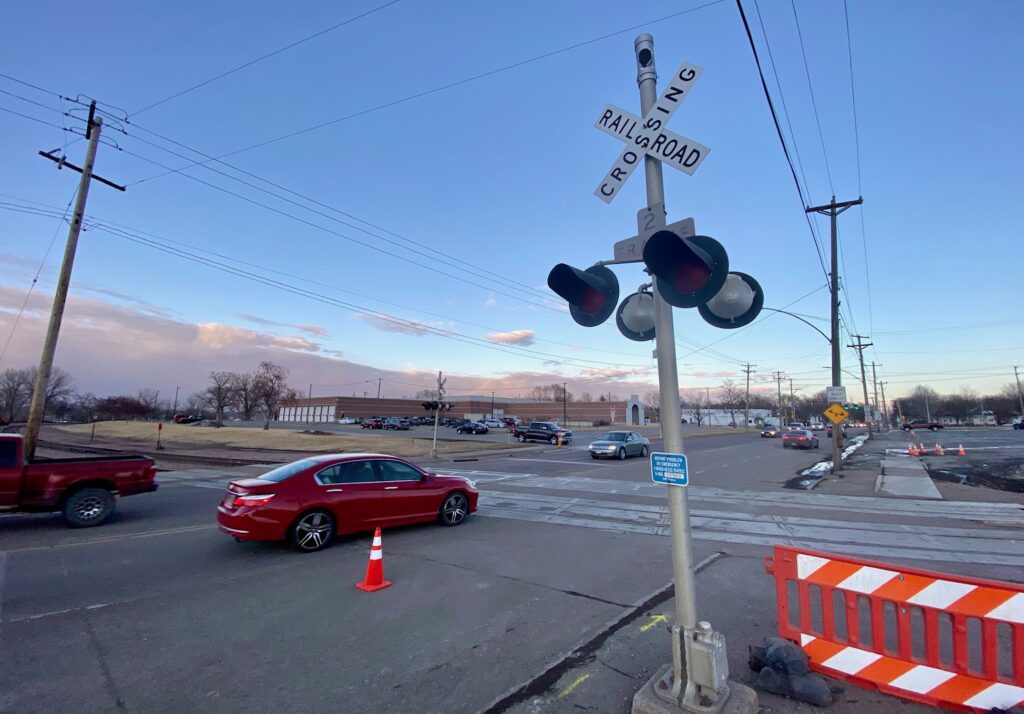
“If it’s an intersection that needs it, half the cost is paid for by the grant and the other half essentially locally, which could be the local governing body along with private individuals,” said Rep. Greg Jamison, who is among the bill’s sponsors.
“We’re hoping for success.”
The bill cleared its first hurdle today, despite testimony from the Bureau of Finance and Management that municipalities should be responsible for the cost. Members of the Senate Transportation Committee unanimously voted in favor of the measure, sending it to the Joint Appropriations Committee.
“When we talk about it, we start to whisper,” Jamison joked. “It draws everybody in.”
In all seriousness, though, the bill was brought forward in response to an issue that quickly can become disruptive to anyone living or working near train crossings.
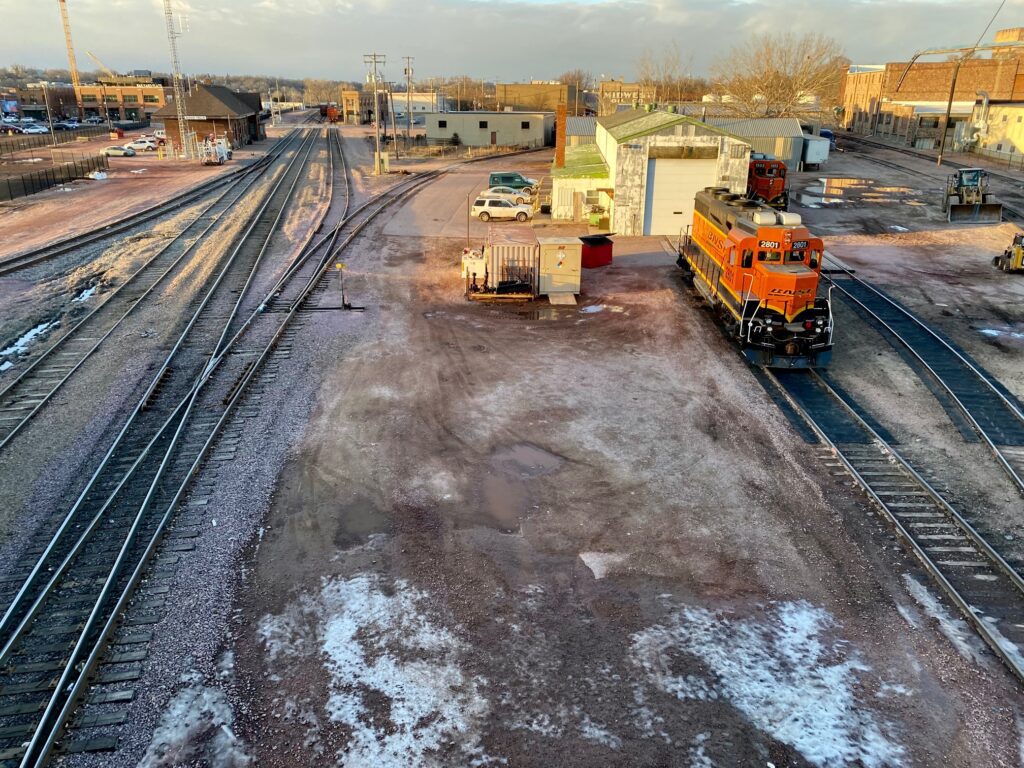
Conductors are required to blow their whistle multiple times when approaching a crossing.
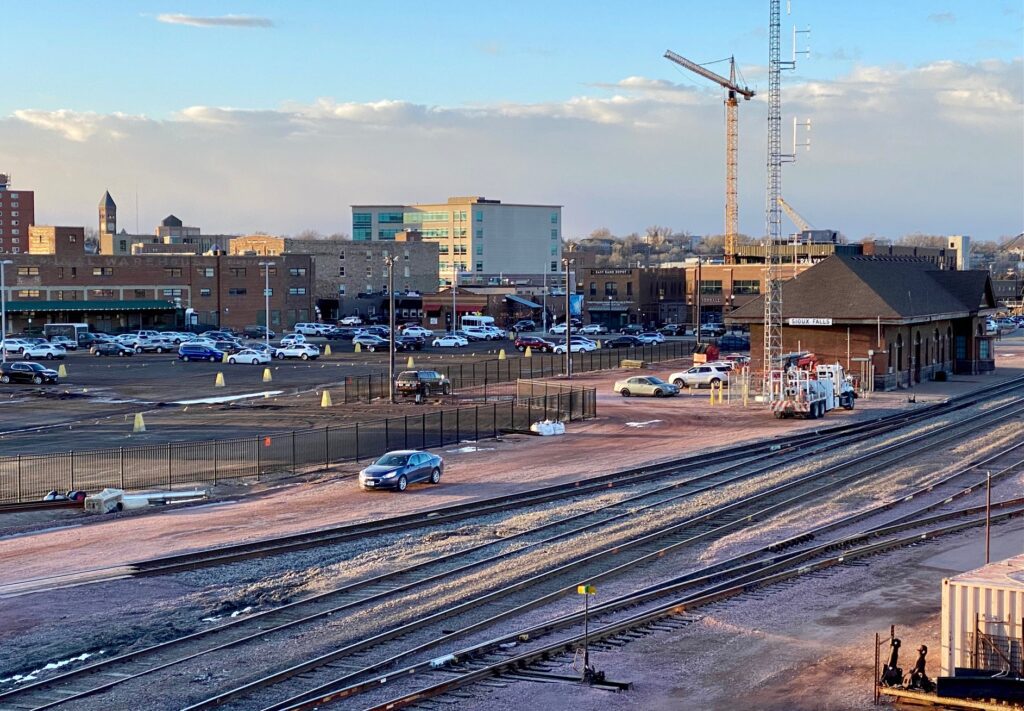
In Sioux Falls, that can mean at Weber Avenue and Sixth and Eighth streets downtown.
“That’s almost continuous horns for three or four blocks,” said Debra Owen, vice president of government relations at the Greater Sioux Falls Chamber of Commerce, which is supporting the bill.
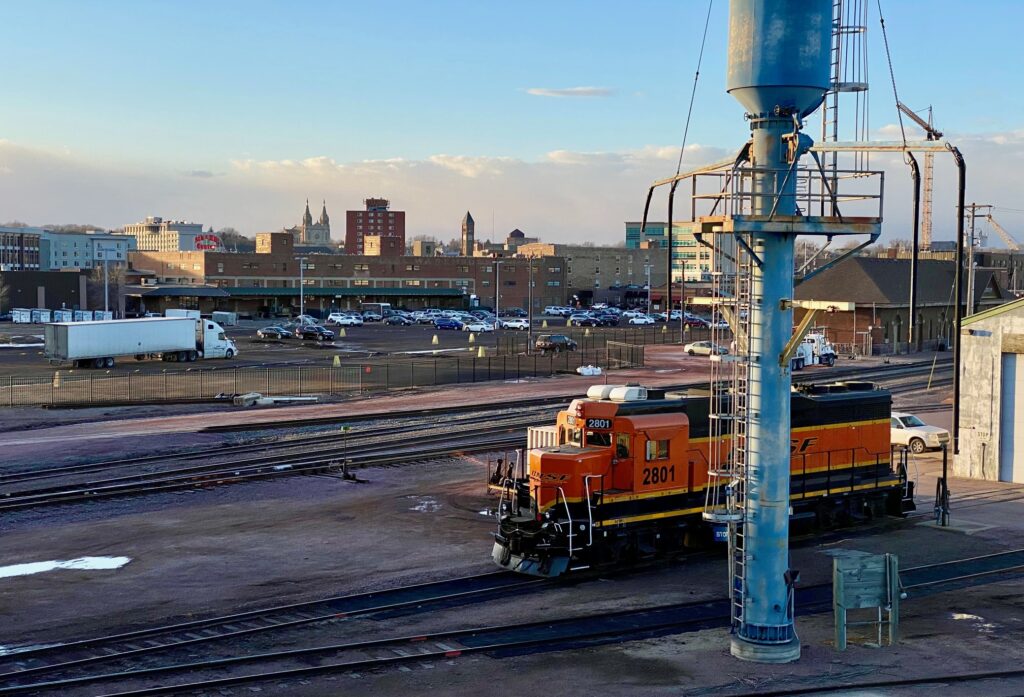
“We have 10,000 workers and 2,500 to 3,000 residents who live downtown … so you have a lot of pedestrians and people living in that high-density area, and we’re looking to improve that quality of life.”
Jeff Scherschligt, who developed Cherapa Place 15 years ago and is constructing a massive expansion there, is experiencing the sound firsthand from his office in the newly built Railyard Flats on Eighth Street.
“When you’re in a business setting and the whistle goes off, you really have to stop your meeting until it ends. But to be honest, that is very acceptable to me. It’s not as acceptable at 2 a.m. for our apartment tenants,” he said.
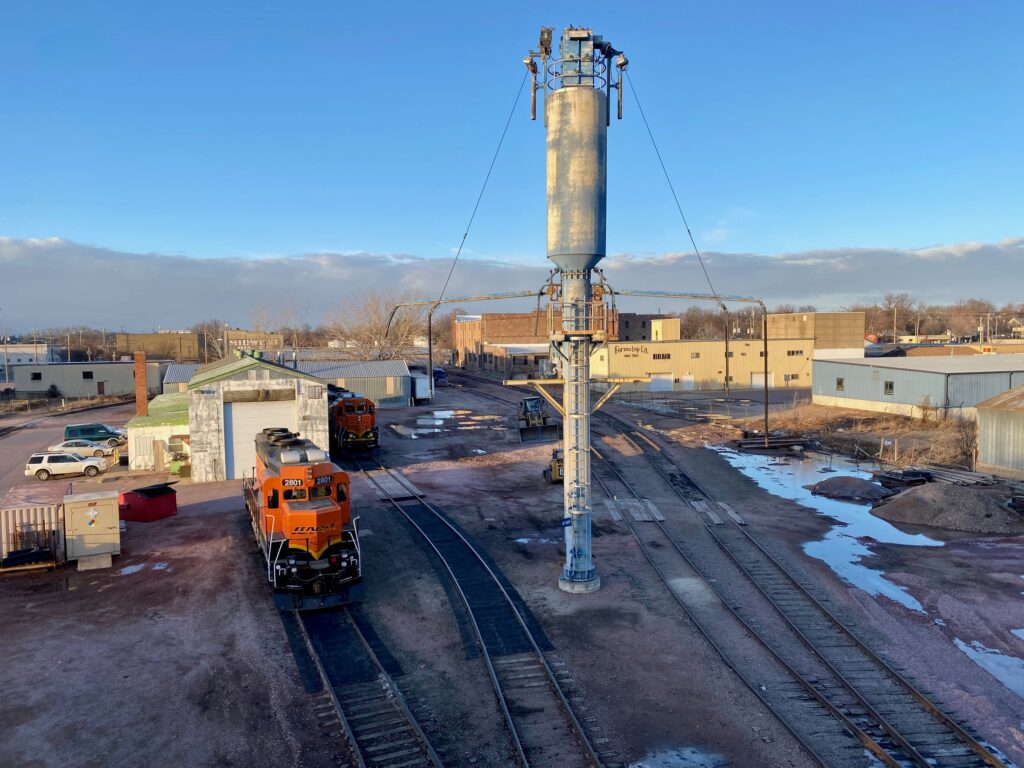
“And every conductor does things differently. Some hit it lightly at night, and some sit there and blow it for 45 seconds at 2 a.m. And the (train) traffic is picking up, so there’s just more activity.”
He likens the investment to how government builds overpasses in new residential areas for easier rail integration with neighborhoods.
“It’s only fair those quiet zones go in downtown because it will help the apartment dwellers, the condo dwellers, the hotel dwellers, and it just adds to our quality of life. To serve the community, this is going to be huge.”
To create a quiet zone, improvements must be made to the crossing so conductors no longer need to blow the whistle. That includes gate systems or gates in combination with medians.
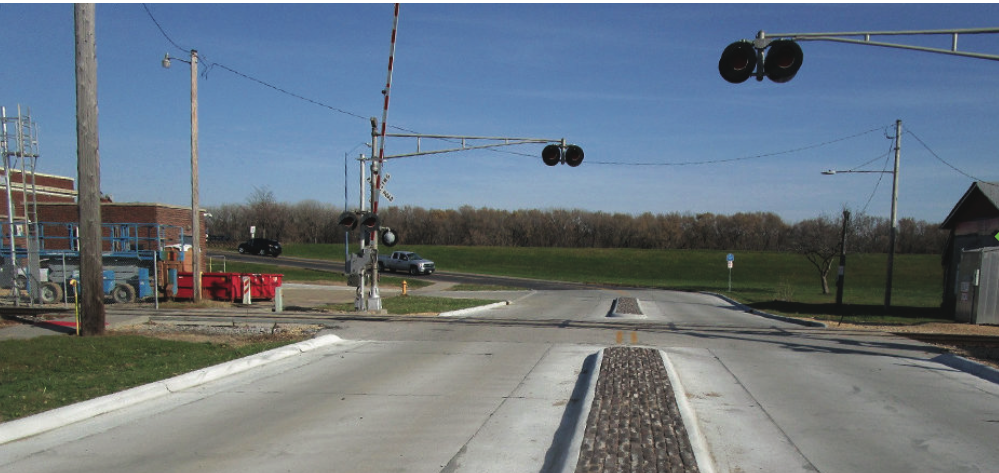
That includes flashing lights and at least one bell, along with a constant warning-time device in most cases.
The device activities the gates and lights based on the speed of the approaching train to ensure enough notice for motorists.
Train operators still can sound the horn to warn people or even animals as needed.
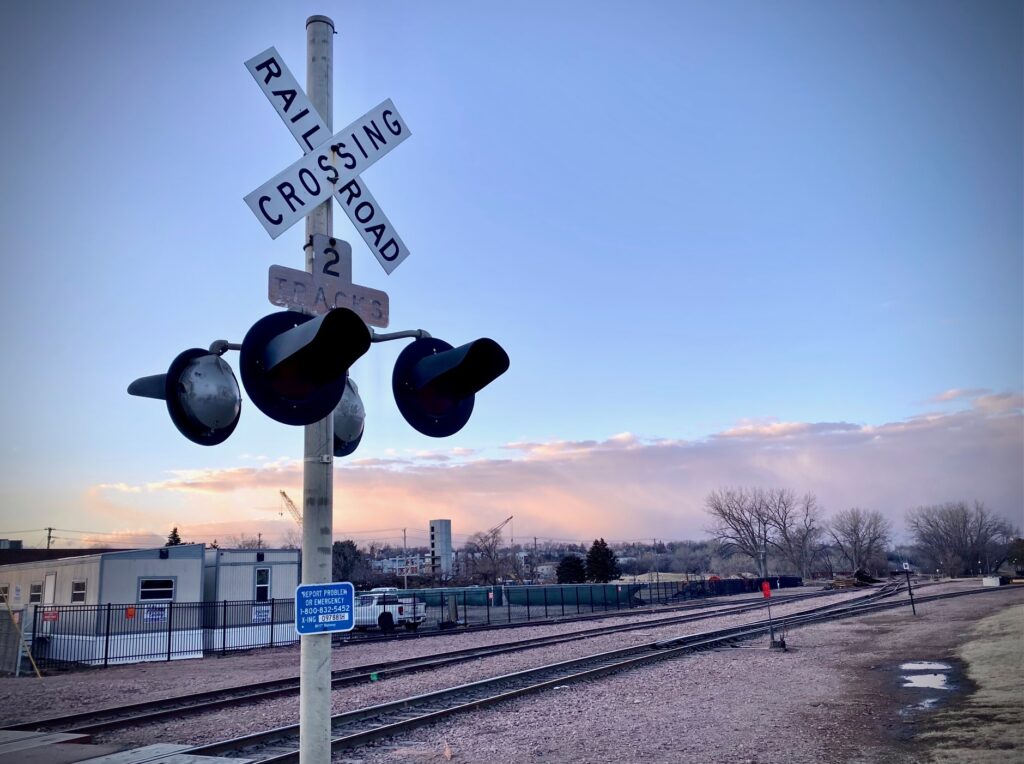
The city has hired a consultant to begin the process of working with BNSF Railway on a plan that would create the quiet zones. They are identified for sure at Sixth and Eighth streets and could be an option at Weber Avenue, though other long-range concepts call for improvements to the road that might make a quiet zone unnecessary.
The quiet zones are more accurately “whistle-reduction zones,” according to Mark Cotter, director of public works for the city of Sioux Falls.
“From my standpoint, we’re going to learn a lot going through the process, and we’re certainly hopeful we’re going to be able to achieve the results we’d like and reduce the number of train whistles there are downtown,” he said.
Cities would have up to four years to apply for the funds, Owen said.
“So it’s a long time. The city of Sioux Falls is ready to roll,” she said. “At this point, lots of cities want to be part of this.”
If all stays on track, the quiet zones could take effect as soon as 2024. But the area still will be an active rail line, Cotter added.
“We’re probably always going to have a fair amount of that kind of activity downtown, and what we have to make sure is that developers construct their buildings with sound proofing and deadening, move bedrooms to the inside as much as they can,” he said.
What could downtown become by 2035? The planning starts today
Share This Story
Most Recent
Videos
Looking amazing @dtsiouxfalls and @washpav! Thanks to @jpickthorn for capturing an incredible night.
Nov 26

Enjoy this glow headed into Halloween week! 📸: @jpickthorn
Oct 31
Hope you had a wonderful summer weekend and are recharged for the week ahead! 📸: @jpickthorn
Jun 27
Beautiful way to start a week! 📸: @jpickthorn
Jan 10
Favorite flyover of the year! Merry Christmas from our entire @pigeon605news flock. 🎄🐦 📸: @actsofnaturephotography
Dec 24
They definitely deserve to be treated like holiday royalty and they were! ❤️ these scenes from tonight’s lighting celebration at @sanfordhealth Children’s Hospital. 🎄
Dec 1
The holidays are here! Perfect night @dtsiouxfalls
Nov 27
Happy Halloween from @avera_health NICU babies! Link in bio to see more! 🎃
Oct 31
Did you know @dtsiouxfalls is filled with 👻 stories? Link in bio … if you dare 😱
Oct 8
When it comes to kids parties nobody wants to be cookie-cutter. Link in bio for the story on what’s trending.
Sep 28
Want to stay connected to where you live with more stories like this?
Adopt a free virtual “pigeon” to deliver news that will matter to you.
Read More




Are you a little bird with something to share?
Delivering news that matters to you
Years ago, homing pigeons were used to bring us news we needed. Today, your virtual “pigeon” will deliver what you want to know about the place you call home.
All pigeons are free to good homes!
Our Partners