Tackling tough conversations, filmmakers come together to talk race, justice
To tell someone’s story is an act of love.
That premise is the animus of the Hazard Film Project, the nonprofit outfit founded by Sioux Falls filmmakers Daniel Bergeson and Bobby Lloyd Peacock that hopes to educate, inspire conversation and build empathy through cinema.
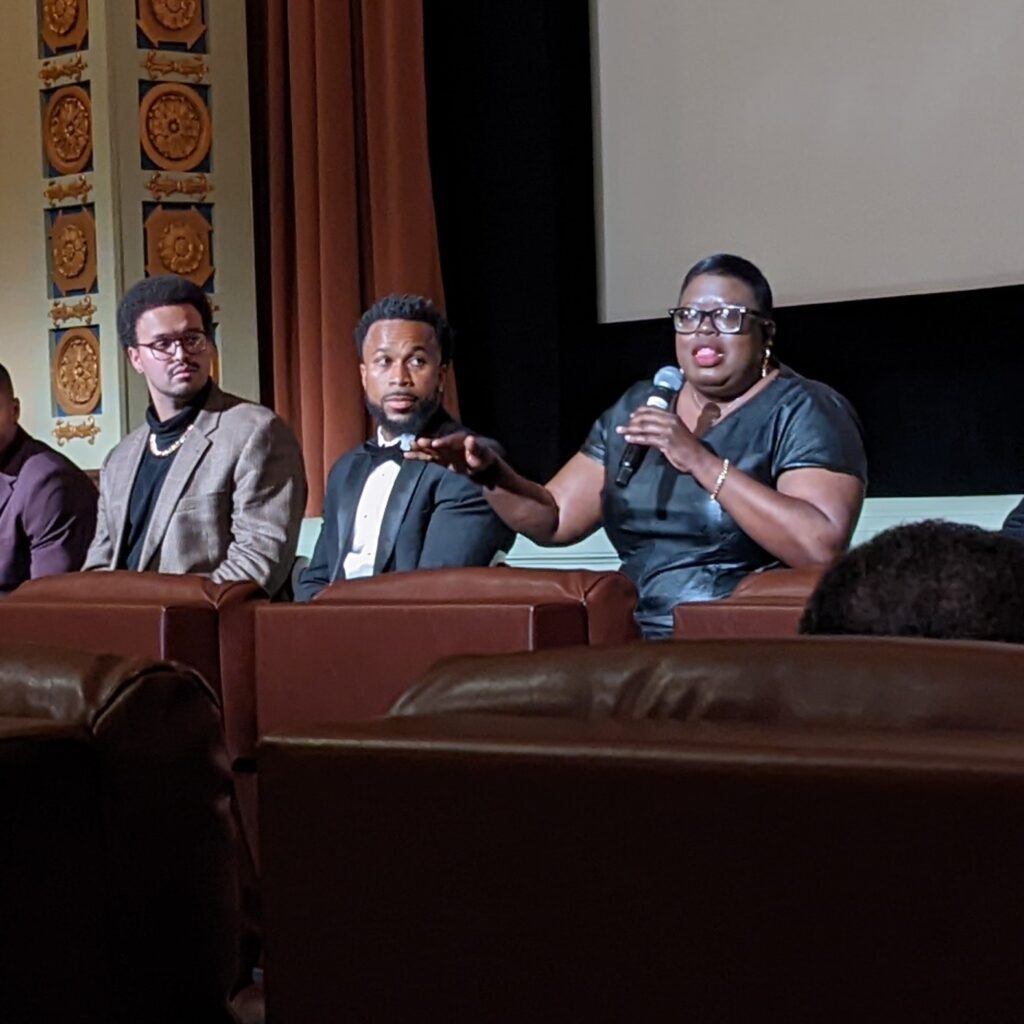
That premise had its red-carpet premiere Tuesday at the State Theatre, as Peacock and Bergeson used the big-screen debut of their first slate of short films as a jumping off point for a panel discussion on race and justice in South Dakota and beyond.
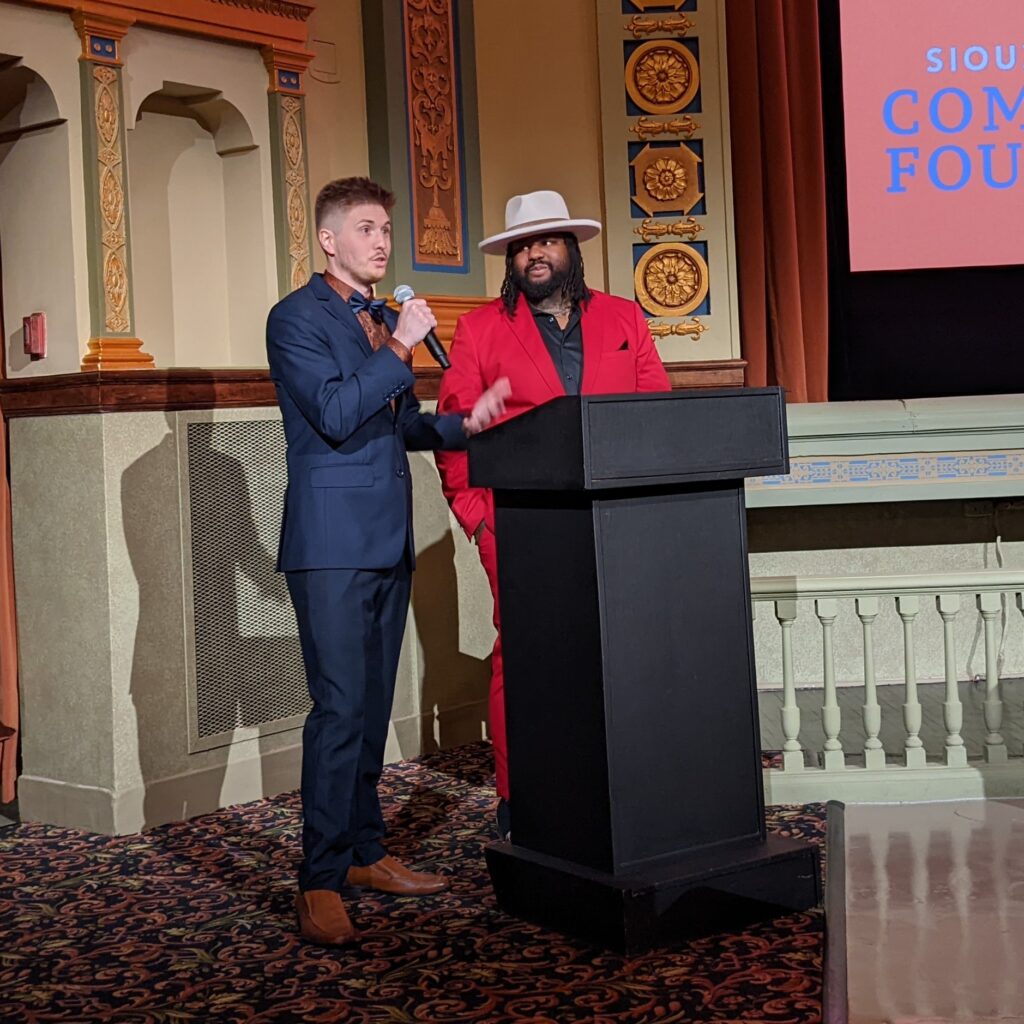
The centerpiece of the evening was the first-ever screening of “Hazard,” a narrative short that follows a Black father, son and uncle’s trip to a national park and their unsettling roadside encounter with two white state troopers. The event also screened several shorts previously released online: a panel discussion called “Artists of Sioux Falls,” interviews with Sioux Falls residents collectively titled “The Black Project” and a short called “Black and Blue” featuring Julian Beaudion, a South Dakota state trooper who co-owns Swamp Daddy’s Cajun Kitchen and serves as the interim director of the South Dakota Black History Museum.
Beaudion was part of the post-screening panel discussion with the filmmakers, actors and Augustana University’s vice provost for diversity, equity and inclusion.
The panel discussion took about 30 minutes longer than the nine shorts. That’s fitting, perhaps, given the nonprofit’s larger purpose.
“We want viewers to be challenged, to be able to come to some conclusions and to then be able to facilitate those difficult conversations in the community,” Peacock told the sold-out audience.
Bergeson, who is white, reached out to Peacock, who is Black, about three years ago. Bergeson pitched Hazard, but Peacock had reservations. He did videography for churches, and Bergeson wasn’t approaching as a Christian filmmaker with religious themes in mind. So Peacock talked to friends and mentors about “this white dude” who wanted his help. He prayed on it.
He thought about his own identity – a Black man and father, brought up in South Dakota’s foster care system in a nation whose persistent prejudices bubble just beneath the surface of even the most modest day-to-day interactions, interactions that so often put Black bodies in mortal danger.
Media coverage seared fresh evidence of that risk into his memory each year, each time as a name and a face that looked like his, like those of his friends and family: Trayvon Martin. Michael Brown. Sandra Bland. Philando Castile. Breonna Taylor. Ahmaud Arbery. George Floyd.
Peacock soon came to see – and others in his orbit agreed – that his perspective was ready to push its way out of his heart and into his creative life.
The prayers confirmed it.
“I remember all too clearly thinking that God was telling me ‘you need to use your voice,’” he said.
The work began in earnest with The Black Project in 2020, which offered stories of Black South Dakotans facing discrimination or worse. One of the films has collaborator Taylor Yocum, for example, telling the story of a head-clearing jog in the country at age 17 that turned into an encounter with a white farmer, who stopped him and ordered him to lie down at gunpoint, with two large dogs circling.
“I’d never cried harder in my life,” Yocum says in the video.
On Tuesday, Yocum told the audience that moving past that experience was a matter of leaning into his support system and his art, which eventually would bring him together with the Hazard Film Project.
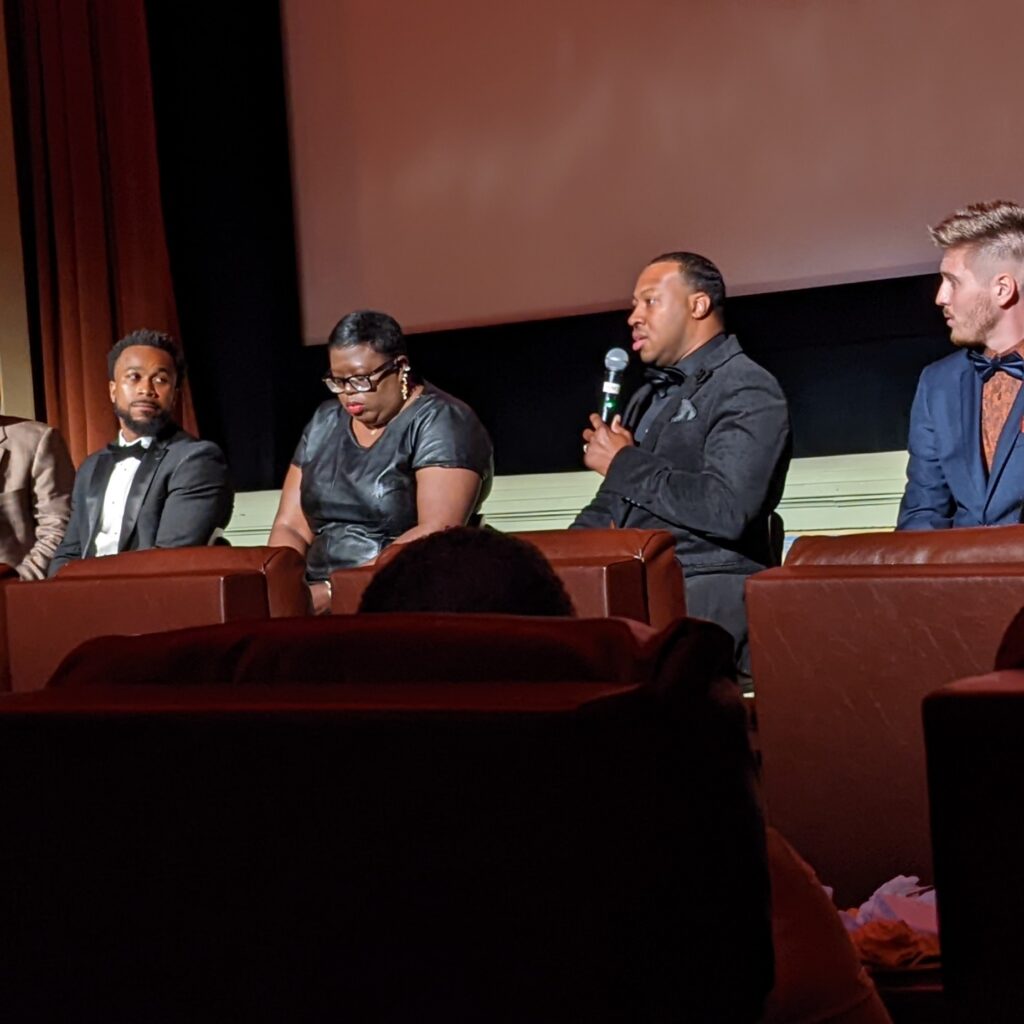
“Being able to share stories like these with a community like this lets me know that the things I love, my hobbies, don’t have to halt in their tracks. I can continue on and so can any of us here,” he said. “Having the opportunity to express that story, reflect on those who have had similar experiences, really brought it around to where I am no longer afraid. I know that if something like that were to ever happen again, I don’t need to feel that only my family will be there.”
Yocum’s story, of seeking solace in quiet spaces and finding discrimination regardless, mirrors the narrative device employed by “Hazard,” where a Black family on a road trip through the country has car trouble and finds itself threatened by law enforcement, rather than helped.
Peacock and Bergeson consulted Beaudion on the scene showing that confrontation to ensure accuracy.
“It was true, not just from the perspective of a law enforcement officer but also from the perspective of a Black man,” Beaudion said. “This may seem shocking to you in the audience, but it wasn’t shocking to me. It felt normal. And when something is normalized in the Black community, it becomes trauma.”
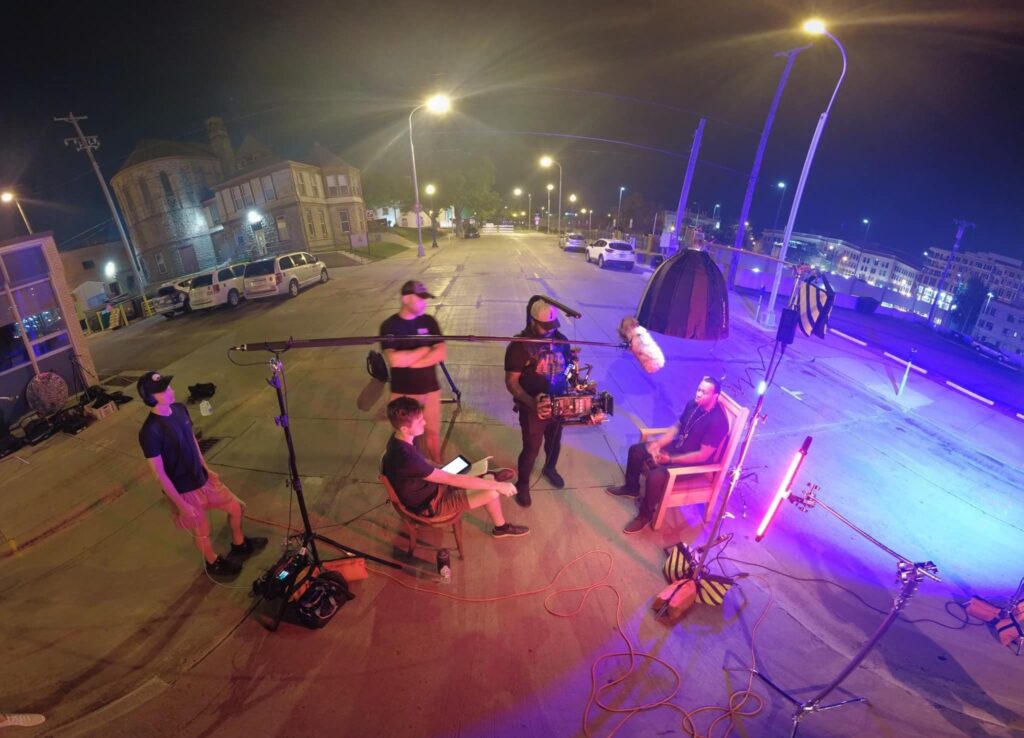
The idea for the film, Bergeson said, was born of his fascination with a factoid, namely that fewer than 2 percent of visitors to national parks are Black. Why, he wondered, were those spaces so unwelcoming for people of color?
Trauma is part of the answer, perhaps, alongside a lack of representation in the marketing of national park offerings and in outdoor lifestyle marketing in general. Jay Dukes and Nicholas Sims, the co-stars of the film, each mentioned that national park trips weren’t on their family to-do lists growing up.
“Even my dad, he never thought about taking us to the Grand Canyon,” Sims said. “I think mostly we don’t feel accepted in those spaces, and something needs to change.”
Dukes and Sims both said they felt drawn to “Hazard” not only because it offered an opportunity to offer a measure of representation in a story about camping and national parks but also because it does so in a way that highlights a unique aspect of the Black experience.
“Every time I leave the house, not even on road trips, even to the store the next street over, the thought is always in my mind of my mom and dad telling me to ‘do whatever you have to do to make it back home,” Dukes said. “Unfortunately, that’s a conversation that has to happen with every Black child.”
Trauma, both from historical and contemporary experiences, makes it difficult for Black people to move freely through the world or, at the very least, to feel truly free in that movement, according to panelist Willette Capers, Augustana’s deputy vice provost for diversity, equity and inclusion.
That’s why a scene in “Hazard” that shows the father and son in a peaceful moment resonated with her.
“In the moment, they literally were free, free in speech, free in thought, free to be a father and son, and that is something that really stood out for me because oftentimes we don’t have those opportunities,” Capers said.
Capers also said the power of storytelling to spark conversation is important, but the work of connection is “just a start.”
“It’s a start, but that’s it,” she said. “You have to take accountability for yourself. When you walk out of here, that’s when the real work begins.”
The premiere was about more than the films themselves as the panel discussion would suggest, but it also functioned as a fundraiser for the next Hazard Film Project issue: producing work that aims to spark conversations between members of the church community and members of the LGBTQ+ community. The programs for the event included prominently placed QR codes for donations. All told, the filmmakers raised enough at the premiere to nearly meet their $5,000 goal.
The nonprofit aims not only to produce films to start difficult conversations, Bergeson said, but also to offer grants and education to filmmakers and to use the films to educate the public at large.
In the end, he said, finding and telling stories – at least for the Hazard Film Project – is a means to that end.
“Working with someone to create a story, that’s creating empathy, and it’s creating connection,” Bergeson said.
After rough start in life, filmmaker’s future comes into focus
Share This Story
Most Recent
Videos

Looking amazing @dtsiouxfalls and @washpav! Thanks to @jpickthorn for capturing an incredible night.
Nov 26

Enjoy this glow headed into Halloween week! 📸: @jpickthorn
Oct 31
Hope you had a wonderful summer weekend and are recharged for the week ahead! 📸: @jpickthorn
Jun 27
Beautiful way to start a week! 📸: @jpickthorn
Jan 10
Favorite flyover of the year! Merry Christmas from our entire @pigeon605news flock. 🎄🐦 📸: @actsofnaturephotography
Dec 24
They definitely deserve to be treated like holiday royalty and they were! ❤️ these scenes from tonight’s lighting celebration at @sanfordhealth Children’s Hospital. 🎄
Dec 1
The holidays are here! Perfect night @dtsiouxfalls
Nov 27
Happy Halloween from @avera_health NICU babies! Link in bio to see more! 🎃
Oct 31
Did you know @dtsiouxfalls is filled with 👻 stories? Link in bio … if you dare 😱
Oct 8
When it comes to kids parties nobody wants to be cookie-cutter. Link in bio for the story on what’s trending.
Sep 28
Want to stay connected to where you live with more stories like this?
Adopt a free virtual “pigeon” to deliver news that will matter to you.



Are you a little bird with something to share?
Delivering news that matters to you
Years ago, homing pigeons were used to bring us news we needed. Today, your virtual “pigeon” will deliver what you want to know about the place you call home.
All pigeons are free to good homes!
Our Partners