
Partners plan increased resources for addressing downtown street-level needs
This piece is sponsored by Downtown Sioux Falls Inc.
As warm weather approaches, Downtown Sioux Falls Inc. is planning an expansion of its successful ambassador program.
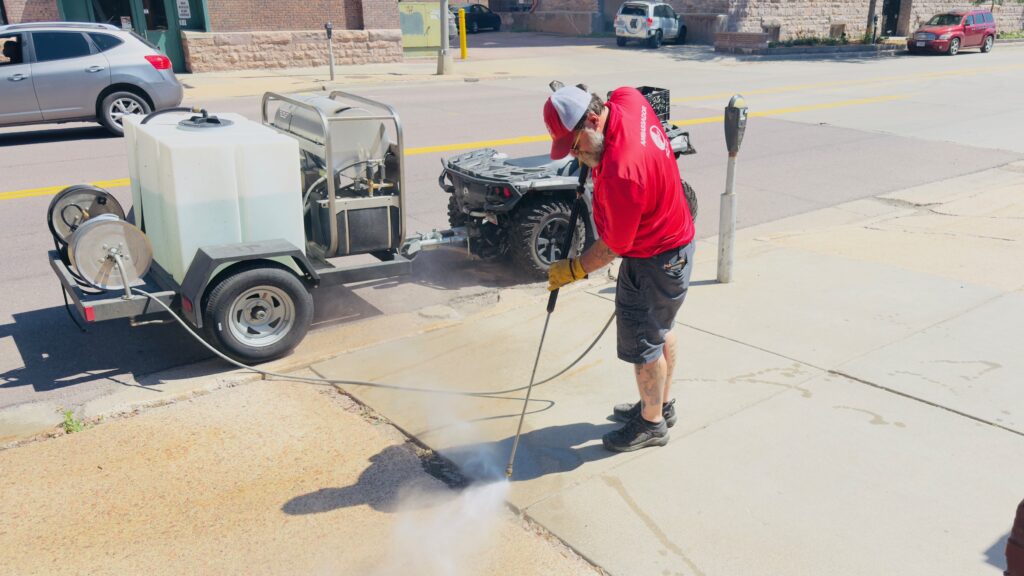
From April through November, DTSF will be adding three more ambassadors for a total of eight — extending service hours and coverages to the edges of the downtown area.
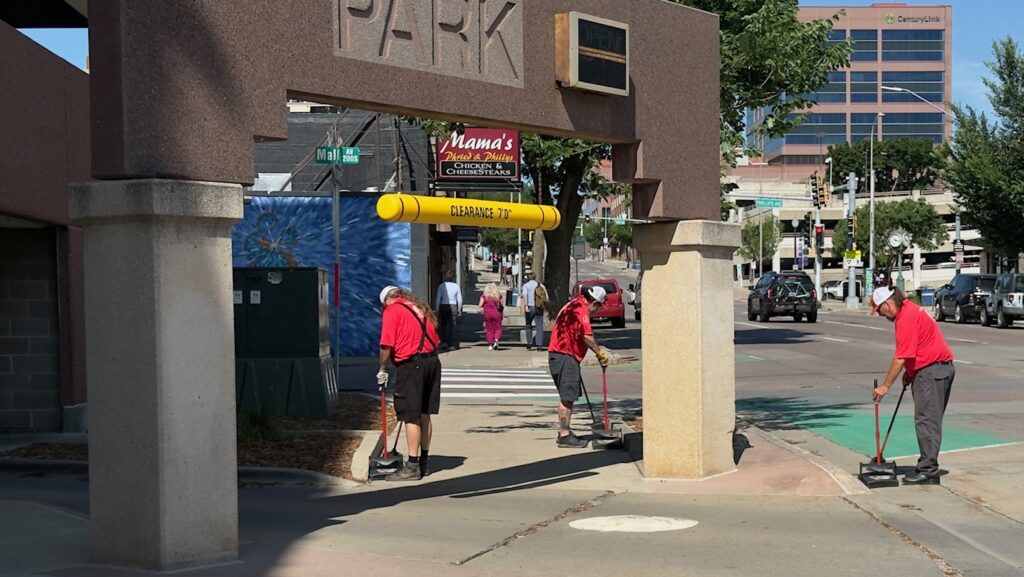
The program is being supported through a Community Partnership Program grant from the city of Sioux Falls and the support of downtown property owners who participate in the Business Improvement District.
“2025 was a major learning and growth year for DTSF, especially for our ambassador program,” said Brandon Hanson, CEO of Downtown Sioux Falls Inc.
“Through deeper collaboration, we solidified our role as a key partner in keeping downtown safe, clean and welcoming.”
DTSF ambassadors are on the streets seven days a week, often functioning as the central connector, the first point of contact and the triage layer for downtown needs.
“While our primary focus is clean and green services, the reality is that downtown needs are constantly evolving,” Hanson said.
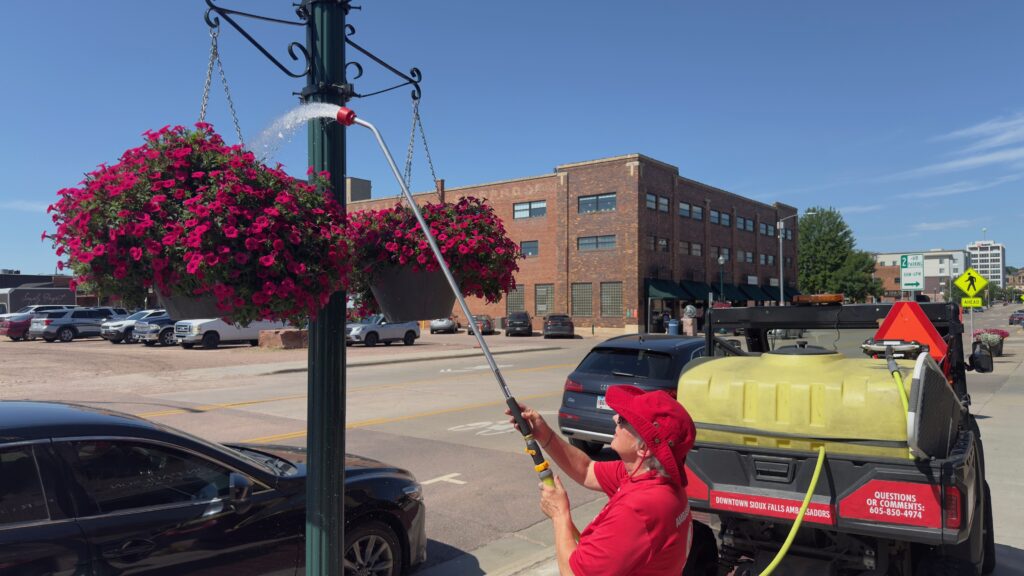
Because our ambassadors build relationships and know the people downtown, including individuals experiencing homelessness, they’re often able to connect people with the right resources before situations escalate. This helps reduce unnecessary strain on city services, whether that’s nonemergency calls, sanitation issues or maintenance needs, allowing the city to focus resources across all neighborhoods.”
The DTSF team works closely with South Dakota Urban Indian Health, the Sioux Falls Police Department, other city departments and the broader social services network.
“Our collaboration with the stakeholders downtown resulted in improvements in many areas in 2025,” police spokesman Sgt. Aaron Benson said.

“This was based off a holistic approach to the challenges that were presented during the year.”
This year, “we plan to continue building on our collaborative approach in the downtown area,” he said. “We also recognize that new challenges arise each year, and when they do, we will work with our downtown partners to find the best possible solutions.”
At South Dakota Urban Indian Health, “we saw a lot of new faces on the street last year — people maybe not familiar to us, but as organizations, we work with people who are vulnerable, and the unhoused organizations in Sioux Falls have done a really good job working together and communicating well,” said Erika Iverson, grants director for the organization.
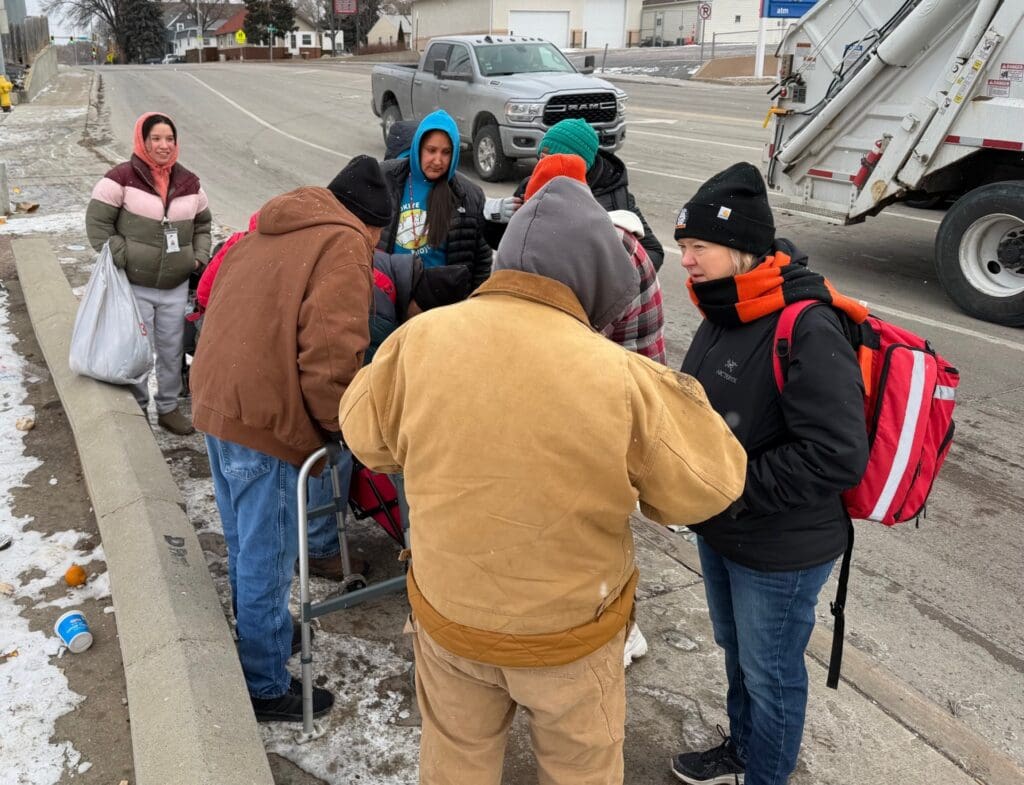
“We as a team were able to get some pretty vulnerable folks housed right before it got really cold.”
The hope is to increase the organization’s street outreach team, allowing more resources to help bring people directly to needed services, including medical appointments, while still keeping a presence on the streets.
“We’re always working toward sustainability, which is hard as a nonprofit when you rely on different kinds of funding sources, but we have been able to increase the hours of our outreach team,” Iverson said. “I would imagine we’ll be more available at hours when it used to be harder to reach us — because sometimes by Friday afternoon, our hourly employees would be over hours at that point.”
From DTSF’s perspective, “we’re excited to see expansion efforts from South Dakota Urban Indian Health and the support the district receives from the school resource officers,” Hanson said.
“For us, this sets the stage for 2027, when we plan to add a full-time, year-round ambassador. None of this happens without the shared investment from the city and downtown property owners. That partnership is what allows us to both maintain high service levels and responsibly expand what we can do. ”
DTSF and SDUIH “are critical partners in addressing issues,” Benson said. “They are key contributors in our collaborative approach to issues in the downtown area. They can address issues from different angles and approaches that help benefit those downtown.”
The increased emphasis on street-level resources also supports DTSF’s broader advocacy efforts around driving foot traffic.
“The return on investment is clear. A strong downtown fuels a strong city, which strengthens the entire region,” Hanson said.
Downtowns generate roughly 30 percent of a city’s sales tax, much of it driven by visitor spending, he added.
“That revenue supports public safety, transportation, health care and essential services,” he said. “Downtowns also produce up to 100 times more property tax per acre than other neighborhoods, helping fund schools, roads and emergency services.”
To learn more about the DSTF ambassador program, visit here.
DTSF will be looking to grow its team of ambassadors. To learn more about the opportunity, click here.
Share This Story
Most Recent
Videos


Looking amazing @dtsiouxfalls and @washpav! Thanks to @jpickthorn for capturing an incredible night.
Nov 26

Enjoy this glow headed into Halloween week! 📸: @jpickthorn
Oct 31
Hope you had a wonderful summer weekend and are recharged for the week ahead! 📸: @jpickthorn
Jun 27
Beautiful way to start a week! 📸: @jpickthorn
Jan 10
Favorite flyover of the year! Merry Christmas from our entire @pigeon605news flock. 🎄🐦 📸: @actsofnaturephotography
Dec 24
They definitely deserve to be treated like holiday royalty and they were! ❤️ these scenes from tonight’s lighting celebration at @sanfordhealth Children’s Hospital. 🎄
Dec 1
The holidays are here! Perfect night @dtsiouxfalls
Nov 27
Happy Halloween from @avera_health NICU babies! Link in bio to see more! 🎃
Oct 31
Did you know @dtsiouxfalls is filled with 👻 stories? Link in bio … if you dare 😱
Oct 8
When it comes to kids parties nobody wants to be cookie-cutter. Link in bio for the story on what’s trending.
Sep 28
This error message is only visible to WordPress admins
There has been a problem with your Instagram Feed.
Want to stay connected to where you live with more stories like this?
Adopt a free virtual “pigeon” to deliver news that will matter to you.





Are you a little bird with something to share?
Delivering news that matters to you
Years ago, homing pigeons were used to bring us news we needed. Today, your virtual “pigeon” will deliver what you want to know about the place you call home.
All pigeons are free to good homes!
Our Partners