

Meet the Whittier residents stepping up to build unity, improve their neighborhood
Lim Bun grew up on Third Street, just off Cliff Avenue. Now, he lives on Second Street, again, just off Cliff Avenue, with his wife, Amber, and their 4-year-old son, Linden.
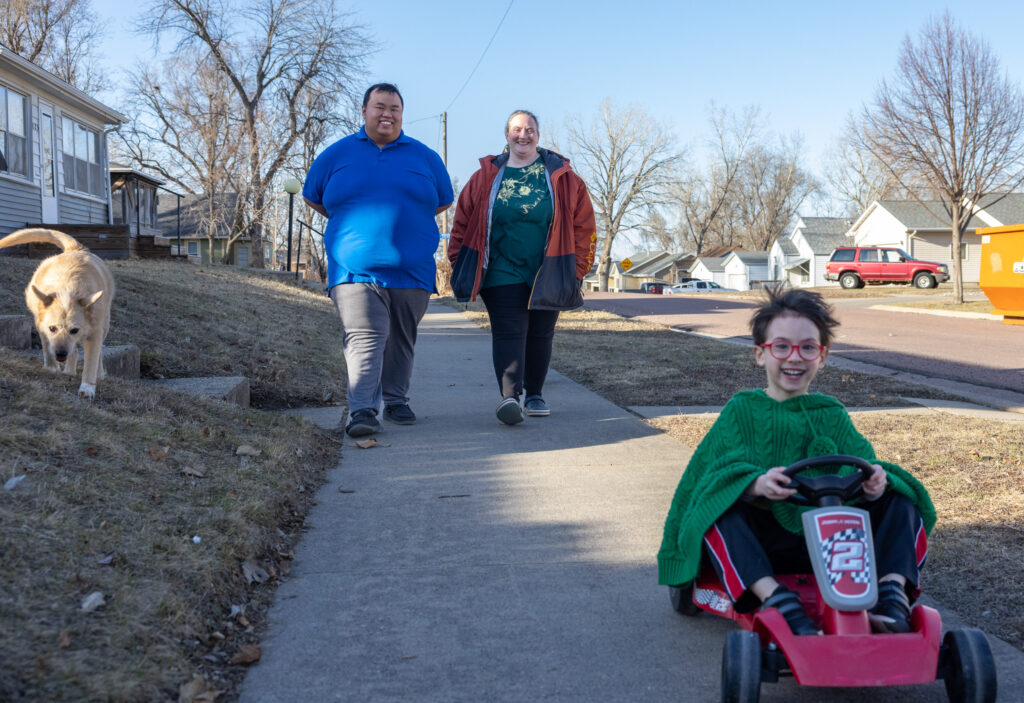
When Hailey Schmidt’s parents brought her home from the hospital 30 years ago, it was to a house on French Avenue. When she moved, after one year on campus at the University of Sioux Falls, it was across French Avenue to a house of her own.
Born and raised in the Whittier neighborhood, Bun and Schmidt chose as adults to make that same neighborhood their permanent addresses. Bun calls the neighborhood “the caring heartbeat” of Sioux Falls.
Last year, when residents decided to resuscitate the city’s oldest organized neighborhood group, Bun and Schmidt stepped up, accepting posts as officers. Since then, Bun has attended more than three dozen meetings with business, faith and government leaders.
“I have chosen to take a very curious listen-and-learn stance,” he said during meeting No. 37. “I’ve learned a tremendous amount. There are a lot of opportunities, and I want to make sure we face the challenges in very mindful and meaningful way.”
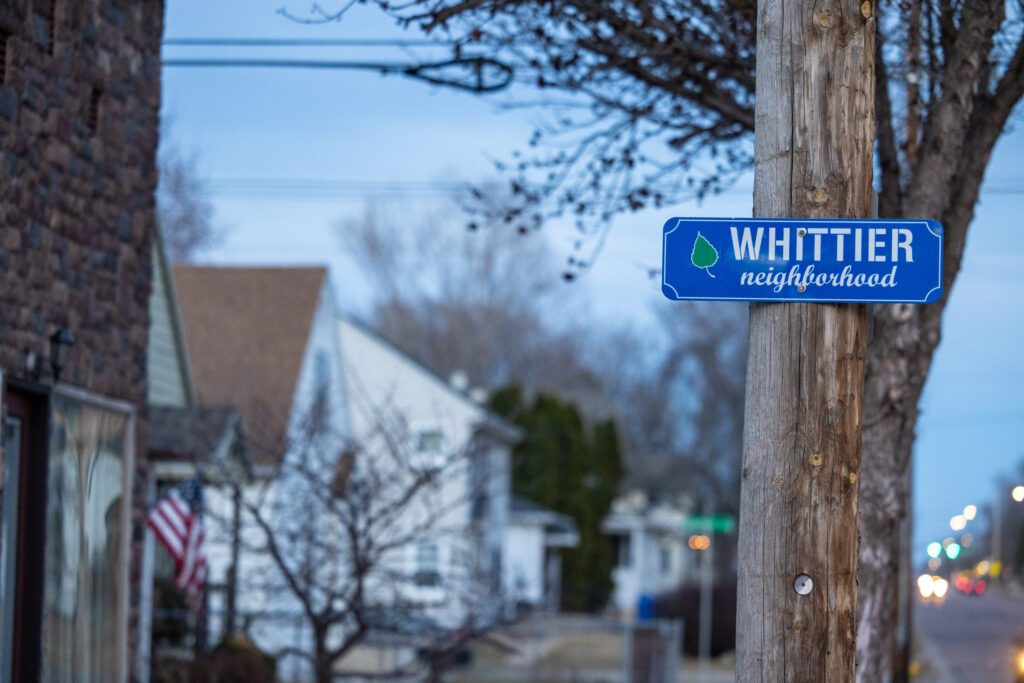
In meeting No. 38 or so, Bun sat down with City Councilor Miranda Bayse. She represents the city’s northeast district, and the Whittier neighborhood falls into both that and the central district.
Neighborhood associations are in good positions to serve as education hubs and sources, Bayse said. They offer proactive communication, and while frustration often spurs changes, positive action can be even more beneficial.
“What I really appreciate about neighbor associations is the energy surrounding reactivated or activated groups,” Bayse said. “Individuals care about their neighborhood and neighbors.”
The Whittier Neighborhood first organized as a group in 2009. Schmidt’s parents were active in the group, serving on the board. As a senior at USF, she redid the group’s Facebook page and created a new logo. Although it would be easy to plead other obligations — Schmidt is a copywriter for Sanford Health and planning her wedding — she didn’t say no when asked to represent the neighborhood.

“It’s really easy to say that you’re busy and you don’t have time to do anything,” Schmidt said. “I was (Facebook page) administrator when the wheels started turning for Round 2. … More importantly, I knew how much this meant to my parents and how much it impacted me.”
Her parents, Tony and Norilee Schmidt, displayed pride in the neighborhood they had chosen and instilled it in their daughter. Her father, a contractor, also taught her to appreciate the nice woodwork and original floors found in many houses. Schmidt’s current home, where she has lived since she was 19 and now shares with fiance Wade Gemar, is 101 years old.
“I grew up knowing most of my neighbors,” she said. “The neighbors were my friends. I really liked growing up here, and I got to experience a lot of diversity. I have Spanish-speaking neighbors on three of the four sides of my house.”
Bun is a first-generation American, the son of Cambodian refugees who fled communism. If it weren’t for great teachers and good neighbors, he said, his father would not have succeeded in their new neighborhood. It was friendly then, and it’s friendly today.

“If you fell off your bike and skinned your knee, you could go to your neighbor’s house and get a Band-Aid,” Bun said. “Our heavy, heavy snows in the winter, you’d see each other dig cars out, jump-start their vehicles and dig out sidewalks. It was the neighborly thing to do.”
That attitude continues today, Bun said. His family lives on a corner lot, and he can rattle off the professions of his immediate neighbors. A home security camera might capture a crime, he pointed out, but good neighbors are even more vigilant, questioning suspicious activity.
Last summer, the city sent out notices that residents needed to trim low-hanging tree limbs.
“That final weekend, people were out helping others, sharing drinks and shaking hands,” Bun said. “We just came together.”
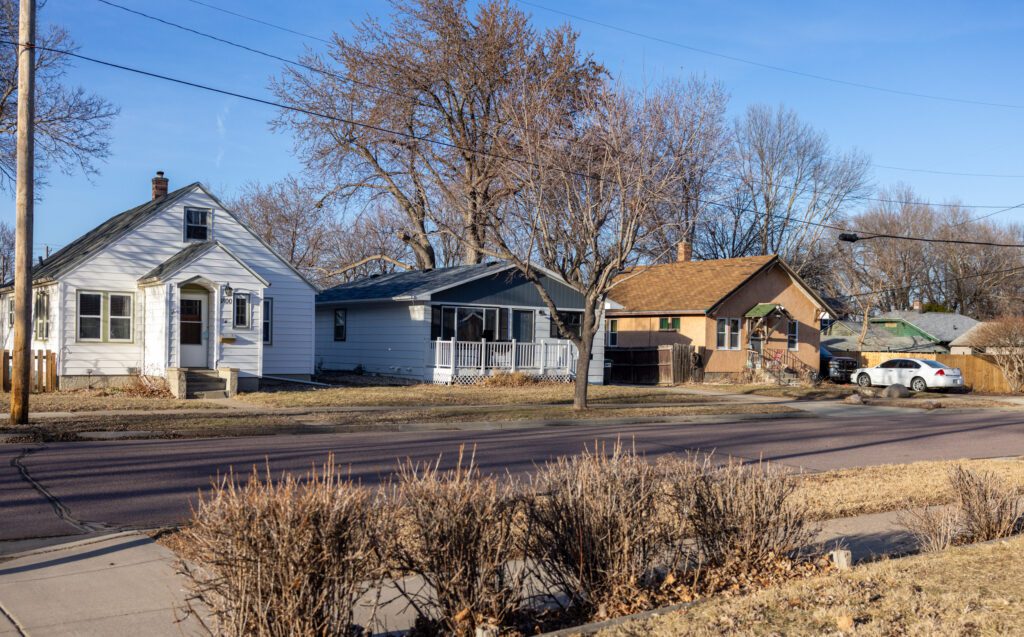
The original neighborhood group established a solid foundation for the current one, Schmidt said. Several reasons led to the initial neighborhood association becoming inactive — members moving, dying or burning out and the COVID-19 pandemic restricting essential gatherings.
Relationships, however, have stood the test of time, Schmidt said. And the neighborhood has a unique character that others do not.
“We have four taco shops within walking distance,” said Schmidt, who has ordered her wedding arrangements from a neighborhood florist.
“There’s the proximity to downtown. My fiance and I do a lot of local theater, and we appreciate how quickly we can get to our favorite places without having to live on Phillips Avenue in an apartment.”
The Whittier neighborhood runs from Rice Street to the north, Interstate 229 to the east, 10th Street to the south and Weber Avenue to the west, abutting Falls Park. It includes at least 5,500 residents — and that’s a low estimate, Bun said — 1,800 residences and 80 locally owned businesses. Another resident pointed out to Bun that if you could pick up the Whittier neighborhood and move it elsewhere in South Dakota, it would be the state’s 20th largest community.

Still, Bun knows how outsiders perceive his neighborhood. The Whittier neighborhood is the service heartbeat of the city with all the major assistance programs there, he said. He views the fact that social services like the Bishop Dudley Hospitality House and The Banquet are located there as something positive.
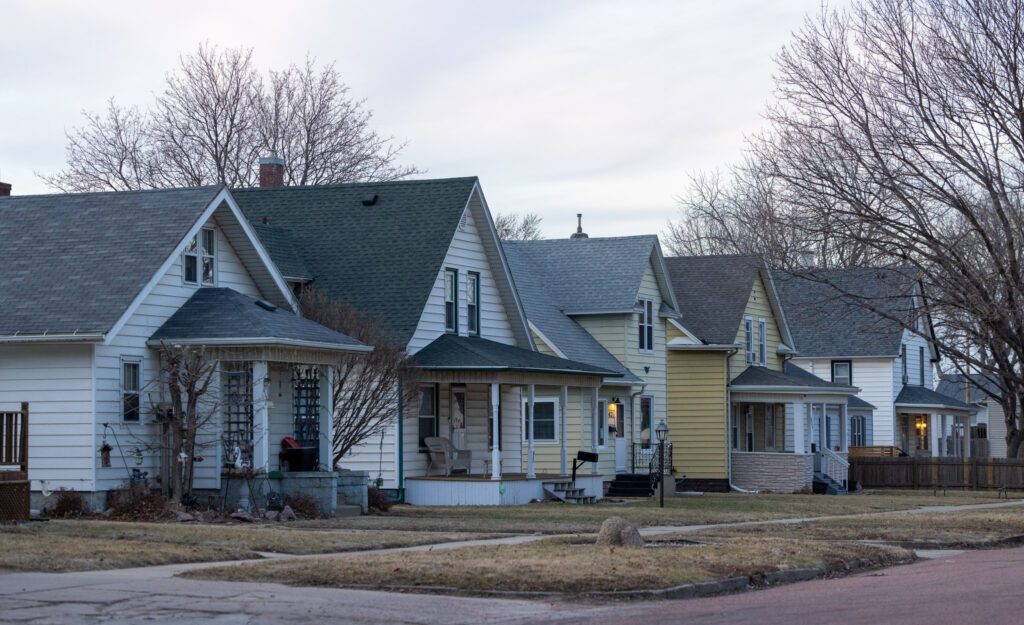
“I am not rosy-eyed by any means; I just don’t think it’s as bad as people paint it out to be. We have really great stakeholders,” Bun said. “The system around us could use improvements, but we’re recognizing now we can help promote a stronger support system. We take care of the most challenging transient population, and we do it with bells on.”
This spring, the Whittier Neighborhood received about $10,600 after applying for a neighborhood grant from the city. Some of the funding will make immediate changes; other projects look to the future, what Bun calls stretch goals.
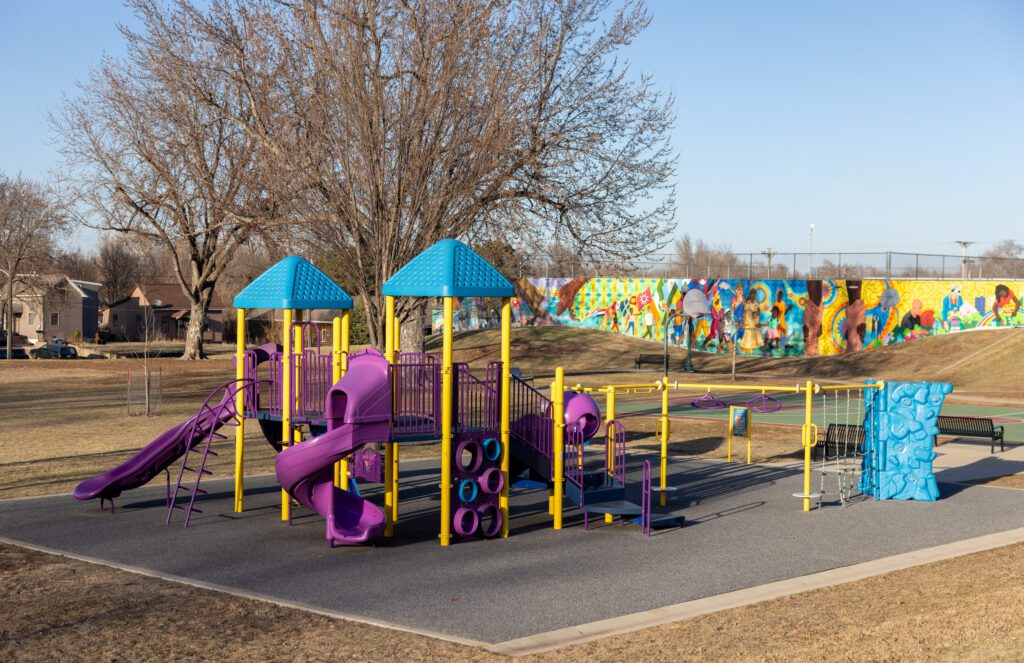
The Whittier Neighborhood has scheduled four neighborhood cleanups, one each in May, June, July and August. Dumpsters will be sited in strategic locations. That was an easy choice, based on residents’ input.
“That’s low-hanging fruit; you can see an immediate difference,” Bun said.
Another project will focus on improving lighting to reduce crime, enhance security and provide for better walkability. Interested residents will receive “dusk-to-dawn bulbs” for the front of their homes; they turn on automatically when it grows dark. The Whittier neighborhood also will receive a streetlight audit to determine where to eliminate random patches of darkness.
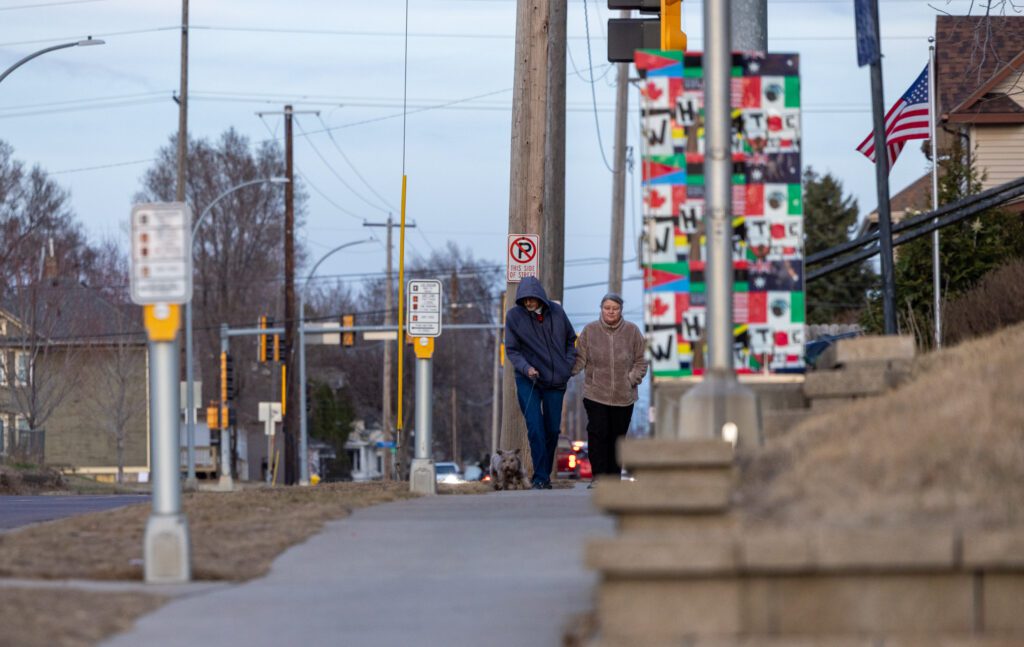
Whittier Neighborhood vice president Mary Poppenga is the only officer who did not grow up in the area but has lived there for decades. She has a huge heart for the area’s children, Bun said. At her urging, some of the grant funds will go to the Community Learning Centers, partnering with them to pay school-age children’s fees for field trips and kits for science, technology, engineering and math activities.
Whittier Neighborhood will also host a Neighborhood Night Out on Aug. 5 in Meldrum Park. It will include family games, face painting, visits from firefighters and police officers and a performance by the Washington High School band.
“It was really, really exciting to see that they wanted to partner with us,” Bun said of the high school from which he graduated.
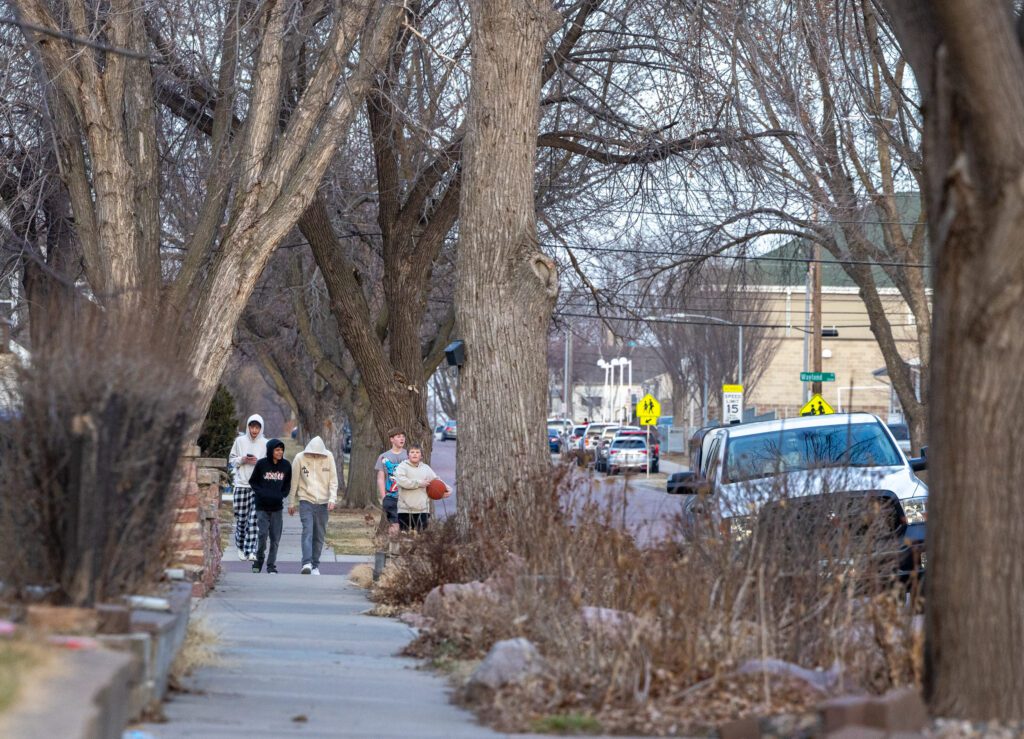
Bun left the Whittier neighborhood when he majored in international business at Northern State University in Aberdeen. He also lived in Seoul, South Korea, for several years. Living with 10 million people in an Asian country made him appreciate the Whittier neighborhood even more.
Now, Bun works in the Sammons Financial Group’s treasury department. He was a personal banker for several years, but both Buns changed careers while going through a five-year IVF journey that led to Linden’s birth.
Even as familiar as he is with the Whittier neighborhood, he finds himself learning something new. Days ago, he discovered that Manna Bakery, just west of Whittier Middle School, also offers lunch.
“We have nice little gems just hidden in here,” Bun said.
In 2014, Bun moved into a Governor’s House on Second Street. The affordable-housing program recently had expanded to three-bedroom homes; now the Bun house has five bedrooms. That’s vastly different than the coffin-sized bedroom with shared living quarters he inhabited in Seoul, he said.
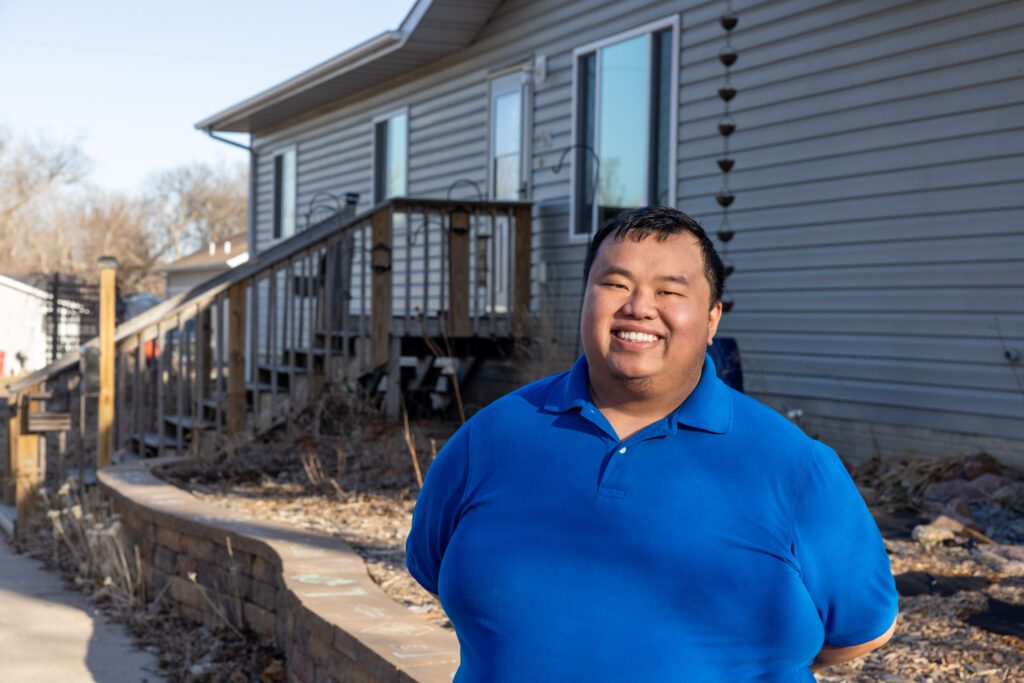
Bun’s house is only a couple of blocks from the residence he grew up in and where his mother still lives. He can’t imagine living anywhere else.
Neither can Schmidt, who is looking forward to working with Bun and building on the base her parents and others established as the original neighborhood association.
“Watching my parents’ generation run the association, they burned out quickly,” she said.
“Lim’s bringing a lot of passion and guarding us, his officers, to make sure we can show up fully. I remember growing up, a lot of neighborhood meetings were taken over with people complaining about things. That took up time and sort of drained people. Lim is ready to tackle what we as an association can tackle.”
Share This Story
Most Recent
Videos

Looking amazing @dtsiouxfalls and @washpav! Thanks to @jpickthorn for capturing an incredible night.
Nov 26

Enjoy this glow headed into Halloween week! 📸: @jpickthorn
Oct 31
Hope you had a wonderful summer weekend and are recharged for the week ahead! 📸: @jpickthorn
Jun 27
Beautiful way to start a week! 📸: @jpickthorn
Jan 10
Favorite flyover of the year! Merry Christmas from our entire @pigeon605news flock. 🎄🐦 📸: @actsofnaturephotography
Dec 24
They definitely deserve to be treated like holiday royalty and they were! ❤️ these scenes from tonight’s lighting celebration at @sanfordhealth Children’s Hospital. 🎄
Dec 1
The holidays are here! Perfect night @dtsiouxfalls
Nov 27
Happy Halloween from @avera_health NICU babies! Link in bio to see more! 🎃
Oct 31
Did you know @dtsiouxfalls is filled with 👻 stories? Link in bio … if you dare 😱
Oct 8
When it comes to kids parties nobody wants to be cookie-cutter. Link in bio for the story on what’s trending.
Sep 28
Want to stay connected to where you live with more stories like this?
Adopt a free virtual “pigeon” to deliver news that will matter to you.
Read More





Are you a little bird with something to share?

Delivering news that matters to you
Years ago, homing pigeons were used to bring us news we needed. Today, your virtual “pigeon” will deliver what you want to know about the place you call home.
All pigeons are free to good homes!
Our Partners