
In underserved neighborhood, more affordable food helps fill critical gap
By Steve Young, for Pigeon605
When Hy-Vee closed its doors at 10th Street and Kiwanis Avenue at the start of 2022, leaving thousands of neighborhood residents without easy access to a supermarket, it was more than just an inconvenience, M.J. Honermann says.
The couple who routinely walked to the store with their three children, even in bad weather, ended up moving away. The disabled veteran using the sidewalks for years going to and from work because he doesn’t drive now had no nearby store to stop at on his way home.
For them and for others on limited budgets ─ the single moms with children, the elderly who get around on scooters, the homebound needing someone to drive them to the store ─ Hy-Vee’s departure “was significant,” said Honermann, vice president of the 10th Street Neighborhood Association.
At least it was. Now, however, an oasis has popped up in the food desert created between 18th and Russell streets from Kiwanis to Minnesota avenues where residents were at least a mile away from a full-service grocery store.
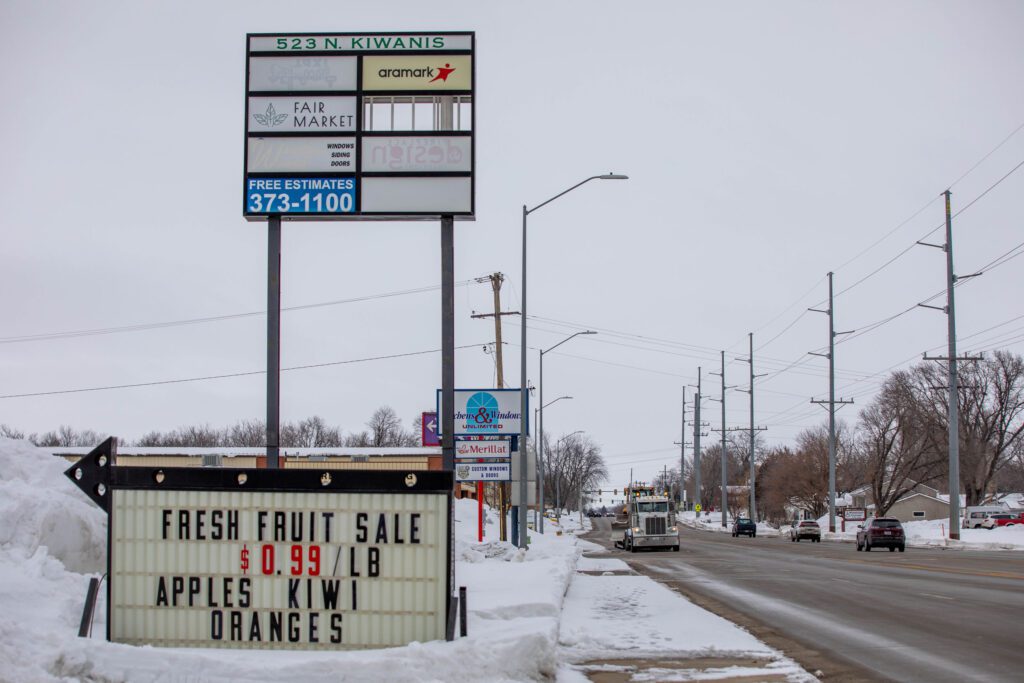
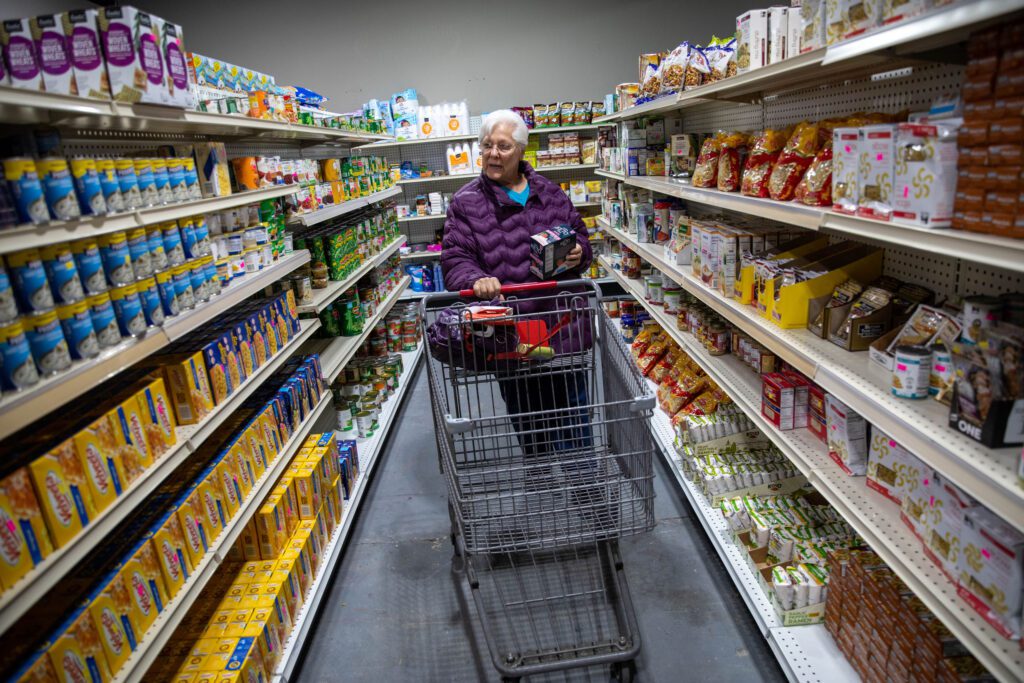
This new place is called Fair Market. It’s located at 523 N. Kiwanis Ave., just a few blocks north of the vacated Hy-Vee. It’s now the second reduced-price store in Sioux Falls, following the first Fair Market that opened early in 2021 and now is operated on East 10th Street, also by Empower Sioux Falls.
Here’s why this latest Fair Market arrival is so important, especially to people living in the neighborhoods nearby. When Hy-Vee closed at 10th and Kiwanis, residents in that part of town suddenly not only had accessibility issues, but affordability challenges as well. Fair Market recently began processing EBT, or SNAP benefits.
Among the 2,638 households in the two census tracts nearest the closed Hy-Vee, the median income was just over $46,500, according to data from the U.S. Census Bureau’s five-year American Community Survey that was released in 2021. That’s a little more than two-thirds of the $66,761 median for all of Sioux Falls. In fact, there are 852 households in those two tracts that bring in $34,999 or less in income and benefits a year.
That’s a significant difference, said Kristin Johnson, Fair Market’s executive director, especially when a 59-cent can of beans at Hy-Vee or Walmart costs double or triple that when purchased in a neighborhood pop-up mini-mart.
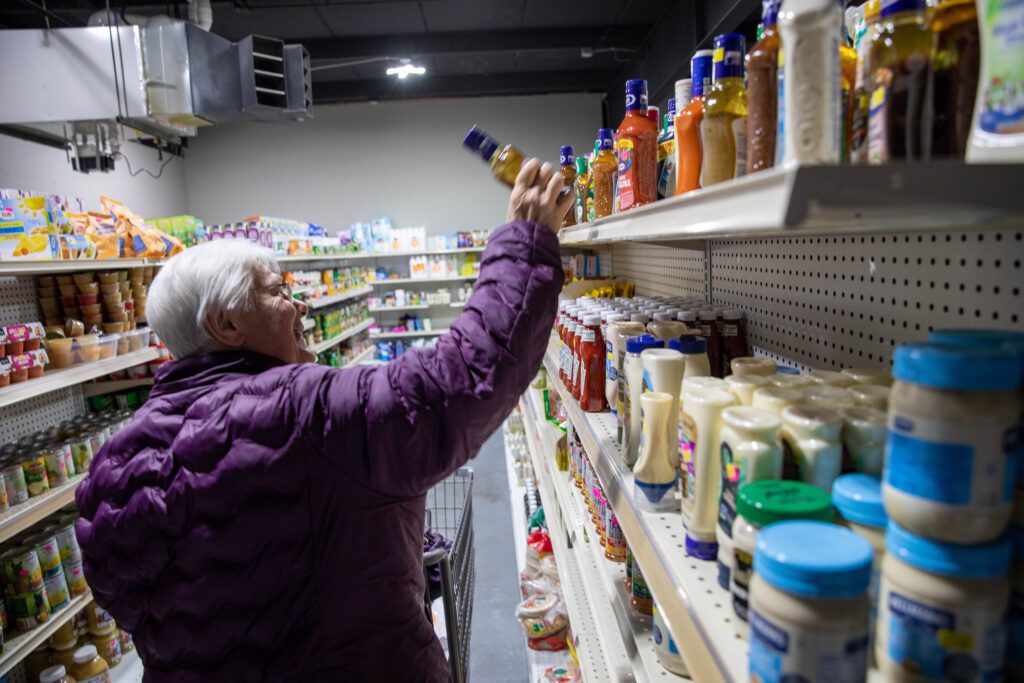
Indeed, when the Kiwanis Avenue Fair Market held its soft opening in the last days of 2022, “we had people in the store with tears in their eyes,” Johnson said. “They were like, ‘Oh my gosh, you can’t believe how hard it’s been. We didn’t have anything.’”
It wasn’t that there were no options. Walgreens, Lewis Drug, the Dollar Store, Burger King ─ food was nearby and available in the neighborhood, and Honermann assumes that their sales went up with Hy-Vee’s departure. But the question of nutrition value certainly rose to the surface then too, said Suzanne Smith, associate vice president of enterprise data analytics for the Augustana Research Institute at Augustana University.
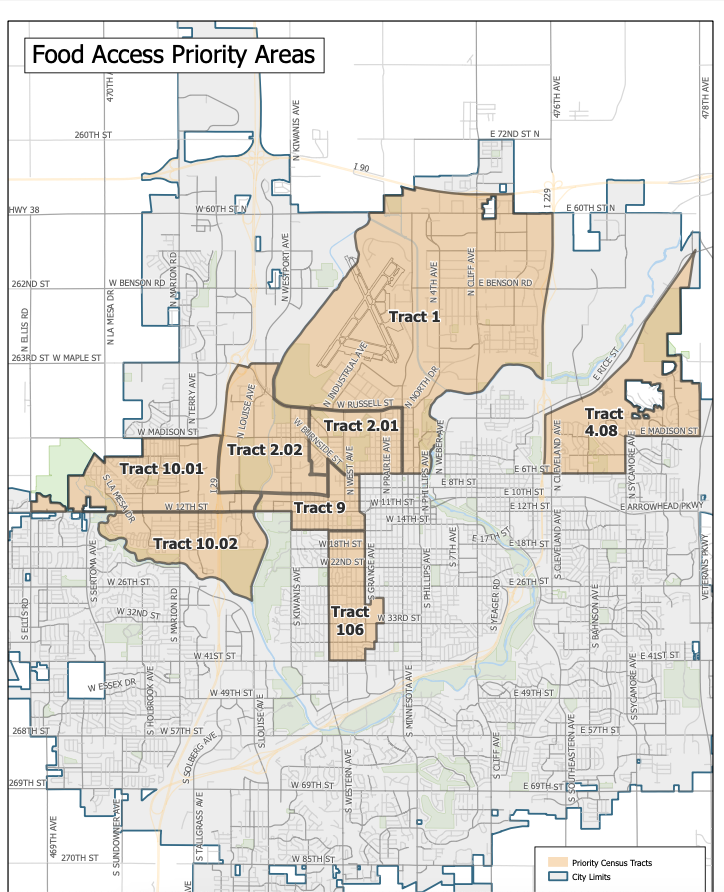
Her institute, which compiled the Food Security and Food Access report for Sioux Falls Thrive that was released in 2022, found that even with other options, the loss of Hy-Vee meant a dramatic difference in the types of food residents could access.
“In food deserts, where the closest purveyors of food are often gas stations or convenience stores, it’s really tough to find fruits and vegetables, both fresh and frozen,” Smith said. “Gas stations and convenience stores also tend to be more expensive.”
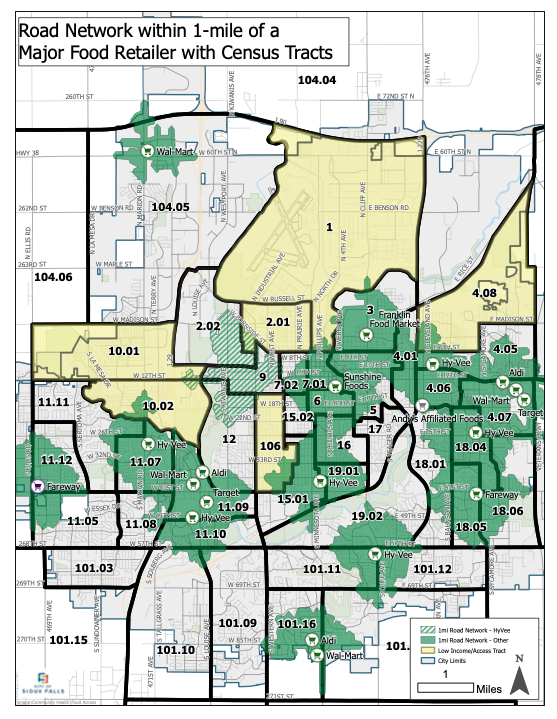
Expensive matters because by definition, a census tract identified as low income by the U.S. Treasury Department’s New Markets Tax Credit program is one where the poverty rate is 20 percent or greater. The other part of the food desert ─ what’s more commonly called a low-income, low-access area ─ is the number of people living different distances from a supermarket or large grocery store who don’t have access to a vehicle and are more than one-half mile from any store.
In at least half the area between 12th and Russell streets from Kiwanis to Minnesota avenues, one out of six households had no vehicle in 2021, according to the Augustana Research Institute’s Food Security and Food Access report.
“For the elderly, disabled, those who don’t drive … it’s a very big inconvenience” for people in her neighborhood association, as well as others in nearby neighborhoods, to lose the Hy-Vee, Honermann said. And for those who do have transportation, “it was an inconvenience to drive over 3 miles plus to another store, especially in bad weather, when something at the store was needed,” she said.
That said, much of the research on food deserts and food security has found that people are going to find a way to get to the cheapest food they can afford, Smith said. Maybe a neighbor, a relative or public transportation can meet their needs. “So distance,” she added, “is often less of a barrier than price.”
Prices do matter to many of the households closest to the old Hy-Vee, where roughly one in five receive benefits through the Supplemental Nutrition Assistance Program, or SNAP.
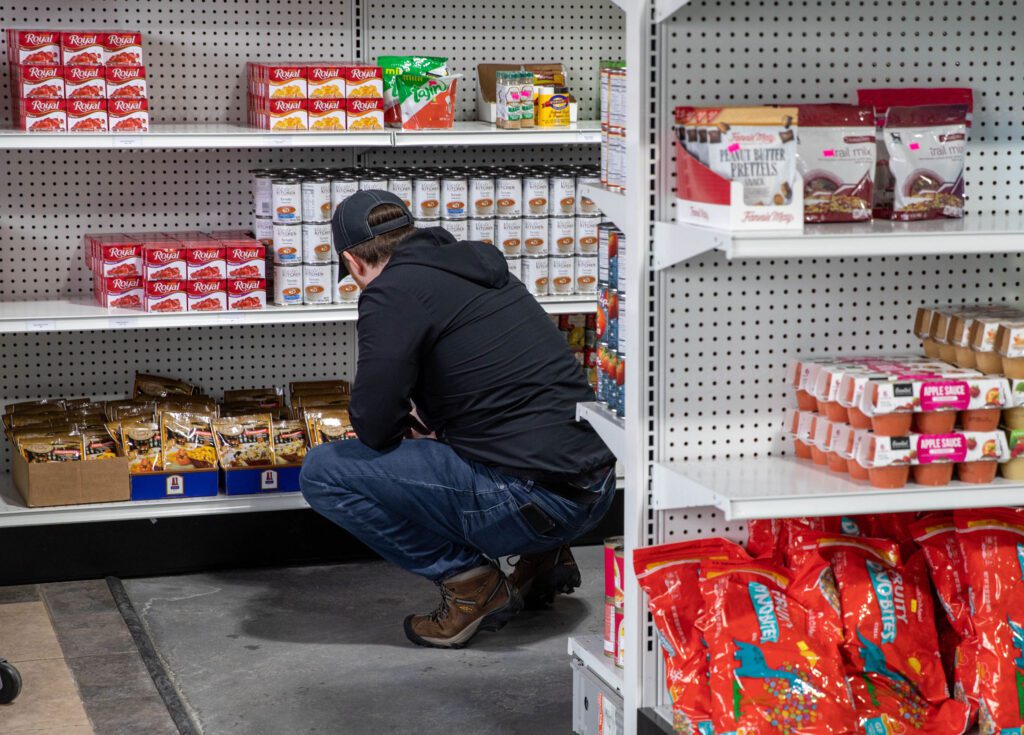
At this point, the business models at the two Fair Market stores differ in that the east-side location carries only long-life food items – what Johnson describes as “any of those dry goods that you find in the center aisles of a grocery store where there are no freezers or coolers.” It might be cereals, laundry soap, hygiene products, dog food and canned goods. Fair Market is able to access those items and heavily discount their prices after they are returned to grocery warehouses because of damaged packaging, low volume of sales, rebranding or the expiration date is nearing.
But what customers aren’t able to buy on the east side are fresh items such as vegetables and meat or essential items like milk, eggs, butter or rice.
“The reason we haven’t moved essentials into the east-side store is because that neighborhood doesn’t have access issues right now,” Johnson said. “There’s an Aldi like a block away from us. And Walmart is like two blocks away. So we don’t have that need in that neighborhood.”
Accessing essential items is a different matter at the Kiwanis store. Fortunately, Johnson said, there is a Fruit Market right next door to Fair Market, “and that has eased the burden … because people have access to quite a bit of fruit there at a pretty reasonable rate.” At the same time, one of the city’s high schools has contacted her about providing fresh vegetables year-round through a hydroponic greenhouse the school has set up.
Working with a variety of vendors, she has been able to secure at the Kiwanis store what she calls 30 to 40 essential items “that people need 80 percent of the time, and we’re going to carry all the time, that we can offer at a discounted-enough rate that people get a good deal.”

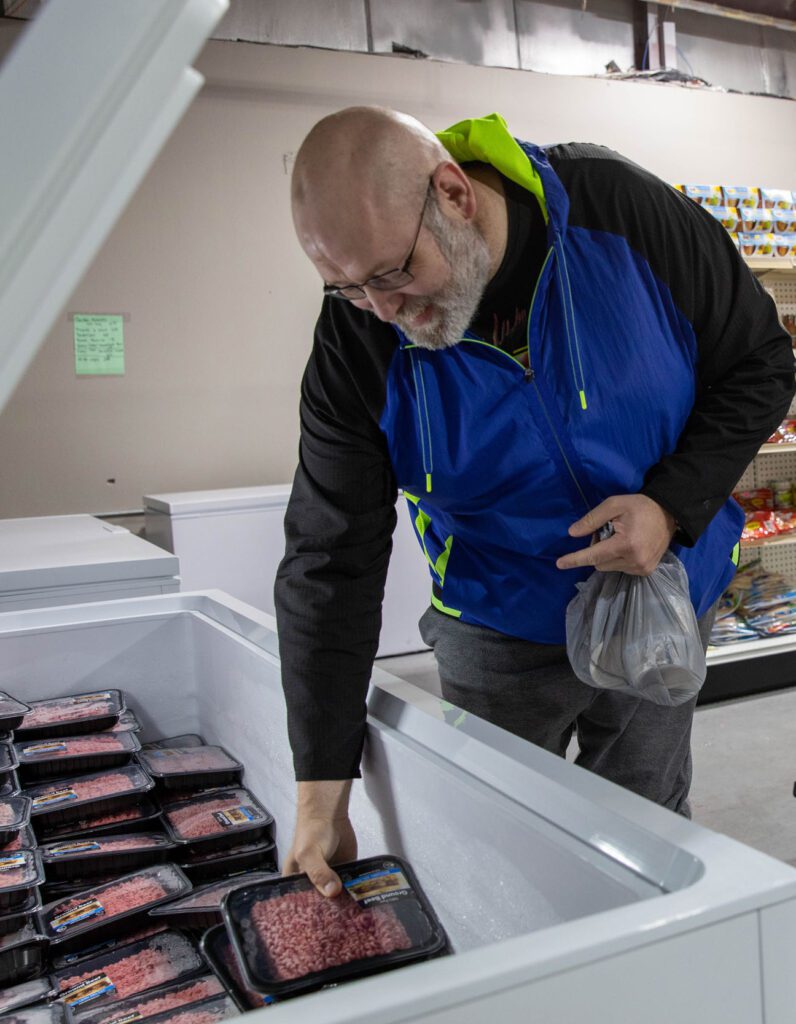
Items like hamburger, instant potatoes, peanut butter, boxed meals, applesauce and more. All those are important to Scott Hansen, who lives in the Valley View Road and 12th Street area, and said he goes to Fair Market first when he needs groceries.
“I have enough money to get by,” Hansen said. “But there’s times where I don’t have enough money, and I’m waiting to try and get to payday or something. For those of us that have a little bit less, it (Fair Market) means we can buy more groceries. That wasn’t meant to be demeaning to anyone. I am that person.”
He has some disabilities, he said. He uses a cane and can’t walk a long way to a grocery store. Though he owns a car, Fair Market offers him affordability. It also keeps what he calls tons of unused groceries out of the landfill, and that’s important to him. He hopes that by going to Fair Market and buying groceries there at discounted rates, “it’s going to show that the store is needed, and it’s going to help those people who don’t have good transportation.”
With at least a two-year commitment to piloting the Kiwanis Fair Market store, Empower Sioux Falls board chairman Rich Merkouris hopes to show that the reduced-price grocery model can make a difference in other community food deserts as well.
“We are trying to find a really unique lane with this approach,” Merkouris said. “I try to be really clear with people that we are not in the charitable food business. That’s already handled really well by Feeding South Dakota, Faith Temple and others. We’re looking strictly at affordability and accessibility. If we take a blended, nonprofit business approach and we succeed, maybe we can get access into more neighborhoods that need what we offer.”
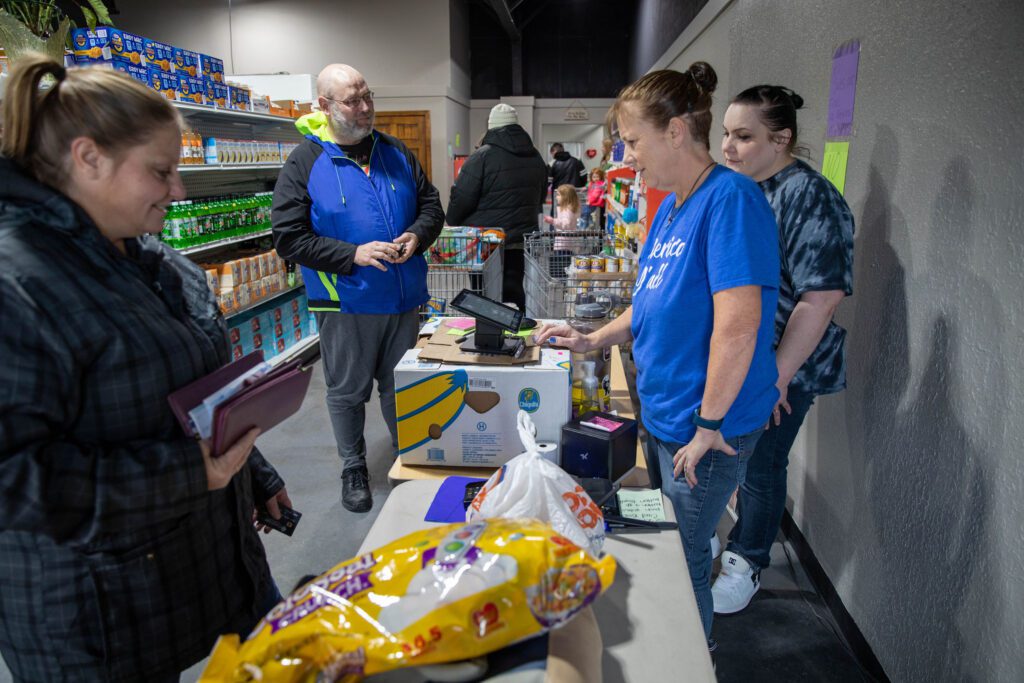
For Johnson, there is no question that Fair Market on Kiwanis has been succeeding in its first months. She said she knows that because of conversations taking place in checkout lines with the single moms, the elderly, the disabled. By treating them as part of the Fair Market family, providing them with discounted groceries and insisting that there is more than monetary transactions happening in this store, they are making what she believes are long-term and lasting connections.
“The neighborhood has been fabulously welcoming,” she said. “They have also been very flexible with our ‘rolling opening.’ It was important to us to start selling food ASAP, so we opened before everything was exactly how we wanted it. But that’s the beauty of being small and being able to turn on a dime and do what works for the customers.”
The rising cost of food “is a problem for so many and not just the typical textbook scenario,” she continued. “We get a lot of feedback about how a person or a family wasn’t able to make ends meet and now they can buy the things they need and want.”
The stories at the checkout are personal, she said.
“Probably more personal maybe than other checkers would get. I feel very fortunate that they trust us in that way. And because of that, I don’t doubt that this is going to work.”
Share This Story
Most Recent
Videos



Looking amazing @dtsiouxfalls and @washpav! Thanks to @jpickthorn for capturing an incredible night.
Nov 26

Enjoy this glow headed into Halloween week! 📸: @jpickthorn
Oct 31
Hope you had a wonderful summer weekend and are recharged for the week ahead! 📸: @jpickthorn
Jun 27
Beautiful way to start a week! 📸: @jpickthorn
Jan 10
Favorite flyover of the year! Merry Christmas from our entire @pigeon605news flock. 🎄🐦 📸: @actsofnaturephotography
Dec 24
They definitely deserve to be treated like holiday royalty and they were! ❤️ these scenes from tonight’s lighting celebration at @sanfordhealth Children’s Hospital. 🎄
Dec 1
The holidays are here! Perfect night @dtsiouxfalls
Nov 27
Happy Halloween from @avera_health NICU babies! Link in bio to see more! 🎃
Oct 31
Did you know @dtsiouxfalls is filled with 👻 stories? Link in bio … if you dare 😱
Oct 8
When it comes to kids parties nobody wants to be cookie-cutter. Link in bio for the story on what’s trending.
Sep 28
Want to stay connected to where you live with more stories like this?
Adopt a free virtual “pigeon” to deliver news that will matter to you.





Are you a little bird with something to share?

Delivering news that matters to you
Years ago, homing pigeons were used to bring us news we needed. Today, your virtual “pigeon” will deliver what you want to know about the place you call home.
All pigeons are free to good homes!
Our Partners