
How Children’s Home Society of S.D. is using ‘Science of Hope’ to guide healing
This paid piece is sponsored by Children’s Home Society.
How can we best cope with change, conflict and uncertainty?
What helps us develop resilience?
Where do we get the strength and stamina to heal from trauma?
Hope is the answer to these questions and many others.
In 2024, Children’s Home Society began a journey to understand and embrace the Science of Hope. Its entire community is included in this endeavor: leadership, staff, clients, board members, volunteers and professional partners.
“Our interest in the Science of Hope began when we heard about it from several leaders within the organization,” president and CEO Michelle Lavallee said. “When we reviewed the theory, we found that it fits perfectly with the work we do helping children and families heal from trauma.”
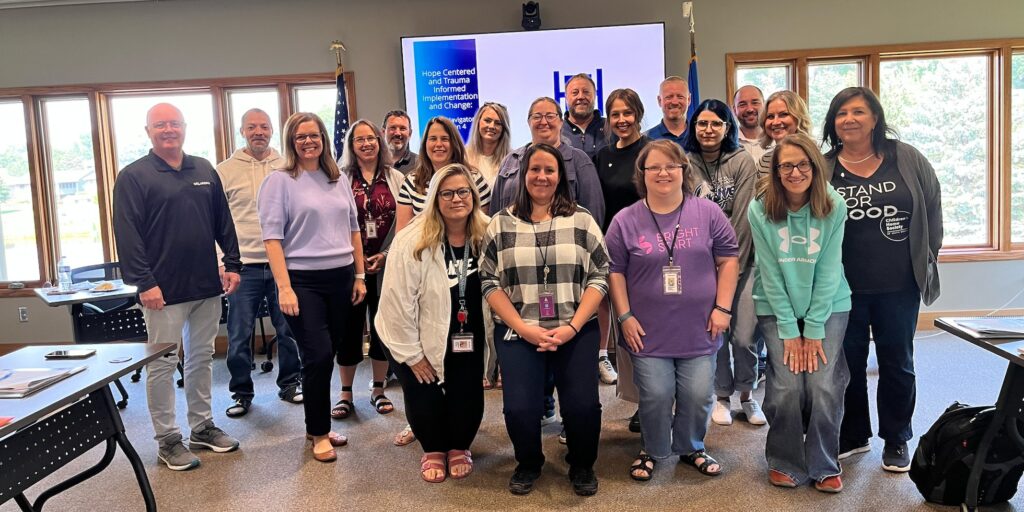
Executive leadership reached out to Science of Hope thought leader Chan Hellman, Ph.D., professor and founding director of the Hope Research Center at the University of Oklahoma. Hellman’s book, “Hope Rising: How the Science of Hope Can Change Your Life,” co-authored with Casey Gwinn, is a fundamental text on the topic.
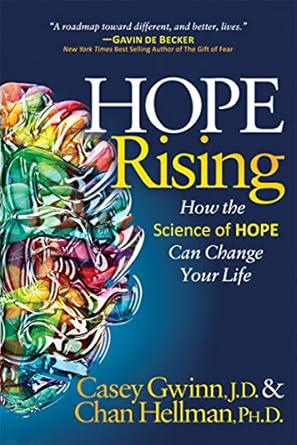
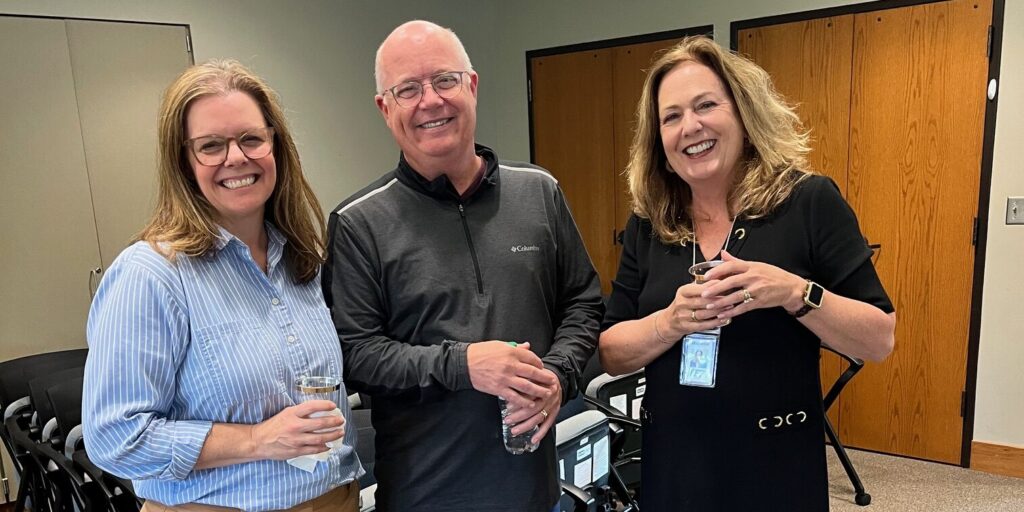
CHS staff received training on the Science of Hope from Hellman and Angela Pharris, Ph.D, associate professor, director of the Child Welfare Impact Institute and senior researcher at the Hope Research Center.
Hope defined
The Science of Hope is a theory, a framework and a movement. More than 2,000 published research studies show that hope is one of the strongest predictors of well-being for children, adults and families.
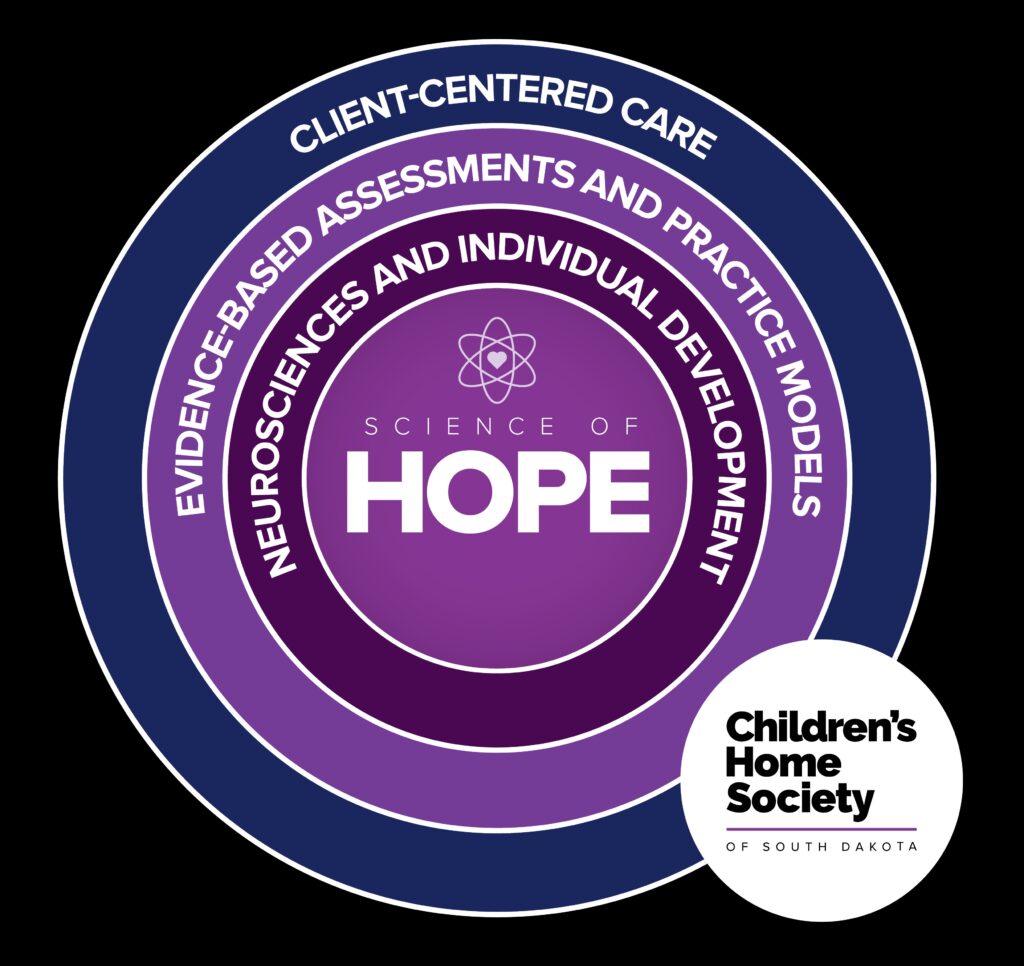
“Hope is the belief that your future will be better than today, and you have the power to make it so,” Hellman and Gwinn wrote in their book.
This is how hope is defined within the Science of Hope. It’s not just wishful thinking; it’s the future expectation that we can set and pursue desired goals.
Defined in this way, hope consists of three pillars:
- Goals.
- Pathways, or strategies for pursuing goals and overcoming obstacles.
- Willpower, or agency — the ability to direct attention on pathways to desired goals.
The Science of Hope is surprisingly simple. It’s an established protective factor, valuable for trauma survivors in particular. It complements CHS’s models and modalities of care. And it can be benchmarked and measured.
CHS grant specialist Angie Smith is a Hope Navigator.
“One value within the Science of Hope is its ability to easily incorporate the trauma-informed practices we have in place. It also appears to be a model that is applicable through a DEI lens,” she said.
Before her current position, Smith was a therapist at CHS, so her perspective is unique.
“Lastly, as a social worker,” she said, “the fact that the Science of Hope is grounded in research is critical for client outcomes.”
Hope at CHS
The goal
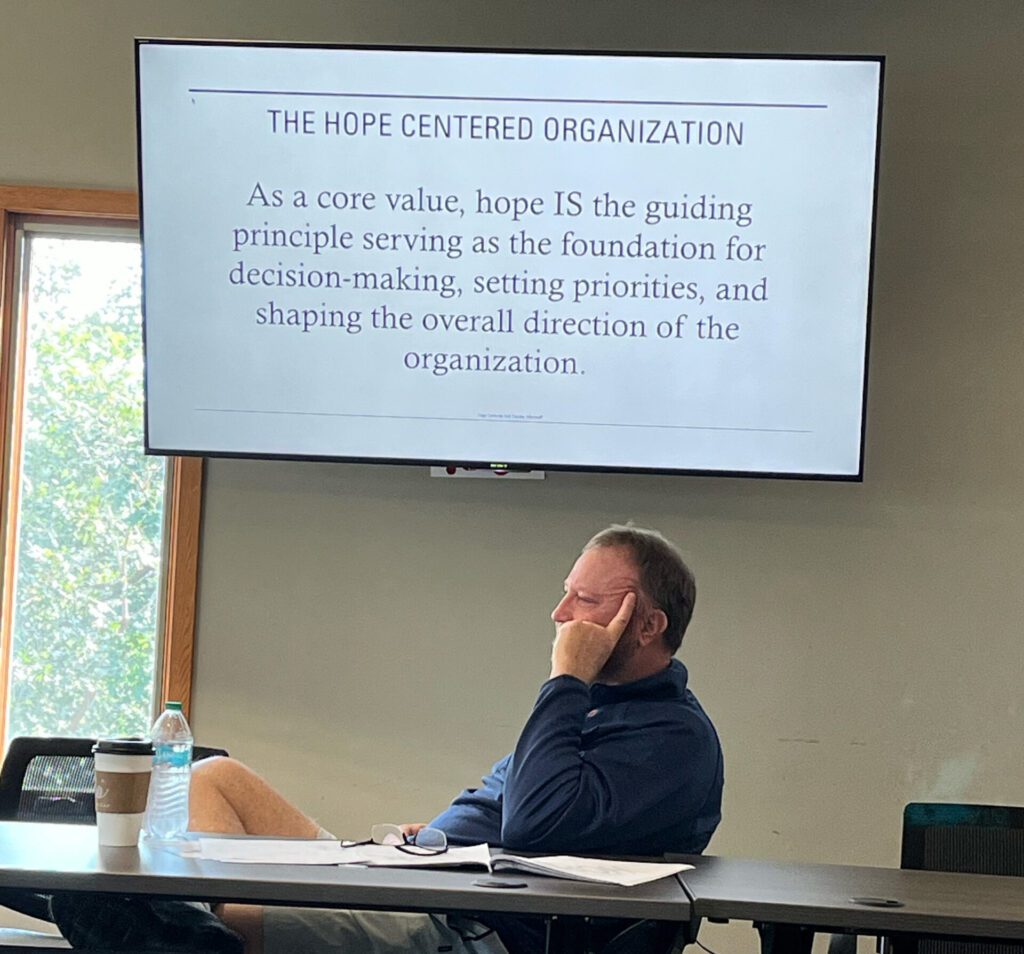
The Science of Hope closely aligns with CHS’s mission to prevent, treat and heal trauma. Executive leadership decided to bring the Science of Hope to CHS.
The pathway
CHS leadership received training first, followed by all staff. An additional 15 staff members, chosen to be Hope Navigators, completed a two-day training. They will implement hope-focused projects at a grassroots level within CHS.
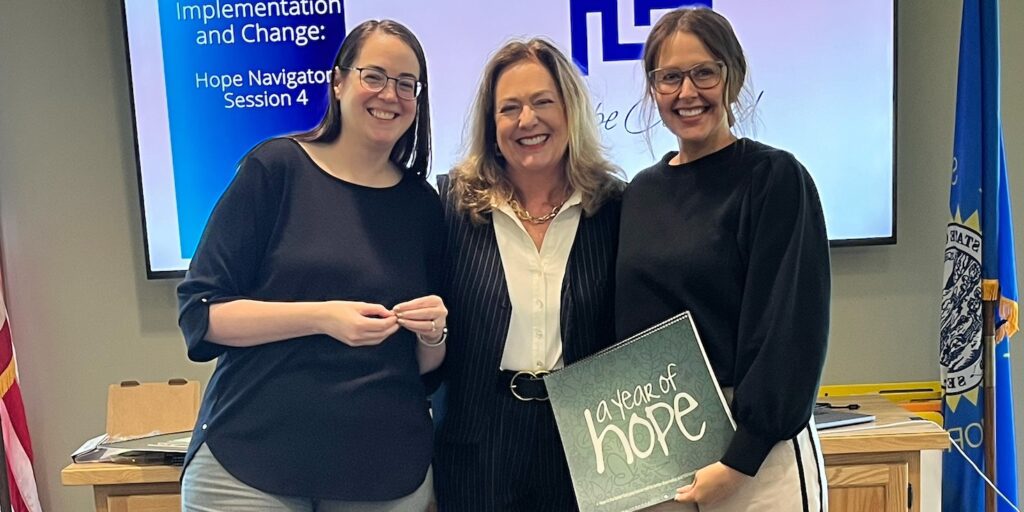
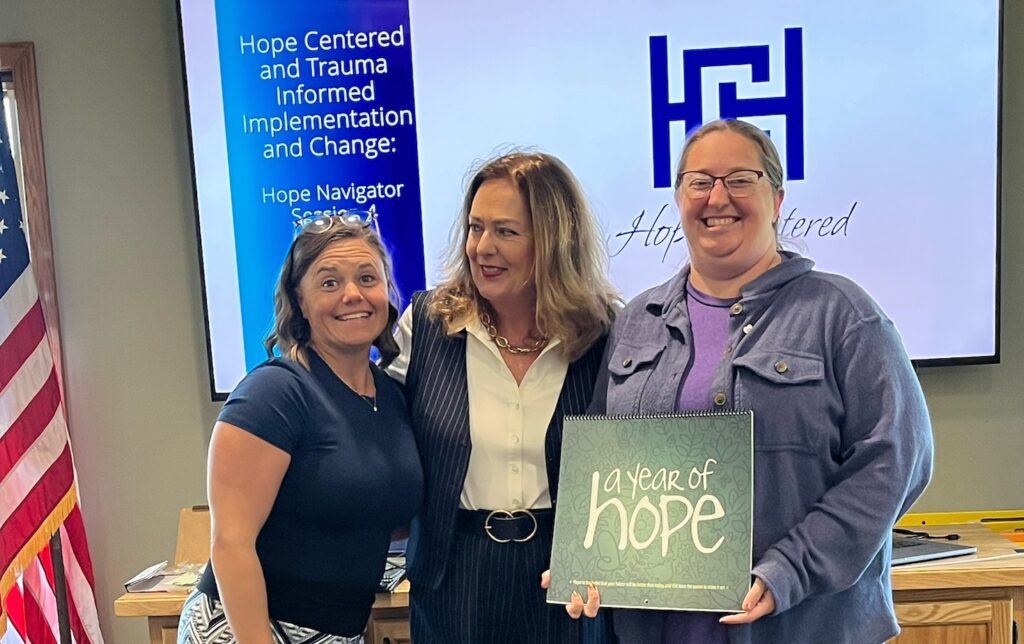
Hope Ambassadors, designated to lead the charge at CHS, are:
- Director of schools Mike Groher.
- Shelter assistant program director Darlene Hillmer.
- Clinical director Malia Holbeck.
- IT director Austin Winter.
The willpower
Hope Ambassadors, Hope Navigators and staff are motivated and have begun implementing many projects. These include:
- Creating a short monthly hope newsletter for staff.
- Including hope language in brochures, HR policies, code of ethics and COA documents.
- Using Scale of Hope metrics to examine the impact of programming.
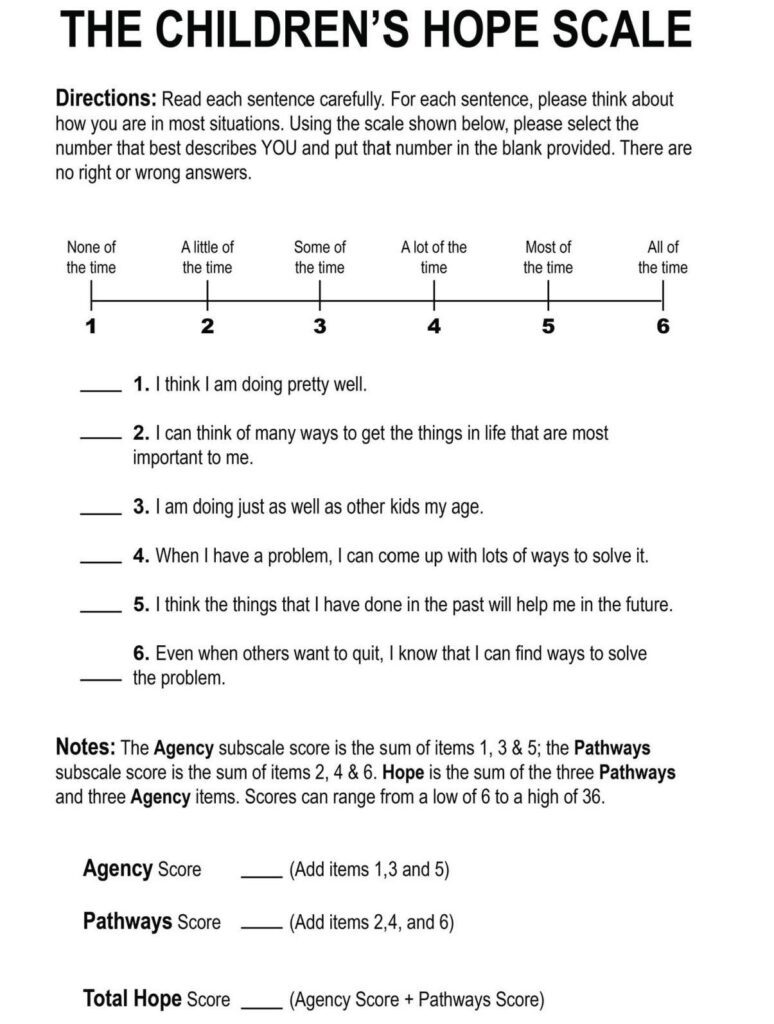
- Incorporating hope concepts into individual and group therapy, including using the Children’s Scale of Hope in therapy sessions.
- Implementing hope-focused one-pagers on CHS services.
- Including information on hope in trainings, internal publications and new-employee orientation.
Hope in action
- Hope-driven solution at Loving School
Teacher assistant and Hope Navigator Paige Knuth noticed in the Science of Hope training materials that lower glucose levels were linked to lower hope levels.
Knuth came up with the idea of providing children at Sioux Falls Children’s Home’s Loving School with a healthy, midmorning snack to boost glucose levels and hope. While children in residential care have breakfast, some of those in the day school program are food insecure and arrive at school hungry.
Part of Knuth’s plan is ensuring that the midmorning snack period is a time when teachers engage with students to build their relationships and work on raising hope. Appropriately, she has nicknamed the concept Willpower Snacks.
- Giving clients hope ASAP
Seeking emergency shelter can be one of the most challenging times in one’s life.
What if hope could be introduced to Children’s Home Shelter for Family Safety clients — both adults and children — as soon as they arrive and throughout their stay?
Assistant program supervisors and Hope Navigators Gwen Betz and Emily Hall have integrated the Science of Hope into the client’s shelter experience.
Clients are exposed to concepts of hope, including goals, pathways and willpower, when they need it most. The Scale of Hope questions are asked at intake and repeated at departure, allowing staff to measure increases in hope.
- Spreading the concept of hope
Hope Navigators Kara Flynn, vice president of development; Clara Jacob, brand strategist/senior writer; and Smith put their heads together and came up with a philanthropy worksheet based on the Science of Hope.
The worksheet is a tool for development staff to use when meeting with donors to learn about their hopes for CHS and our communities. “Hope is relevant to all our stakeholders,” Flynn said. “The place where our donors’ goals and our goals align is a sweet spot, and we can help identify this using the hope thought process.”
The worksheet also will be used as the basis for seminars with financial planners to help them think about their clients’ hopes and wishes using a new framework.
The effects of hope
What happens inside an organization that has embraced and promoted the Science of Hope? Hellman has written extensively about it.
Hope-centered leadership
- Leadership seeks to infuse values, policies, practices and programs with the Science of Hope to create a culture of well-being.
- Hope provides a unifying language across multidisciplinary teams to promote a positive culture where well-being is the outcome.
Collective hope
- Collective hope is the belief that the organization can hold a shared vision of the future.
- Employees believe the team can identify and navigate pathways to achieve the vision, and there is collective willpower, or energy, to engage in those pathways.
Organizational outcomes
- Research shows that collective hope is associated with lower burnout and turnover, and increased commitment, job satisfaction, engagement and well-being.
Hope keeps growing
CHS will roll out additional hope-focused initiatives this year.
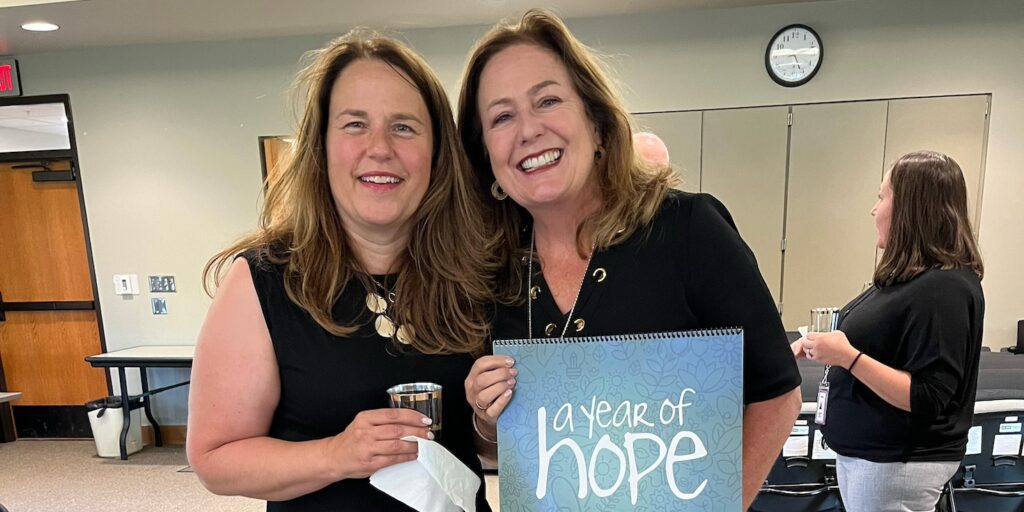
“This is our year of implementing Science of Hope tactics throughout the organization,” Lavallee said. “It’s a concept that everyone can embrace and utilize, and its benefits are widespread.”
The Science of Hope emphasis already has made an impact at CHS.
“We have seen a rising undercurrent of hope within CHS, even during these challenging times for nonprofits,” Lavallee said.
“It’s about giving every advantage to the people we serve, and we believe hope is a critically important tool that can literally change lives.”
Share This Story
Most Recent
Videos


Looking amazing @dtsiouxfalls and @washpav! Thanks to @jpickthorn for capturing an incredible night.
Nov 26

Enjoy this glow headed into Halloween week! 📸: @jpickthorn
Oct 31
Hope you had a wonderful summer weekend and are recharged for the week ahead! 📸: @jpickthorn
Jun 27
Beautiful way to start a week! 📸: @jpickthorn
Jan 10
Favorite flyover of the year! Merry Christmas from our entire @pigeon605news flock. 🎄🐦 📸: @actsofnaturephotography
Dec 24
They definitely deserve to be treated like holiday royalty and they were! ❤️ these scenes from tonight’s lighting celebration at @sanfordhealth Children’s Hospital. 🎄
Dec 1
The holidays are here! Perfect night @dtsiouxfalls
Nov 27
Happy Halloween from @avera_health NICU babies! Link in bio to see more! 🎃
Oct 31
Did you know @dtsiouxfalls is filled with 👻 stories? Link in bio … if you dare 😱
Oct 8
When it comes to kids parties nobody wants to be cookie-cutter. Link in bio for the story on what’s trending.
Sep 28
Want to stay connected to where you live with more stories like this?
Adopt a free virtual “pigeon” to deliver news that will matter to you.





Are you a little bird with something to share?

Delivering news that matters to you
Years ago, homing pigeons were used to bring us news we needed. Today, your virtual “pigeon” will deliver what you want to know about the place you call home.
All pigeons are free to good homes!
Our Partners