
From savings to sustainability, those embracing minimalist lifestyle point to benefits
Tenley Schwartz says one way to create the world you want to live in is by how you spend your money.
From the stores you go to, to the brands you buy, to whether you buy anything at all – or make it yourself – each decision can help make a real difference.
“Often, we can see those transactions as this like numbers game, ‘I’m making a business decision, and I’m picking the bargain option,’” Schwartz said.
“But when you’re practicing sustainable lifestyle, you say, ‘I am going to do this values-based spending.’ Maybe I slow down on clothing spending, so I have more cash to spend on sustainable food. When you are buying from someone in your community, you are also saying this is a community I want to live in, one where people can sustain their families by growing food.”

That kind of values-based spending is common in millennial and Gen Z consumers – or anti-consumers. It might seem counterintuitive that the generations who have grown up with everything instantly available have begun to go the opposite direction and embrace slowing down.
Think backyard gardens, canning, sewing or thrifting clothes.
It’s conscious, local and economical – and changes how brands are perceived.
According to Harvard Business Review, in a survey of more than 350,000 U.S. customers age 18 to 98, sustainability promotes trust, particularly among younger generations.
When Gen Z and millennial customers believe a brand cares about its impact on people and the planet, they are 27 percent more likely to purchase it than older generations are — a clear measure of sustainability’s power to drive buying decisions in this group, the article said.
And that’s worth noting – if you sell any products.
The purchasing power of millennials and Gen Z will surpass that of baby boomers around 2030, with up to $68 trillion in wealth transferring to these younger generations.
According to a 2024 Gen Z and millennial survey by Deloitte, 64 percent of respondents were willing to pay more to purchase environmentally sustainable products.
Schwartz agrees.
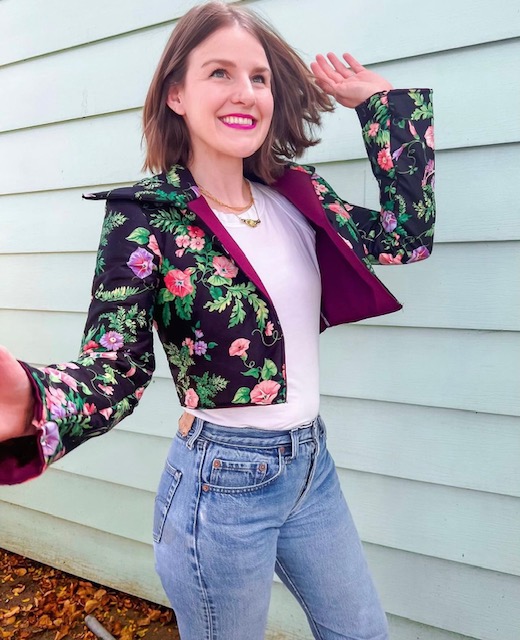
“I think it influences a lot of my decisions,” said Schwartz, who thrifts and sews her own clothes. “There’s a slow-clothing movement, and there are a lot of people who are making their own clothes and saying, ‘I don’t need a ton of items.’”
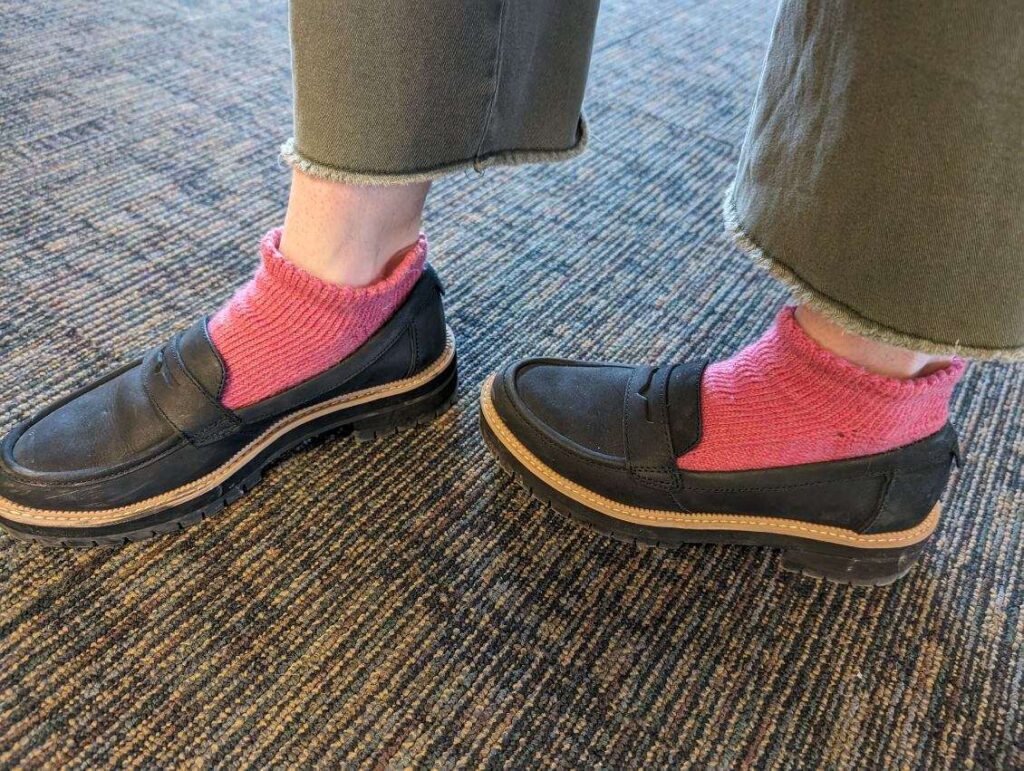
She said making her own clothes has helped her realize how much work goes into making an item. “Then, you start to realize buying something that costs very little is probably not compensating someone properly, and it’s also probably not being made with materials that are going to be good for the environment.”
Molly O’Connor takes it one step further. She loves fashion and wanted to be a fashion designer when she grew up, but like Schwartz, the overconsumption of clothing and other goods and the fast-fashion movement deterred her.
“I realized that it is an addiction – we are addicted to overconsuming. I’ve always been like this – I do not waste,” O’Connor said. “I cannot stand waste. I will save food as long as I possibly can. I ignore best-by dates or expiration dates. This is just how I’ve lived. I don’t know where it comes from, but it does apply to all areas of my life.”
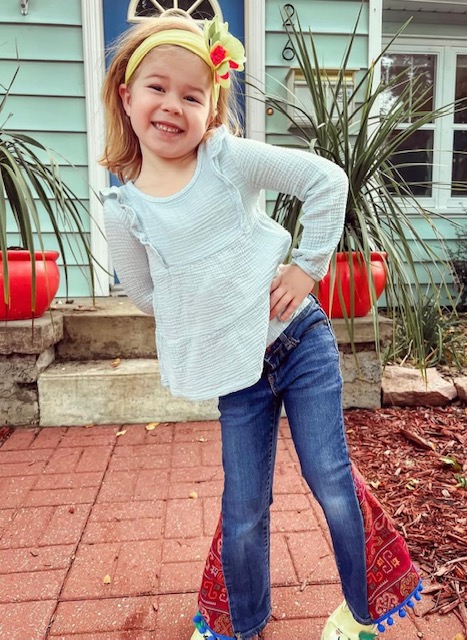
O’Connor decided to track how many new clothing items she purchased for herself and her daughter over the course of a year and take a photo of it. She has been doing it since 2020, and she averages about five new items – each.
The photo has helped keep her accountable to her goal of less consumerism.
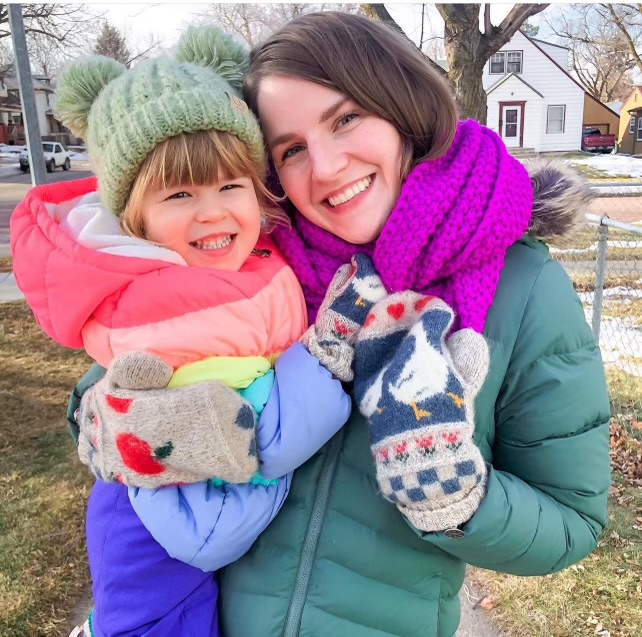
“I ask, ‘Do I want to account for this at the end of the year, and do I want this in the photo,’” O’Connor said. “That is often enough to make me take a pause. It has reset my brain to not crave new things.”
She said this focus doesn’t mean she doesn’t still enjoy fashion. “I’m not depriving myself by buying secondhand clothing,” she said. “It’s even more exciting because you don’t know what you are going to find, and you can alter and repair things, and it’s more affordable.”
O’Connor said allowing a few new things a year makes the goal more attainable – and she notes that she has been able to stick to it through a pregnancy and raising a young child. “I don’t put any guidelines on it; I just see what the year brings.”
She prefers thrifting locally but notes that there are some brands that offer used clothing online and other sites like Poshmark, where people sell their clothes. And, of course, there’s always a friend of a friend cleaning out a closet or with a kid outgrowing clothes.
Schwartz grew up in Minnesota and read blogs where people were knitting, sewing and remaking things. “Creativity has always been huge for me,” she said. “I saw so many examples of people who were doing these crafts and making their own clothes.”
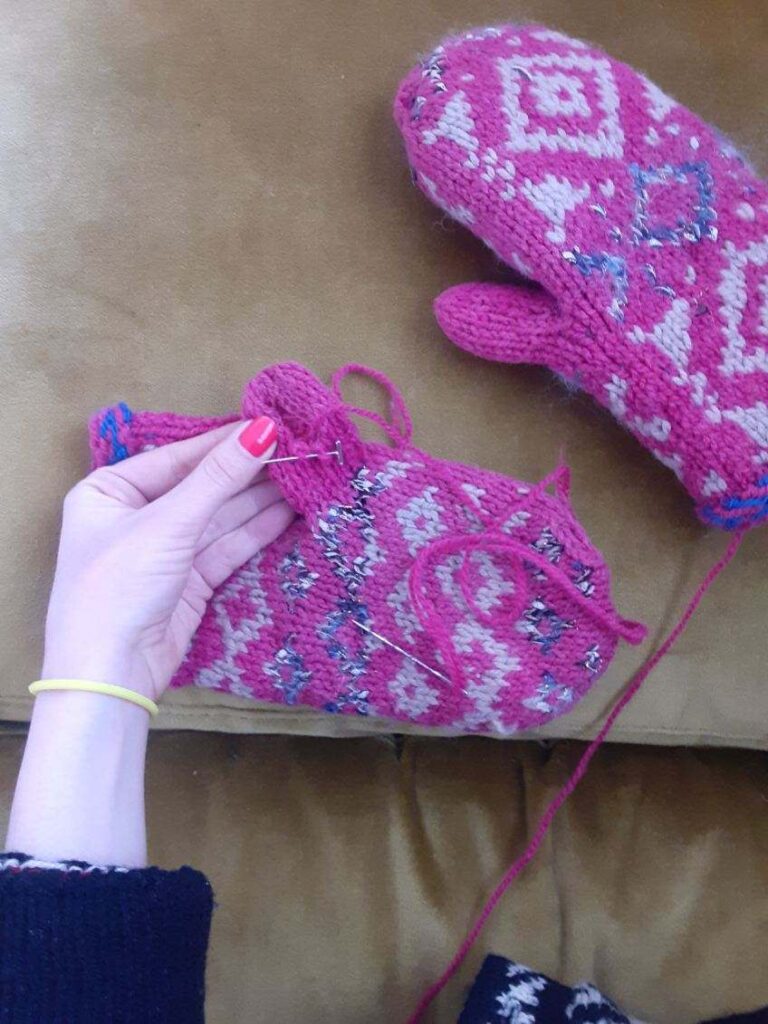
It felt intimidating, but she began trying. She took up knitting. She made her own socks – a pair she still has from high school. She learned some sewing basics from her mom and some from online and then a lot from practice.
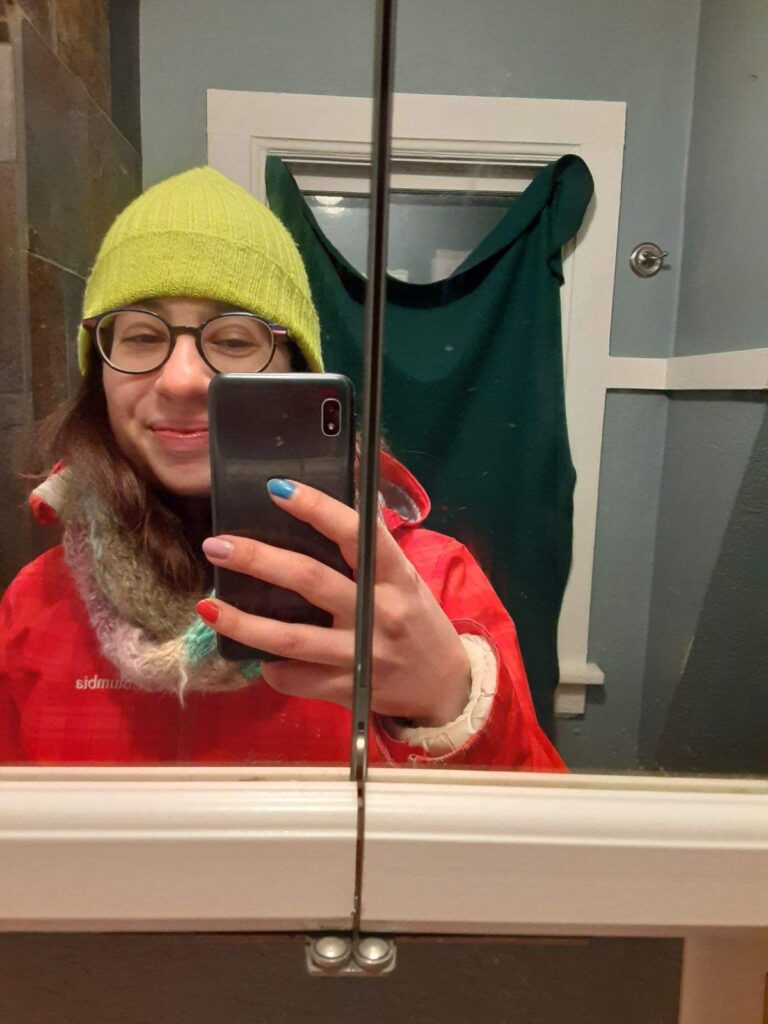
“I think my favorite thing about making my own clothes is when it becomes so integrated into my wardrobe and I don’t think about it as a special garment,” Schwartz said. She said even in the maker world, it’s easy to get caught up in thinking you have to constantly be making something. But that can lead to waste too. “For me, it’s important to have the skills to make things like a dress or a pair of socks but not making something just because I can. Do I have a gap in my wardrobe? Then I can fill it.”
The skills also allow her to breathe new life into items she thrifts. “I found a skirt that was a fun color, but it wasn’t my size, so I turned it into a dress,” Schwartz said. “It was so satisfying. It’s something only I own, and otherwise it would have been lost in the thrift store.”
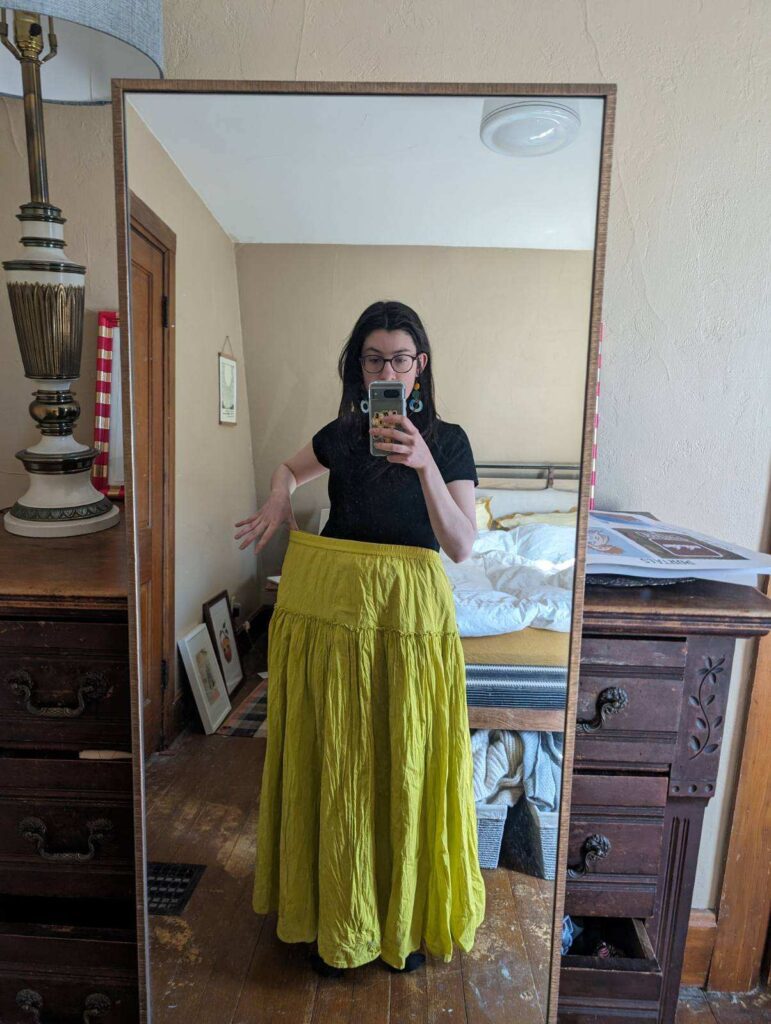
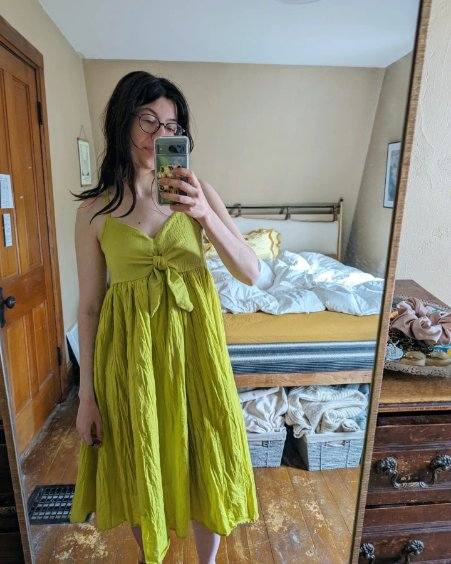
Schwartz said she looks for natural materials when thrifting. “Those are the ones that will break down naturally and decompose,” she said. “One of my favorite parts about thinking sustainably is that it can be the easier, more economical option.”
Sustainable living
Kelsie Thomas and Tony Helland are raising two kids and trying to stay as sustainable as possible.
Thomas notes that what that looks like changes over the years.
“Things look different at different stages,” Thomas said. A few years ago, she set a goal of growing and canning enough tomatoes to get the family through the winter. “That was a good goal marker – we grow food to preserve it,” she said.
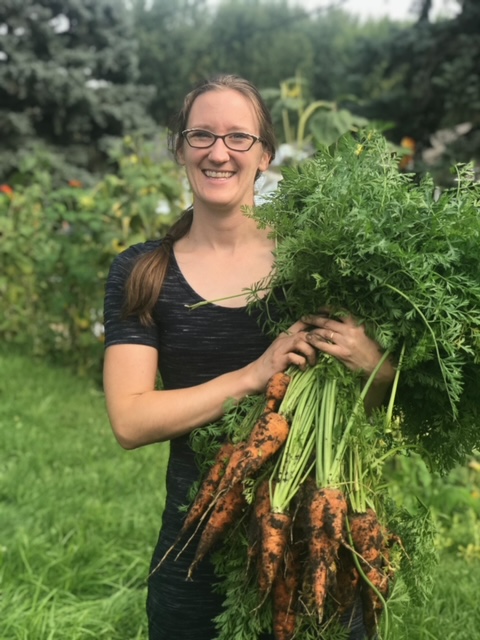
They do much of their food shopping through the Sioux Falls Food Co+op, Cherry Rock Farms or various community supported agriculture groups. They have chickens in the backyard.
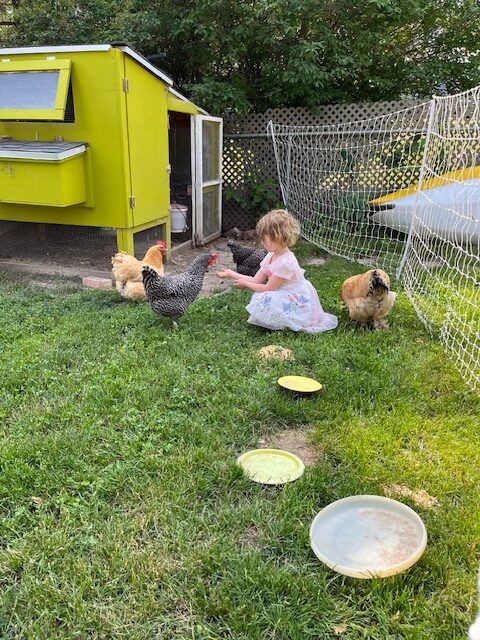
“They are providing a good nitrogen source for our grass, and we get to enjoy their eggs,” Thomas said.
In 2019, they got a grant to turn their backyard into a workshop learning space and put in a rain garden. “It’s hooked to our rain gutter, so the rains go right into this pollinator-friendly garden,” she said. “It was used as a grad project, with soil quality and rain output and data collection.”
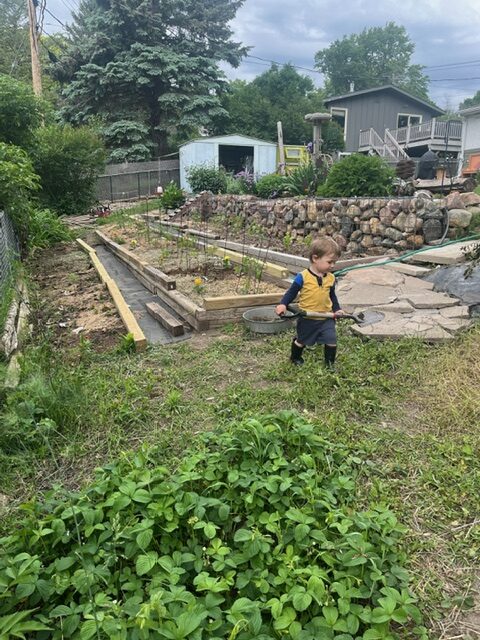
Beyond that, they are always learning and trying new things. This summer, they are building a deck and adding to their garden space. They took down a shed and had a lot of concrete, which they are using to create a gabion wall – rocks held in place by a cage. “We redid our retaining walls and were able to reuse the concrete from the shed.”
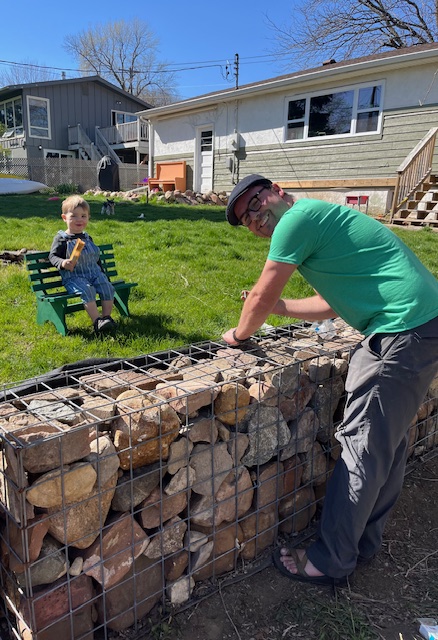
“We’re always kind of moving things around and creating new from old,” Thomas said. “We do what we can to try to reuse or repurpose.”
Thomas, a doula, said it’s something important to teach their children. “We are all about perennial growth in this household,” she said. “It’s as grassroots as it comes. My husband was an Eagle Scout and always jokes ‘Oh, I have a badge for that.’”
Part of the fun is learning – along with their kids. “We’re just trying to take care of the little piece of earth we have in the best way we can,” she said. “And that’s our quality of life – we enjoy being outside and getting our hands dirty.”
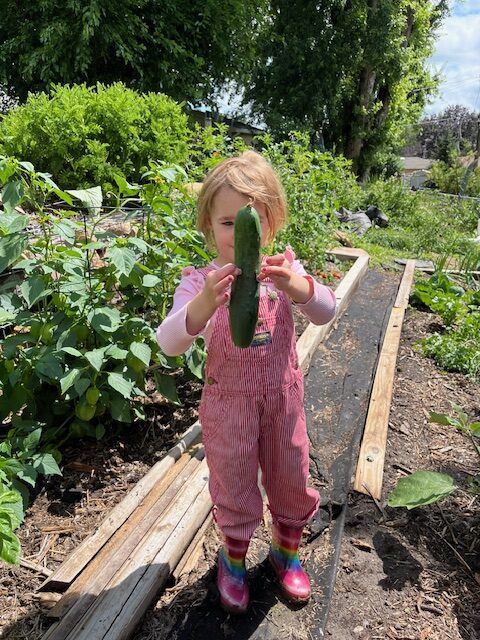
Thomas encourages people to make just a few small changes. “This isn’t about creating big changes,” she said. “It’s about doing things a little differently. It doesn’t have to be a major shift. Success is just trying.”
Schwartz agrees.
Living sustainably is not running out to buy the latest kitchen composting bucket or fancy new clothing item, Schwartz said. It can be as simple as not using a store bag when shopping. “I figure if I have carried the items through the store on a quick trip, I don’t need to put them in a bag to carry them out of the store.”
Supporting local farmers and businesses is a way to use your money to support the world you want to live in, Schwartz said.
“Saying you are connected to all these people in your community, it’s so important to focus on what’s around you,” she said. “We can’t all do these giant projects, but we can support things on a local level. And that’s one of the heartening parts of practicing sustainability.”
Share This Story
Most Recent
Videos



Looking amazing @dtsiouxfalls and @washpav! Thanks to @jpickthorn for capturing an incredible night.
Nov 26

Enjoy this glow headed into Halloween week! 📸: @jpickthorn
Oct 31
Hope you had a wonderful summer weekend and are recharged for the week ahead! 📸: @jpickthorn
Jun 27
Beautiful way to start a week! 📸: @jpickthorn
Jan 10
Favorite flyover of the year! Merry Christmas from our entire @pigeon605news flock. 🎄🐦 📸: @actsofnaturephotography
Dec 24
They definitely deserve to be treated like holiday royalty and they were! ❤️ these scenes from tonight’s lighting celebration at @sanfordhealth Children’s Hospital. 🎄
Dec 1
The holidays are here! Perfect night @dtsiouxfalls
Nov 27
Happy Halloween from @avera_health NICU babies! Link in bio to see more! 🎃
Oct 31
Did you know @dtsiouxfalls is filled with 👻 stories? Link in bio … if you dare 😱
Oct 8
When it comes to kids parties nobody wants to be cookie-cutter. Link in bio for the story on what’s trending.
Sep 28
Want to stay connected to where you live with more stories like this?
Adopt a free virtual “pigeon” to deliver news that will matter to you.



Are you a little bird with something to share?
Delivering news that matters to you
Years ago, homing pigeons were used to bring us news we needed. Today, your virtual “pigeon” will deliver what you want to know about the place you call home.
All pigeons are free to good homes!
Our Partners