

From Canistota to chart-topping pianist, meet the musician who honors his S.D. roots
By Mick Garry, for Pigeon605
The cover photo for Matthew Mayer’s first album involved a pickup he borrowed from Pat Jolley, a teacher and basketball coach in his hometown of Canistota.
Mayer rolled the piano out onto a walking bridge at the Leif Ericson Day Camp, stood next to it, and there you go: album cover No 1. for “Crossing the Bridge.”
“I put on some khakis that looked like the kind Jake from State Farm wears, along with a nice little sweater vest,” Mayer said. “It was around that time it was like: ‘I don’t know what I’m doing, but I’m going to figure it out. I got a record, and I have to get a picture for the cover. How am I going to do this?’”
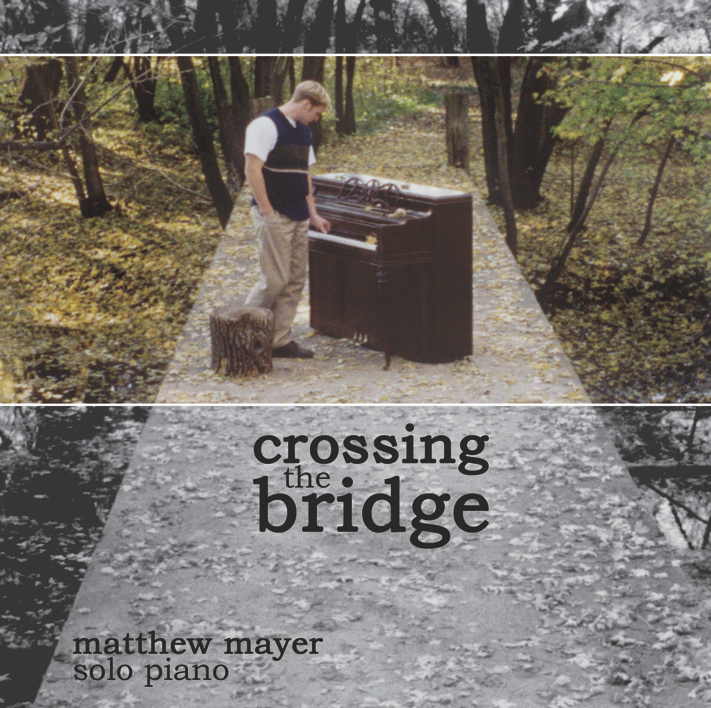
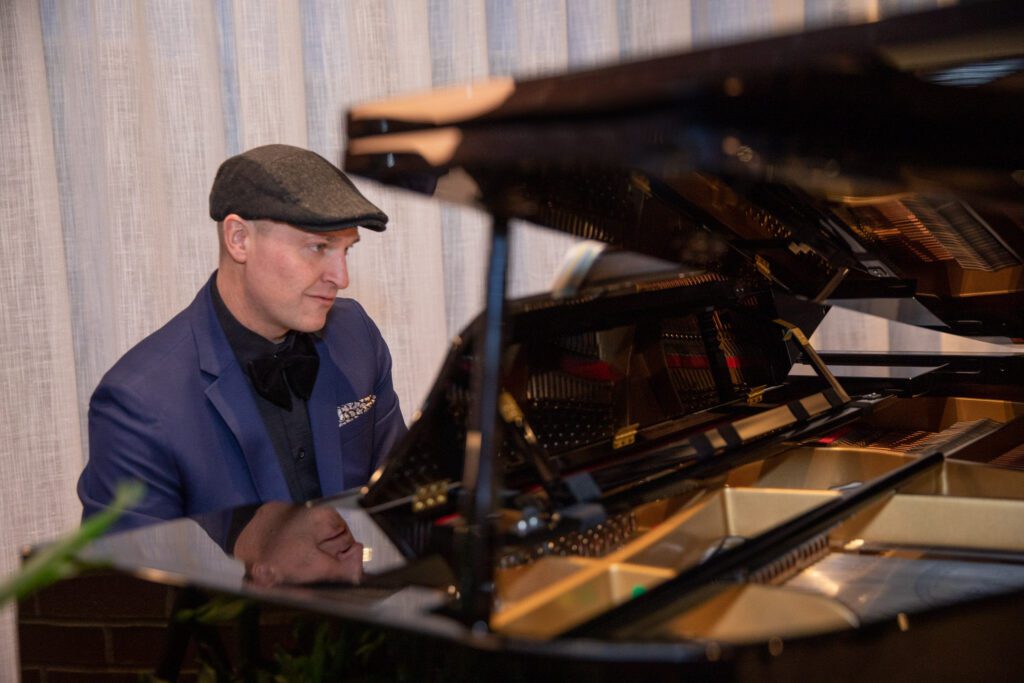
Just a moment in time, perhaps, but a glimpse of the resolve that has accompanied the talent that has led to at least 17 albums, world tours with some of the world’s best musicians, recognition on Billboard charts and national acclaim as a new-age solo pianist in the 25 years since then.
“Making that album cover,” said Mayer, who was a college student at USD at the time, “is when the bug really hit me.”
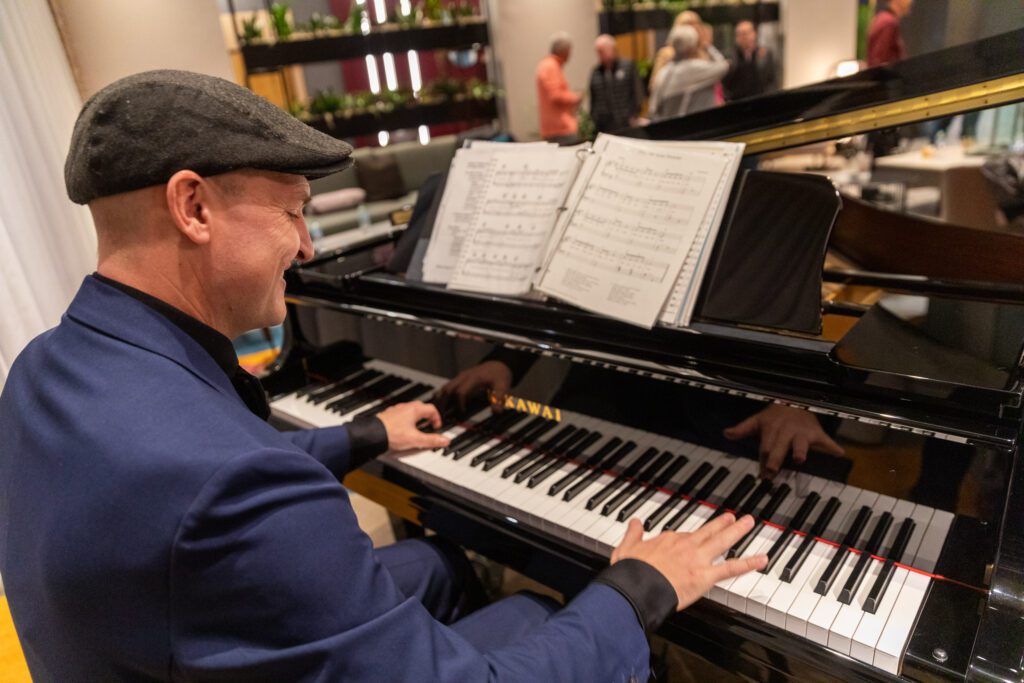
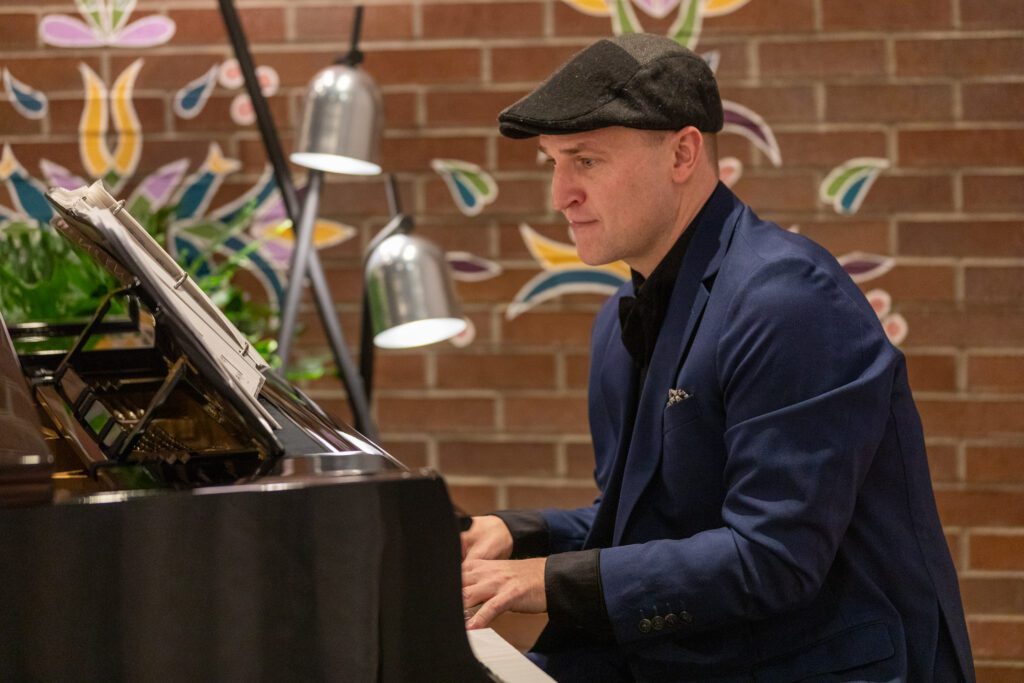
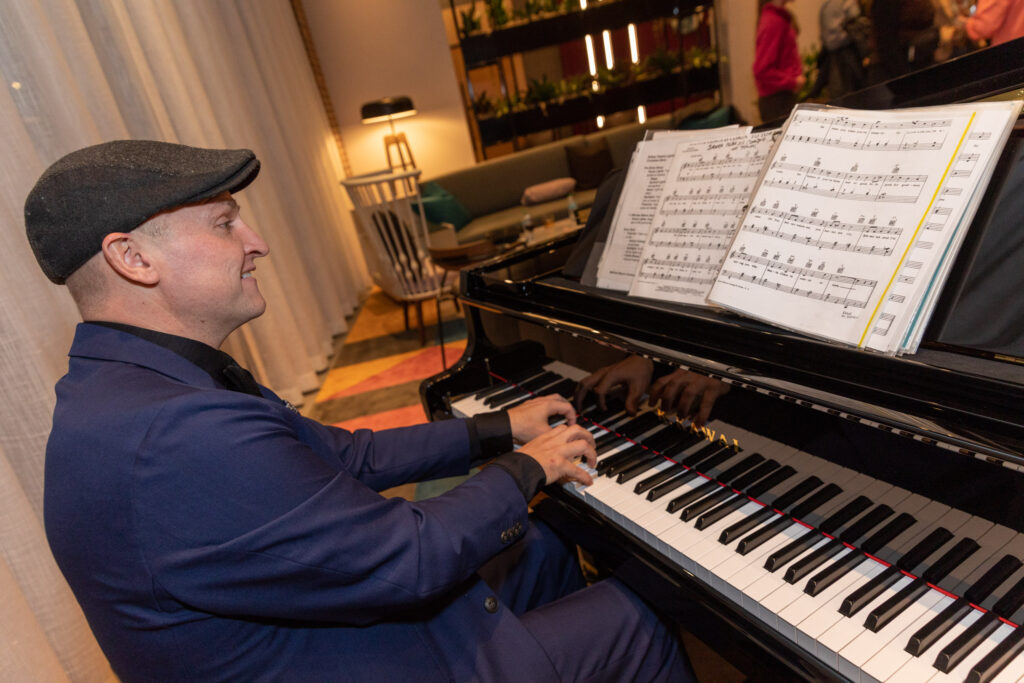
His recent visit to a sold-out Belbas Theater at the Washington Pavilion provided those who have followed his career — many of whom he has known since he was a child — a chance to hear him play and entertain.
Those who knew him only via his recorded music were in for quite a ride. There were stories about growing up in Canistota, several of which included prominent mentions of friends and teachers who were attending the concert. This was a Christmas card for them in many respects, celebrating the holiday season and a history that now includes a quarter-century of his work.

“All these people have come together – it’s a hometown gathering, and I’m trying to say thank you to everyone who supported me and believed in me,” Mayer said. “To be able to come back here is true joy.”
His single “When Flowers Grew Wild” has been used in more than 90,000 Instagram reels. His 2022 album “Piano Lullabies” has been streamed more than 60 million times on Amazon Music, and “Beautiful You,” an album he recorded in 2018, got to No. 1 on Billboard’s New Age Albums chart.
His road to being able to fill a local theater began with messing around with the piano at his grandparents’ home. That led to a trip across the street to visit with a neighbor, the late Rev. Art Cooper, about taking piano lessons. Cooper, who died in 1996, inspired Mayer initially by taking simple tunes and blowing them up.
“He might end up hitting just about every key on the piano, all in the right time and right style, to play a song like ‘Mary Had a Little Lamb,’” Mayer said. “How can you do that to ‘Mary Had a Little Lamb’? I was 12 at the time, and most of my friends had already taken piano lessons and quit. But I’m like, ‘Dang, this looks pretty cool.’”
Years later, Mayer would create an album of children’s lullabies he titled “Art” as a nod to the man who got him started.
“He was a great, great man,” Mayer said. “I think Art saw something in me that I didn’t see right away myself. It was just the way he taught me. He believed in me. And he lived 25 steps from my front door.”
In Mayer’s senior year of high school, an injury ended his football season early. To kill time, he would report to the high school computer room, working on a song he would later play – accompanied by the school band – at Canistota High School’s spring concert.
“I was pretty upset about missing football, so I tried to compose music,” Mayer said. “I realized I liked it. It was a lot better than just sitting around after school.”
The song was dedicated to Canistota music teacher and band director Lloyd Huber, who retired that year after 33 years.
“The part the band had to play in that song is in a very tough key,” said Huber, who attended the concert. “They had to play a lot of sharps. That’s not very good for brass players. They like to play flats.”
Huber was one of many Canistota folks singled out during the Belbas performance. After Mayer mentioned that his music teacher was in the audience, he marched them through one of Huber’s signature routines from memory.
“What’s with your dog, Mr. Huber?” Mayer called out.
Huber, who spent decades moonlighting as a piano tuner in the Canistota area and had tuned at least two iterations of the Mayer family piano countless times over the years, was not expecting to be part of the entertainment but delivered the following as if he’d been rehearsing for weeks:
“My dog has no nose,” Huber told the crowd.
“That’s sad,” Mayer replied. “If that’s the case, how does he smell?”
“Awful,” Huber said.
“I was a little shocked when Matt called my name,” Huber later said. “I used that joke with the band kids for years.”
Mayer, whose career included a stint in Los Angeles working in production for “Access Hollywood,” lives in Omaha. When he entered the music business, the conventional route to making money in music was just beginning to evolve.
Since the 1920s, musicians had recorded music and then tried to get people to buy recordings of their efforts. Though the vehicles had changed – records to tapes to CDs – the money-making equation essentially was unchanged when Mayer gutted his personal savings to record, produce and distribute “Crossing the Bridge” around the turn of the century.
Twenty-five years later, the terrain is much different. Technology has made music production much more accessible – you don’t need a union sound engineer to help you put together an album anymore – but monetizing your talents is more difficult.
“How many times have you played a CD recently? When you want to listen to music, you go to streaming,” Mayer said. “Spotify, Pandora, Apple Music, Amazon – we have all those digital providers, and you can easily get your songs on those platforms. Now, the trick is getting people to save your songs or stream them. If you stream my music on Apple, I might get .0021 of a cent when you stream it. So in addition to making quality music, you need quantity. Can you get people to add you to their playlist?”
The numbers for Mayer look better than they once did on that count, thanks to establishing a name and a brand in the business. If someone goes to a platform and types in something like “solo new-age piano,” there’s a good chance a song or an album by Matthew Mayer will show up.
A little more digging would reveal that his catalog of original material is extensive. This is a guy, you’re thinking, who never had a noncreative day in his life.
That’s not exactly true, of course. The challenge is to minimize the musician’s version of “writer’s block,” while squeezing the most out of your good days.
“How do you capture the creative muse when it hits? For me, that creativity and spark seem to leave for a while,” Mayer said. “But when something is calling you to the piano bench, you have to make the most of it.”
Mayer had the opportunity to interview George Winston, perhaps the greatest contemporary new-age pianist ever, about writing music. Winston, who died in 2023, told him to listen to his subconscious. Let the song flow naturally and stand on its own.
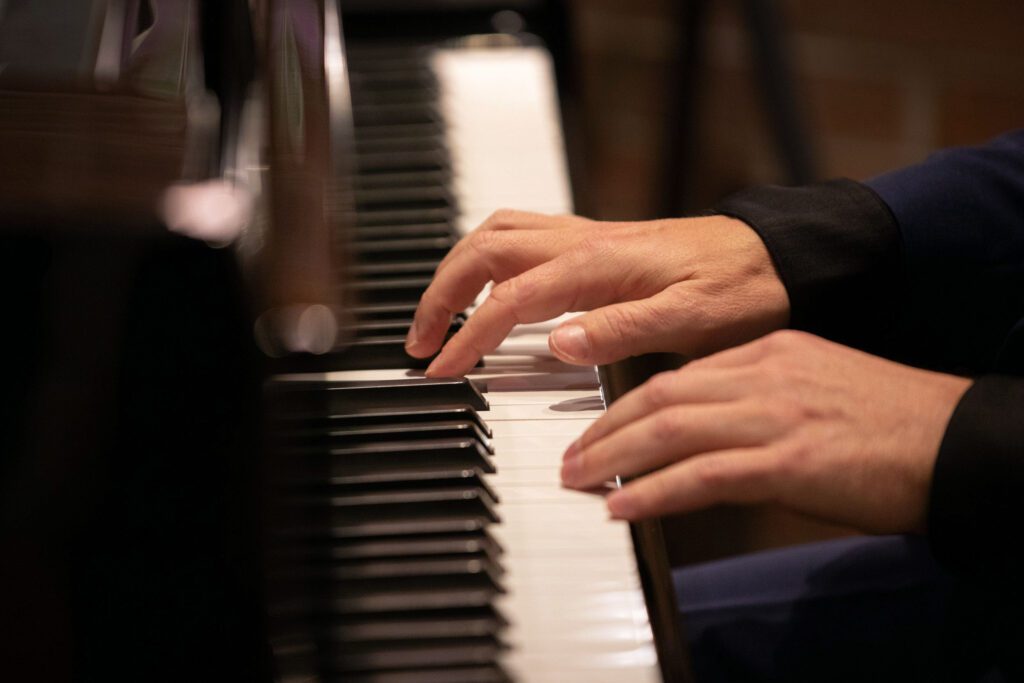
“If it does stand on its own, great, but if it doesn’t, maybe that leads to another creative idea or maybe try playing it slower. What does that sound like?” Mayer said. “It’s such a fluid process it’s hard to explain. Sometimes, you’ll write something that might not speak to other people, but it speaks to you. That’s what matters.”
During the Belbas concert, at one point Mayer launched into a medley of well-known Christmas songs that, in his hands, went far beyond where they usually go. He ended with a robust version of “Jingle Bells” that had Huber’s professional ears thinking that this grand piano was going to need a grand tuning after Mayer quit playing it.
Mayer jumped from the piano bench to the stage floor at that point and cranked out five pushups.
“I still got it, Coach Whalen!” he said, referring to Canistota football coach Dan Whalen, who was in the audience.
The guy who went deep into the weeds about the creative process with George Winston was showing his high school football coach he still has what it takes.

“Matt has always been somebody who stayed with things until he got them right,” Huber said. “Before the concert, his mother gave me a card from Matt, and I asked my daughter if I should open it. She said that was all right. So I did. In it, he’s praising me for all the things I did for him. All I can say is that I’m never getting rid of that card.”
Share This Story
Most Recent
Videos



Looking amazing @dtsiouxfalls and @washpav! Thanks to @jpickthorn for capturing an incredible night.
Nov 26

Enjoy this glow headed into Halloween week! 📸: @jpickthorn
Oct 31
Hope you had a wonderful summer weekend and are recharged for the week ahead! 📸: @jpickthorn
Jun 27
Beautiful way to start a week! 📸: @jpickthorn
Jan 10
Favorite flyover of the year! Merry Christmas from our entire @pigeon605news flock. 🎄🐦 📸: @actsofnaturephotography
Dec 24
They definitely deserve to be treated like holiday royalty and they were! ❤️ these scenes from tonight’s lighting celebration at @sanfordhealth Children’s Hospital. 🎄
Dec 1
The holidays are here! Perfect night @dtsiouxfalls
Nov 27
Happy Halloween from @avera_health NICU babies! Link in bio to see more! 🎃
Oct 31
Did you know @dtsiouxfalls is filled with 👻 stories? Link in bio … if you dare 😱
Oct 8
When it comes to kids parties nobody wants to be cookie-cutter. Link in bio for the story on what’s trending.
Sep 28
Want to stay connected to where you live with more stories like this?
Adopt a free virtual “pigeon” to deliver news that will matter to you.





Are you a little bird with something to share?

Delivering news that matters to you
Years ago, homing pigeons were used to bring us news we needed. Today, your virtual “pigeon” will deliver what you want to know about the place you call home.
All pigeons are free to good homes!
Our Partners