
Food forests slowly blooming, bringing edible plants with multiple benefits
Kim Rockman asks if it’s too windy to hear her over the phone.
“I’m sitting on the 5 acres that Food Forest manages in Luverne, which we call Prairie Ally,” Rockman said from southwest Minnesota. The nonprofit Project Food Forest was founded in 2016, and Rockman became executive director in 2020 after several years of working with the organization.
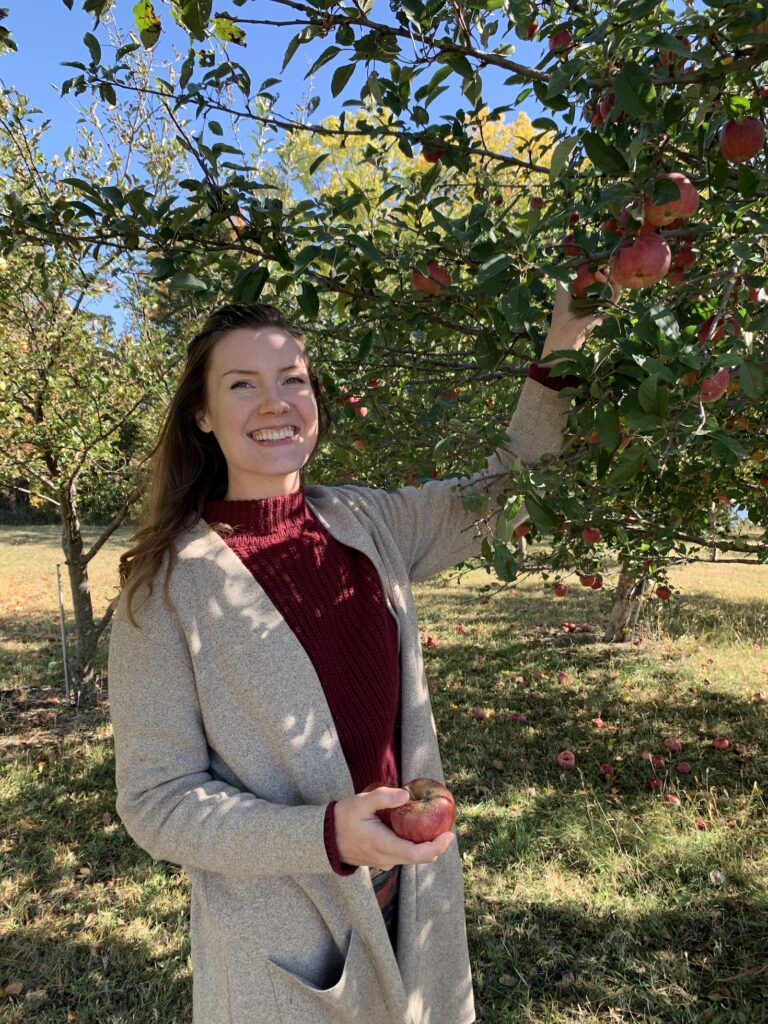
Project Food Forest serves the tri-state area, headquartered in Sioux Falls, with the Luverne demonstration site as a focal point. It also sits on the property where Rockman grew up. Her parents leased the group 5 of the 6.2 acres available.
“We want to provide recreation, education, food and habitat,” Rockman said. “It’s really intended for the public to use, for this to be an edible park, for a space for respite and a place to learn.”
What exactly is a food forest?
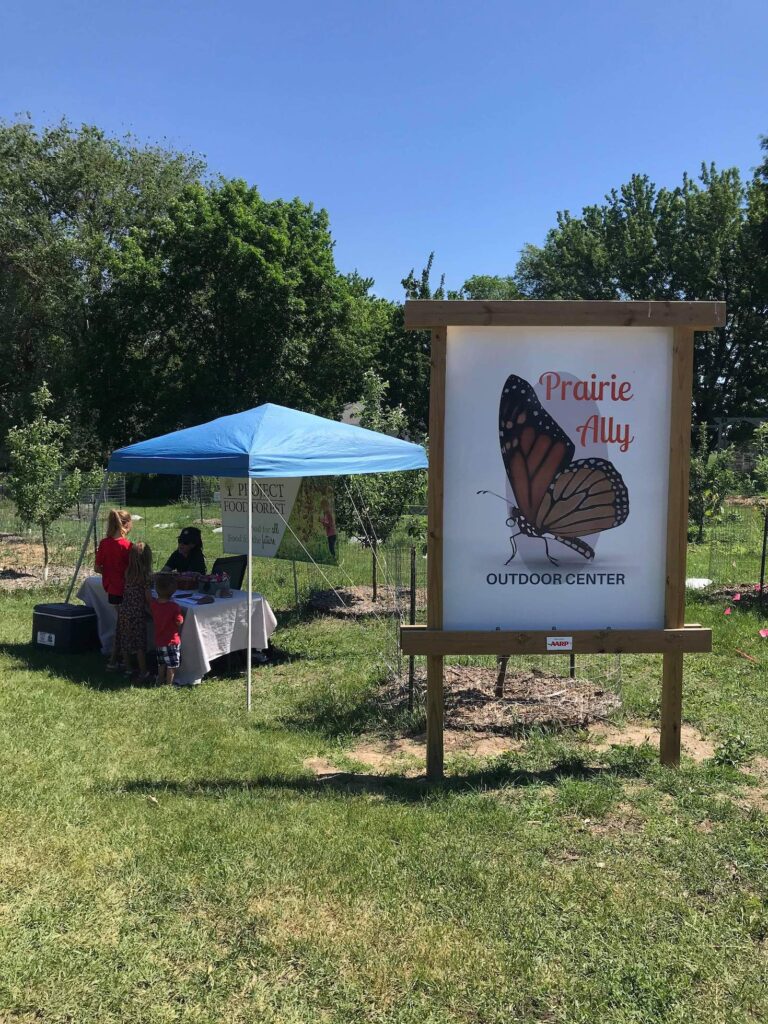
According to the organization’s site: “A food forest, also called a forest garden, is a diverse planting of edible plants that attempts to mimic the ecosystems and patterns found in nature. Food forests are three-dimensional designs, with life extending in all directions: up, down, and out.
“Generally, we recognize seven layers of a forest garden: the overstory, the understory, the shrub layer, the herbaceous layer, the root layer, the ground cover layer and the vine layer. Some also like to recognize the mycelial layer, layer eight (mushrooms). Using these layers, we can fit more plants in an area without causing failure due to competition.”
Or, as Rachel Saum said: “It’s to help people feed themselves. It’s as simple as one apple tree and a couple of companion plants.”
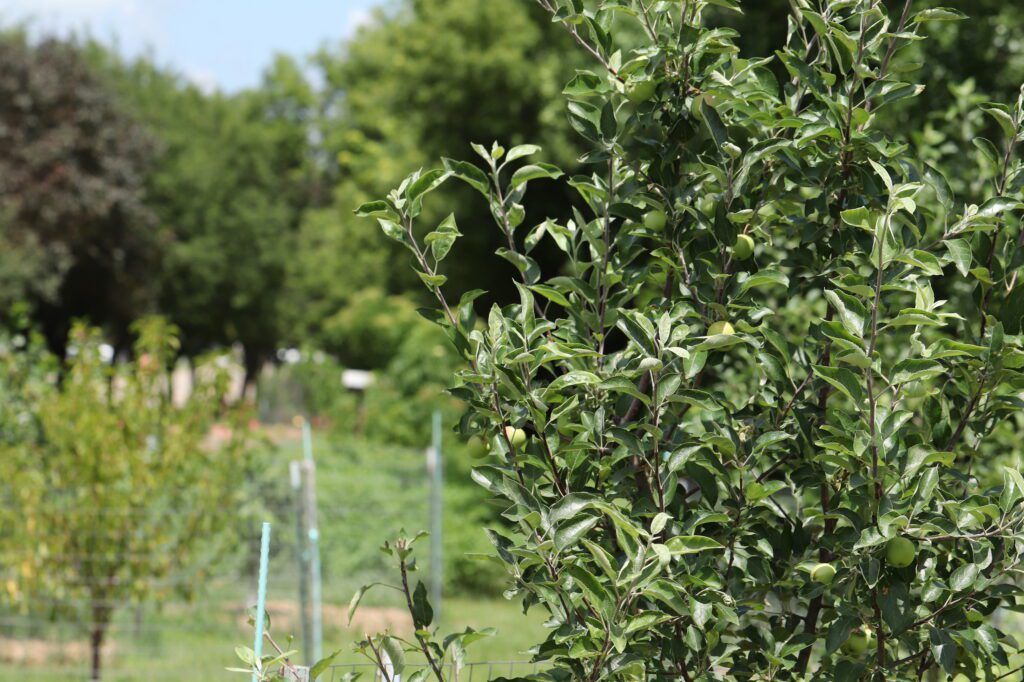
Saum is the director of education and outreach for the project and strives to make it all approachable and encourage people to give it a try. “I try not to intimidate people, “ she said. “Anytime I notice someone has an interest in gardening or food production – it doesn’t have to be a giant forest and all this work.”
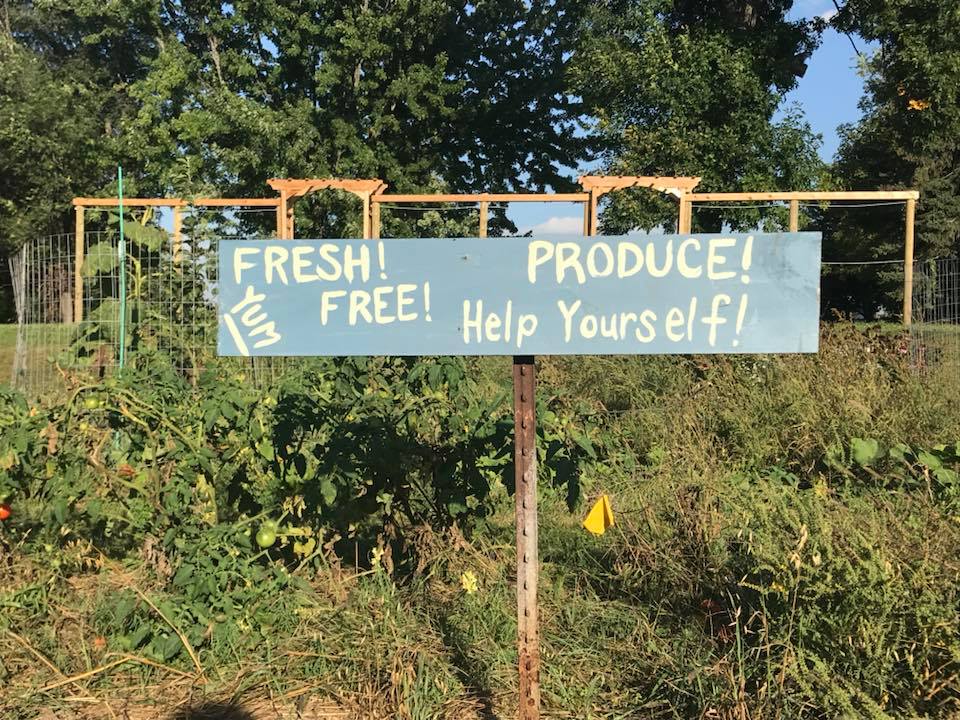
That’s exactly what Rockman hopes people will take from this project, which has become a passion.
“The beauty of having an actual site we can bring people to is you can read all the books you want, but being somewhere and being able to ask questions in real time and use all of your senses to soak in the space, we found to be more and more powerful over the years,” Rockman said. People who come tour the site are everything from families to church groups or corporate businesses looking to create more meaningful landscaping.
Saum, who lives in Sioux Falls, got involved after visiting the site a few summers ago and harvesting elderberries. She has a background in retail grocery and annual farm production but not in perennials or in native plants. It has been a learning curve, but one she enjoys.
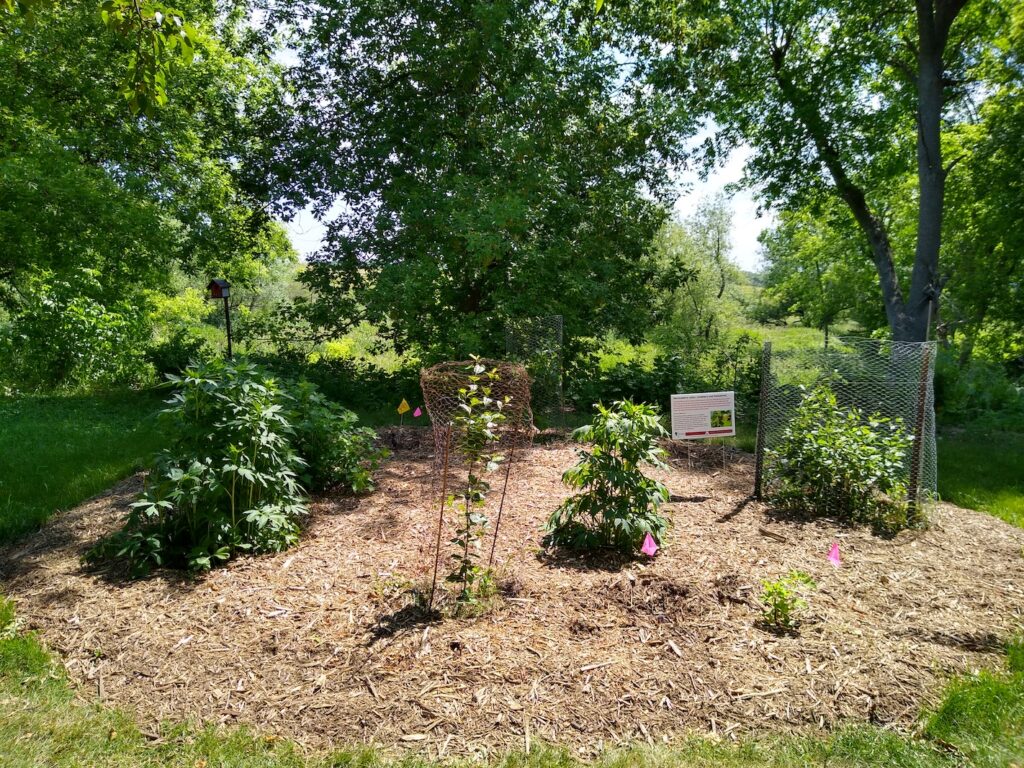
“Food forests incorporate a lot with permaculture design principles,” Saum said, noting that the organization also provides consulting services and educational materials to help people get started. “I’m still learning a lot. How do you plant things together so they can benefit each other? A simple example is we have comfrey planted near our orchard trees. It grows quickly and has a high nutrient density. We chop it down and spread it as a green mulch, and as it breaks down, it feeds the plants around it. It continues to grow, and it blooms and brings pollinators.”
Several volunteers and an AmeriCorps member help with the Luverne site and community outreach.
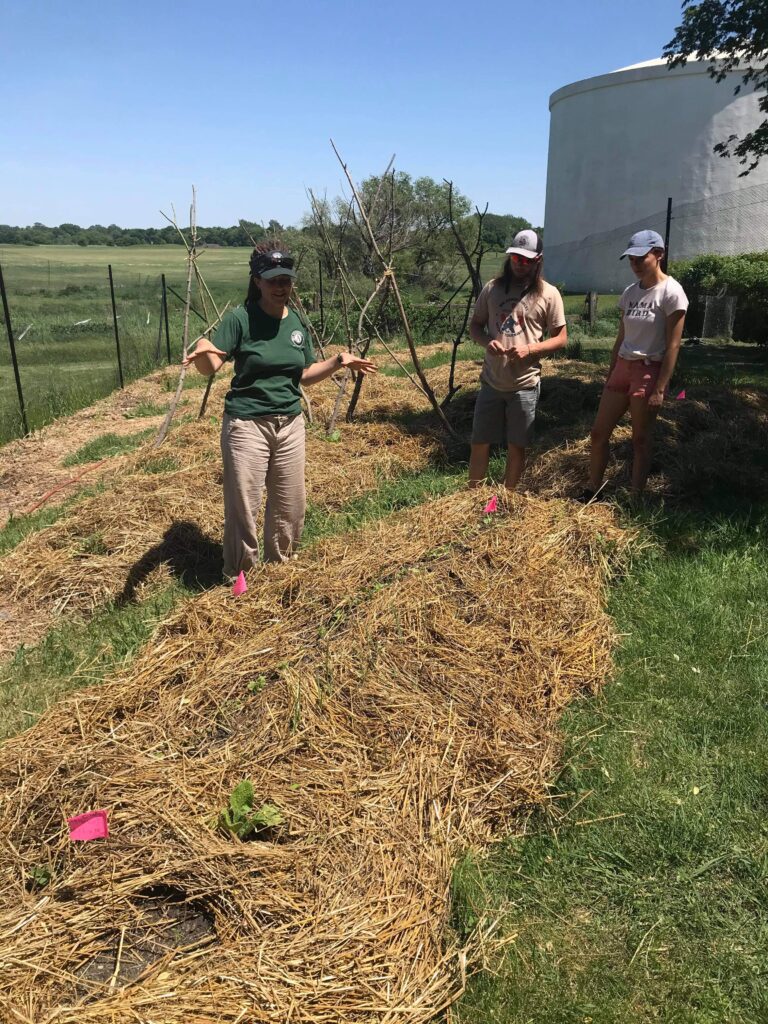
“People are very curious,” Saum said. “I think we are in a moment where people want to talk about plants. Maybe it’s the lingering effects of the pandemic or discussion on food shortages or fragility in our system. People are often surprised at what we can grow here – like hazelnut or different types of berries.”
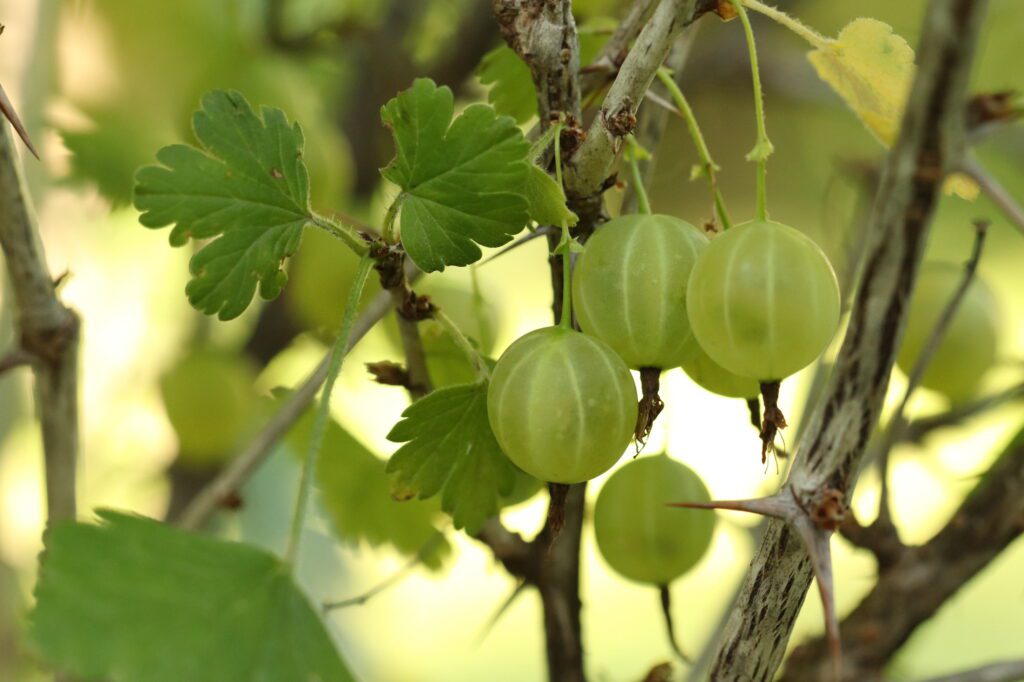
Initially, the organization wanted to manage more sites but since has discovered that the partnership approach – where others manage their own sites – is ideal, Rockman said. “I call us an extension of Extension.”
Saum said the organization is in discussion with several sites to expand the food forest concept.
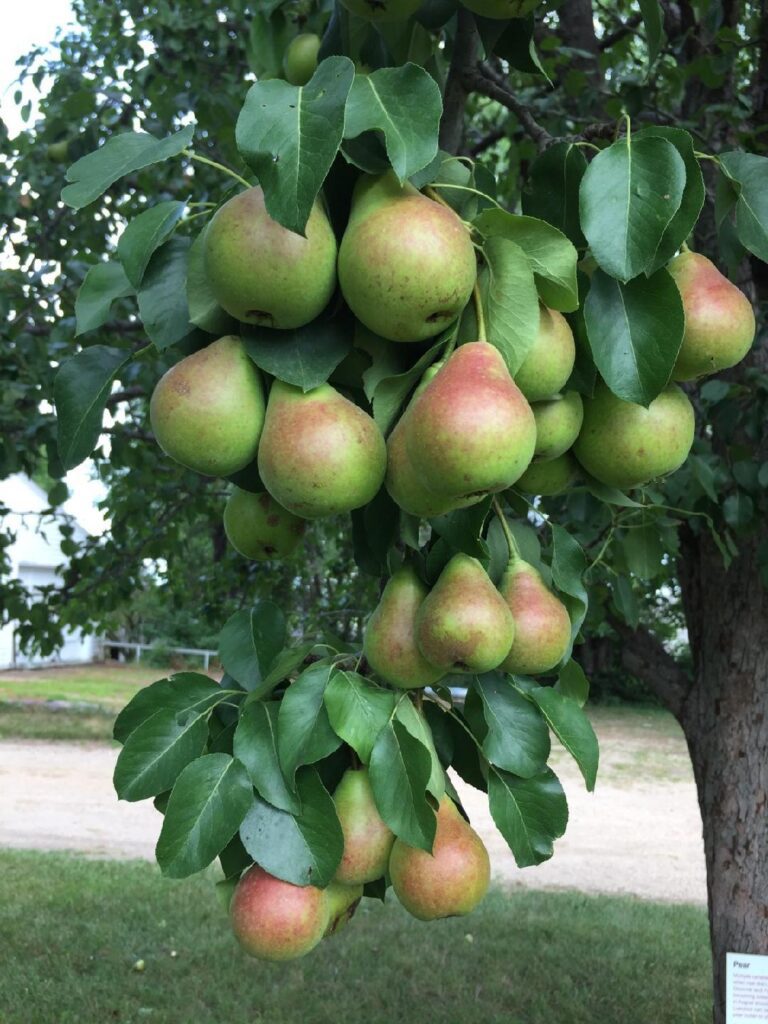
“Our goal is to work in our region,” she said. “We are trying to see where we can partner with existing organizations and green spaces, and how we can encourage people to incorporate edible plants into that. Green spaces are valued, and one of the ways to keep them of value is to have food-producing plants on them.”
Inspiring others
The Project Food Forest site is right on the edge of Luverne. It started as a bit of a whim, but it has taken off, and Rockman’s parents have given their full support, she said. Plans include building more trails on the property, which is open to the public.
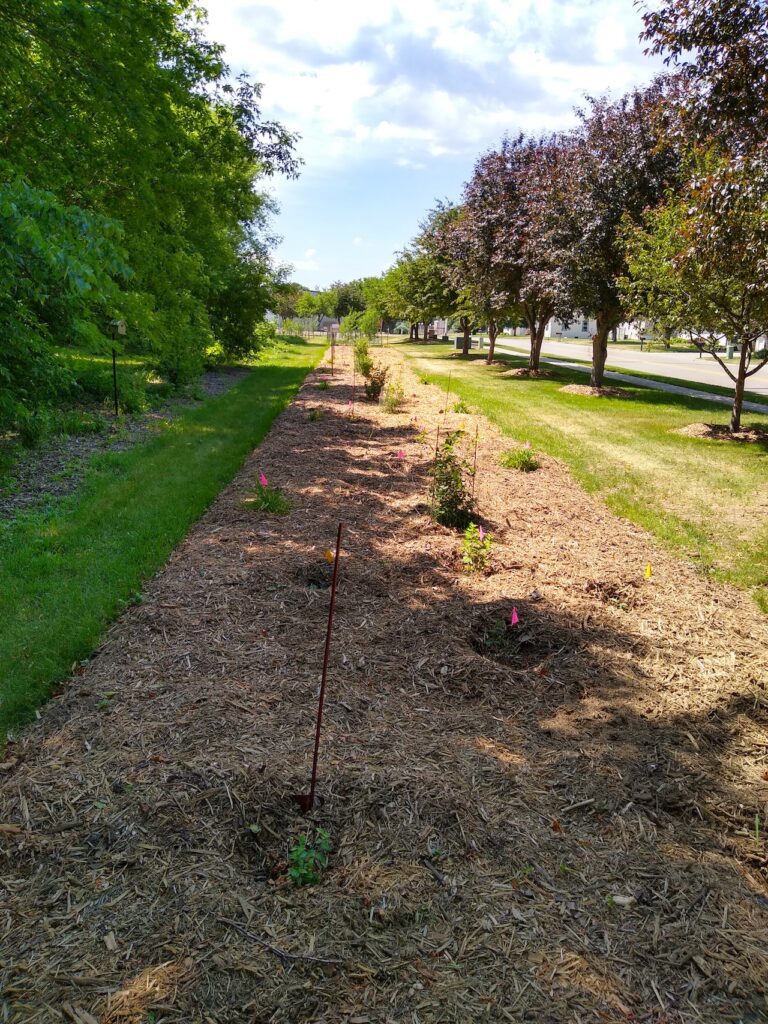
“We live in an agricultural area, but most folks are pretty disconnected from both nature and their food system,” Rockman said. “We knew we wanted this to be community driven and include a variety of minds as to what the space could be and how it could evolve.”
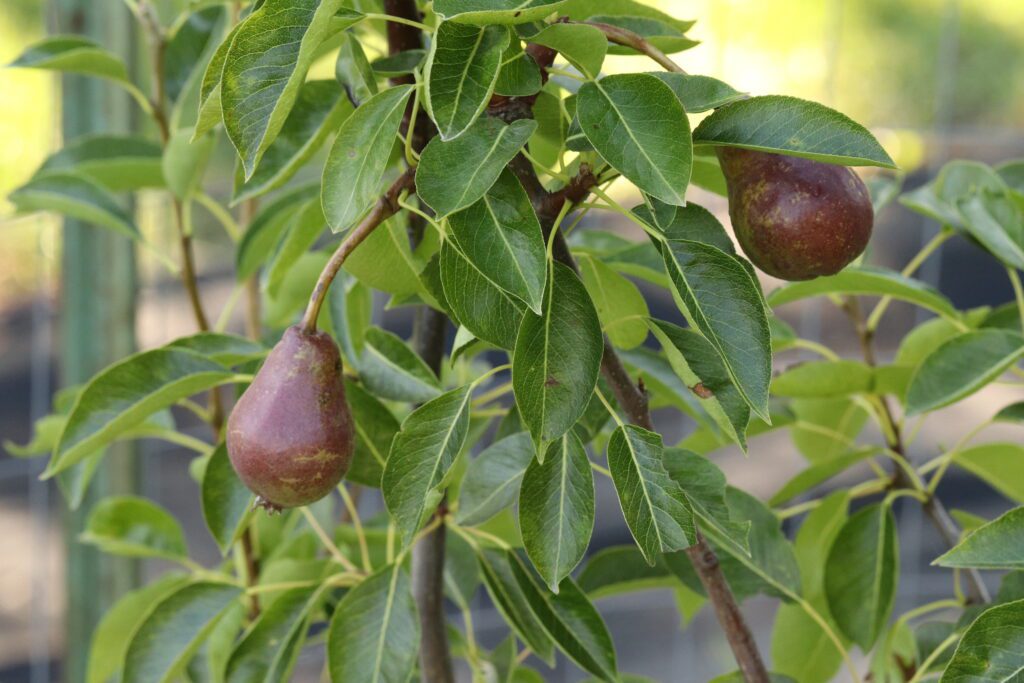
The organization started with trees, shrubs and berry bushes and then added grapes and native plants to boost the prairie restoration project. The location on part of a regional bike trail and on a heavily traveled road at the edge of town helps raise awareness.
“The term food forest is spreading,” Rockman said. “There are a lot of folks who run community spaces who maybe have raised bee gardens, and there might be space on those properties to add perennial planting as well.”
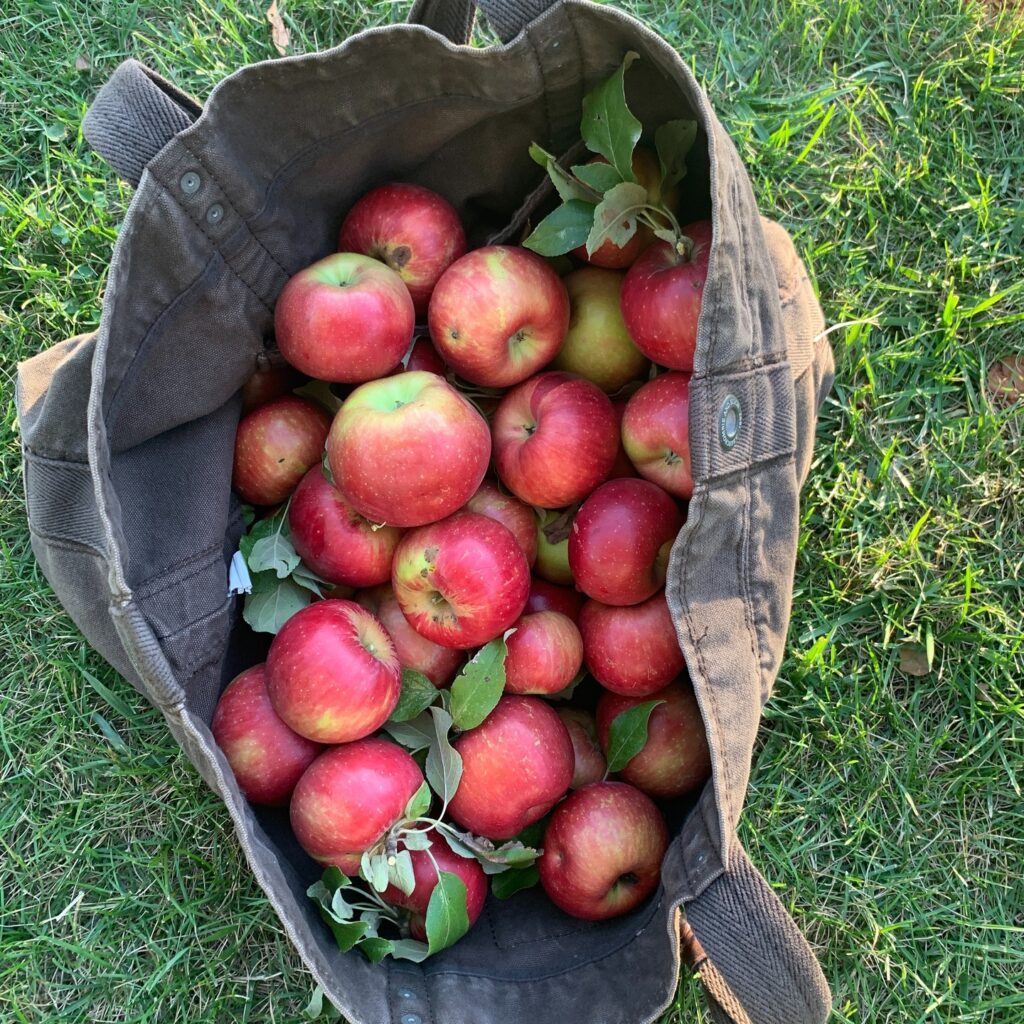
Food forest concepts around the country range from fully public to special event only to some that exclusively grow food to donate to community food pantries. Some are straight up community orchards, where it’s just fruit trees.
In Sioux Falls, that’s what Cherry Rock and Kuehn parks offer.
“A lot of folks don’t know, and it’s not in the main part of the park,” Rockman said. “We want to see the history of the space.”
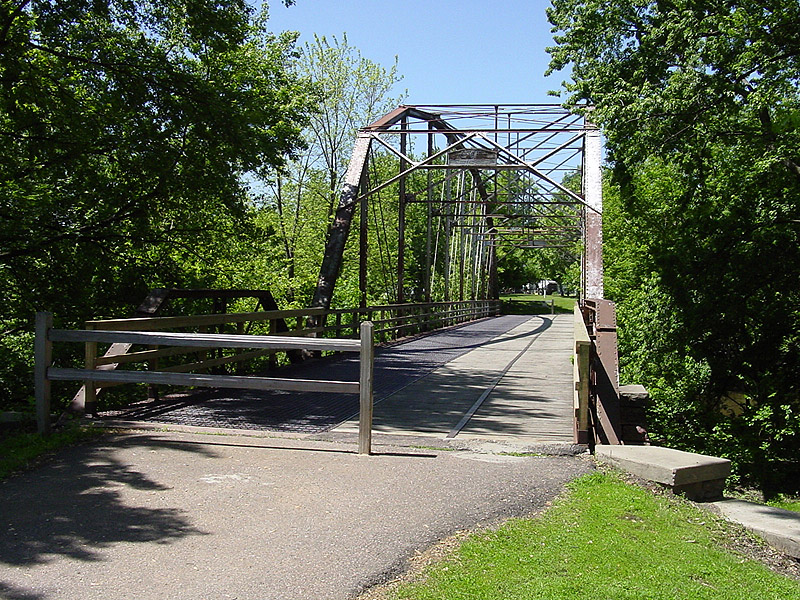
Don Kearney, director of the Sioux Falls Parks & Recreation Department, isn’t sure of the history of the small orchards – apple trees at both Cherry Rock and Kuehn parks.
And while it wasn’t intended as a food forest, people do come pick fruit from time to time. “It’s a first-come, first-served basis,” Kearney said.
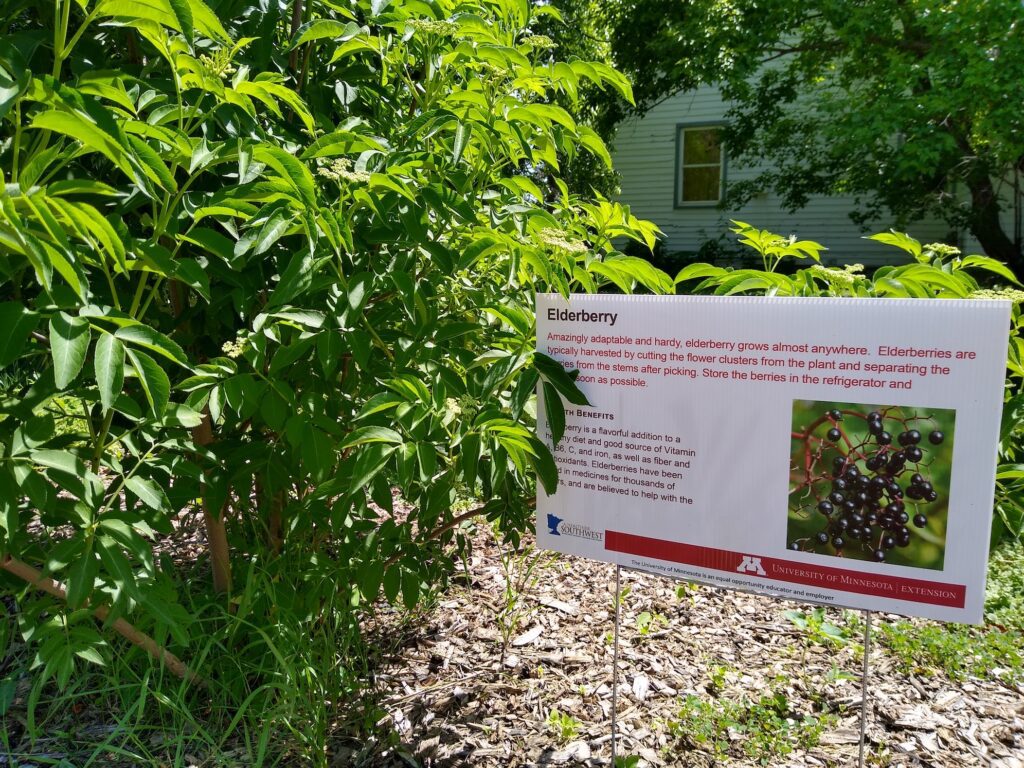
In Luverne, a local business needed to put in a windbreak — and included a row of elderberries, inspired by the work Rockman was doing.
“It’s fun to see momentum. And it’s not like we’re doing anything new. These techniques have been used for centuries; we just kind of quit doing it,” she said.
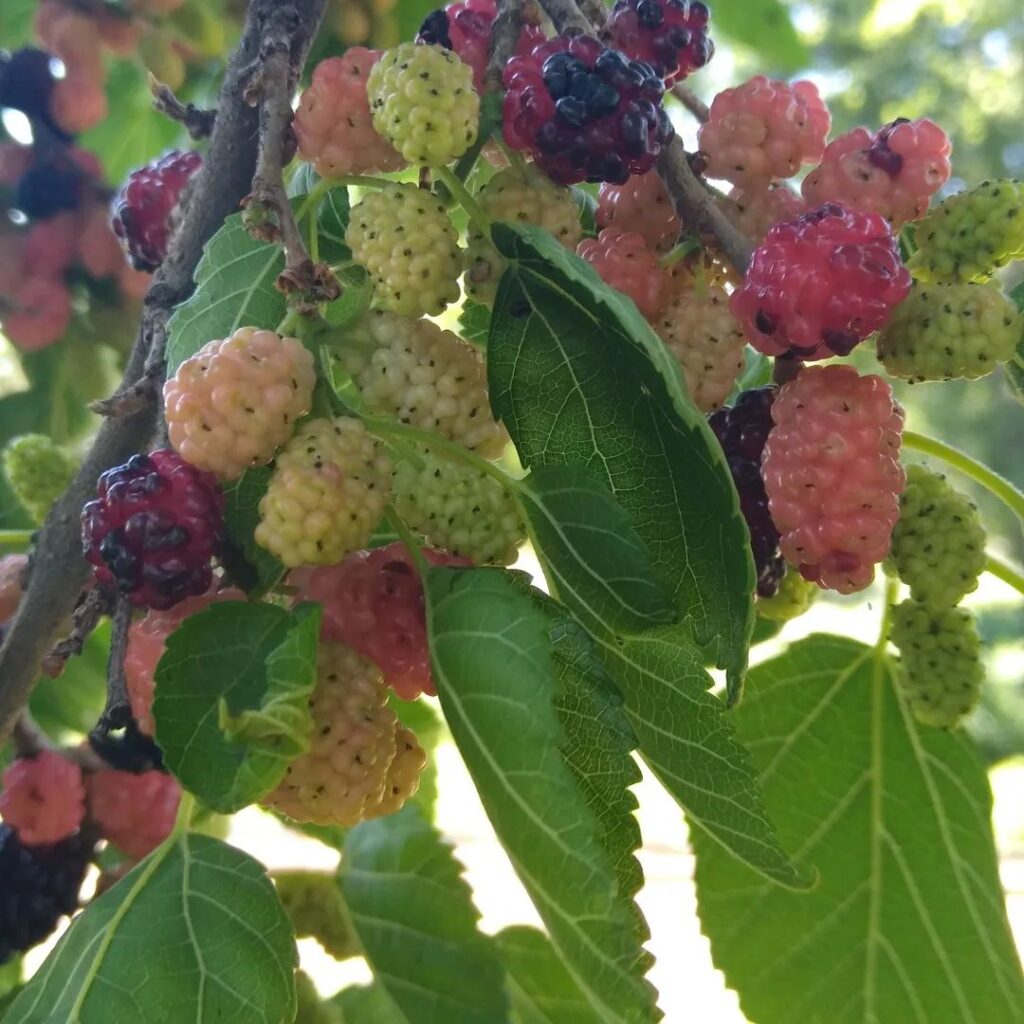
But it’s coming back – in Minnesota, for example, a program called Lawns to Legumes encourages native planting in residential areas.
Sara Wells volunteers at the Luverne site Tuesday evenings. She attended a gardening event in the winter and heard about it. “I was so thrilled to find out there was a project like this right in my hometown,” Wells said.
She loves to garden and has enjoyed learning more about native plants – and her neighbors. “The time spent with other volunteers, like-minded people, is so enjoyable,” Wells said. “There is so much to learn, and Kim is full of knowledge.”
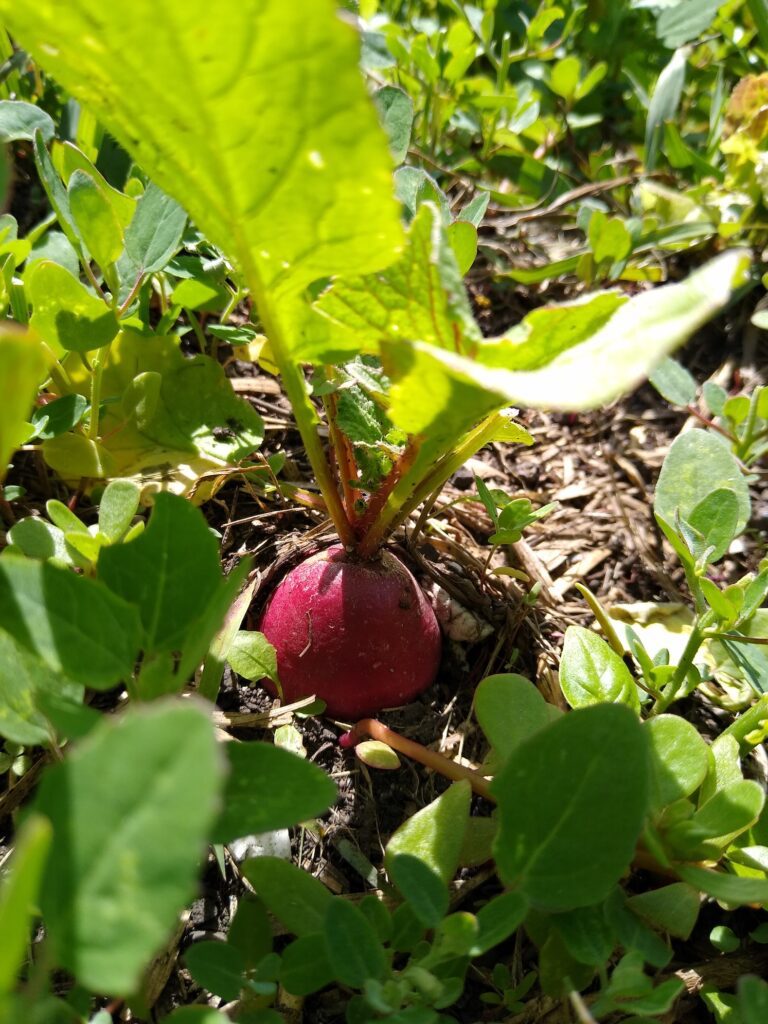
She notes the excitement Rockman brings anytime someone comes to tour or even just to check out the food forest. It’s hard not to be excited by the beautiful property, Wells said. She also notes the repurposed weather vane, antique plow and other art made from agricultural tools scattered throughout the site. “The heritage of the community is tied in through some of the art on display,” she said.
She recalls walking through an intentional garden on the site – one with vegetables, flowers and herbs.
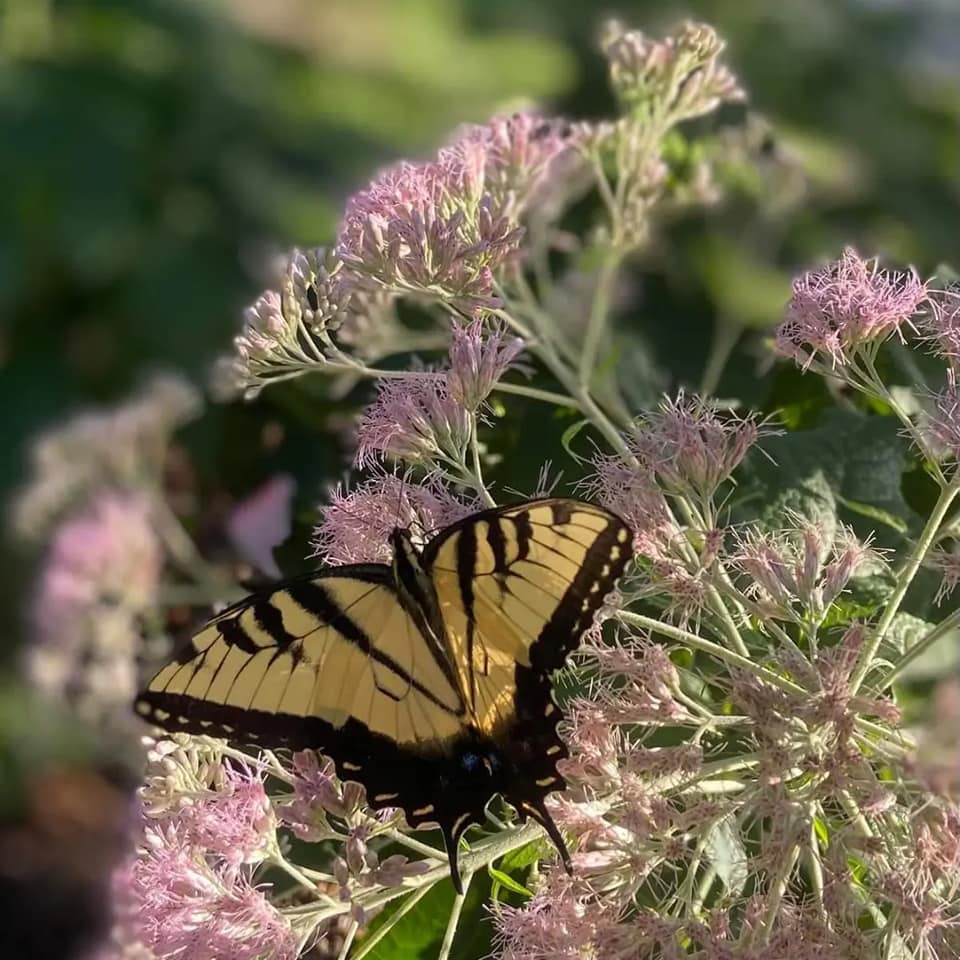
“This one flowering plant was just in full bloom. It was absolutely covered in monarch butterflies,” Wells said. “There were at least two dozen monarch butterflies hanging out on this plant. It’s a good-sized plant, so there was plenty of room. Nature is accessible through this project.”
Next steps
Rockman encourages anyone with an interest to email and reach out.
“If folks are thinking this might be right for them at any scale, we have resources we can send to folks. Or schedule a guided tour. And there are partner organizations that have additional information that can be helpful as well,” Rockman said.
Saum said she’d love to help others find out more.
“My dream is that every neighborhood has free and accessible food,” she said. “That there is this more holistic picture of how we take care of the land and how we take care of each other. That people gather and have communal meals and share the harvest of their garden and pick peaches together.”
She acknowledges it might sound idyllic, but that doesn’t mean it isn’t possible or probable.
“I think there is a way forward and a potential for every neighborhood in Sioux Falls to have a food forest.”
Wells agrees. “People can see what they can do in their own yards,” she said. “Have you ever thought you could plant a fruit tree in your own backyard? We’re doing that.”
Share This Story
Most Recent
Videos


Looking amazing @dtsiouxfalls and @washpav! Thanks to @jpickthorn for capturing an incredible night.
Nov 26

Enjoy this glow headed into Halloween week! 📸: @jpickthorn
Oct 31
Hope you had a wonderful summer weekend and are recharged for the week ahead! 📸: @jpickthorn
Jun 27
Beautiful way to start a week! 📸: @jpickthorn
Jan 10
Favorite flyover of the year! Merry Christmas from our entire @pigeon605news flock. 🎄🐦 📸: @actsofnaturephotography
Dec 24
They definitely deserve to be treated like holiday royalty and they were! ❤️ these scenes from tonight’s lighting celebration at @sanfordhealth Children’s Hospital. 🎄
Dec 1
The holidays are here! Perfect night @dtsiouxfalls
Nov 27
Happy Halloween from @avera_health NICU babies! Link in bio to see more! 🎃
Oct 31
Did you know @dtsiouxfalls is filled with 👻 stories? Link in bio … if you dare 😱
Oct 8
When it comes to kids parties nobody wants to be cookie-cutter. Link in bio for the story on what’s trending.
Sep 28
Want to stay connected to where you live with more stories like this?
Adopt a free virtual “pigeon” to deliver news that will matter to you.
Read More




Are you a little bird with something to share?
Delivering news that matters to you
Years ago, homing pigeons were used to bring us news we needed. Today, your virtual “pigeon” will deliver what you want to know about the place you call home.
All pigeons are free to good homes!
Our Partners