
Don’t let your teeth stop you from savoring holiday meals this season
This paid piece is sponsored by Siouxland Oral & Maxillofacial Surgery.
By Dr. Denis Miller, DDS, MBA
As we head into the Thanksgiving season, we all tend to focus on enjoyable fellowship with friends and family. Being able to share a meal with loved ones seems like a natural plan that we all can do. Though for many of us, the loss of teeth over the years makes participating in this simple but important cultural event a difficult endeavor.

Whether the loss of teeth causes anxiety because of cosmetic concerns (form) or because you can’t chew well (function) or chew with confidence (combination of both form and function) many people turn to dental implants as a solution.
Maybe you have teeth that are hurting you now, and you need to figure out a plan before the family gatherings commence. The No. 1 best thing to do is see your dentist and, if possible, save the teeth with fillings, crowns or roots canals. If that pathway is not possible, then extractions may be the best option before a large infection sets in. Remember, during holidays, there are no truly reliable options for emergency dental care on the weekends or after hours.
Many people have spent a great deal of money maintaining their front teeth because of the cosmetic benefits of a nice smile but have lost all their posterior teeth. Unfortunately, this scenario eventually results in the loss of all teeth because front teeth are not strong enough to chew all food, and they eventually fracture and need to be removed.
The posterior teeth protect the front teeth and, in the past, partial dentures solved this looming problem. Partials still do fill a role in halting/treating this issue. Over time, however, the bone under the partial denture slowly dissolves because of consistent pressure, resulting in ill-fitting partial dentures. Nevertheless, partial dentures now can be augmented or even entirely replaced by dental implants.
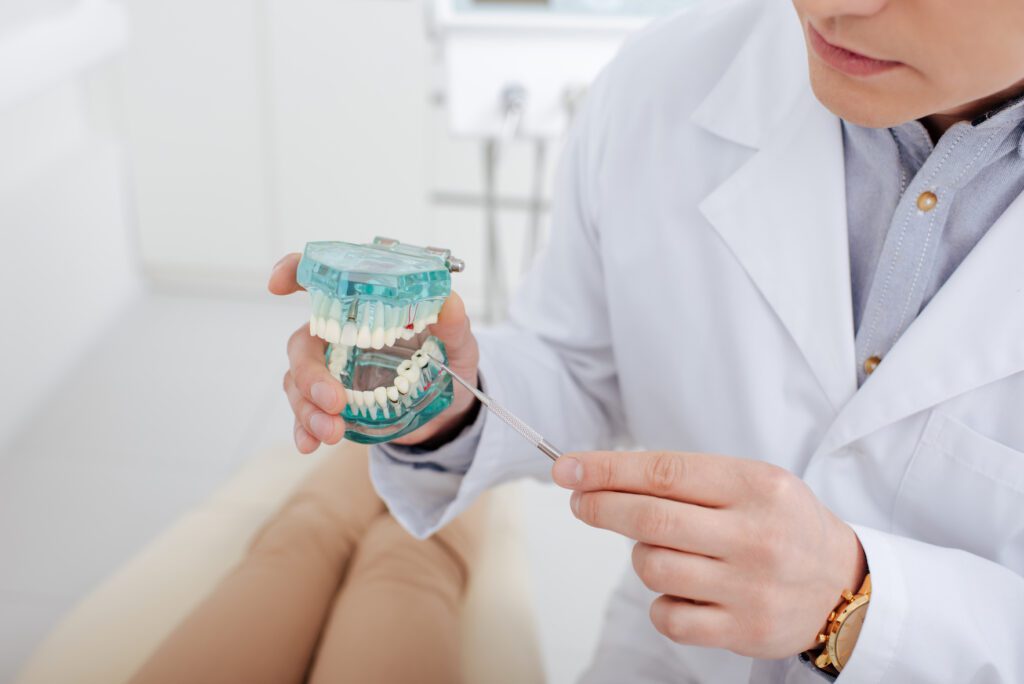
When thinking about dental implants in the posterior portion of the mouth, we need to talk about bone. In the lower jaw (mandible), there is a nerve within the bone that goes to your lip to provide sensation, and as the bone dissolves under the denture, you get closer and closer to the nerve itself, until eventually there is not enough bone to place the implants. In the upper jaw (maxilla), the bone dissolves until you get closer and closer to your sinuses. Yet again, you encounter not having enough bone to place an implant. Knowing that this process occurs over years in most people allows one to plan for the time when you will benefit from dental implants before it’s too late.
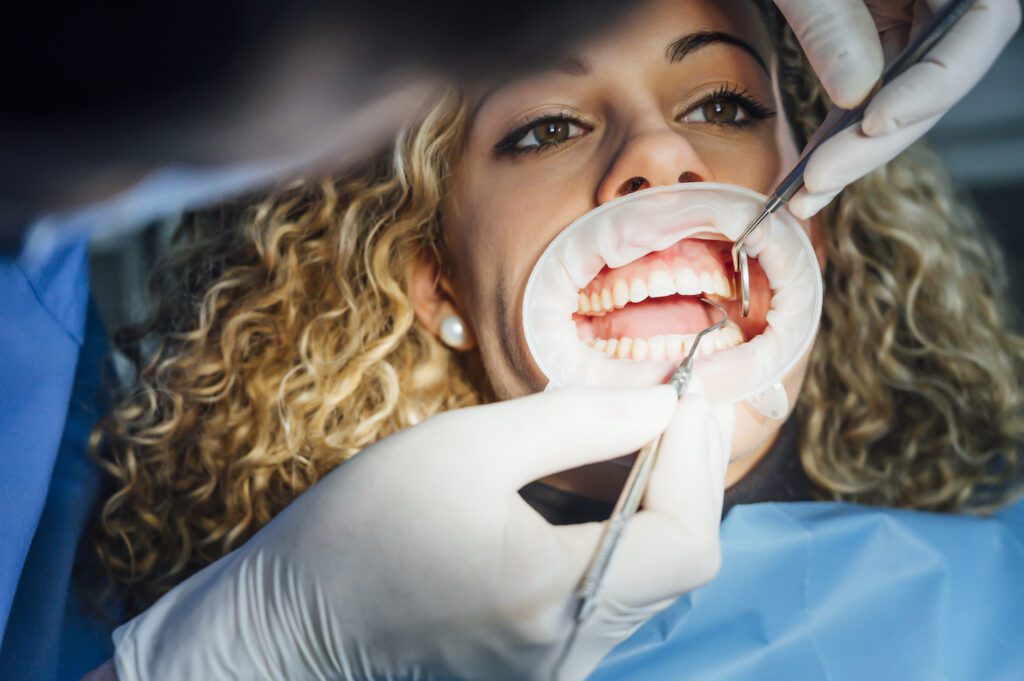
Let’s back up a bit to the time when the posterior teeth could have been saved by root canals and crowns or even to the point when that was not possible, and they needed to be removed. The primary approach that truly will benefit the patient is to NOT remove excess bone to remove the teeth. So many times, the treating doctor may take the easy way out and take away too much bone to remove the tooth/teeth in question. This results in a troublesome defect that makes the bony support for future implants very narrow. We oftentimes can get around this problem with bone grafting, but it’s not always as successful as one would think in the back of the mouth. Another option is “mini-implants,” but these do not do well over time when compared with standard implants.
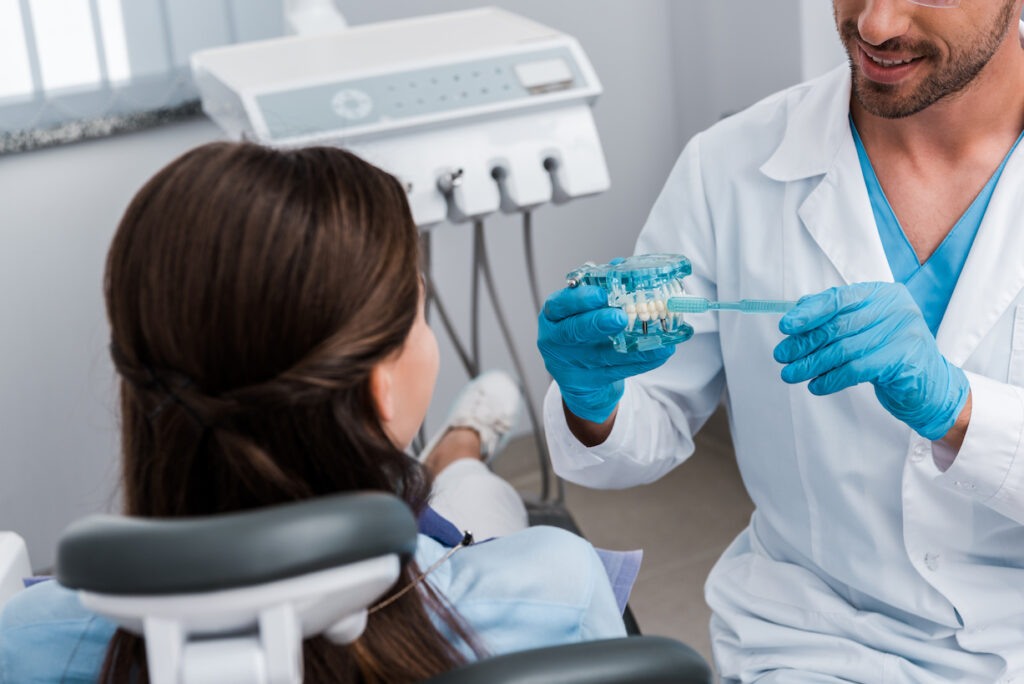
Currently, there are all kinds of claims on social media and even in the news regarding these topics. One notion, however, is firmly tried and true: common sense. If you need orthopedic knee surgery, you will ask an orthopedic surgeon to do the surgery. If you need an angioplasty, you will ask your cardiologist to help you out. So naturally, if you need oral surgery for tooth extraction, dental implants or grafting, then find an oral surgeon to perform that surgery. Oral and maxillofacial surgeons have completed four to six extra years of training AFTER dental school to excel at surgery and provide the best surgical/anesthetic experience to patients. This is not an opinion. It is fact.
The No. 1 best way to know if you are seeing a true oral surgeon is to ask to see their board certification. A trained oral surgeon will have a certificate that says “Diplomate of the American Board of Oral & Maxillofacial Surgery.” That document is your primary guarantee that the surgeon has gone through an accredited specialty residency training program to give you the best possible outcome. Anything else is simply not the real deal.
Please look for our future monthly articles covering a variety of dental and surgical topics.
To learn more about Siouxland Oral & Maxillofacial Surgery, go to siouxlandoralsurgery.com or call us at 800-952-0066 to schedule your appointment today!
Share This Story
Most Recent
Videos



Looking amazing @dtsiouxfalls and @washpav! Thanks to @jpickthorn for capturing an incredible night.
Nov 26

Enjoy this glow headed into Halloween week! 📸: @jpickthorn
Oct 31
Hope you had a wonderful summer weekend and are recharged for the week ahead! 📸: @jpickthorn
Jun 27
Beautiful way to start a week! 📸: @jpickthorn
Jan 10
Favorite flyover of the year! Merry Christmas from our entire @pigeon605news flock. 🎄🐦 📸: @actsofnaturephotography
Dec 24
They definitely deserve to be treated like holiday royalty and they were! ❤️ these scenes from tonight’s lighting celebration at @sanfordhealth Children’s Hospital. 🎄
Dec 1
The holidays are here! Perfect night @dtsiouxfalls
Nov 27
Happy Halloween from @avera_health NICU babies! Link in bio to see more! 🎃
Oct 31
Did you know @dtsiouxfalls is filled with 👻 stories? Link in bio … if you dare 😱
Oct 8
When it comes to kids parties nobody wants to be cookie-cutter. Link in bio for the story on what’s trending.
Sep 28
Want to stay connected to where you live with more stories like this?
Adopt a free virtual “pigeon” to deliver news that will matter to you.




Are you a little bird with something to share?

Delivering news that matters to you
Years ago, homing pigeons were used to bring us news we needed. Today, your virtual “pigeon” will deliver what you want to know about the place you call home.
All pigeons are free to good homes!
Our Partners