
Different vaccines produce different results: Here’s why
This piece is sponsored by Sanford Health.
Vaccines are a powerful tool when it comes to keeping us safe, but not all vaccines work the same way.
If you’ve wondered why the measles vaccine offers lifelong protection after two doses, but you must get the flu vaccine annually, or you’ve wondered why you still got the flu after getting your flu vaccine, you’re not alone.
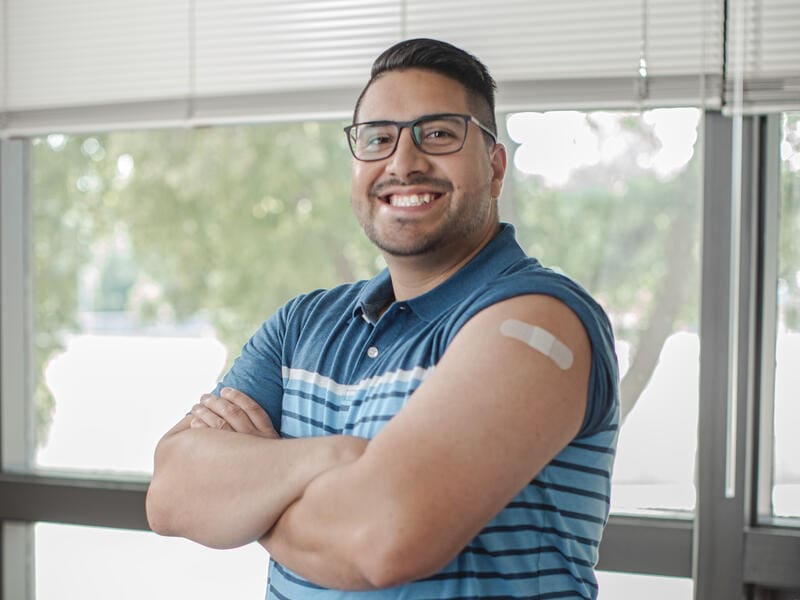
According to Dr. Avish Nagpal, an infectious disease specialist at Sanford Health, how a vaccine works depends on multiple factors.
What do vaccines do?
“The purpose of a vaccine is to make your body recognize the virus,” Nagpal said. “But instead of exposing you to the real live virus, which can cause disease, we expose patients to a nonfunctioning virus or a part of the virus, which is generally a protein on the surface of the virus that helps it attach to your body’s tissues.”
This surface protein acts like a “face ID,” helping your immune system recognize and respond quickly if the real virus ever shows up. That recognition is key to preventing infection or reducing its severity.
Why some vaccines offer lifelong protection and others don’t
Vaccines train your immune system to recognize and fight off viruses, but not all viruses behave the same way. That’s why some vaccines offer lifelong protection, while others need to be updated regularly.
The difference lies in how quickly the virus mutates.
Some viruses, like measles and polio, are genetically stable and have more complex DNA, which means they don’t change much over time. A vaccine developed decades ago would still work effectively today. For example, the measles vaccine, first introduced in the 1960s, remains extremely effective at preventing disease.
Other viruses, like influenza and COVID-19, mutate rapidly because of their short, segmented genetic material.
“These viruses change their surface proteins frequently,” Nagpal said. “That’s why we have to redesign the flu vaccine every year and update the COVID vaccine to match circulating strains.”
Vaccine misconceptions
A common misunderstanding is that if you get sick after being vaccinated, the vaccine didn’t work. But that’s not the case.
Some vaccines can prevent infection entirely, while others greatly help reduce the severity of illness. Both vaccine types are critically important.
“Even though the vaccine may not prevent you from the disease itself, it still prevents you from getting too sick. You might recover in two days instead of two weeks. You don’t get hospitalized. You don’t go into respiratory failure. You don’t need to be put on a vent,” Nagpal said.
Age and health may play a role in how well vaccines work
Certain factors can cause a lower immune response to vaccines, leading to breakthrough infections. These include:
- People with autoimmune diseases such as lupus or rheumatoid arthritis for which patients are frequently on long-term immunosuppressive medications.
- People receiving chemotherapy.
- Older adults and infants, whose immune systems may not be fully developed or may have declined with age.
Additionally, the higher the dose of the virus you are exposed to, the higher the risk of infection.
“If your child is sick and you are comforting them or letting them sleep with you, you’re getting exposed to heavy doses of virus. Your risk of acquiring the infection is high,” Nagpal said. “If someone sneezes on the street and you walk past, you were exposed to a lower dose of the viruses. A vaccine might be strong enough to protect you against low doses, but your immune system might have a harder time fighting off a high dose of infection, even with a vaccine.”
Vaccines are proven to work as designed
“I remember very distinctly when COVID-19 initially hit, our entire hospital building was full of COVID-19 patients and no one else at its peak. Now, we have a vaccine, and it has reduced the severity of the disease. People realize that yes, they may get infected with COVID-19, but they’ll recover in no time,” Nagpal said.
People may underestimate the benefit of vaccination because there’s a chance they’ll still get sick with the virus. What’s often overlooked is how vaccines help reduce the severity or duration of illness and lower the risk of hospitalization and death.
“Even if you do get sick, vaccination can help you recover more quickly, or you may experience less-severe symptoms,” Nagpal said. “This also means that the number of people who are at risk of catching an infection from you is reduced too.”
Protecting those around you from getting sick is a valuable benefit to getting vaccinated.
“If you have newborn children or elderly relatives in your family who you visit often, they’ll benefit from you getting your vaccines,” Nagpal said. “If you don’t get sick, you can’t pass on the infection. If you do get sick but recover quickly, you’ll stop spreading the infection earlier.”
Learn more
Share This Story
Most Recent
Videos



Looking amazing @dtsiouxfalls and @washpav! Thanks to @jpickthorn for capturing an incredible night.
Nov 26

Enjoy this glow headed into Halloween week! 📸: @jpickthorn
Oct 31
Hope you had a wonderful summer weekend and are recharged for the week ahead! 📸: @jpickthorn
Jun 27
Beautiful way to start a week! 📸: @jpickthorn
Jan 10
Favorite flyover of the year! Merry Christmas from our entire @pigeon605news flock. 🎄🐦 📸: @actsofnaturephotography
Dec 24
They definitely deserve to be treated like holiday royalty and they were! ❤️ these scenes from tonight’s lighting celebration at @sanfordhealth Children’s Hospital. 🎄
Dec 1
The holidays are here! Perfect night @dtsiouxfalls
Nov 27
Happy Halloween from @avera_health NICU babies! Link in bio to see more! 🎃
Oct 31
Did you know @dtsiouxfalls is filled with 👻 stories? Link in bio … if you dare 😱
Oct 8
When it comes to kids parties nobody wants to be cookie-cutter. Link in bio for the story on what’s trending.
Sep 28
Want to stay connected to where you live with more stories like this?
Adopt a free virtual “pigeon” to deliver news that will matter to you.
Read More



Are you a little bird with something to share?
Delivering news that matters to you
Years ago, homing pigeons were used to bring us news we needed. Today, your virtual “pigeon” will deliver what you want to know about the place you call home.
All pigeons are free to good homes!
Our Partners