

Cops, kids and camp: A week that changed young lives
By Steve Young, for Pigeon 605
So here’s the question: How can a bluegill tugging on the end of a 12-year-old’s fishing line potentially change the trajectory of that child’s life?
Or a game of tug-of-war? Or an act of kindness among kids who barely know each other? Or, perhaps most importantly, a connection between a child and a camp counselor who just happens to be a cop?
All good questions. And in fact, all offering the promise of life-changing answers that could benefit the community and the world for decades to come, thanks to a new area venture called Camp POSTCARD.
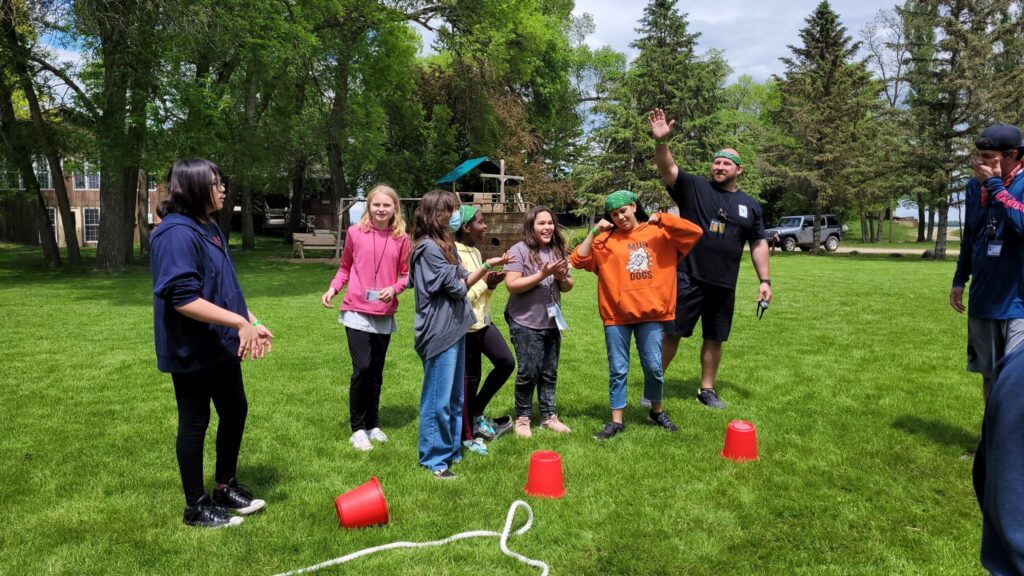
POSTCARD is an acronym for Police Officers Striving to Create and Reinforce Dreams. Launched this year after three years of development in the Sioux Falls area, the joint venture among Volunteers of America-Dakotas, the Sioux Falls Police Department and the Minnehaha County Sheriff’s Department turns law enforcement into camp counselors and pairs them with children who face a wide variety of challenges in their lives.
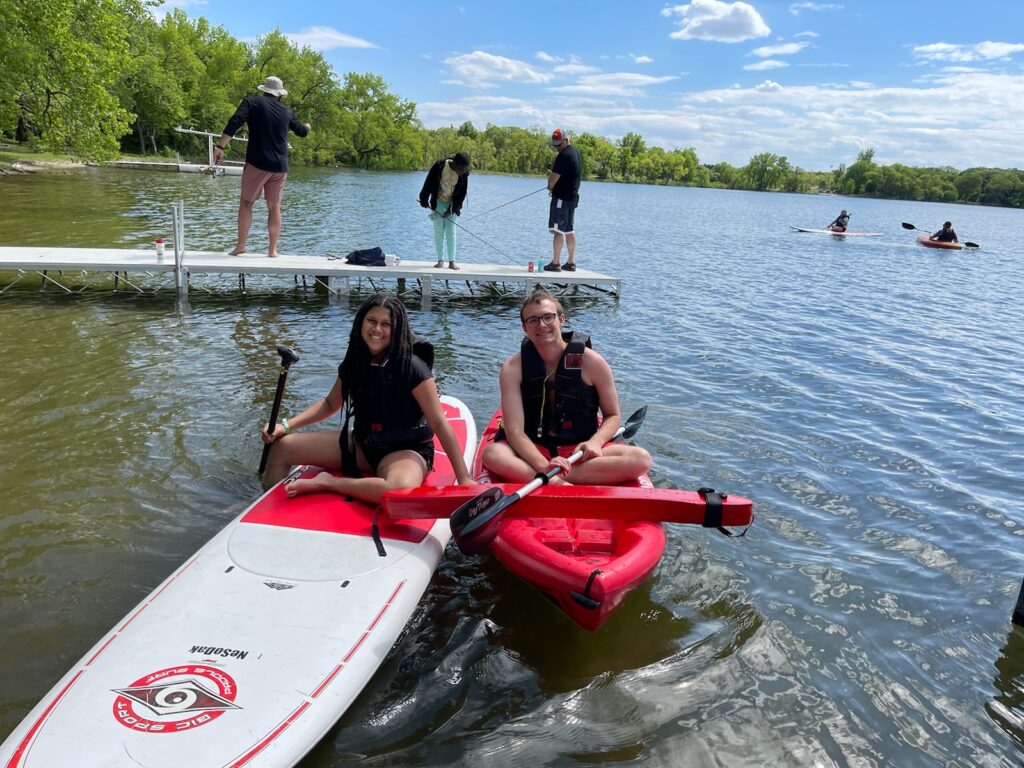
From June 5-10, a group of 14 police officers, one sheriff’s deputy and 36 boys and girls all heading into seventh grade this fall journeyed to the NeSoDak Camp on Lake Enemy Swim near Waubay. The children, nominated for the experience by resource officers and principals at their respective middle schools, didn’t have to pay a dime to go. VOA funded it through donations.
These are kids who can benefit from a spotlight, a helping hand or a friend. Some know hunger more than others. Some have behavioral issues. Some have been bullied. And some are bright, smart children who just haven’t had a chance to shine in leadership or other roles at their schools.
“Let’s just say they’re all from a variety of experiences and socioeconomic backgrounds,” said Lt. Andrew Siebenborn, a camp counselor and Sioux Falls policeman. “For some of them, they’re really at the proverbial crossroads of life, of saying, ‘Do I want to be really good at a positive career, or do I want to be really good at going down a very bad path where I can have future contact with law enforcement?’ They’ve all got amazing talents; it’s just where they choose to put their efforts.”
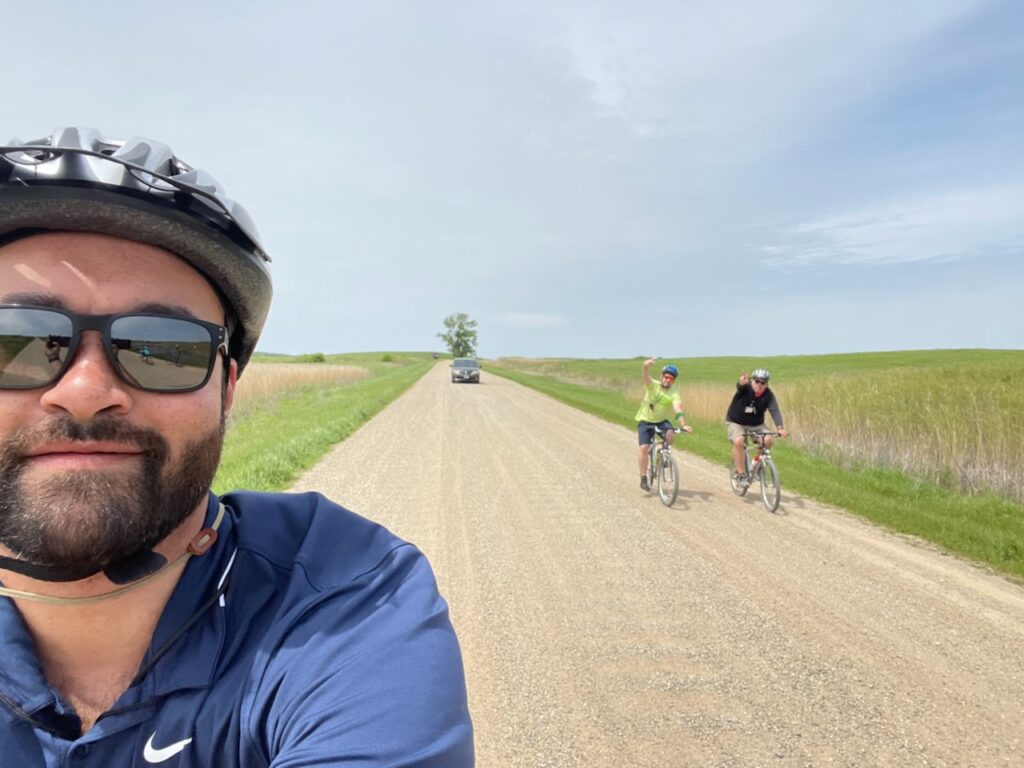
At Camp POSTCARD, they put their efforts into fun, into fishing, canoeing, water boards, arts and crafts, basketball, football, swimming, tug-of-war contests and more. They learned some things too. During one day dedicated to demonstrations, Game, Fish and Parks staff came and brought a mobile aquarium. The Division of Criminal Investigation talked about online safety. The Forestry Service discussed tree identification. The South Dakota Highway Patrol brought in a rollover vehicle and had a canine demonstration. And the Sioux Falls Police Department shared about its work.
The demonstrations were excellent, said Tracie Phelps, the Camp POSTCARD and community outreach coordinator for VOA. “But the main point of this camp,” she added, “was really getting the kids to build trusting relationships with law enforcement so that they have a trusted place to go if they ever need to.”
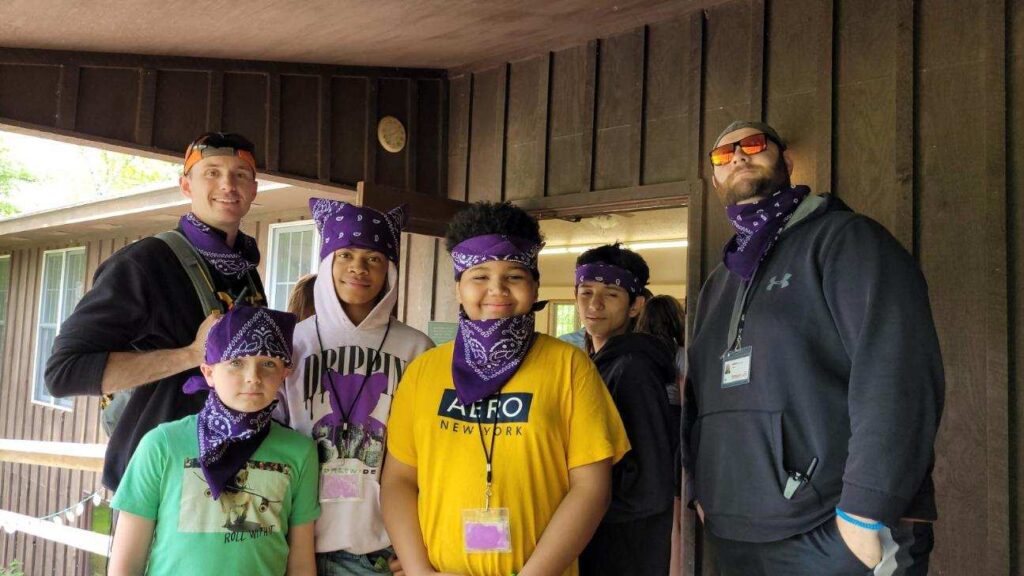
Tearing down stereotypes and negative attitudes about law enforcement was a significant focus of the camp. Though the kids were told early on that their counselors worked in law enforcement, many quickly forgot that in an environment where there were no uniforms. It wasn’t uncommon for a child to ask their counselor repeatedly, “What exactly is it you do?”
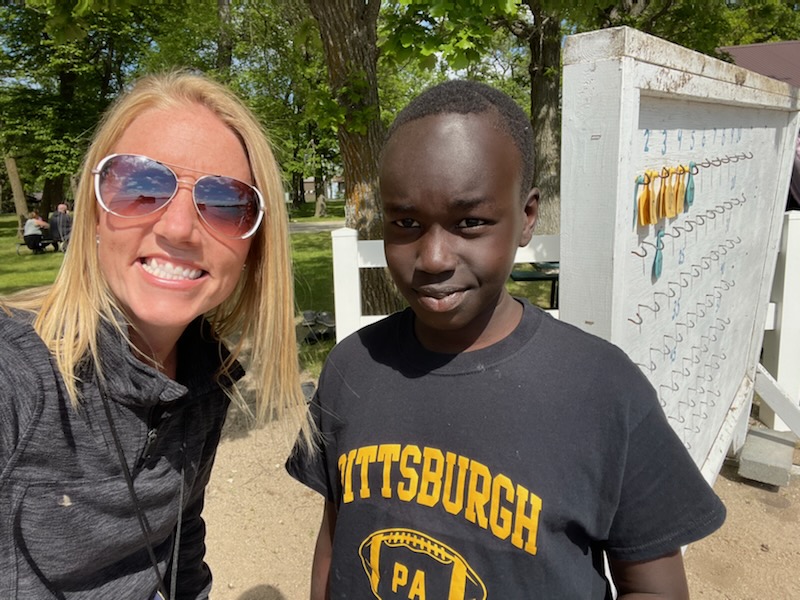
“Kids would tell me: ‘You’re too cool. You’re too normal to be a police officer,’” Officer Isaac Anderson said.
That coolness enabled powerful, poignant conversations. Kids sharing about struggles going on at home, in school or in their lives. One of the campers told a counselor how nice it was to get three meals a day, Siebenborn said, “which just breaks your heart … because you know he had never eaten three meals a day before.”
Anderson said one his campers thanked him for simply listening and asking questions. “He said he really didn’t have a lot of people listening, so ‘thank you,’” Anderson recalled. “I thought that was pretty profound for 12 years old.”
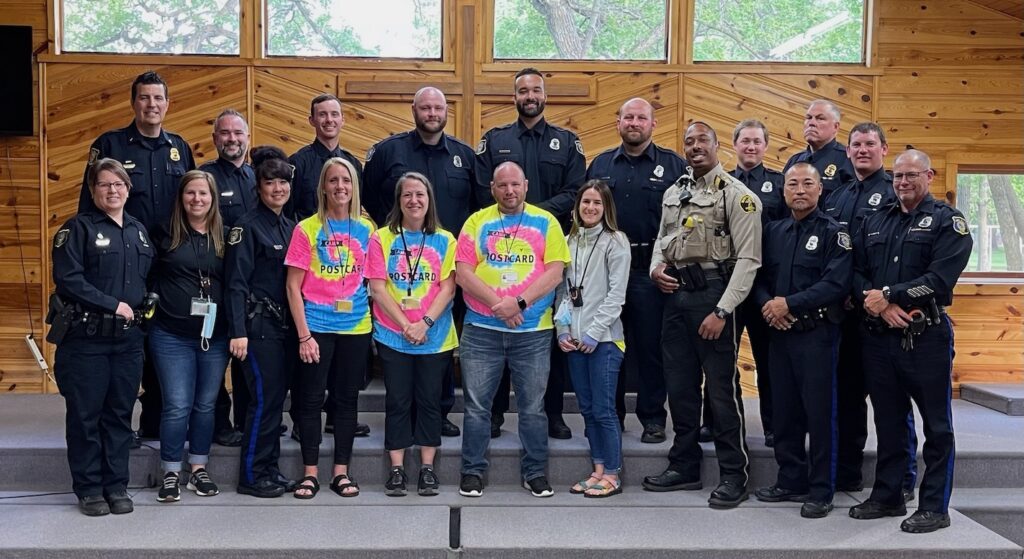
Along with their counselors, the youth also developed trust with each other as well. Camp organizers intertwined a curriculum called Cowboy Ethics-Be Somebody into the games and activities. The campers were encouraged to learn about and follow the Code of the West: 10 principles to live by. Things like start what you finish. Talk less and say more. Live each day with courage.
There was a game they played called Minefield, where one camper had to lead a blindfolded participant through a minefield course by voice only. To make it more difficult, staff would move the so-called mines around to make the challenge more difficult.
Afterward, they would discuss how life can be like a minefield and how challenges constantly come out of nowhere, Phelps said.
“All sorts of things can pop up and throw your world out of whack that you can’t control,” she said. “But you can always control your attitude about what happens. You can still work through the rest of your day and whatever problems are in front of you with courage and not let it get you down.”
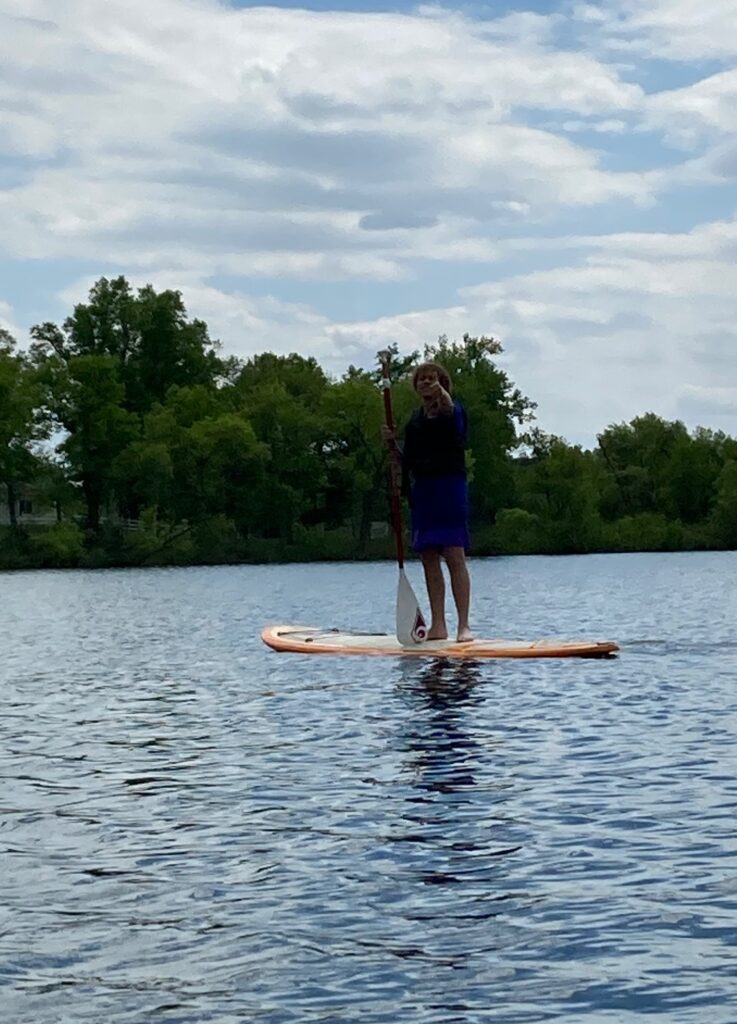
Sioux Falls Police Lt. Robert Forster took some campers fishing one day, and they were catching very little, just some small sunfish. The next day, the haul was much better, the fish bigger. And one of the campers came to believe there actually were fish in that lake, despite their poor success the day before.
“I said: ‘Yeah, there are. We just have to be patient. Being patient is part of your life because you don’t get everything you want right away. You have to take some time and put some work into it,’” Forster said. “And one of the kids said, ‘I never thought of it like that.’ To hear a 12-year-old say that, that makes an impact, I think.”
Parents who sent their children off to the camp said they came home excited and energized. Like a number of the kids, Julie Beaner’s 13-year-old daughter, Hadley, wasn’t sure she even wanted to go the day they were supposed to get on the bus to head north. In fact, she called her mother from the VOA parking lot in Sioux Falls and told her to come get her.
“So I was on my way,” Beaner recalled, “and then she called again and said, ‘No, I’m going to stay.’ It seems a school resource officer had introduced her to a fellow camper, and all was good then.”
Hadley, like the others, was glad she stayed. She had a great time at camp, her mother said. And Charity Penning said her 12-year-old son, Richard, “had a blast.”
It was a changed boy that came home to her, Penning said. “He was so happy,” she said. “And he actually came and gave me a hug. Usually, he doesn’t.”
For Hadley, who dreams of one day being an FBI agent, the camp reinforced in her ambitions that other students had scoffed at. She had been belittled at school by classmates who believed all police had bad reputations and were racist to minorities. She must be racist, too, they told her.
“She really took a lot of heat for it this year, but she stood up for herself,” her mother said. “And now, just being at camp confirmed to her what she wants to do.”
The growth Hadley and Richard experienced was not isolated. Officers said they witnessed multiple transformational moments throughout the week.
Forster talked about two campers he counseled from lower socioeconomic backgrounds and another who had a behavior issue. Though there were struggles at first, the three campers grew together and bonded as a team during the week, Forster said. And toward the end, the boy with the behavior issue was able to secure some new clothing that the VOA had provided and present it to his cabin mates who had less.
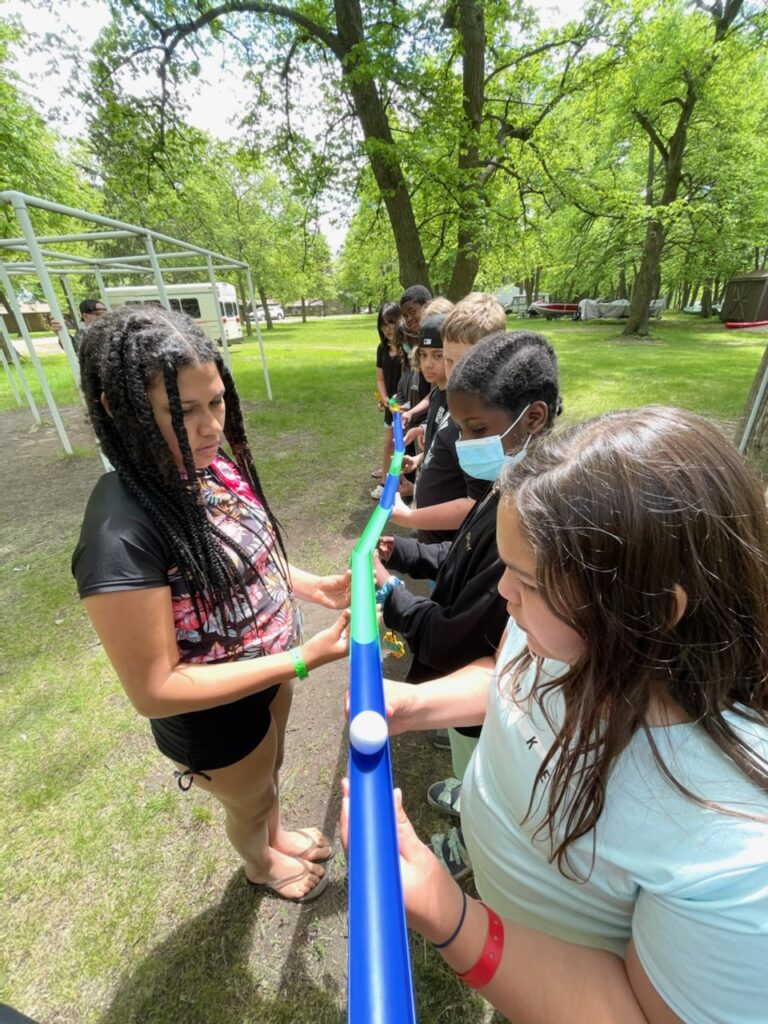
“To see him go gather some things together in a bag and bring them to those boys and say, ‘Hey, you guys should take this home,’ that was heart-warming because he could see that these guys didn’t have a lot,” Forster said. “And to also see those kids who didn’t have lot … really appreciate what was there for them … really touched you.”
So here’s the question now: How realistic is it to think that this camp changed lives? And beyond that, what happens to these kids a month from now, a year from now? How will they keep it going?
One way is through surveys and assessments, Phelps said. Both officers and campers filled out surveys pre-camp and another post-camp as a way to see if opinions about trusting law enforcement changed. “Then, we’ll follow up with the kids and have them fill those out at three months and six months post-camp to see if those attitudes and changes stick with them or not,” she said.
There are reunions planned every six months to bring the children back together. Many of them already have exchanged phone numbers with each other to keep their connections going. And Sarah Hanson, managing director of children, youth and families for VOA, said many of the counselors at the camp are resource officers at the schools these children attend.
“They’re going to have continued interactions with these youth in school throughout the school year,” Hanson said. “So if any of these kids are having trouble at school, the officers can remind them ‘Well, remember at camp how you learned about when you make a promise, you keep it? Or take pride in your work?’ There are some built-in opportunities for continued connections.”
Someday, when they’re in high school, the campers will have the opportunity to return to camp as junior mentors. If they do, the numbers most certainly will be bigger as VOA and law enforcement work to increase camp participation.
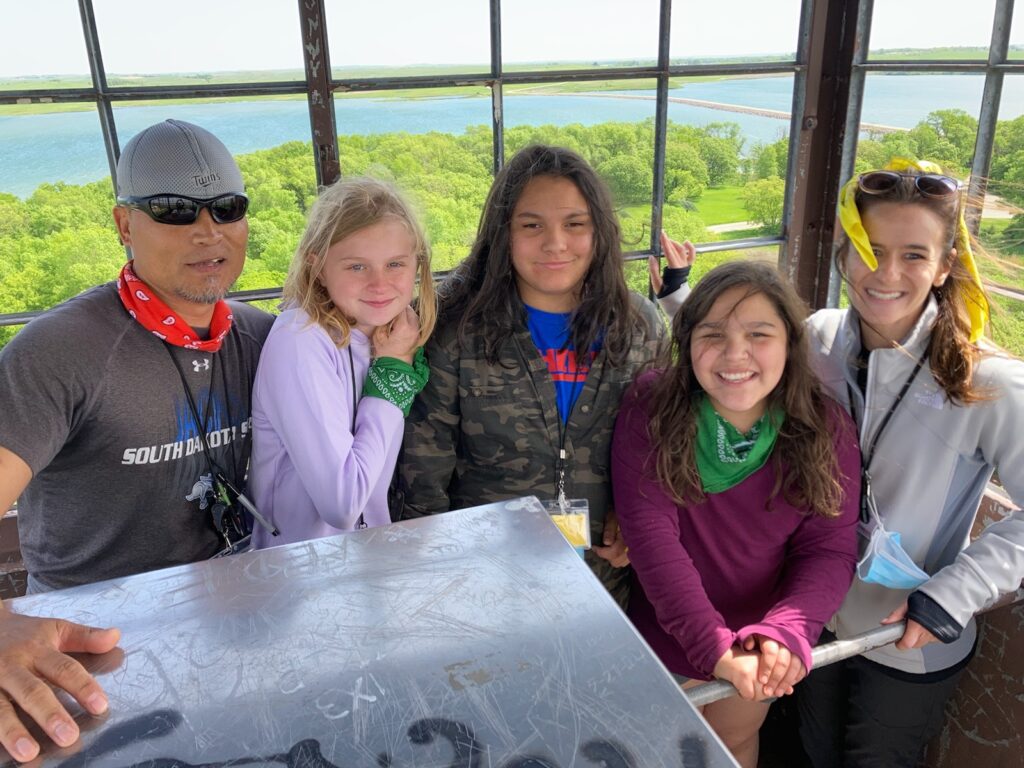
In the meantime, as they settle back into their lives in and around Sioux Falls, giddy about the experience yet emotionally spent by all the give and take that transpired over six days, the law enforcement participants in particular insist that they have been touched profoundly by this experience. And they believe the community and region will be too.
“In talking with several of the VOA members, I think most of us recognize and truly believe that this is going to provide some generational change not only for these families, but also our community, through these kids, wherever life ends up taking them,” Siebenborn said.
“I’ve told people this is the hardest assignment I’ve ever done in my career, and not in a negative way. You’re so invested in these kids. You hear all the things they tell you, and sure, after awhile, you hear so much that it can wear you down. But although I left camp with my gas tanks empty, my heart’s gas tank is full and overflowing. This is going to be an awesome, awesome thing going forward. There’s no question. This is something that is going to make a difference in all our lives.”
Share This Story
Most Recent
Videos



Looking amazing @dtsiouxfalls and @washpav! Thanks to @jpickthorn for capturing an incredible night.
Nov 26

Enjoy this glow headed into Halloween week! 📸: @jpickthorn
Oct 31
Hope you had a wonderful summer weekend and are recharged for the week ahead! 📸: @jpickthorn
Jun 27
Beautiful way to start a week! 📸: @jpickthorn
Jan 10
Favorite flyover of the year! Merry Christmas from our entire @pigeon605news flock. 🎄🐦 📸: @actsofnaturephotography
Dec 24
They definitely deserve to be treated like holiday royalty and they were! ❤️ these scenes from tonight’s lighting celebration at @sanfordhealth Children’s Hospital. 🎄
Dec 1
The holidays are here! Perfect night @dtsiouxfalls
Nov 27
Happy Halloween from @avera_health NICU babies! Link in bio to see more! 🎃
Oct 31
Did you know @dtsiouxfalls is filled with 👻 stories? Link in bio … if you dare 😱
Oct 8
When it comes to kids parties nobody wants to be cookie-cutter. Link in bio for the story on what’s trending.
Sep 28
Want to stay connected to where you live with more stories like this?
Adopt a free virtual “pigeon” to deliver news that will matter to you.



Are you a little bird with something to share?

Delivering news that matters to you
Years ago, homing pigeons were used to bring us news we needed. Today, your virtual “pigeon” will deliver what you want to know about the place you call home.
All pigeons are free to good homes!
Our Partners