
City’s transit service set out to increase ridership — is it working?
A vision to increase ridership on the city transit system appears to have the numbers to prove that it is working.
Figures supplied by Via, which serves as the transit manager for Sioux Area Metro, or SAM, show a 17 percent increase in public transit ridership from August 2024 to August 2025. That’s more than 8,500 riders, from 52,186 to 60,948.
The transit system expanded in-demand services from a limited area to the full city in August 2024, said Brenda Schweitzer, transit planning coordinator for the city of Sioux Falls.
In mid-September 2024, SAM implemented a fixed-route system, and in February, bus service expanded to Sioux Falls Regional Airport, and other changes were made.
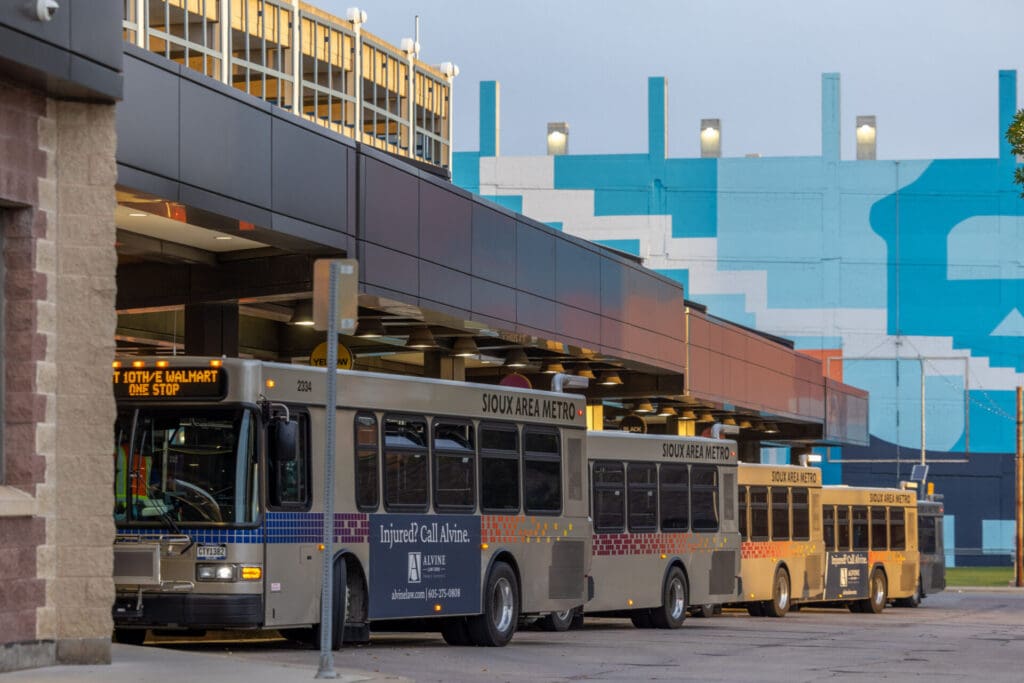
Via was awarded a five-year contract to run and operate SAM in September 2023 and took over operations Jan. 1, 2024, using a phased approach in the months before and after to accomplish a smooth transition, said Emily Shapiro, head of operations for the West Coast.
“Over the last year, we have been reimagining the network and bringing in more on-demand,” Shapiro said. “We are changing the way riders get around in Sioux Falls.”
Transit ridership had dropped in the early 2020s during the pandemic, Schweitzer said, but had begun to rebound by 2023.
“At the same time, we knew we needed to make changes,” she said. “This was a great opportunity to do so and bring in new leadership.”
The initial changes to the bus routes made them quicker and more direct, Shapiro said. Buses no longer operate on routes but go out and back.
“We brought in on-demand to fill the gaps and bring in more riders so they can efficiently and easily get across the city,” she said.
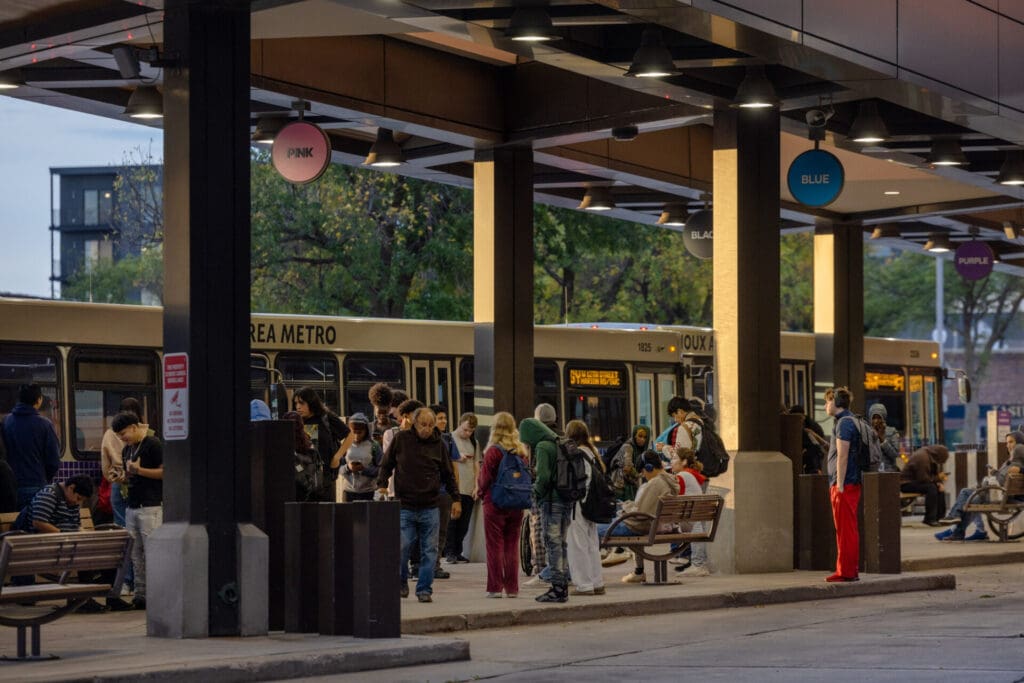
Via also implemented a distance cap of 6 miles “as the crow flies,” Shapiro said. That covers the majority of Sioux Falls, but for exceptionally long trips, riders must now transfer at a different point. That allows the transit system to be more efficient and serve as many riders as possible, she said.
It’s important that passengers know the transit system is consistent, Schweitzer said. The drivers are well aware of the timetables and the need for a steady pace. If a stopped train or traffic delays a bus, texts can be sent out sharing the delay.
The increase in frequency on several routes to 30 minutes also impacts the transit system’s usability. SAM’s green line, for example, runs between The Bus Stop downtown and Jefferson High School and Southeast Technical College on Minnesota Avenue, Bailey Street and Madison Street.
Popular destinations include the Premier Center, Jefferson High School, the Minnehaha County Administration Building and Courthouse and the Sioux Falls Health Department. Available between 6 a.m. and 7 p.m., it operates every 30 minutes during peak hours, every hour off-peak.
“The golden standard would be 15 minutes, but that gets very expensive,” Schweitzer said. “The increase from the 60-minute route to 30 has been helpful.”
People have varying reasons for taking city transit, Shapiro said. Making it more predictable has made using it more alluring. SAM’s drivers, who see frequent customers regularly, become an integral piece of the community, she said.
“We want a system reliable and efficient enough to take the bus, and it does feel like a choice. That’s our vision over the next couple of years. People are riding not because they must but because they want to, because it works well for them.”
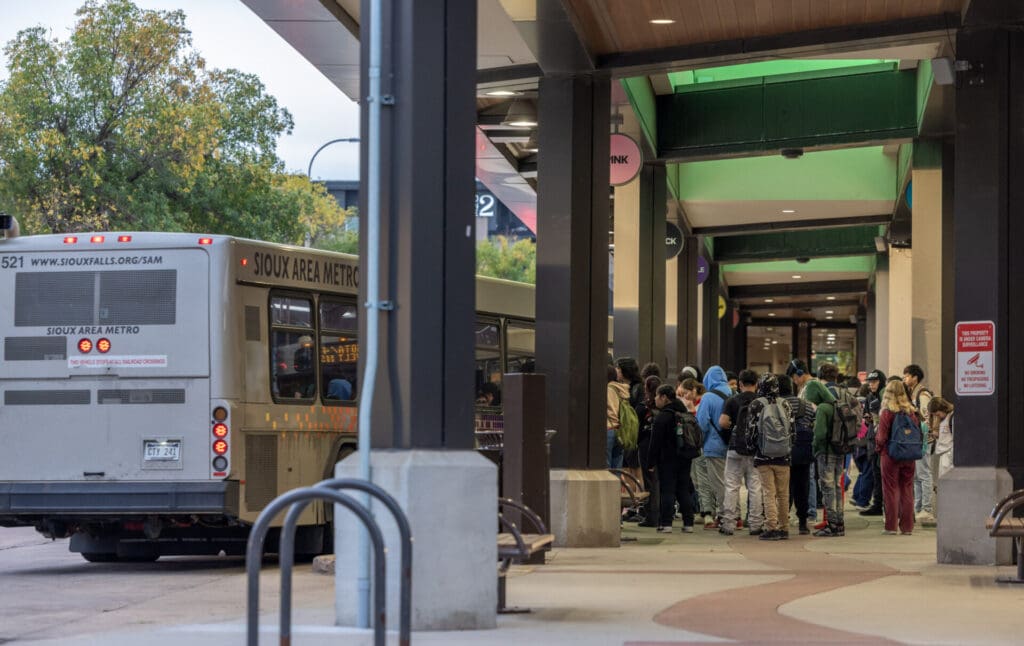
While use of SAM to the airport has been slow since it started Feb. 3, Schweitzer expects that to change. Any new business or service that makes a change must show patience, she said.
“I look for that to increase overall,” she said. “I think some of that will advance with the transit system overall. That’s one of our goals with the change of management.”
Via and SAM have talked about adding electric buses to the fleet, but there is no timeline, Shapiro said. Adding electric buses would be expensive because a new infrastructure to support those buses would be needed, Schweitzer said. That includes garages with charging and maintenance capabilities.
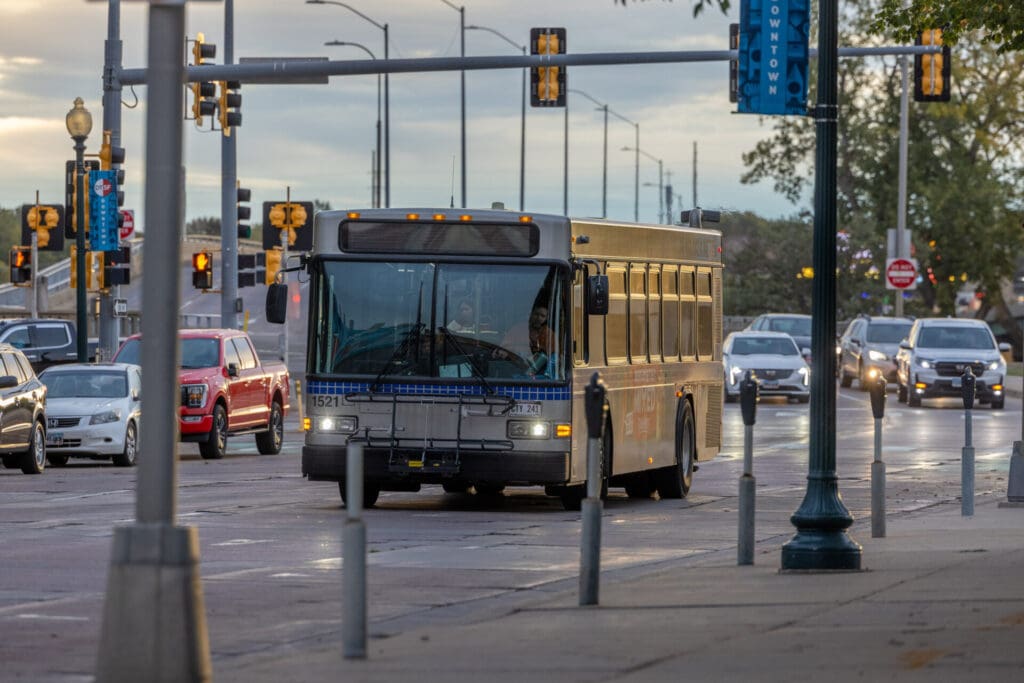
“Our goal right now is looking at a new transit facility as ours has totally exhausted its useful life,” she said. The current facility is at least 40 years old.
While Via’s initial contract with the city is for five years, the hope is that it will extend years into the future, Shapiro said.
“We are partners with the city in a really ambitious long-term vision maximizing the coverage of public transportation,” she said. “When we were introduced to the city, less than half of the population had access. With the introduction of on-demand … we’ve given 100 percent access while making the buses faster and more reliable.”
The SAM app can be found for iPhones and Androids. For information on fares, click here. SAM operates nine lines Monday through Saturday.
Share This Story
Most Recent
Videos

Looking amazing @dtsiouxfalls and @washpav! Thanks to @jpickthorn for capturing an incredible night.
Nov 26

Enjoy this glow headed into Halloween week! 📸: @jpickthorn
Oct 31
Hope you had a wonderful summer weekend and are recharged for the week ahead! 📸: @jpickthorn
Jun 27
Beautiful way to start a week! 📸: @jpickthorn
Jan 10
Favorite flyover of the year! Merry Christmas from our entire @pigeon605news flock. 🎄🐦 📸: @actsofnaturephotography
Dec 24
They definitely deserve to be treated like holiday royalty and they were! ❤️ these scenes from tonight’s lighting celebration at @sanfordhealth Children’s Hospital. 🎄
Dec 1
The holidays are here! Perfect night @dtsiouxfalls
Nov 27
Happy Halloween from @avera_health NICU babies! Link in bio to see more! 🎃
Oct 31
Did you know @dtsiouxfalls is filled with 👻 stories? Link in bio … if you dare 😱
Oct 8
When it comes to kids parties nobody wants to be cookie-cutter. Link in bio for the story on what’s trending.
Sep 28
Want to stay connected to where you live with more stories like this?
Adopt a free virtual “pigeon” to deliver news that will matter to you.
Read More




Are you a little bird with something to share?
Delivering news that matters to you
Years ago, homing pigeons were used to bring us news we needed. Today, your virtual “pigeon” will deliver what you want to know about the place you call home.
All pigeons are free to good homes!
Our Partners