Carpal tunnel surgery fixes 30 years of repetitive use
This paid piece is sponsored by Avera.
Bob Foster has been an electrician for more than 30 years. A career of repetitive movements caused a growing pain in his hand over the course of two years. The pain interrupted everything from sleeping to driving his motorcycle.
“I’d often have to drive one-handed, shaking out the numbness and tingling in one hand and then the other,” Foster said.
Carpal tunnel syndrome is a well-known hand condition that affects one of the main nerves in the wrist area. The median nerve provides sensation to your fingers. This important nerve runs through the carpal tunnel formed by small wrist bones and a covering ligament called the transverse carpal ligament.
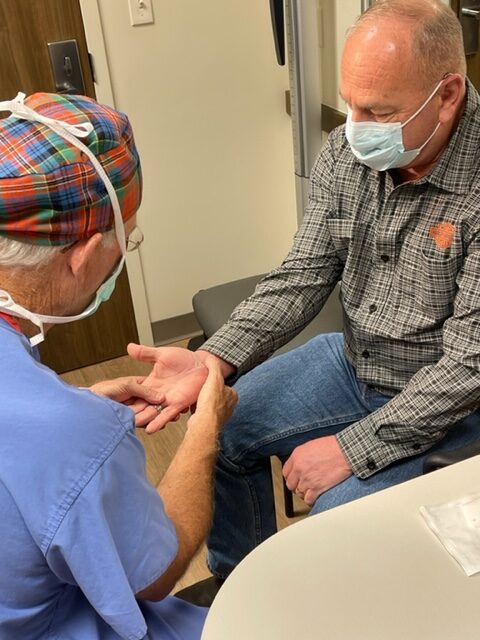
When you perform repetitive movements with your hand, such as using a keyboard or mouse, the transverse ligament swells and pushes on the median nerve.
The result is pain, numbness, tingling and weakness of the hand. In severe cases, the symptoms can wake you up in the middle of the night.
Treatment
Conservative treatment measures such as activity modification, bracing, physical therapy and injections may help alleviate your symptoms.
“Unfortunately, pain doesn’t always resolve itself no matter how good our intentions,” said Dr. Scott McPherson, an orthopedic hand surgeon at Avera Orthopedics. “Surgery is recommended when nonsurgical measures do not relieve the hand symptoms.”
Carpal tunnel surgery typically is performed as an open approach through a small incision at the base of the palm or as an endoscopic approach, which uses a small incision and camera.
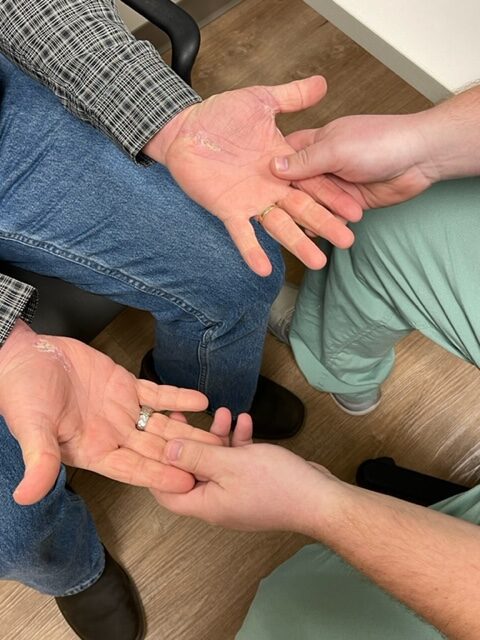
In both cases, the transverse carpal ligament covering and compressing the median nerve is cut to relieve the pressure on the nerve.
When Foster had surgery, each hand took only six minutes, and he stayed awake through it with a local anesthetic.
Recovery
Post-surgery recovery varies from patient to patient. Most patients see an improvement right away in their symptoms and experience better hand coordination. They usually don’t need bracing and immediately can resume activities of daily living and increase activities as tolerated.
Foster now has no pain in his hand and regained the strength he once lost.
“I’m so thankful that I went ahead and had surgery; my only regret is that I didn’t do it sooner,” Foster said.
Get more health and wellness tips at AveraBalance.org.
Share This Story
Most Recent
Videos

Looking amazing @dtsiouxfalls and @washpav! Thanks to @jpickthorn for capturing an incredible night.
Nov 26

Enjoy this glow headed into Halloween week! 📸: @jpickthorn
Oct 31
Hope you had a wonderful summer weekend and are recharged for the week ahead! 📸: @jpickthorn
Jun 27
Beautiful way to start a week! 📸: @jpickthorn
Jan 10
Favorite flyover of the year! Merry Christmas from our entire @pigeon605news flock. 🎄🐦 📸: @actsofnaturephotography
Dec 24
They definitely deserve to be treated like holiday royalty and they were! ❤️ these scenes from tonight’s lighting celebration at @sanfordhealth Children’s Hospital. 🎄
Dec 1
The holidays are here! Perfect night @dtsiouxfalls
Nov 27
Happy Halloween from @avera_health NICU babies! Link in bio to see more! 🎃
Oct 31
Did you know @dtsiouxfalls is filled with 👻 stories? Link in bio … if you dare 😱
Oct 8
When it comes to kids parties nobody wants to be cookie-cutter. Link in bio for the story on what’s trending.
Sep 28
Want to stay connected to where you live with more stories like this?
Adopt a free virtual “pigeon” to deliver news that will matter to you.





Are you a little bird with something to share?
Delivering news that matters to you
Years ago, homing pigeons were used to bring us news we needed. Today, your virtual “pigeon” will deliver what you want to know about the place you call home.
All pigeons are free to good homes!
Our Partners