

Caring for a parent? How not to burn out in the sandwich generation
This piece is sponsored by Avera Health.
Caring for a loved one with a chronic condition or severe illness is important but demanding work. How do you navigate caregiving without getting overwhelmed?
When we’re burnt out, our bodies will show up in ways that tell us we’re overdoing it, according to Megan Enfield, lead social worker with Avera@Home.
Amber Reed helped care for her mother through a cancer journey at Avera and noticed she was making mistakes she usually would not make and starting to neglect her own needs.
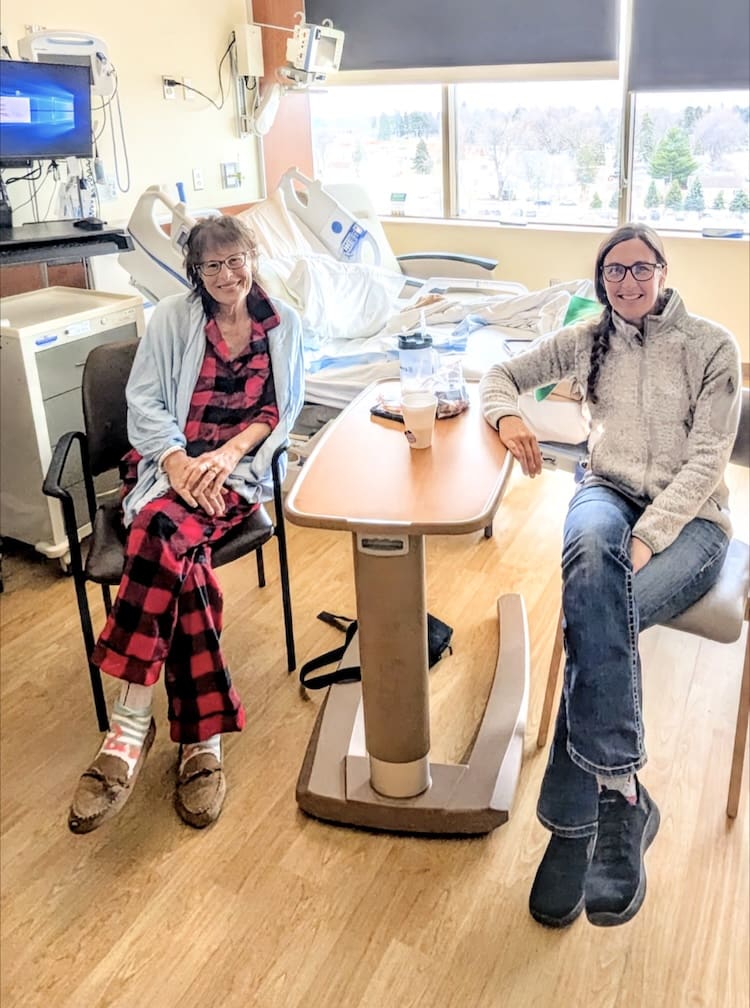
“I had disassociated from my own body,” Reed said. “I was dropping things, missing my own medications, not eating meals, waking up in the middle of the night with my heart racing, not able to take care of my own home or family.”
Warning signs of burnout include feeling:
- Easily triggered into anger or irritability.
- Physically ill, such as with frequent colds.
- Overwhelming sadness or hopelessness.
- Intense sense of guilt.
- Withdrawal from the support of friends and family.
- Fatigue.
“It wasn’t until my mom started her next adventure after hospice that I look back and realize how much I put my body through and how much mind and body are still going through now,” Reed said.
Mollie Sanchez, community patient care coordinator with Avera@Home, suggested talking with a primary care provider.
“They can connect you to coordinated care, social work or whatever resources are right for you.”
Share the caregiving workload and create boundaries
Brenda Ling, CSW-PIP, an oncology clinical social worker at Avera Cancer Institute, recommends looking for tangible help — someone who can come in and give breaks or share some of your caregiving duties.
You could share responsibilities with a family member or talk with your provider about hiring a personal care aide or home healthcare worker so that you are not always in the caregiver role.
Sanchez stresses the importance of setting firm boundaries to avoid burnout.
Boundaries can look like:
- Not answering your phone after a certain time.
- Limiting updates about the loved one to a single message at the end of the day.
- Taking a 30-minute break every afternoon, no matter what.
- Designating certain days or hours for personal time.
- Delegating a specific task like bathing to another person.
Talk to others: Caregiver support groups and therapy
Talking to someone you trust can take a lot of power out of any pent-up feelings you might have and give you a logical perspective, according to Ling.
Options for support include:
- A therapist — someone you’ve met through behavioral health therapy, physical therapy, occupational therapy or speech therapy.
- A social worker.
- Support groups — illness-specific groups may be available virtually or in person.
- Faith-based groups.
Self-care and maintaining routines
At-home self-care activities to consider:
- Taking a walk to recharge.
- Listening to your favorite music.
- Journaling or reading a book.
- Pampering yourself.
- Maintaining your own nutrition and fitness routines.
- Doing small things for yourself like taking daily showers.
- Taking frequent breaks and prioritizing rest.
Mindfulness — being fully present in the moment — is another helpful practice that calms the nervous system and quiets intense emotions. Mindfulness apps on your phone or computer make it easy to access relief from anywhere.
Self-care can even mean doing nothing — having nowhere you’re scheduled to be and no one who needs you.
Hospice resources for caregivers
Hospice can be an underutilized resource, and most people can get hospice support earlier than they do, according to Ling. Your provider can help explain what criteria must be met to qualify for hospice services.
Avera@Home home health and hospice services are available across Avera’s footprint.

The honor of caregiving
Despite the potential hardships and strain, caregiving can be very rewarding, according to Ling.
“To be a companion to someone in their time of need is an honor,” Ling said. “You might have some really beautiful moments of connection that others don’t get to see.”
Get more wellness tips at Avera.org/Balance.
Share This Story
Most Recent
Videos



Looking amazing @dtsiouxfalls and @washpav! Thanks to @jpickthorn for capturing an incredible night.
Nov 26

Enjoy this glow headed into Halloween week! 📸: @jpickthorn
Oct 31
Hope you had a wonderful summer weekend and are recharged for the week ahead! 📸: @jpickthorn
Jun 27
Beautiful way to start a week! 📸: @jpickthorn
Jan 10
Favorite flyover of the year! Merry Christmas from our entire @pigeon605news flock. 🎄🐦 📸: @actsofnaturephotography
Dec 24
They definitely deserve to be treated like holiday royalty and they were! ❤️ these scenes from tonight’s lighting celebration at @sanfordhealth Children’s Hospital. 🎄
Dec 1
The holidays are here! Perfect night @dtsiouxfalls
Nov 27
Happy Halloween from @avera_health NICU babies! Link in bio to see more! 🎃
Oct 31
Did you know @dtsiouxfalls is filled with 👻 stories? Link in bio … if you dare 😱
Oct 8
When it comes to kids parties nobody wants to be cookie-cutter. Link in bio for the story on what’s trending.
Sep 28
Want to stay connected to where you live with more stories like this?
Adopt a free virtual “pigeon” to deliver news that will matter to you.






Are you a little bird with something to share?

Delivering news that matters to you
Years ago, homing pigeons were used to bring us news we needed. Today, your virtual “pigeon” will deliver what you want to know about the place you call home.
All pigeons are free to good homes!
Our Partners