‘Cancer Wars’ comic features Sanford researcher
This paid piece is sponsored by Sanford Health.
Pilar de la Puente is a Jedi when it comes to researching cancer cells.
And she has a comic book to prove it.
Her lightsaber is scientific
The Sanford Research scientist, who runs her own laboratory in Sioux Falls, recently was featured in the “Cancer Wars” comic book, published by ECUSA.

ECUSA, or Espanoles Cientificos en USA, is an organization where scientists and other technology pros have a tie to Spain. De la Puente is a member of the organization. She grew up in Spain, and her Spanish roots are important to her.
“I collaborate with them by giving talks and community outreach,” she said. “I was approached because they wanted to create a comic series about cancer. They asked if I wanted to be featured on it. I was delighted, of course, because it’s a wonderful way to connect with kids, and girls in this particular case, so then they can have role models of Hispanic scientists and women who can do great science and are contemporary to them.”
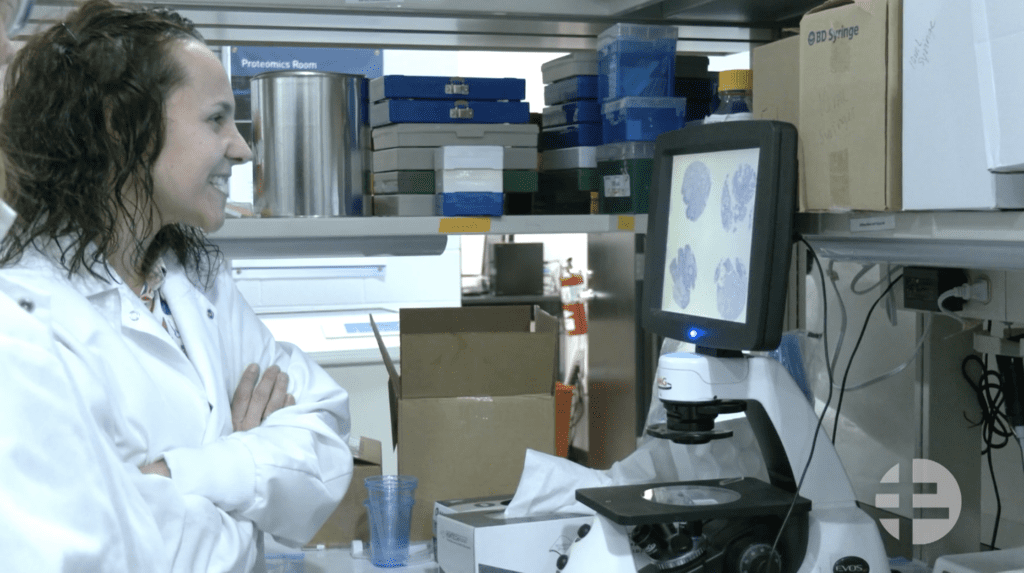
She said it was a surreal and fun moment when she was sent the final product.
“I was actually at a birthday party with my girls,” she said. “I showed it to them and said ‘Look! Mommy’s in a comic!’ And, they said, ‘How come?’” she laughed.
“She was reading and said, ‘It’s actually you, and it’s telling your story!’ So she was fascinated by it. It was a really proud mommy moment. It wasn’t just a ‘hey look at Mommy,’ it was more ‘hey, look at Mommy doing science, and Mommy at work.’”
De la Puente said she hasn’t used the coolness factor that comes with being in a comic book to persuade her daughters to clean their rooms, “but I may have to give that a try,” she chuckled.
Training the future Jedi of science
Motivating and exposing children to science is a priority at Sanford Research. For a shining example of this in action, look no further than the PROMISE Lab.
Louisa Otto is the senior research education specialist at the PROMISE Lab. The program offers students K-12 the opportunity to experience science hands-on.
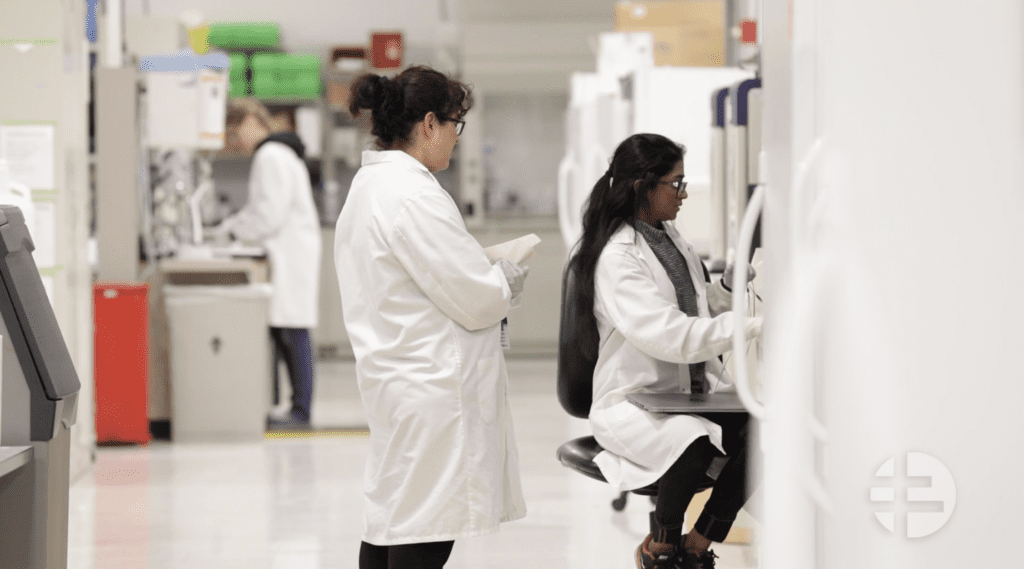
“There’s many different opportunities for our kids. They might come on a school field trip, and we’ll pull some DNA out of a strawberry. For high school students, they might be here for three to four hours, and we’ll go through a whole genetic experience. They’ll get an idea of what it’s like to be a scientist for a day,” Otto said.
“We also have our Biomedical Research Investigation Days where students in high school can come for a whole day, working alongside one of our scientists to learn more of the intricacies of what they study,” Otto added.
More: Visit the Sanford PROMISE Community Laboratory
De la Puente said it’s critical to keep girls – and all children – interested in science.
“It’s important to show them early that it is possible,” she said. “You can have a career in science, and you can be a role model. In this particular case, we also wanted to show that historically marginalized or disadvantaged groups, which often lack opportunities and role models, have paved the way and succeed in science too.”
Learn more
Share This Story
Most Recent
Videos
Looking amazing @dtsiouxfalls and @washpav! Thanks to @jpickthorn for capturing an incredible night.
Nov 26

Enjoy this glow headed into Halloween week! 📸: @jpickthorn
Oct 31
Hope you had a wonderful summer weekend and are recharged for the week ahead! 📸: @jpickthorn
Jun 27
Beautiful way to start a week! 📸: @jpickthorn
Jan 10
Favorite flyover of the year! Merry Christmas from our entire @pigeon605news flock. 🎄🐦 📸: @actsofnaturephotography
Dec 24
They definitely deserve to be treated like holiday royalty and they were! ❤️ these scenes from tonight’s lighting celebration at @sanfordhealth Children’s Hospital. 🎄
Dec 1
The holidays are here! Perfect night @dtsiouxfalls
Nov 27
Happy Halloween from @avera_health NICU babies! Link in bio to see more! 🎃
Oct 31
Did you know @dtsiouxfalls is filled with 👻 stories? Link in bio … if you dare 😱
Oct 8
When it comes to kids parties nobody wants to be cookie-cutter. Link in bio for the story on what’s trending.
Sep 28
Want to stay connected to where you live with more stories like this?
Adopt a free virtual “pigeon” to deliver news that will matter to you.




Are you a little bird with something to share?
Delivering news that matters to you
Years ago, homing pigeons were used to bring us news we needed. Today, your virtual “pigeon” will deliver what you want to know about the place you call home.
All pigeons are free to good homes!
Our Partners