
As home values surge, owners feel property tax pinch
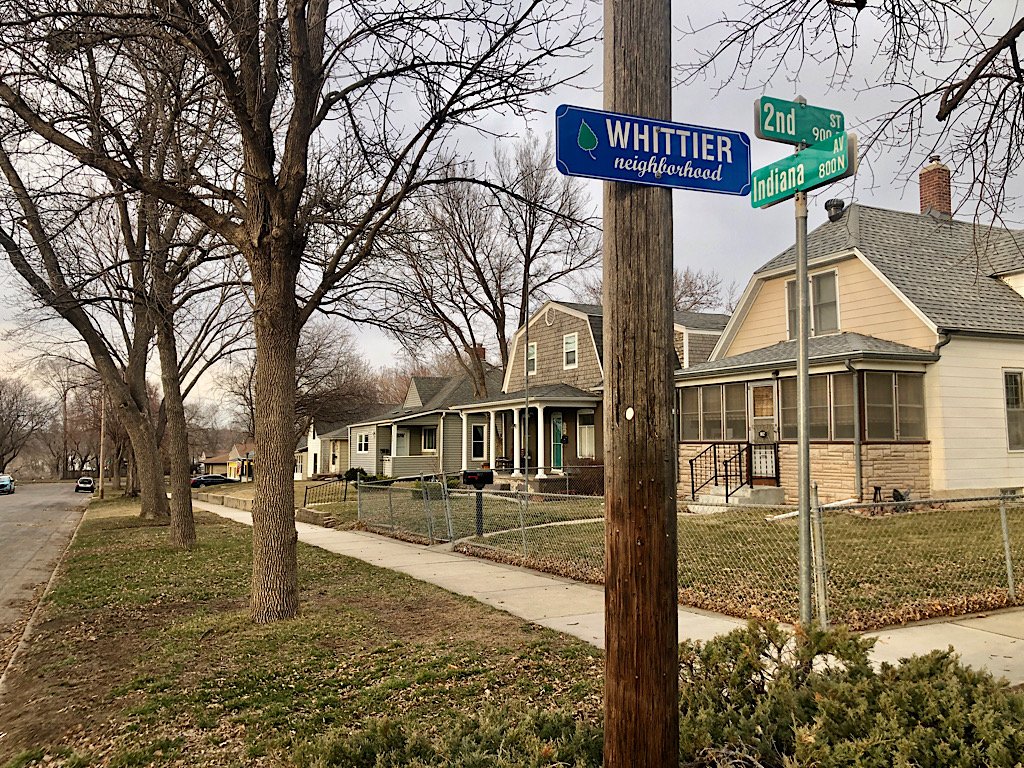
Denise Simon and her husband have lived in their home northeast of downtown Sioux Falls for about 50 years.
“We probably paid $7,000 for it in 1970,” said Simon, a retired medical records worker.
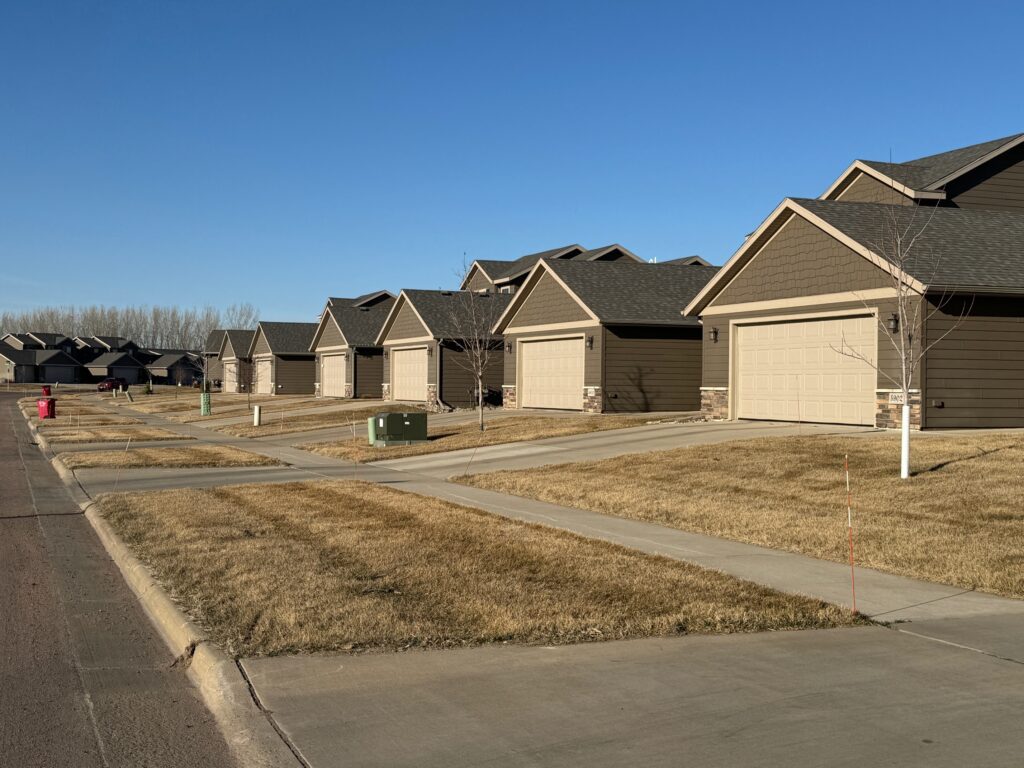
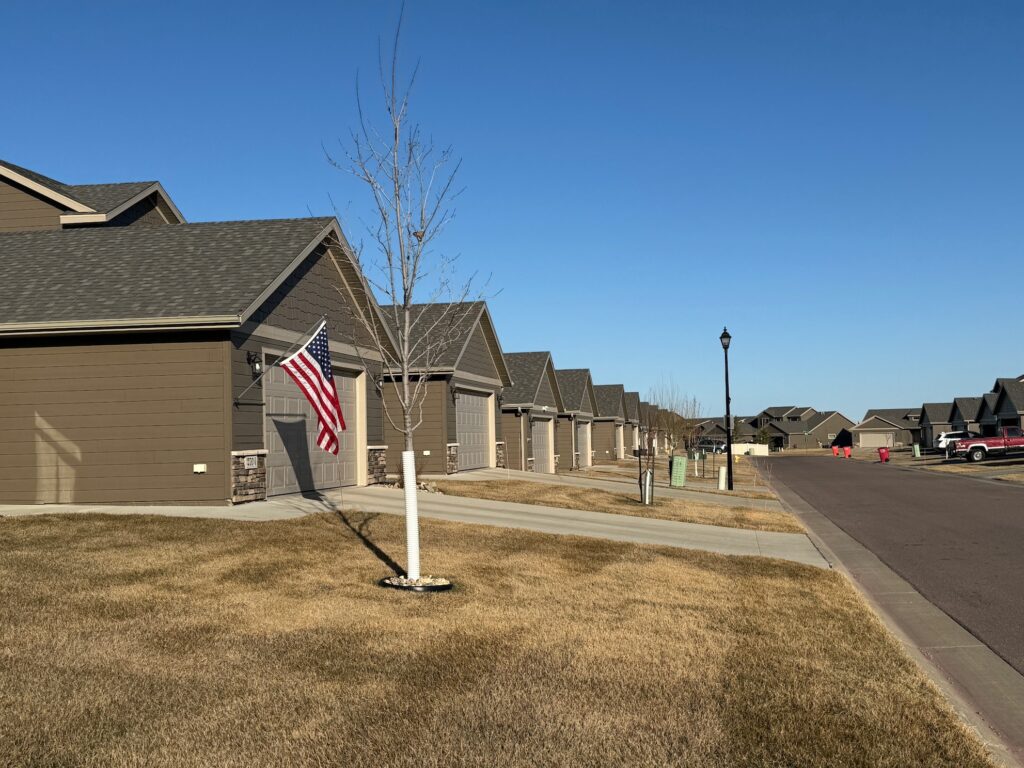
Meredith Stevens and her husband bought their southeast Sioux Falls town house in 2017 for just under $175,000.
“We bought it thinking this would be a starter home, and at $174-ish, that’s not bad,” said Stevens, a special education teacher.
From different generations and different counties, the two women now share the same perspective on their property values.
“It’s just steadily going up, and you’re like, wow,” Stevens said. “The ones around us are selling for $300,000, so our (envisioned) second home is now what the starter home costs. It’s just a wild time to be in Sioux Falls.”
That’s one way to put it. A sampling of Sioux Falls-area residents responding to property tax valuation and resulting property taxes drew a consistent theme:
“Horrified,” one said.
“Severely risen,” another said.
“Absolutely robbery,” said another.
And finally: “At least I don’t feel all alone.”
You’re likely far from alone if your home’s assessed value has risen by double-digit percentages in recent years.
In Minnehaha County, the average increase in 2024 assessed valuations went up 9.1 percent compared with 2023. From 2022 to 2023, it went up 14.4 percent on average. The year before that, the increase was 18.4 percent.
Lincoln County recently saw a 8.7 percent average increase in valuation for 2024 versus 2023, following a 16 percent increase the prior year and a 14 percent increase from 2021 to 2022.

Blame a double-whammy: Too many years of not regularly adjusting valuations enough and a housing market in which population growth and limited inventory caused sale prices to surge.
“We were playing catchup for many years, starting in 2016 to 2021, for sure,” said Karla Goossen, Lincoln County director of equalization. “So some folks saw a larger increase than the average and still this year as well.”
The portion of Sioux Falls that’s in Lincoln County increased 8 percent on average this year. Harrisburg was up 7.7 percent, and Tea saw a 13 percent increase, driven by “new unique developments and million-dollar homes,” Goossen said.
For Stevens and her husband, their town house went from being purchased at almost $175,000 in 2017 to being assessed at $265,000 this year. They don’t dispute it — knowing nearby homes are selling for even more — but they didn’t anticipate paying property taxes on a home valued at that much when they bought it a short time ago.
“It’s a positive-negative problem,” she said. “Great if we sold our home, but hard to find the next-level home in a value that isn’t at $500,000 or more.”
In Minnehaha County, director of equalization Chris Lilla speaks as though he’s attempting to adjust valuations with more of a scalpel than a sledgehammer.
In the Cathedral neighborhood, for instance, his office has now split it into five areas to reflect their unique characteristics.
“In Cathedral northeast this year, our older homes we took down 3 percent,” he said. “And our mid-aged homes needed to go up 5 percent and our mid-aged 1.5 or two-story houses needed to come down 2 percent, so we really try and tailor it. My Cathedral southwest part of the original neighborhood, I needed 15 percent increases.”
Assessors look at the age of the neighborhood, the demand for housing there, recent improvements to the housing stock and — maybe most key — comparable recent home sales in the area.
As in Lincoln County, there was deferred adjustment to do, he added.
“We’ve made a lot of strides into getting them graded right and analyzed.”
For Simon, the 1905 bungalow she and her husband bought five decades ago for $7,000 is now valued at $135,600.
“We are surprised,” she said, adding her resulting property tax bill was $1,200 a year in 2018 and now comes in at $1,800.
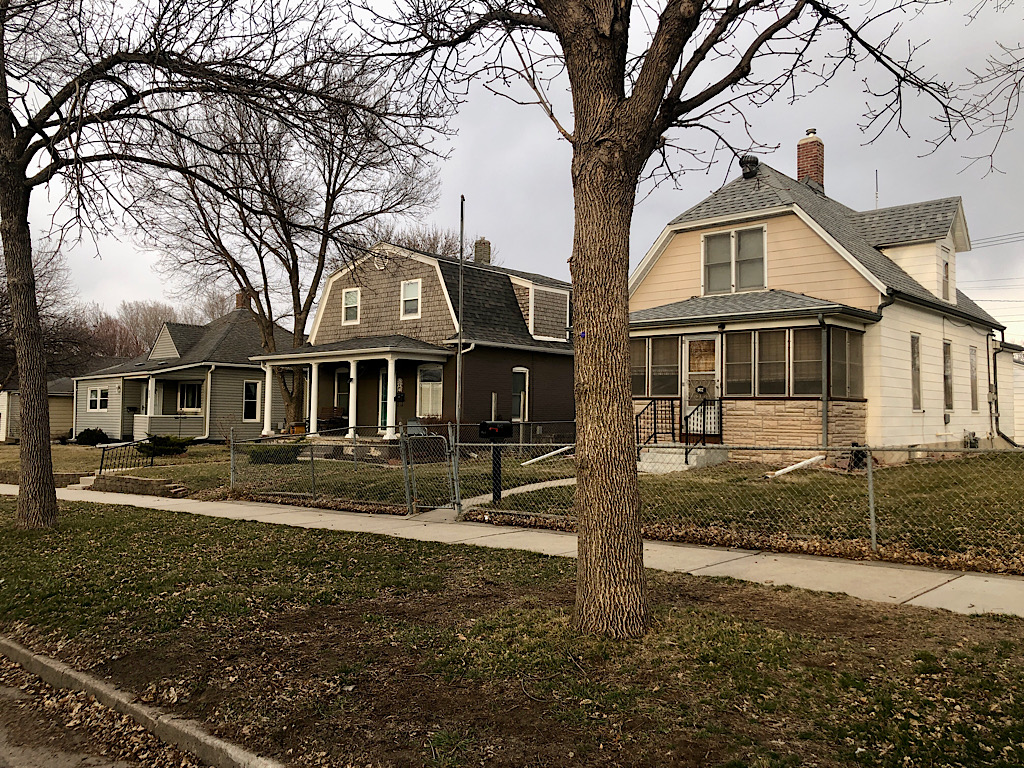
“It used to be a little over $1,000 a year, and now it’s almost $2,000 a year.”
Valuation going up “is not a bad thing,” Lilla said. “Real estate is an investment, and anybody with any knowledge of investing doesn’t want to lose money. The problem is it comes with taxes.”
Options to appeal
This week brings annual hearings in local government as property owners appeal their home’s valuation — even though what often motivates an appeal is the tax bill, assessors said.
“We see a lot of appeals, and the reason for appealing is their taxes, and you can’t appeal your tax amount,” Goossen said. “We don’t have control of that.”
The two questions to answer are: “Is the assessed valuation over market value?” and “Am I being treated fairly in comparison to others?”
Often, assessors will sit down with homeowners and share comparative data, along with going out to look at the property. Sometimes, they will recommend an adjustment based on that. Other times, property owners will end up appealing or realize the reality of the valuation.
“They need to do some research. They need to truly be knowledgeable about the market,” Lilla said.
Mike Hanten, a Realtor with Pivot Cos., has done enough homework to successfully challenge what he estimates as 30 assessments in recent years, including eight in the Diamond Fields neighborhood in east Sioux Falls.
“You’ve got a mix of 15- and 20-year-old houses and a bunch of brand-new houses, so sales comps (comparisons) are all new construction houses.”
His own house in the area went from being assessed at $270,000 when he bought it in 2021 to just under $480,000 in his most recent assessment, he said.
Those considering an appeal should “call your Realtor and get a market analysis,” Hanten said. “Most Realtors will help you out, and it’s facts, not feelings.”
It’s important to remember that appraised value isn’t the same as taxable value, he added.
Taxable value is the property value equalized to 85 percent. Taxes then are calculated by multiplying the taxable value times the sum total of all applicable levies.
In many situations, the actual levy decreases as more property tax payers enter the area and property values go up.
For instance, while the city of Sioux Falls annually has voted to increase the total revenue it receives from property tax by 1 percent to 2 percent in recent years, that doesn’t mean individual taxpayers are paying that percentage more. The actual levy has gone down as assessments have gone up.
“The whole system got bigger,” director of finance Shawn Pritchett said. “You’re going to feel the inflationary adjustment, but clearly there are some imbalances happening in the system right now. The reality is some people are seeing fairly significant increases in their property taxes.”
When you pay your property taxes, 27 percent of your payment goes to fund city government, 21 percent goes to county government and 53 percent goes to your school district, with some slight variation.
Income-qualified seniors can apply for a property tax freeze through their county auditor by April 1. The state of South Dakota also has increased the number of eligible seniors, so those taking advantage of the option have increased 57 percent, Pritchett said.
Share This Story
Most Recent
Videos


Looking amazing @dtsiouxfalls and @washpav! Thanks to @jpickthorn for capturing an incredible night.
Nov 26

Enjoy this glow headed into Halloween week! 📸: @jpickthorn
Oct 31
Hope you had a wonderful summer weekend and are recharged for the week ahead! 📸: @jpickthorn
Jun 27
Beautiful way to start a week! 📸: @jpickthorn
Jan 10
Favorite flyover of the year! Merry Christmas from our entire @pigeon605news flock. 🎄🐦 📸: @actsofnaturephotography
Dec 24
They definitely deserve to be treated like holiday royalty and they were! ❤️ these scenes from tonight’s lighting celebration at @sanfordhealth Children’s Hospital. 🎄
Dec 1
The holidays are here! Perfect night @dtsiouxfalls
Nov 27
Happy Halloween from @avera_health NICU babies! Link in bio to see more! 🎃
Oct 31
Did you know @dtsiouxfalls is filled with 👻 stories? Link in bio … if you dare 😱
Oct 8
When it comes to kids parties nobody wants to be cookie-cutter. Link in bio for the story on what’s trending.
Sep 28
Want to stay connected to where you live with more stories like this?
Adopt a free virtual “pigeon” to deliver news that will matter to you.





Are you a little bird with something to share?

Delivering news that matters to you
Years ago, homing pigeons were used to bring us news we needed. Today, your virtual “pigeon” will deliver what you want to know about the place you call home.
All pigeons are free to good homes!
Our Partners