

To raise a better athlete, don’t specialize
This piece is sponsored by Sanford Health.
Every young athlete faces the question of whether to specialize in a single sport or to diversify and participate in multiple sports. Each approach has its merits and drawbacks, but in the end, the evidence suggests that multisport athletes are better off, according to experts at Sanford Sports Performance.
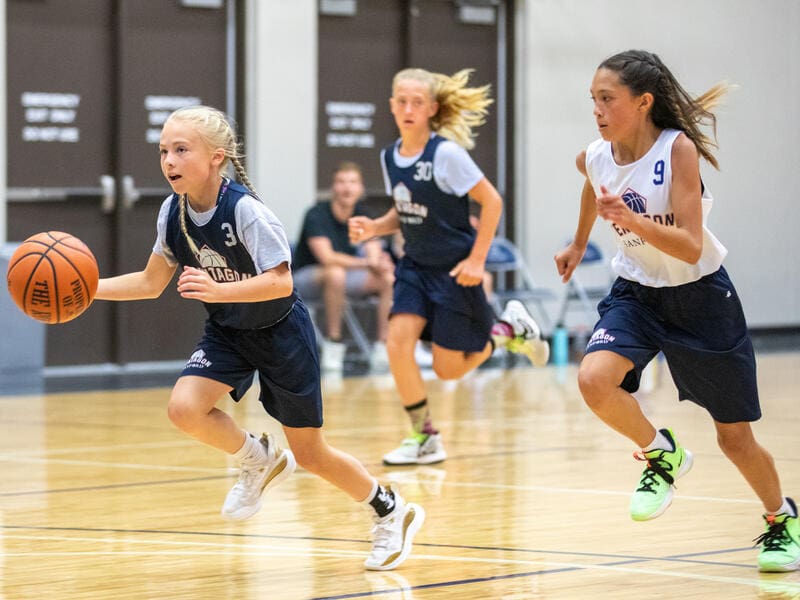
From 1960 to 2018, less than one-fifth of NCAA athletes surveyed specialized in one sport before the age of 15. More recent college athletes — from the classes of 2008 to 2018 — were more likely to have specialized earlier. Career lengths were similar, but burnout was more common among athletes who specialized at a younger age.
“I do think there is a specific time where sports specialization could be OK or even the right choice, but it is probably in the later years of high school,” said Jason Dorman, lead sports science specialist at Sanford Sports Performance. “Or at minimum, if someone is only involved in one sport at the youth level, they need to have an offseason away from the sport altogether for an extended period of time.”
Many elite athletes played multiple sports
Specializing can afford young athletes more time and energy to devote to skill development in their single sport of choice. But as we’ll see, the time spent focusing on a specific skillset may hinder an athlete’s overall development instead of shooting them to superstardom. Specializing also poses a higher risk for overuse injuries and burnout.
What’s more, many of the best athletes you know grew up playing multiple sports, including:
- Pro football players. According to the scouting research service Tracking Football, 30 of the 32 first-round picks in the 2017 NFL draft played multiple sports in high school. In 2018, it was 29 of the first 32.
- Pro basketball players. In a study published in the American Journal of Sports Medicine, NBA first-round draft picks who were multisport athletes in high school participated in more games, had fewer injuries and had longer careers in the NBA than their single-sport counterparts.
- College athletes. A study reported by the peer-reviewed journal Sports Health found that just 17 percent of the NCAA’s DI women’s athletes had previously competed exclusively in their college sport. The overwhelming majority played at least one other sport in high school.
Those are eye-opening numbers. They suggest that multisport athletes may have a better chance of making it through to the highest levels.
Benefits of multisport participation
But why might a college or professional coach see more value in the multisport experience? Why should young athletes and their parents prefer that approach? Consider some of the benefits:
- Higher overall sports IQ. Problem-solving skills carry over and compound from sport to sport.
- Better understanding of competition and teamwork. Competing on multiple teams teaches young athletes to act as good sports and to build positive relationships with different groups of people.
- More fundamental gross motor skill development. Each sport has its own unique range of motions, but they all require and build coordination, balance, flexibility, agility and strength. Mastering a variety of sport-specific techniques makes for more well-rounded athletes by correcting for asymmetries in their athletic tool kit.
- More confidence. It’s simple: A wide range of skills is better for self-esteem than a small set. Multisport participation shows kids they’re capable of gaining skills that seemed out of reach at first. This can carry over into other parts of their life.
- Reduced risk for injury. By allowing athletes to rest certain musculoskeletal groups during the offseason — say, their lower legs during baseball season and upper body during soccer season — the multisport approach can help keep athletes healthy. Overuse injuries from repetitive movements without sufficient recovery are far more common in athletes who specialize.
But perhaps the strongest argument for multisport participation is that it prevents young athletes from experiencing burnout.
Often, specializing in one sport comes with pressure and stress. It’s thought that by specializing, young athletes should advance in their sport. At that point, it’s no longer about having fun — it’s about success. That pressure to perform can lead some young athletes to mentally check out or quit altogether.
Participating in multiple sports gives athletes a renewed focus and a mental break from the previous sport season, thus reducing the likelihood of quitting sports entirely.
Let kids choose their sports
There’s nothing wrong with young athletes feeling motivated to perform better, but at the end of the day, very few of them — less than 1 percent — will make a career out of playing sports. That’s why sports should be enjoyable for kids first and foremost.
For most parents, the best approach is to encourage multisport participation and leave the choices to the young athlete. This could help keep kids in sports longer, which will benefit them later in life as they work among colleagues and face real-world problems. Studies also have shown that multisport athletes are more likely than specialists to be physically active later in life.
So if you’re a parent or a young athlete who’s torn between single-sport specialization and multisport participation, just remember: Most young athletes gain more in the short and long run from playing multiple sports — even those with their sights set on college or professional athletics.
Learn more
Share This Story
Most Recent
Videos



Looking amazing @dtsiouxfalls and @washpav! Thanks to @jpickthorn for capturing an incredible night.
Nov 26

Enjoy this glow headed into Halloween week! 📸: @jpickthorn
Oct 31
Hope you had a wonderful summer weekend and are recharged for the week ahead! 📸: @jpickthorn
Jun 27
Beautiful way to start a week! 📸: @jpickthorn
Jan 10
Favorite flyover of the year! Merry Christmas from our entire @pigeon605news flock. 🎄🐦 📸: @actsofnaturephotography
Dec 24
They definitely deserve to be treated like holiday royalty and they were! ❤️ these scenes from tonight’s lighting celebration at @sanfordhealth Children’s Hospital. 🎄
Dec 1
The holidays are here! Perfect night @dtsiouxfalls
Nov 27
Happy Halloween from @avera_health NICU babies! Link in bio to see more! 🎃
Oct 31
Did you know @dtsiouxfalls is filled with 👻 stories? Link in bio … if you dare 😱
Oct 8
When it comes to kids parties nobody wants to be cookie-cutter. Link in bio for the story on what’s trending.
Sep 28
Want to stay connected to where you live with more stories like this?
Adopt a free virtual “pigeon” to deliver news that will matter to you.





Are you a little bird with something to share?

Delivering news that matters to you
Years ago, homing pigeons were used to bring us news we needed. Today, your virtual “pigeon” will deliver what you want to know about the place you call home.
All pigeons are free to good homes!
Our Partners