6 ways to train around hip or knee pain
This paid piece is sponsored by Avera Health
By Nicolas Albers, PT, DPT, OCS, Avera Health
Many adults will experience hip or knee pain, yet the pain need not stop you from staying active and doing the things you love.
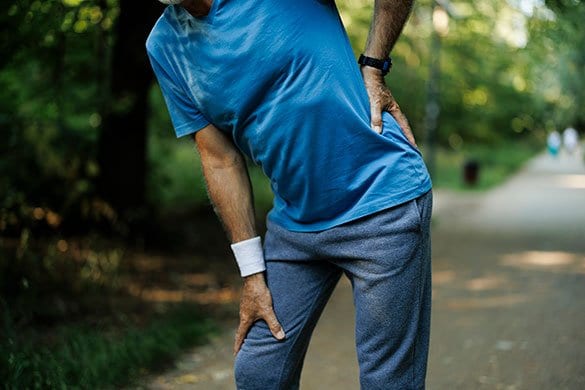
Having a modify attitude rather than a stop-everything attitude will pay off. You can try these changes.
Reduce training volume
- Avoid sudden increases in volume; it’s a recipe for injury as your tissues can’t repair themselves as fast as you break them down.
- Let’s say you typically run 2 miles four times a week, but some lateral hip pain is starting to develop. Try keeping your distance the same, but only run two or three times a week. You’re still doing the activity you love, just at a lower total volume.
- The additional time off may give your body time to heal.
- Remember: Stress + rest = growth. Stress + stress = breakdown and injury.
Change the range of motion
- If you have pain doing deep squats, a box squat from a nonpainful height could be a good modification.
- You will work your muscles in the same way, yet the box helps you avoid going too low.
- Shortening the movement can allow you to perform it without as much pain.
Adjust the weight
- If you feel pain when lifting a specific amount, try less weight. You can increase repetitions.
- For some, body weight is enough to cause pain. If so, use assistance. For the hips and knees, TRX straps really help moving in and out of lower positions.
- Holding a bar or countertop could do the same thing.
- Exercises like planks can be adjusted for your level of movement.
Go weightless to keep active
- Get in a pool; buoyancy takes weight off your joints.
- People with joint issues like osteoarthritis love to exercise in the pool as it allows them to do many motions typically painful on land.
- If things like walking hurt, try the same activity in the pool.
Train around the areas of pain
- When a certain muscle or joint is just too sore, give it a rest, but stay active working other muscle groups.
- For example, if you strained a groin muscle, which primarily pulls the leg inward, keep your hip strong by continuing to work the muscles that extend and abduct the hip.
- Appropriate rest for injured areas while preventing atrophy in healthy areas is key.
Change the exercises
- Start with lower-impact activities. If running or walking hurts, try cycling. You still get cardiovascular work with less stress on joints.
- Open-chain exercises, which are any movements where the limb is not in contact with the ground, may be good options; you can choose the resistance.
- An example is lying on your side and lifting your leg to work the outside glute muscles or using a knee extension machine to strengthen your quads.
- Both pool work and open-chain exercise can be more comfortable because they put less compressive force on joints.
Remember that hip and knee pain is common, but with some modifications, you can keep active despite it. Staying active is vital for recovery and for overall health at any age. Avera Physical Therapy can help you develop a plan for activity and exercise, no matter what challenges you face.
Get more tips from our experts at Avera.org/Balance.
Share This Story
Most Recent
Videos



Looking amazing @dtsiouxfalls and @washpav! Thanks to @jpickthorn for capturing an incredible night.
Nov 26

Enjoy this glow headed into Halloween week! 📸: @jpickthorn
Oct 31
Hope you had a wonderful summer weekend and are recharged for the week ahead! 📸: @jpickthorn
Jun 27
Beautiful way to start a week! 📸: @jpickthorn
Jan 10
Favorite flyover of the year! Merry Christmas from our entire @pigeon605news flock. 🎄🐦 📸: @actsofnaturephotography
Dec 24
They definitely deserve to be treated like holiday royalty and they were! ❤️ these scenes from tonight’s lighting celebration at @sanfordhealth Children’s Hospital. 🎄
Dec 1
The holidays are here! Perfect night @dtsiouxfalls
Nov 27
Happy Halloween from @avera_health NICU babies! Link in bio to see more! 🎃
Oct 31
Did you know @dtsiouxfalls is filled with 👻 stories? Link in bio … if you dare 😱
Oct 8
When it comes to kids parties nobody wants to be cookie-cutter. Link in bio for the story on what’s trending.
Sep 28
Want to stay connected to where you live with more stories like this?
Adopt a free virtual “pigeon” to deliver news that will matter to you.
Read More





Are you a little bird with something to share?
Delivering news that matters to you
Years ago, homing pigeons were used to bring us news we needed. Today, your virtual “pigeon” will deliver what you want to know about the place you call home.
All pigeons are free to good homes!
Our Partners