
As mayor’s race remains undetermined, city proposes next capital improvement program
The calendar, the Sioux Falls mayoral election outcome and the city charter are combining for an unprecedented approach to presenting the city’s next budget.
According to the city’s charter, the administration must propose a five-year capital improvement program to the City Council by June 30 each year.
Today, Mayor Paul TenHaken’s administration announced a proposed nearly $1.1 billion five-year blueprint for investing in infrastructure, parks, public safety and city facilities.
It’s unclear when a new mayor could take over, depending on the process that unfolds with an anticipated recount between Christine Erickson, who edged out Jamie Smith on election night by two votes.
The operating budget — the second half of the overall budget — has to be presented by Aug. 1, and a budget address is scheduled July 30.
The City Council then holds hearings with departments before voting on a budget in September.
The capital program largely is unchanged from the one proposed last year, which looked out to 2030. This one projects out to 2031 and reflects an improving picture related to sales tax revenue.
In 2027, the city is proposing to spend $221 million on capital improvements, of which 45 percent would be funded through sales tax, 35 percent would be through user-funded enterprise funds such as water and wastewater, and the balance would be from special funds, internal service funds and the entertainment tax.
The plan is $32 million more than last year’s five-year plan.
Sales tax revenue is projected to grow 3 percent this year, 4 percent in each of the next three years and 5 percent in 2030 and then in 2031. The historical average is just over 4 percent.
Revenue has trended up this year, most recently up 7.2 percent year to date versus 1 percent for the same time last year.
“I thought maybe it was an aberration, but we’re really feeling like the business sector is recovering and consumers are coming back as well,” director of finance Shawn Pritchett said.
“We got more conservative than we typically do by resetting this year at 3 percent.”
The city carried over about $10 million of unspent money from previous years, which will be applied to streets and highways.
More than 60 percent of each’s years sales tax fund is spent on roads, with 16 percent servicing debt. Parks, libraries and other departments make up the rest.
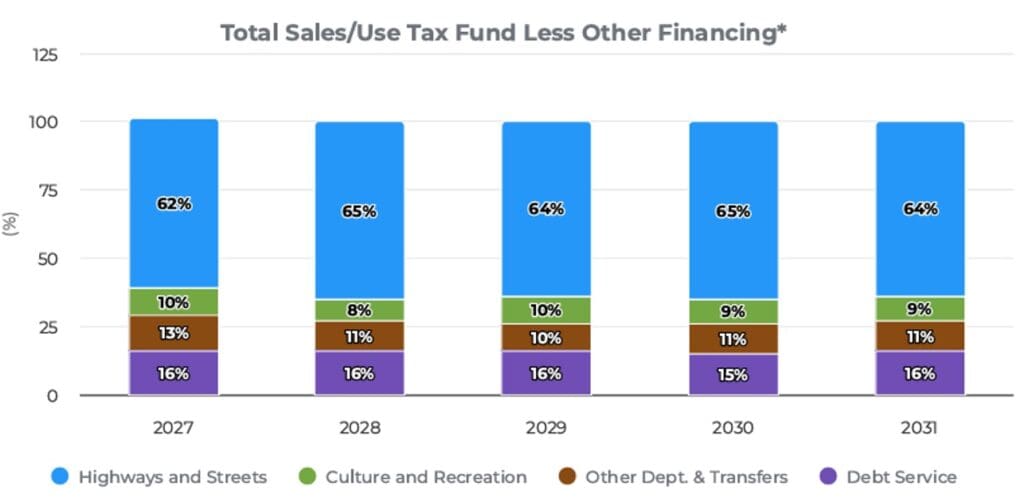
“With the administrative change and some pressures on the sales tax revenues, we tried to hold as much constant as possible from prior years,” Pritchett said. “You’re not going to see a lot of major new things in this one … and I think if we continue with the trend we’re at (with revenue), we’ll have a larger program next year with maybe more capacity.”
Major infrastructure projects
The city’s proposed investments in roads totals $440 million and includes several major improvements beginning in 2027.
The current construction climate has allowed the city to stretch its budget, said Mark Cotter, director of public works.
“We’re seeing very favorable bids, multiple bidders, which is really allowing us to get more done with the capital dollars.”
One major new project in 2027 will be the complete reconstruction of the intersection of 41st Street and Louise Avenue, budgeted at $13 million.
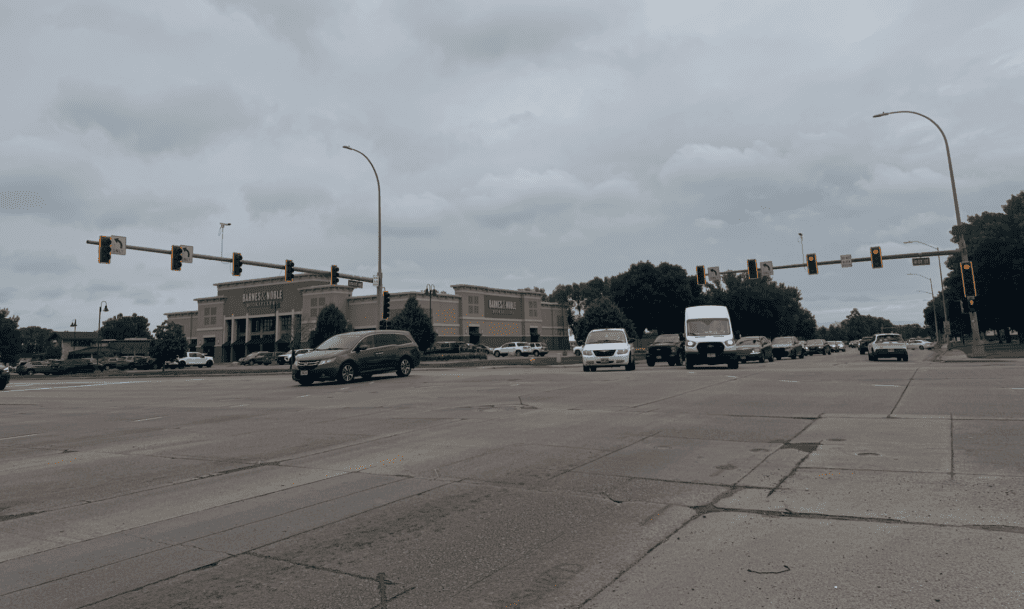
“Obviously, it’s one of the busiest intersections in the state,” Cotter said. “We’ve done selective maintenance, but I’m sure the pavement is tired, and it’s well over 30 years since we’ve done something significant.”
Much of the capital program involves partnerships with the South Dakota Department of Transportation around Veterans Parkway and interstate work.
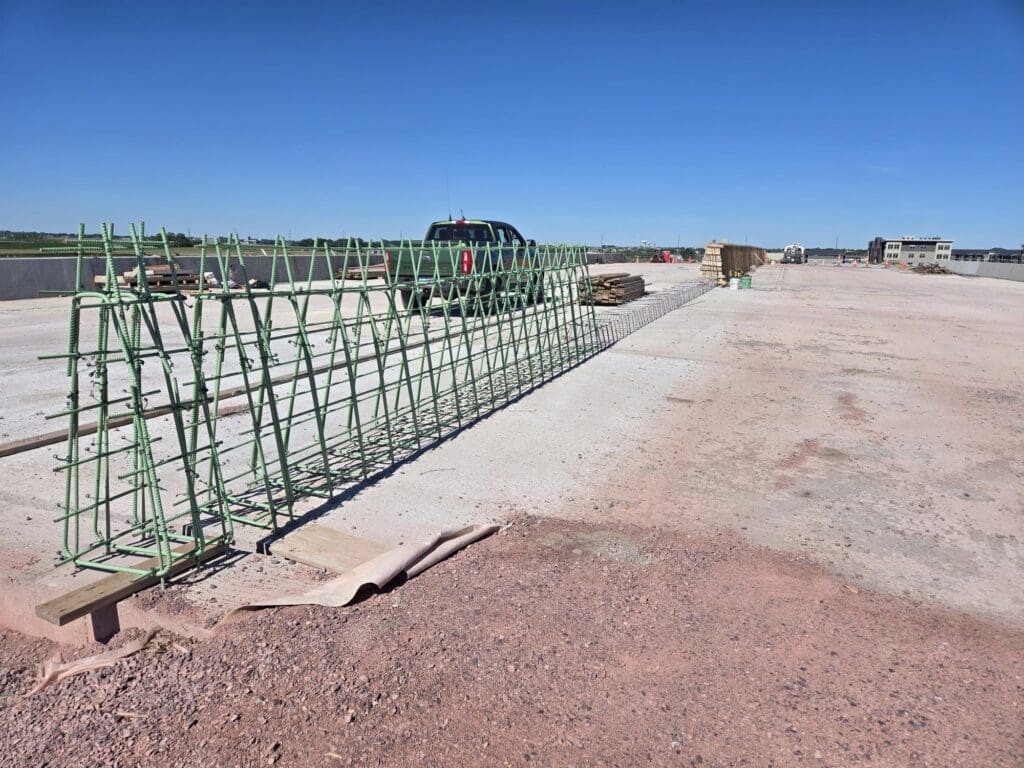
The segment of Veterans Parkway from Cliff to Sycamore avenues is expected to be done this year, with another segment to connect Sycamore to 57th Street expected to bid this fall and begin a two-year construction process. That leaves a final stretch from Western Avenue to Interstate 29 that could start construction in the fall of 2027 to be done in 2029.
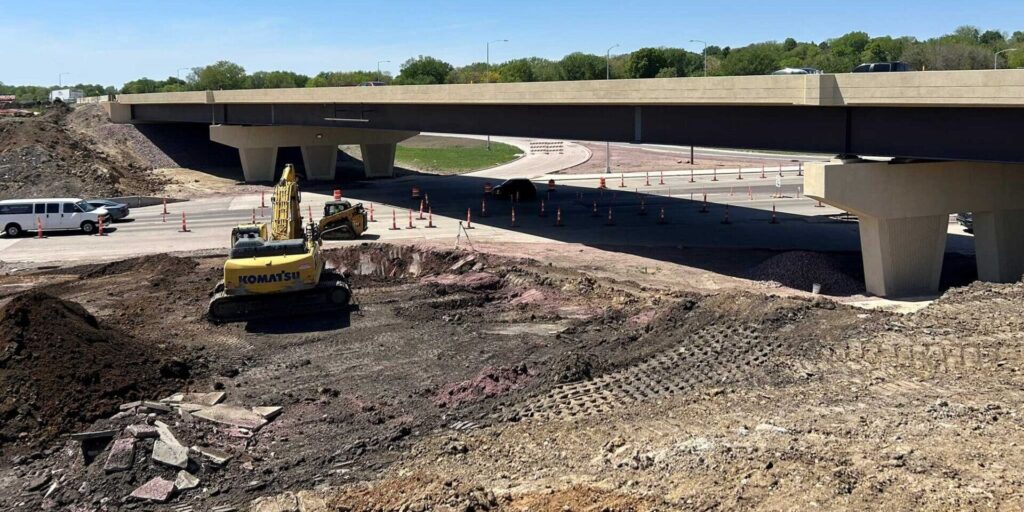
Work on the existing interstate system also is reflected in the plan, with an improved Interstate 229 and Cliff Avenue interchange expected to be done this year and a similar project at I-229 and Minnesota Avenue scheduled to begin next year.

“Cliff and 229 already functions much better than the old one, and we’re only half-done,” Cotter said.
In conjunction with the Minnesota Avenue improvements, the city plans to extend 49th Street from West to Grange avenues in 2027 and then ultimately connect it to Minnesota as interstate construction is complete.
In downtown Sioux Falls, the capital program calls for reconstruction of Phillips Avenue from Eighth to 10th streets, a project already designed that was put on hold for budgetary reasons a few years ago.
Other major projects include the reconstruction of Minnehaha County Highway 130 north of Foundation Park, which will support future development, including the new Smithfield Foods plant, and the reconstruction of Benson Road from I-29 to Westport Avenue, which reflects the growing area around the Sanford Sports Complex.
The city also plans to address more than 700 city blocks in 2027 as a way to balance expansion of the transportation network with maintenance of existing streets.
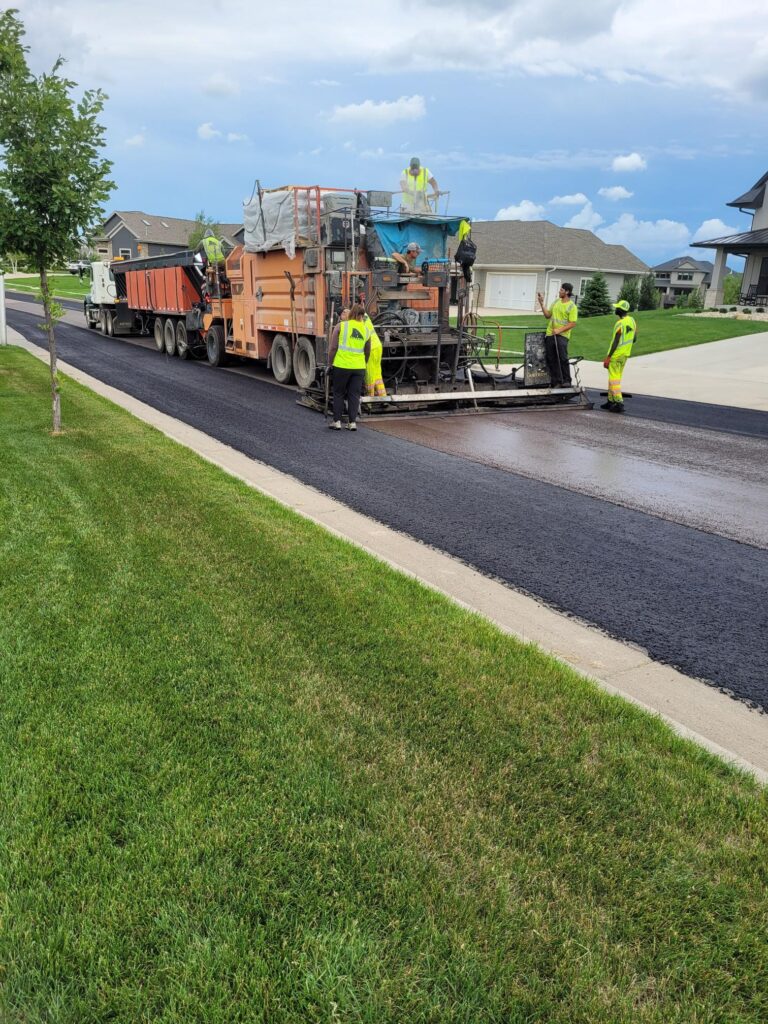
“It’s a significant year coming up with maintenance programs with no budget reduction taken,” Cotter said. “Our goal is to maintain an average street condition index of greater than 70. It’s currently 73, and we’ve targeted those ‘just in time’ maintenance activities to maximize pavement life.”
Utility improvements total $381 million over five years and address water, wastewater, landfill, and light and power, funded through user fees.
For wastewater, the program outlines expansion and maintenance projects to both the collection system and treatment facility to support current service levels and future growth, including the ongoing expansions of wastewater basins in the west and southeast areas of Sioux Falls.
The water utility has investments planned for future water supply sourcing such as the third connection to the Lewis and Clark Regional Water System, which will bolster the community’s drinking water supply. Utility infrastructure investments ensure that the city maintains its current service levels for customers while positioning the city for future economic growth and development.
Public safety planning
While each year of the capital program includes funding for police and fire vehicles and equipment, the later years would allocate dollars toward creating a shared public safety site in southeast Sioux Falls where the city owns land near the USF Stadium at 69th Street and Cliff Avenue.
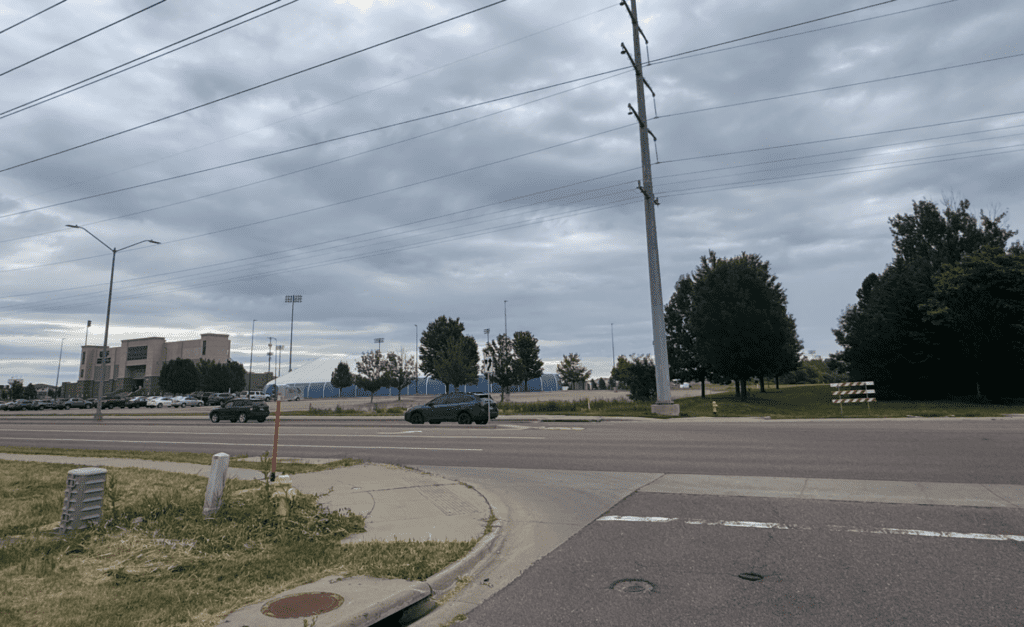
That would include the city’s 14th fire station as well as a report-to-work station for the Police Department, with the two possibly co-located, and design scheduled in 2029.
There’s about $6 million budgeted for the facility, though the actual cost could be three times that, Pritchett said.
“That’s a huge hit to the program,” he said, adding that the intent would be to adjust the number as it gets closer. “At this time, knowing we’re still five years away and have significant debt capacity at that point.”
Zoo, neighborhood parks among quality-of-life proposals
Among the biggest proposed changes in the 2027-31 capital program would be the allocation of $6.5 million to the Great Plains Zoo — a combination of second-penny sales tax revenue with $4 million in one-time funding from the city’s entertainment tax.
That would be used for master plan improvements, including allowing the zoo to reach a goal for its new aquarium.
Sioux Falls Zoo & Aquarium has raised $46.7 million so far, including $25 million from philanthropist Denny Sanford, and when the effort reaches $50 million, he will add $10 million. The target goal to fund all improvements is $73 million.
“They have had a historic fundraising effort,” said Brett Kollars, assistant director of parks and recreation.
Once the $50 million milestone is met, bids can go out for the aquarium portion of the project. The hope is to start construction later this year or early next year, which then leads to more than two years of construction.

“The request was made for additional assistance from the city to help get over the hump in terms of getting fully fundraised,” Pritchett said. “A lot of people have asked ‘Why isn’t the city in for more?’ We didn’t have capacity in the sales and use tax. Entertainment tax is doing pretty well, we had some balance, and it’s a one-time expenditure. It’s not ongoing, which is a lot easier for us to absorb, and it helps them leverage opportunities for additional private investment.”
In 2027, the Parks & Recreation Department relied on its five-year master plan in proposed improvements, Kollars said.
Those include prioritizing neighborhood parks, trails and existing parks.
There are three new neighborhood parks proposed in the plan:
- Whispering Woods South at 5820 S. Bahnson Ave.
- Wild Meadows in northeast Sioux Falls at 5200 E. Brennan Drive near Sixth Street and Dubuque Avenue.
- A school/park site envisioned for next to a future elementary school west of Ellis Road between 22nd and 26th streets.
All parks would be built in 2027 with neighborhood input on amenities such as basketball, tennis or pickleball courts.
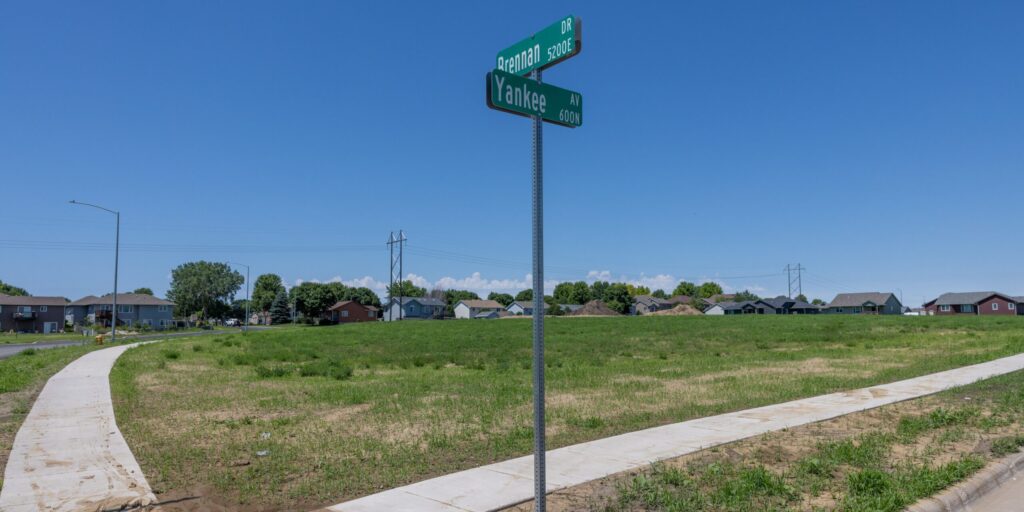
“We’re talking neighborhood parks, so a park shelter, internal trails and sidewalks, playground and play courts,” Kollars said. “We aim for park accessibility within a half-mile of every resident, so we have a map and analyze gaps where we’re meeting that need and not.”
Across the five-year program, $12 million will be invested for expansion and reconstruction of recreational trails, including new trail extensions for Cherry Creek Trail, Big Sioux River Trail and Eastside Trail, which connects Arrowhead Park and the Mary Jo Wegner Arboretum. Trail reconstruction is scheduled for the southeastern spur, the section from Maple Street to the diversion dam, and the River Park bridge.
The plan also would fund a tennis and pickleball court at Kuehn Park in 2027 as part of that park’s broader master plan, which includes the new outdoor aquatic facility opening next year.
Additionally, a new shelter is planned at Sherman Park and will be named in honor of the Kiwanis Club, recognizing that the former Kiwanis Park downtown no longer is in operation.
Looking ahead
While still years from development, the future Sanford District is reflected in the capital program, with plans to set aside $2.5 million each year for four years for city-related uses at what will be the former Smithfield Foods site adjacent to Falls Park.
“We want to be able to have public use of a portion of that land for parks, a library, anything at this point, and we need to start planning ahead,” Pritchett said. “The city would like to have options to acquire part of that for public use.”
Share This Story
Most Recent
Videos
Looking amazing @dtsiouxfalls and @washpav! Thanks to @jpickthorn for capturing an incredible night.
Nov 26

Enjoy this glow headed into Halloween week! 📸: @jpickthorn
Oct 31
Hope you had a wonderful summer weekend and are recharged for the week ahead! 📸: @jpickthorn
Jun 27
Beautiful way to start a week! 📸: @jpickthorn
Jan 10
Favorite flyover of the year! Merry Christmas from our entire @pigeon605news flock. 🎄🐦 📸: @actsofnaturephotography
Dec 24
They definitely deserve to be treated like holiday royalty and they were! ❤️ these scenes from tonight’s lighting celebration at @sanfordhealth Children’s Hospital. 🎄
Dec 1
The holidays are here! Perfect night @dtsiouxfalls
Nov 27
Happy Halloween from @avera_health NICU babies! Link in bio to see more! 🎃
Oct 31
Did you know @dtsiouxfalls is filled with 👻 stories? Link in bio … if you dare 😱
Oct 8
When it comes to kids parties nobody wants to be cookie-cutter. Link in bio for the story on what’s trending.
Sep 28
Want to stay connected to where you live with more stories like this?
Adopt a free virtual “pigeon” to deliver news that will matter to you.


Are you a little bird with something to share?

Delivering news that matters to you
Years ago, homing pigeons were used to bring us news we needed. Today, your virtual “pigeon” will deliver what you want to know about the place you call home.
All pigeons are free to good homes!
Our Partners