

Can you spot measles? What you need to know
This piece is sponsored by Avera.
Measles is in South Dakota and surrounding states. You might be wondering what to look for, how it’s treated and what to do.
Dr. Kara Bruning, Avera pediatrician, and Dr. Peter Paul Lim,, infectious disease specialist, answer questions and help separate fact from fiction.
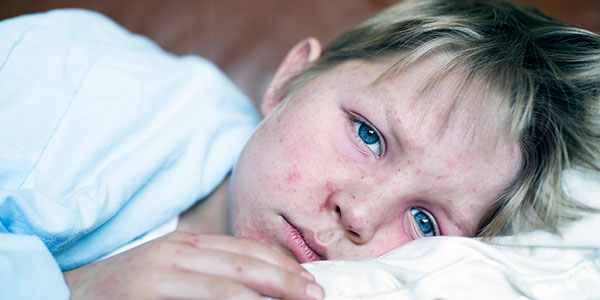
How contagious is measles, and how is it spread?
Measles is one of the most contagious of any known viral infection. It is more contagious than smallpox, tuberculosis or Ebola. It has an attack rate of 90 percent, meaning about nine out of 10 susceptible people can be infected if exposed to an infected patient with measles. A person with measles is contagious four days before and four days after the rash eruption. Patients with measles need isolation during this time.
Measles is spread through airborne transmission and direct contact of infectious droplets.
How is measles transmitted?
Much like the viral illnesses that pop up every fall through spring, the measles virus is airborne and is transmitted via coughing, sneezing or other air droplets that can live in the air for two hours. Washing hands, social distancing when appropriate and practicing good hygiene will help decrease the chance of spreading.
How long is someone with measles contagious?
A person with measles is contagious four days before and four days after the rash eruption. The incubation period is usually seven to 21 days — typically 10 to 14 days — from the time of exposure, depending on a patient’s immune status. Immunocompromised patients can take up to 28 days to start having symptoms from time of exposure.
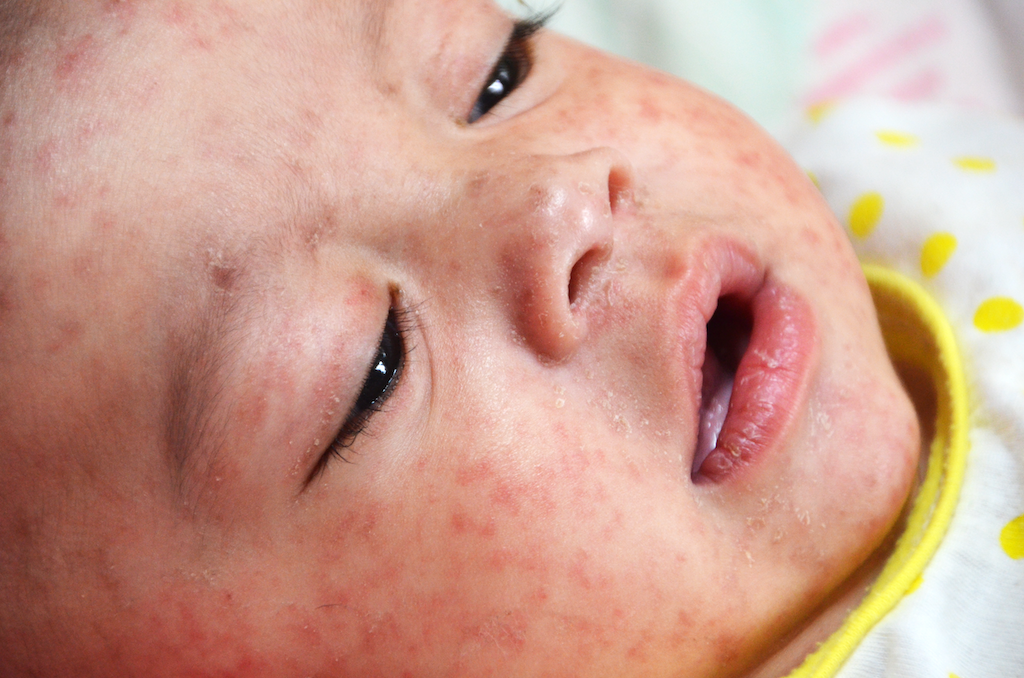
What are the symptoms to look for?
It’s typically very hard to diagnose initially because it presents with flu-like symptoms and then starts spreading throughout your body. If you or your child haven’t been vaccinated, you should be seen by a doctor. What to look for:
- Flu-like symptoms
- Diarrhea
- High fever
- Flat red spots

You don’t want to wait until the rash appears to seek help because people can be contagious for four days before the rash appears.
Here is a typical timeline measles follows:
- Seven to 14 days after becoming infected, the first symptoms show as high fever, cough, runny nose and red, watery eyes.
- Two to three days after the onset of symptoms, you often can see tiny white spots, known as Koplik spots, inside the mouth, which is a hallmark of measles.
- Three to five days after the onset of symptoms, the characteristic measles rash begins. The usual pattern is that flat red spots appear at the hairline and then spread down the neck, trunk, arms, legs and feet. The spots may “join” as they become more profuse across the body. The rash fades after five to six days in order of rash appearance.
How many vaccines do people need to be protected from measles?
Two doses. That’s all you need to get lifetime protection from the measles. This vaccine has been providing excellent protection from this disease for over 50 years. Avera Health follows the U.S. Centers for Disease Control and Prevention recommended vaccine schedule for children:
- First dose: 12 to 15 months of age
- Second dose: 4 to 6 years old
Do adults need a measles booster vaccine?
If you completed the vaccination as a child, you are good to go. There is no need to get a booster as an adult. If you got only one shot, if you don’t know or you don’t have access to your records, you can seek out a single measles vaccination to ensure coverage. The other reasons why you might need a measles vaccination:
- Are immunocompromised or considered high risk.
- Have been exposed or are caring for an infected person.
Can you still get the measles if you have the vaccine?
It’s rare that a vaccinated person would become infected. One shot of the measles vaccine is 93 percent effective; two doses boost that efficacy to 97 percent. It’s very unlikely that you will get sick if you are vaccinated for the measles. Even if you are vaccinated and become infected, that breakthrough case would be significantly less severe.
What should you do if your child is too young for the MMR vaccine but you need to travel?
This is a very good question. There is not a good recommendation for travel for unvaccinated people. The safest thing to do is to not travel if you are concerned about your child and they’re younger than 6 months. It’s also important to be vaccinated yourself to help protect children who are too young to receive the vaccine.
How do you treat the measles?
The best way is through preventive vaccination. If you choose not to get vaccinated and do get infected, treating the measles is primarily supportive care and addressing the needs of the symptoms. The biggest concern is the case becoming severe or a patient having a severe side effect. One out of every five children who gets the measles will have some sort of severe side effect like ear infection, pneumonia or brain swelling which is why seeking care and getting a diagnosis early is critical.
Get more wellness tips at Avera.org/Balance.
Share This Story
Most Recent
Videos



Looking amazing @dtsiouxfalls and @washpav! Thanks to @jpickthorn for capturing an incredible night.
Nov 26

Enjoy this glow headed into Halloween week! 📸: @jpickthorn
Oct 31
Hope you had a wonderful summer weekend and are recharged for the week ahead! 📸: @jpickthorn
Jun 27
Beautiful way to start a week! 📸: @jpickthorn
Jan 10
Favorite flyover of the year! Merry Christmas from our entire @pigeon605news flock. 🎄🐦 📸: @actsofnaturephotography
Dec 24
They definitely deserve to be treated like holiday royalty and they were! ❤️ these scenes from tonight’s lighting celebration at @sanfordhealth Children’s Hospital. 🎄
Dec 1
The holidays are here! Perfect night @dtsiouxfalls
Nov 27
Happy Halloween from @avera_health NICU babies! Link in bio to see more! 🎃
Oct 31
Did you know @dtsiouxfalls is filled with 👻 stories? Link in bio … if you dare 😱
Oct 8
When it comes to kids parties nobody wants to be cookie-cutter. Link in bio for the story on what’s trending.
Sep 28
Want to stay connected to where you live with more stories like this?
Adopt a free virtual “pigeon” to deliver news that will matter to you.






Are you a little bird with something to share?

Delivering news that matters to you
Years ago, homing pigeons were used to bring us news we needed. Today, your virtual “pigeon” will deliver what you want to know about the place you call home.
All pigeons are free to good homes!
Our Partners